

Smart Shopper Handbook for 1 Carat Oval Diamonds
Why a 1 Ct Oval Diamond Is a Smart Choice
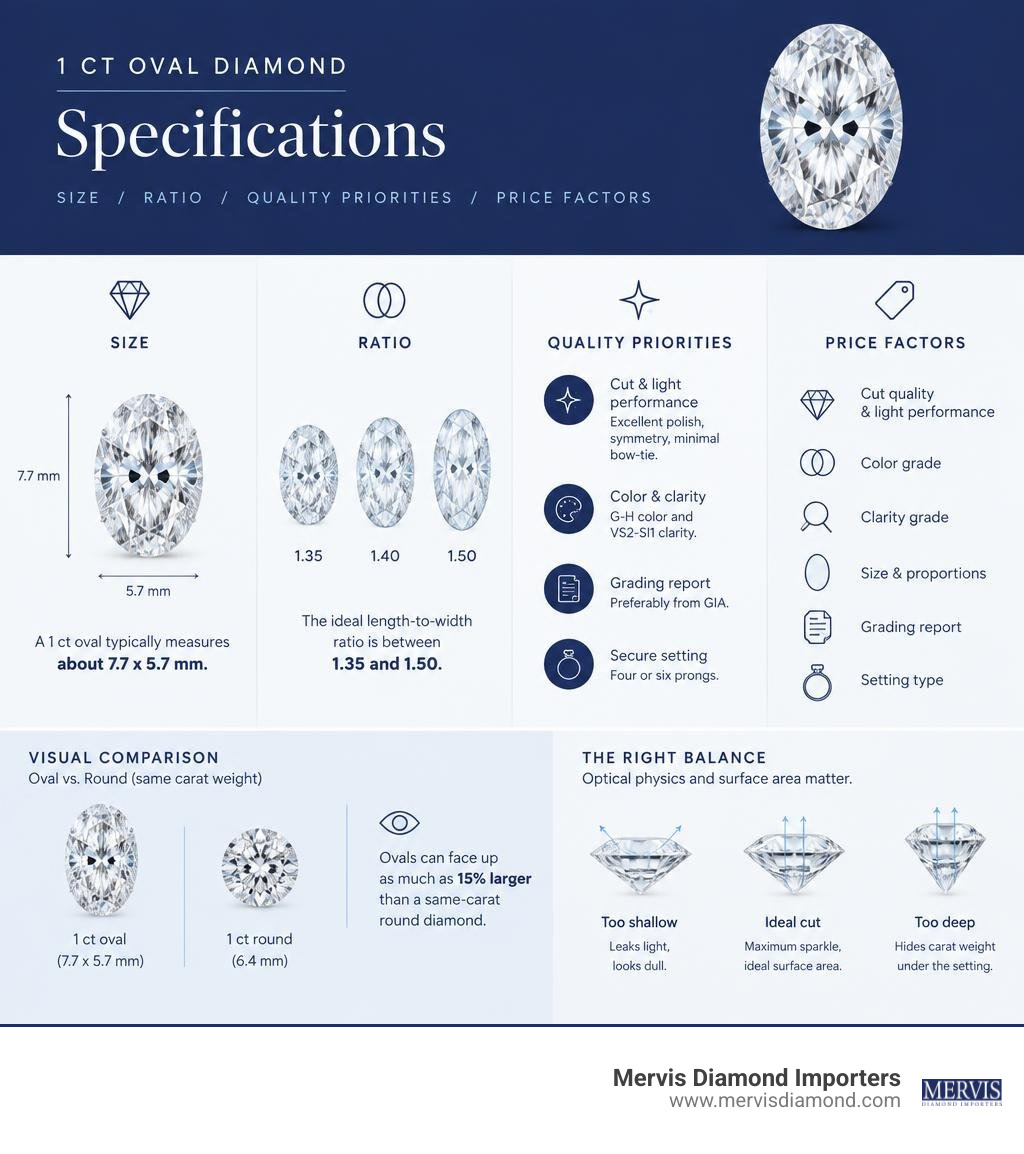
A 1 ct oval diamond is an excellent choice if you want strong sparkle and a larger-looking center stone without paying the premium often attached to a round brilliant. A well-cut one usually measures about 7.7 x 5.7 mm and has a length-to-width ratio between 1.35 and 1.50, creating the balanced, elongated outline many buyers love. For more on how oval cuts compare to other shapes, see the diamond shape overview.
For the best value, prioritize:
- Cut and light performance first. Look for excellent polish and symmetry, plus a minimal bow-tie shadow.
- G-H color and VS2-SI1 eye-clean clarity for a bright, clean appearance without overpaying for details you cannot see.
- A reliable grading report, especially from GIA, to confirm the diamond's quality.
- A secure setting, such as four or six prongs, to protect the oval's narrower ends.
Ovals can face up as much as 15% larger than a same-carat round diamond, while their longer shape can create a graceful, finger-lengthening effect. The catch: oval diamonds do not receive a universal cut grade from GIA, so comparing real videos, proportions, and bow-tie appearance matters more than relying on a single label.
I am Morris Mervis, and this guide will help you compare 1 carat oval diamonds with confidence and focus on the qualities that truly affect beauty and value.
Understanding Dimensions and Proportions of a 1 ct Oval Diamond
When shopping for an oval diamond, carat weight only tells you how much the stone weighs on a scale—not how large it will appear on your finger. Because ovals are elongated modified brilliants, their millimeter footprint dictates their actual visual presence.
Understanding optical physics and surface area is essential when evaluating fancy shapes. A shallow stone might offer a large millimeter spread across the top, but it will leak light through the pavilion, resulting in a dull, lifeless appearance. Conversely, a stone cut too deep hides its carat weight underneath the setting where nobody can see it. Striking the right balance ensures maximum light return, fire, and surface area coverage.
Ideal Length-to-Width Ratio and Size for a 1 ct Oval Diamond
The length-to-width (L/W) ratio determines the outline and silhouette of your oval diamond. To find this ratio, simply divide the diamond's length in millimeters by its width.
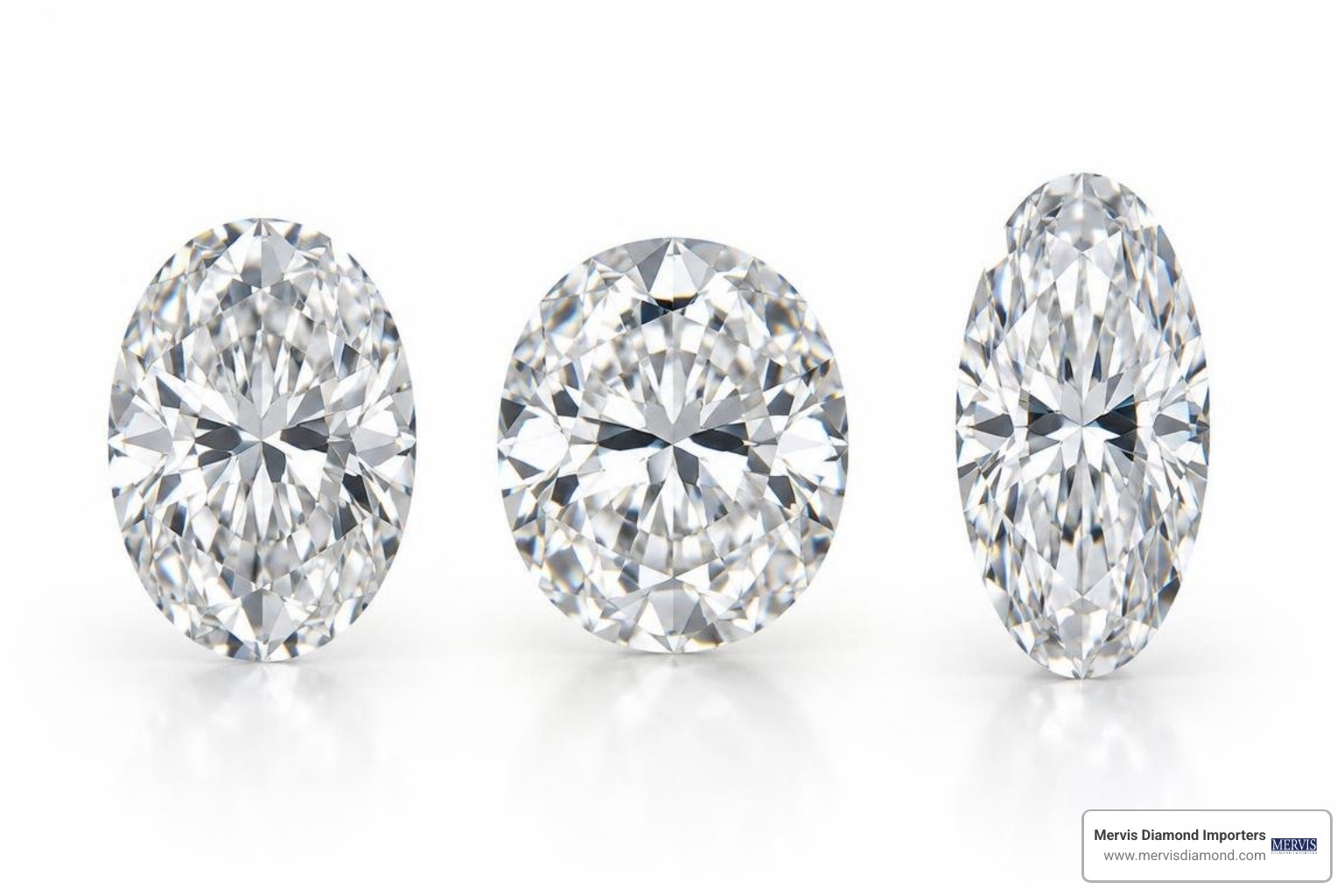
- Classic Proportion (1.35 – 1.50): This is the sweet spot chosen by most buyers. A standard 1-carat oval in this range measures roughly 7.7 x 5.7 mm, delivering an aesthetically pleasing oval silhouette that elongates the finger elegantly without looking too wide or overly stretched.
- Wider/Chubby Oval (1.20 – 1.30): Stones in this range appear rounder and softer. They provide great brilliance across the center but offer less of the lengthening effect on the finger.
- Elongated/Slim Oval (1.55 – 1.70+): These stones appear strikingly sleek and contemporary. However, excessively long ratios can emphasize light extinction across the center, making optical symmetry harder to achieve.
Optimal Proportions: Depth, Table, and Symmetry
Unlike round brilliants, major grading laboratories such as the Gemological Institute of America (GIA) do not assign an overall "Cut Grade" to oval diamonds. As a result, savvy shoppers evaluate the stone's critical proportions directly:
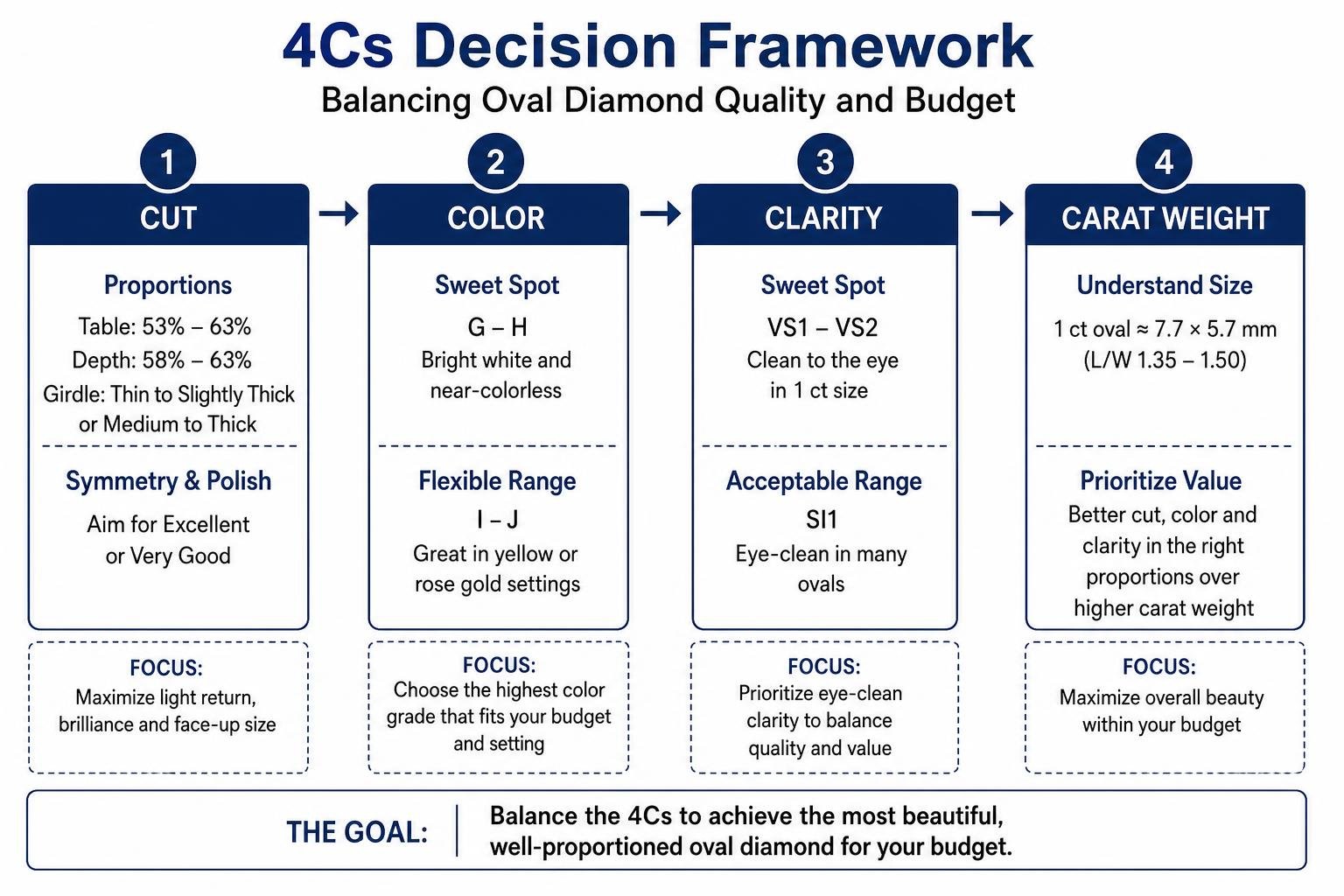
- Table Percentage (53% – 63%): An optimal table allows ample light to enter and refract within the crown facets. Avoid tables wider than 68%, as they flatten the crown and reduce rainbow-colored flashes (fire).
- Depth Percentage (58% – 63%): Depth governs internal reflection. Stones shallower than 56% often appear "glassy" or watery, while depths exceeding 66% trap dark shadows and mask size.
- Girdle Thickness: Look for a girdle graded Thin to Slightly Thick or Medium to Thick. Avoid Extremely Thin girdles (prone to chipping) or Extremely Thick girdles (dead weight).
- Polish and Symmetry: Always aim for Excellent or Very Good ratings. Strong symmetry ensures facet junctions align precisely, balancing light distribution across both rounded ends (heads) and the center (belly).
Quality Evaluation: The 4Cs, Bow-Tie Effect, and Pricing
Oval cut diamonds are among the most sought-after fancy shapes in the world, capturing roughly 15% to 20% of all fancy-shaped diamond selections. Maximizing your budget requires balancing cut, color, clarity, and carat weight effectively.
Color and Clarity Sweet Spots for a 1 ct Oval Diamond
Fancy shapes distribute light differently than standard rounds. Because the rounded ends of an oval can concentrate body color slightly, choosing your color grade carefully is important:
- Color Sweet Spot (G – H): In a 1-carat size, diamonds in the G to H range appear bright white and near-colorless to the naked eye when mounted in platinum or white gold. If you prefer yellow gold or rose gold mountings, you can comfortably move down to an I or J color grade while maintaining a crisp, warm aesthetic.
- Clarity Sweet Spot (VS2 – SI1 Eye-Clean): The complex, brilliant facet pattern of an oval does a wonderful job disguising tiny natural inclusions. A verified eye-clean SI1 or VS2 diamond gives you an immaculate face-up look without the premium price tag of VVS or Flawless grades. Approximately 70% of oval diamond buyers prioritize cut precision over flawless clarity to achieve maximum brilliance.
Identifying and Minimizing the Bow-Tie Effect
Every oval diamond exhibits some degree of a "bow-tie"—a dark, bow-tie-shaped shadow across the center width of the stone.
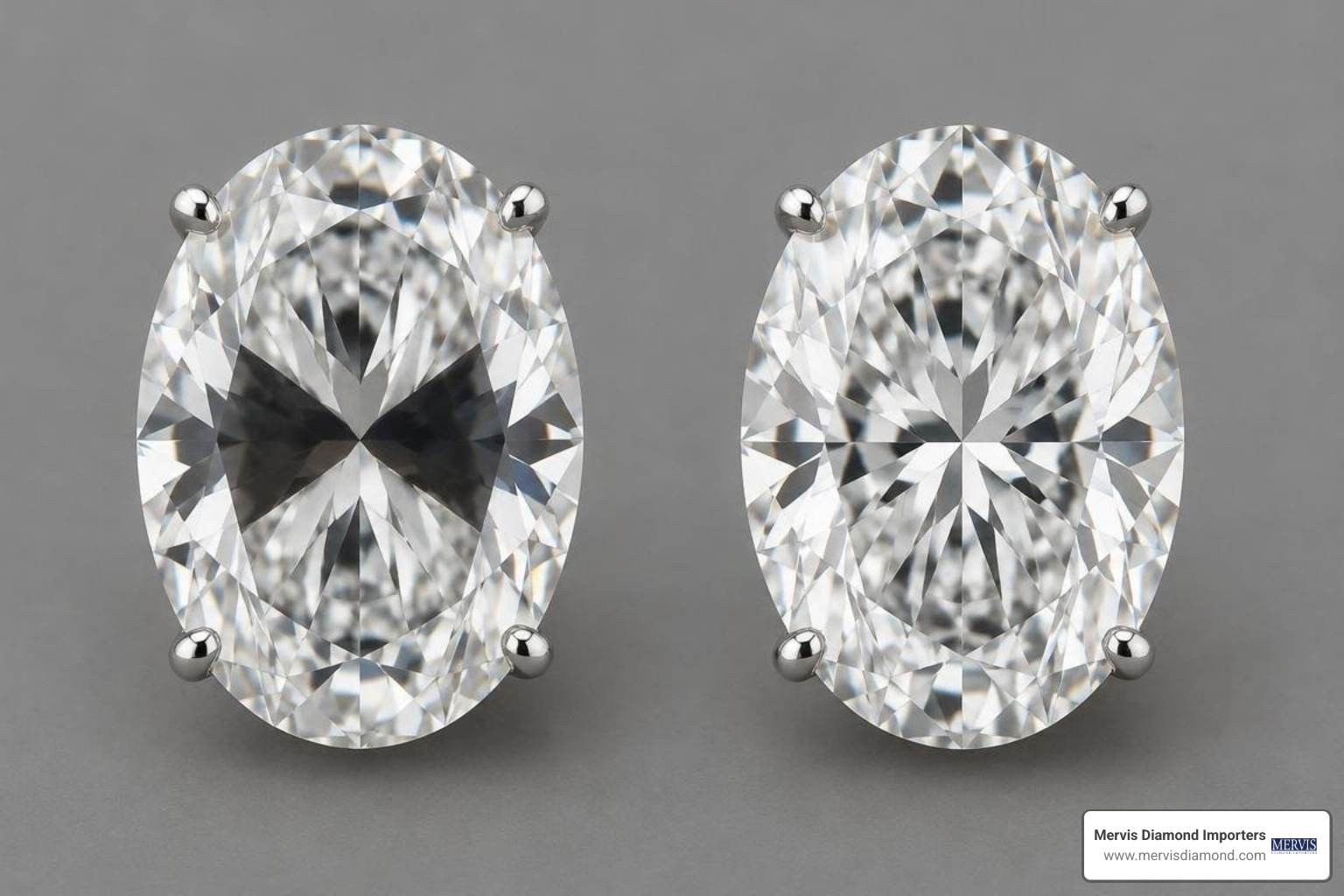
The bow-tie is an optical consequence of facet angles: when you look directly at the stone, your head and body block overhead light from entering the center facets, casting a shadow back to your eyes.
- Subtle/Pleasing Bow-Tie: A well-cut oval displays a balanced interplay of light and dark contrast that enhances movement, sparkle, and scintillation.
- Severe/Distracting Bow-Tie: If the pavilion facets are cut at steep, uncoordinated angles, the center creates a permanent, lifeless black band across the stone.
Always inspect high-definition video or view the loose diamond in person under multiple lighting conditions to ensure the bow-tie does not overpower the gem's brilliance.
Certification Standards and Price Factors
Never purchase a diamond without an independent, third-party grading report from an internationally recognized institution like GIA or AGS. These laboratories enforce rigorous grading standards, ensuring you receive the exact color, clarity, and carat weight stated.
The average market price for a natural 1-carat oval diamond of good cut, near-colorless tone (F–H), and eye-clean clarity (VS2–SI1) typically spans from $4,500 to $8,000. Key factors influencing this pricing include:
- Cut Precision and Proportion Balance: Premium stones with minimal bow-ties and ideal tables demand higher value.
- Color Purity: D-F colorless grades command noticeable premiums over near-colorless stones.
- Fluorescence: Faint to medium blue fluorescence can offer minor cost savings without affecting transparency.
Shape Comparison: Oval Cut vs. Alternative Diamond Shapes
To understand how an oval compares to other popular cuts in terms of perceived size, brilliance, and finger coverage, review the comparison below:
| Diamond Shape | Relative Face-Up Size (1.00 ct) | Typical Dimensions (mm) | Brilliance & Fire | Key Advantages |
|---|---|---|---|---|
| Oval Cut | Up to 15% Larger than Round | ~7.70 x 5.70 mm | Very High (Brilliant Facets) | Elongating outline, exceptional finger coverage, masked inclusions |
| Round Brilliant | Standard Benchmark | ~6.45 x 6.45 mm | Maximum (Optical Benchmark) | Universal cut grades, classic symmetry, zero bow-tie effect |
| Pear Shape | ~10–12% Larger than Round | ~8.50 x 5.50 mm | High (Combines Round & Marquise) | Dramatic teardrop silhouette, unique vintage appeal |
| Marquise Cut | ~15–20% Larger than Round | ~10.0 x 5.00 mm | High (Elongated Facets) | Maximum surface area spread, bold dramatic presence |
Optimal Ring Settings and Diamond Protection
Because an oval has curved sides and narrower tips, choosing a durable, complementary setting ensures lifetime wearability.
Prong Configurations and Setting Styles
- 4-Prong Settings: Maximizes light entry from all sides, creating a minimalist look that lets the diamond float above the band. Compass prong arrangements (North-South-East-West) add a clean, modern aesthetic.
- 6-Prong Settings: Provides extra security around the curves and ends, keeping the stone firmly anchored during active daily wear.
- Hidden Halos: A subtle circle of pave diamonds tucked directly underneath the center stone's girdle adds extra sparkle from side angles without distracting from the oval shape.
- Bezel and Cathedral Mountings: A bezel wraps a fine rim of metal entirely around the perimeter, delivering protection against accidental bumps. Cathedral settings arch upward from the band to support the center head, elevating the stone gracefully.
Frequently Asked Questions About Oval Diamonds
Does a 1 ct oval diamond look larger than a round diamond?
Yes. Thanks to its elongated shape and shallower carat distribution, a 1-carat oval features roughly 10% to 15% more surface area face-up than a traditional 6.45 mm round brilliant diamond of identical weight.
What causes a bow-tie in an oval diamond?
A bow-tie occurs when the diamond's facet angles reflect the viewer's shadow back into the center of the stone. While all ovals display some subtle contrast, well-proportioned cuts keep this shadow soft, lively, and dynamic rather than dark and dull.
Which certification is most reliable for fancy shapes?
The Gemological Institute of America (GIA) remains the gold standard in diamond grading. GIA provides consistent assessments of color, clarity, polish, and symmetry, giving you peace of mind when comparing stones.
Conclusion
A 1-carat oval diamond provides an appealing blend of modern sophistication, brilliant light performance, and expansive finger coverage. By focusing on a balanced 1.35–1.50 ratio, choosing eye-clean VS2–SI1 clarity, and selecting G–H color, you can secure an exceptional diamond that looks vibrant every day.
At Mervis Diamond Importers, we hand-select our natural and lab-grown diamonds to ensure every stone meets strict standards for optical beauty and minimal bow-tie contrast. We invite you to visit our showrooms in Tysons, VA, Rockville, MD, or Washington, DC for an educational, pressure-free consultation, or begin by exploring our curated oval engagement rings online to find your perfect center stone.