

Why Everyone Is Falling in Love With the 2ct Lab Grown Oval Diamond
Why a 2ct Lab Grown Oval Diamond Is Worth a Closer Look
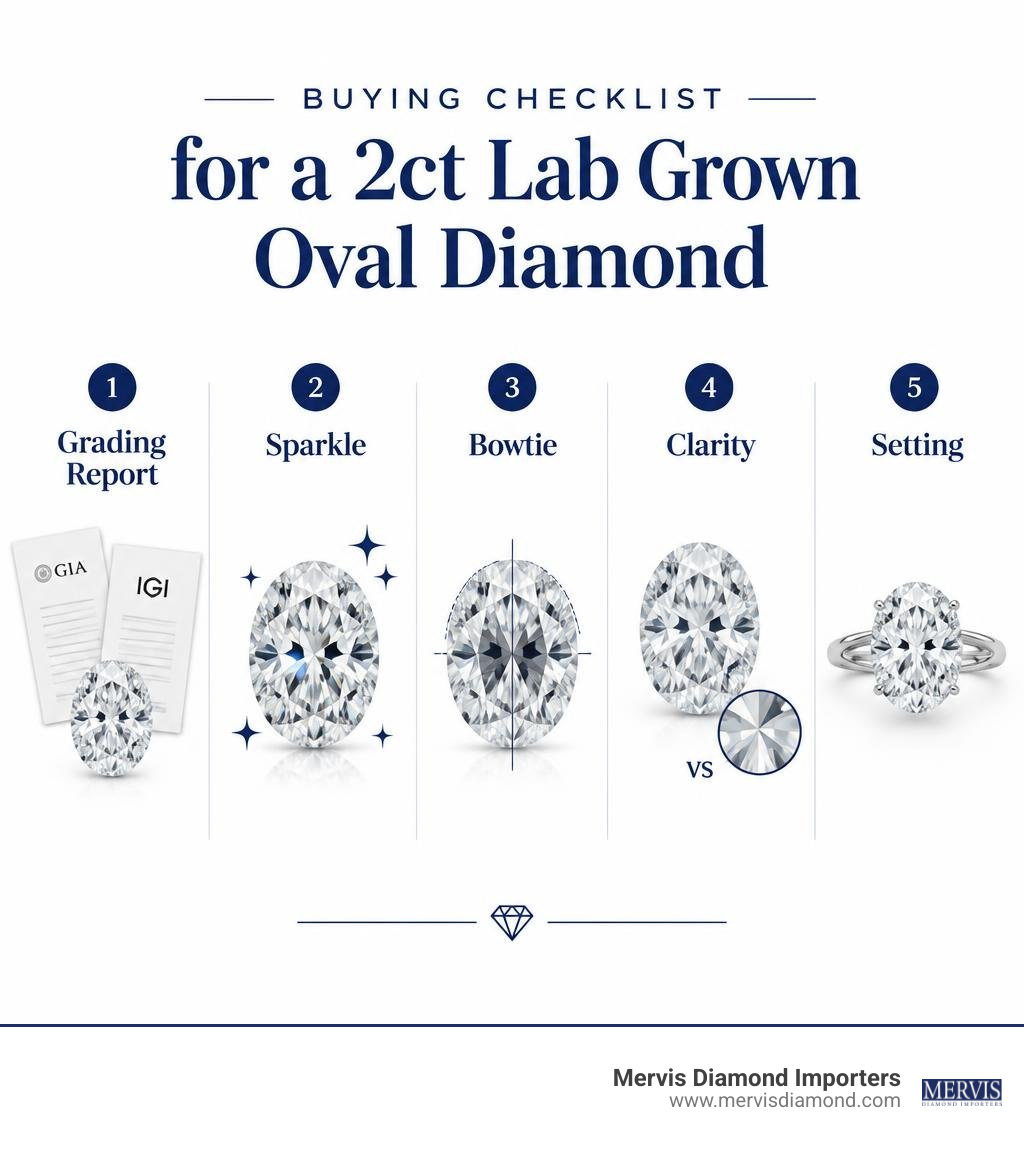
Buying a 2ct lab grown oval diamond? Start with a grading report from IGI or GIA, then compare stones in person or through clear videos. Look for lively sparkle across the whole diamond, an oval shape you like, and no dark bowtie across the center that distracts you. An eye-clean VS clarity grade can offer better value than paying for flaws you cannot see.
A lab-grown diamond is a real diamond with the same basic optical and physical properties as a mined one. It typically costs less, while the oval shape gives a 2-carat stone generous finger coverage. I'm Morris Mervis, and I'll walk you through what matters before you choose.
Why Choose a 2ct Lab Grown Oval Diamond Over Natural Stones?
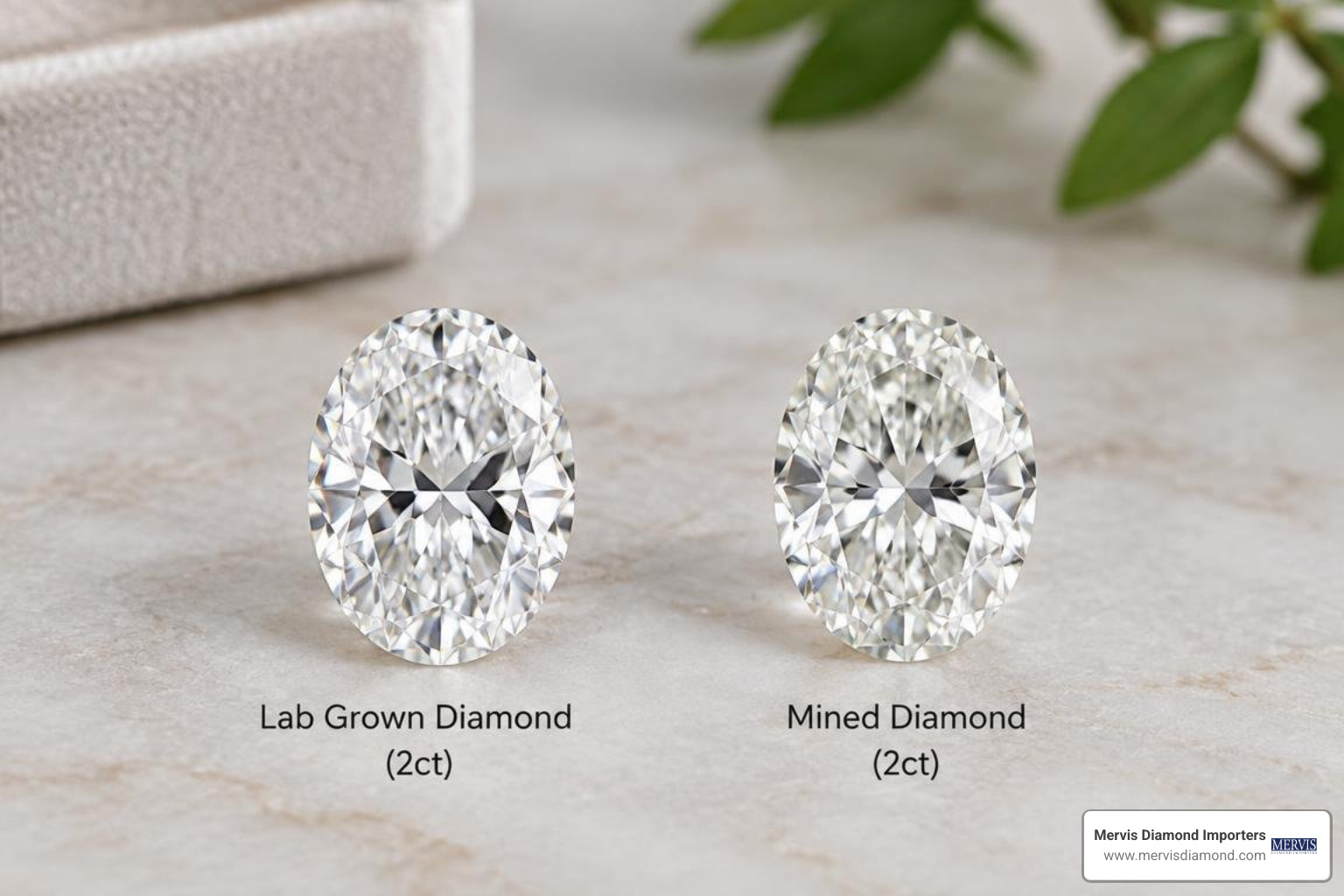
When exploring fine jewelry today, many people ask whether lab-created gems genuinely hold up against Earth-extracted stones. A lab-created diamond possesses the exact same chemical composition, crystal lattice, and physical hardness as a mined diamond. Both are pure crystalline carbon arranged in an isometric structure with an identical refractive index of 2.42.
Because their optical brilliance and dispersion are chemically indistinguishable, no human eye can tell them apart without specialized gemological testing equipment. Choosing a lab-grown stone allows you to prioritize quality, clarity, and dimensions without compromising on authenticity or beauty.
Visual Impact and Elongation of the Oval Cut
The oval cut has quickly become one of the most sought-after shapes in modern jewelry design, and for good reason. Thanks to its elongated profile, an oval diamond distributes more of its total carat weight across the top surface area (the table) rather than hiding it in the depth of the stone.
As a result, a 2-carat oval appears noticeably larger than a standard 2-carat round brilliant diamond. The elongated silhouette creates an elegant, finger-slimming effect that flatters any hand. When crafted with balanced symmetry, it delivers fiery dispersion and crisp light return across all its facets.
Cost Comparison: Lab-Created vs. Mined Diamonds
One of the most compelling reasons couples and collectors choose lab-created diamonds is value accessibility. Lab-grown diamonds generally cost between 50% and 70% less than mined diamonds sharing identical specifications. This production efficiency allows you to allocate your budget toward higher clarity grades, custom designer mountings, or meaningful life experiences without sacrificing visual impact.
| Diamond Type & Carat | Typical Color Range | Typical Clarity Range | Cut Quality | Average Market Price (2026) |
|---|---|---|---|---|
| 2.00ct Lab Grown Oval | E – F | VS1 – VS2 | Excellent / Ideal | $2,000 – $5,000 |
| 2.00ct Natural Oval | E – F | VS1 – VS2 | Excellent / Very Good | $10,000 – $20,000 |
| 2.00ct Lab Grown Oval | D | VVS1 – VVS2 | Ideal | $3,500 – $6,000 |
| 2.00ct Natural Oval | D | VVS1 – VVS2 | Excellent | $18,000 – $32,000+ |
Essential Quality Factors for Oval Cut Diamonds
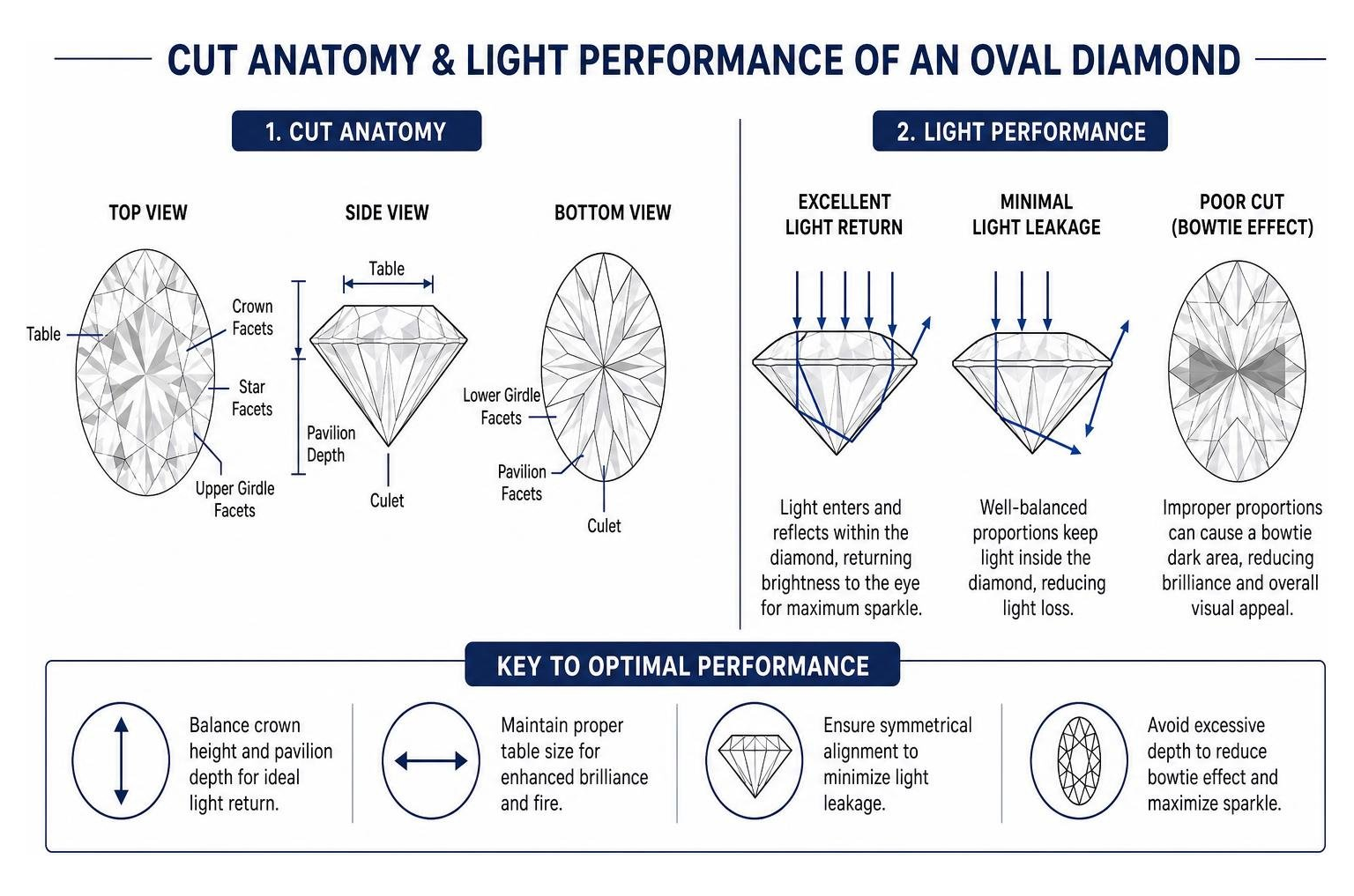
Evaluating an oval shape requires a slightly different approach than assessing a classic round brilliant. While standard rounds follow rigid grading formulas for cut, fancy shapes like ovals depend on visual harmony, balance, and facet symmetry.
Ideal Cut Proportions for a 2ct Lab Grown Oval Diamond
To ensure optimal sparkle without unnecessary light leakage, keep an eye on key proportional metrics:
- Length-to-Width (L/W) Ratio: A ratio between 1.35 and 1.50 represents the classic, balanced oval silhouette. A lower ratio creates a rounder, plumper appearance, while a higher ratio yields a more slender outline.
- Table Percentage: Aim for a table width between 53% and 63% of the total stone width.
- Depth Percentage: Look for a total depth between 58% and 64% to ensure crisp light reflection.
- Girdle Thickness: A range from thin to slightly thick provides stone durability without adding dead weight.
- The Bowtie Effect: All oval cuts feature a natural optical phenomenon where facets reflect light back toward the viewer, sometimes creating a darkened shadow across the center. While every oval has a subtle bowtie, expert cutting ensures this contrast remains light, dynamic, and minimally visible rather than a flat, dark patch.
Color and Clarity Recommendations
Because oval diamonds feature a brilliant facet pattern, they excel at masking minor internal inclusions. Choosing an eye-clean grade like VS1 or VS2 delivers flawless appearance to the naked eye while keeping costs efficient.
For those who desire exceptional purity, stones like this 2.01 Carat D VVS2 Lab Grown Oval Diamond represent the pinnacle of colorless beauty and pristine crystalline structure. In terms of color, grades in the D through F range guarantee bright, icy whiteness that pairs seamlessly with white metals and accent gems.
Certification and Grading Standards
Always ensure your diamond is verified by an independent, internationally recognized gemological laboratory such as the International Gemological Institute (IGI) or the Gemological Institute of America (GIA).
These reports verify whether the diamond was created using Chemical Vapor Deposition (CVD) or High Pressure High Temperature (HPHT) methods, outline exact millimeter measurements, confirm color and clarity, and ensure the diamond is completely unenhanced.
Top Ring Settings to Maximize Brilliance and Protection
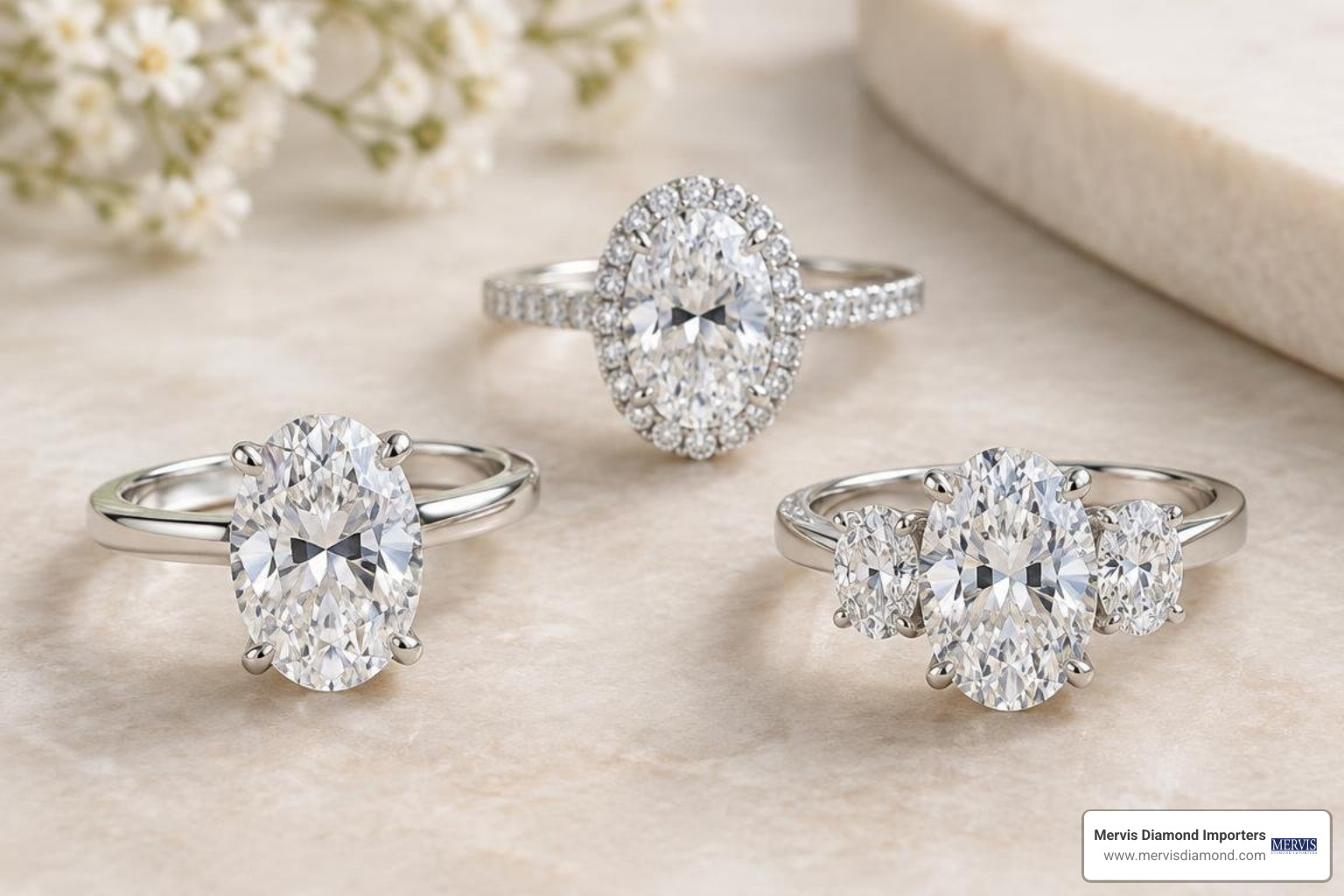
Choosing the right mounting protects your center stone while highlighting its elongated proportions. Whether you are exploring our curated selection of oval engagement rings in Tysons Corner or building a bespoke piece from scratch, the setting style sets the tone for your daily wear.
Setting Styles to Secure a 2ct Lab Grown Oval Diamond
- Classic Solitaire: A four-prong or six-prong solitaire keeps the emphasis entirely on the center stone, allowing light to enter freely from every angle.
- Hidden Halo: A delicate ring of pavé diamonds positioned directly underneath the oval's girdle adds an extra whisper of sparkle without altering the classic outline.
- Bezel Setting: A sleek metal rim completely wraps the outer edge, offering maximum protection for active lifestyles.
- Pavé Accent Band: Accenting the ring shank with micro-pavé diamonds complements the brightness of the main gem.
If you are shopping locally, our team can help you try on custom styles and handcrafted lab grown diamond engagement rings in D.C. to discover what fits your personal aesthetic best.
Metal Pairing and Daily Wear Durability
The choice of precious metal influences both durability and appearance:
- Platinum: Naturally white, hypoallergenic, and dense, platinum provides the most secure hold for prongs over decades of wear.
- 14k or 18k White Gold: Delivers a bright, silvery sheen that enhances colorless diamonds.
- Yellow and Rose Gold: Warm metals offer a striking vintage or romantic contrast against crisp, bright ovals.
For clients browsing lab grown diamonds in Alexandria, VA and our nearby Maryland and DC showrooms, we always recommend regular prong inspections every six months to keep your gem firmly secured.
Market Trends, Ethics, and Long-Term Value
Consumer interest in lab-created fine jewelry has grown dramatically over the past several years. With modern advanced growing technologies, couples can select larger, higher-grade centerpieces with full transparency regarding their origins.
Environmental and Sustainable Advantages
Lab-grown diamonds are produced in controlled laboratory facilities using advanced energy systems, eliminating the surface disruptions, heavy earth displacement, and complex geopolitical supply chains associated with traditional mining. For buyers who prioritize modern sustainability, choosing lab-created stones provides clear, verifiable origins from start to finish.
Resale Value Considerations and Ownership Cost
When purchasing fine jewelry, it is helpful to look closely at both market depreciation and upfront savings. If you are curious about asset retention, you can read our detailed breakdown on Do Lab Grown Diamonds Have Resale Value?.
Mined diamonds traditionally retain roughly 50% of their initial purchase value on the secondary market, whereas lab-created diamonds typically retain 20% to 30%. However, because a lab-grown oval diamond costs thousands of dollars less on day one, the total out-of-pocket cost of ownership remains substantially lower. You keep your hard-earned capital in your pocket from the very beginning.
Frequently Asked Questions About Oval Lab Diamonds
Do 2-carat lab grown oval diamonds look larger than round diamonds?
Yes. Due to their elongated shape and shallower depth profile, oval diamonds have a larger face-up surface area than round brilliants of the exact same carat weight. A 2-carat oval typically measures around 10.0 x 7.0 mm, offering substantial visual spread on the hand.
Will a lab-grown oval diamond test as a real diamond?
Yes. Because lab-grown diamonds possess identical thermal conductivity, electrical resistance, and optical properties as mined diamonds, standard thermal gemological testing instruments will read them as genuine diamond material.
What causes the bowtie effect in oval cut diamonds?
The bowtie effect is a natural result of the facet geometry in elongated brilliant cuts. When looking straight down at the diamond, your head and shoulders block overhead light from entering certain central facets, reflecting a shadow pattern. A master gem cutter angles the pavilion facets to minimize this darkness, ensuring bright, lively sparkle across the entire center.
Conclusion
A 2-carat lab-grown oval diamond offers a breathtaking combination of modern luxury, generous finger coverage, and exceptional everyday value. Whether you favor a timeless platinum solitaire or a diamond-lined band, selecting a hand-inspected stone ensures your ring will sparkle brilliantly for a lifetime.
Ready to find your perfect center stone? Visit one of our welcoming showrooms across Washington DC, Tysons, VA, or Rockville, MD, or explore trending lab-grown diamond styles with our expert consultants today.