

Find Quality Bead Restringing Near Me Without the Guesswork
Find a Bead Restringing Service Near You
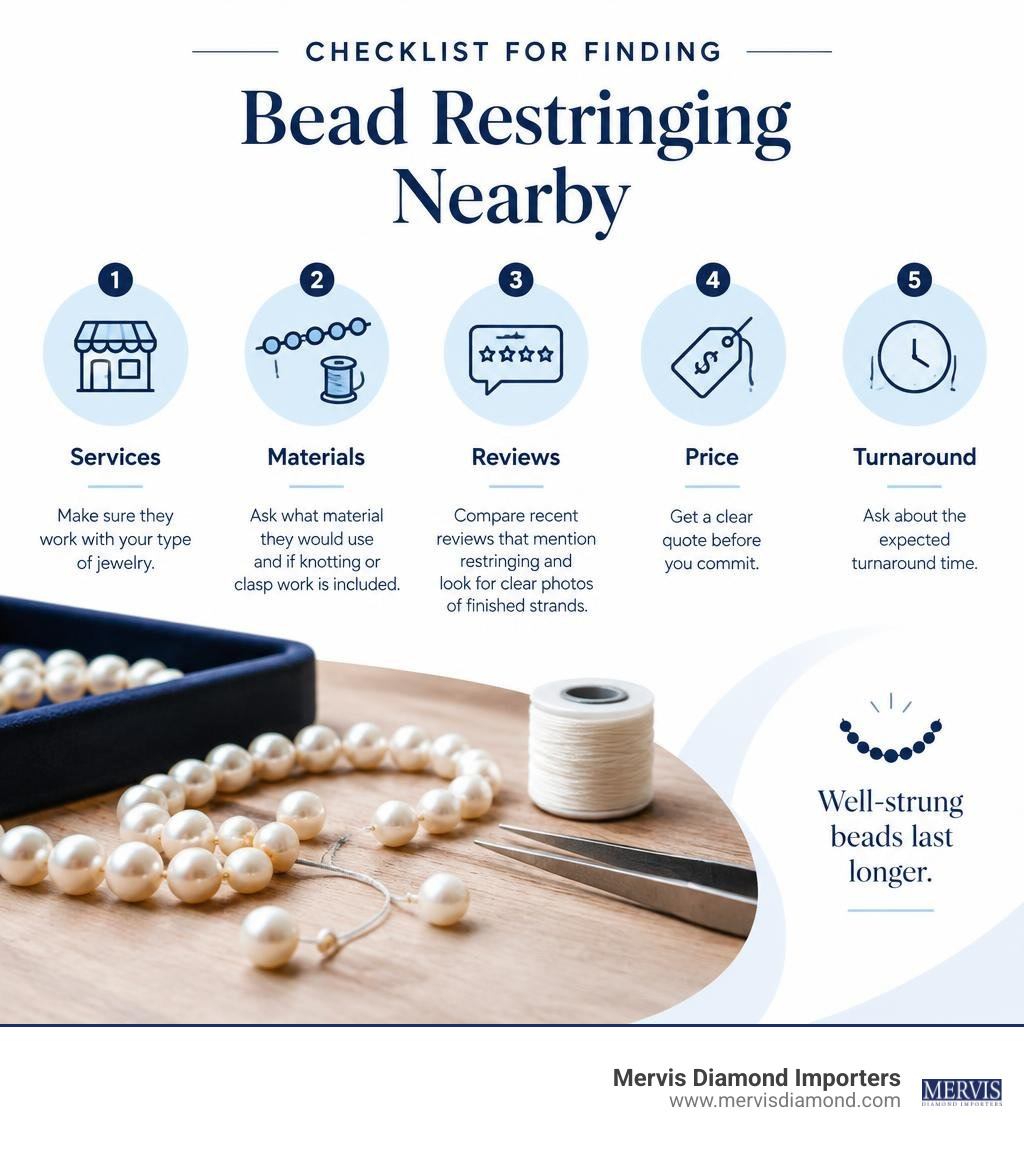
Start with local jewelry repair shops and bead stores. Ask whether they work with your type of jewelry, what material they would use, and whether the quote includes knotting or clasp work. Compare recent reviews that mention restringing, clear photos of finished strands, the total price, and the expected turnaround time.
Restringing replaces worn thread, wire, elastic, or cord before a strand breaks or restores one that already has. If your pearls have loose knots or your bracelet has visible, fraying cord, it is time to have it checked. A quality bead restringing service near me should evaluate the strand in person, recommend the right cord for the bead weight, and explain exactly what the repair includes before you leave the piece.
I'm Morris Mervis, and I'll walk you through how to compare your options without guesswork.
Understanding Bead Restringing: Why and When Your Strands Need Care

Every time you slip on a classic pearl necklace, a vibrant gemstone strand, or a sentimental beaded bracelet, the internal cord absorbs movement, tension, and environmental elements. Bead restringing is the specialized craft of removing old, degraded stringing material and threading your gems onto a resilient, fresh foundation.
Natural fibers and synthetic threads are constantly exposed to body oils, perspiration, cosmetics, and everyday friction. Over time, these substances penetrate deep into the fibers, causing them to dry out, stretch, and eventually snap. When natural pearls or heavy mineral beads rub directly against one another without protective barriers, their smooth outer surfaces can chip or erode. Whether you have an everyday stretch bracelet or an heirloom pearl and bead restringing project, keeping your strands strong ensures you never lose a single precious piece.
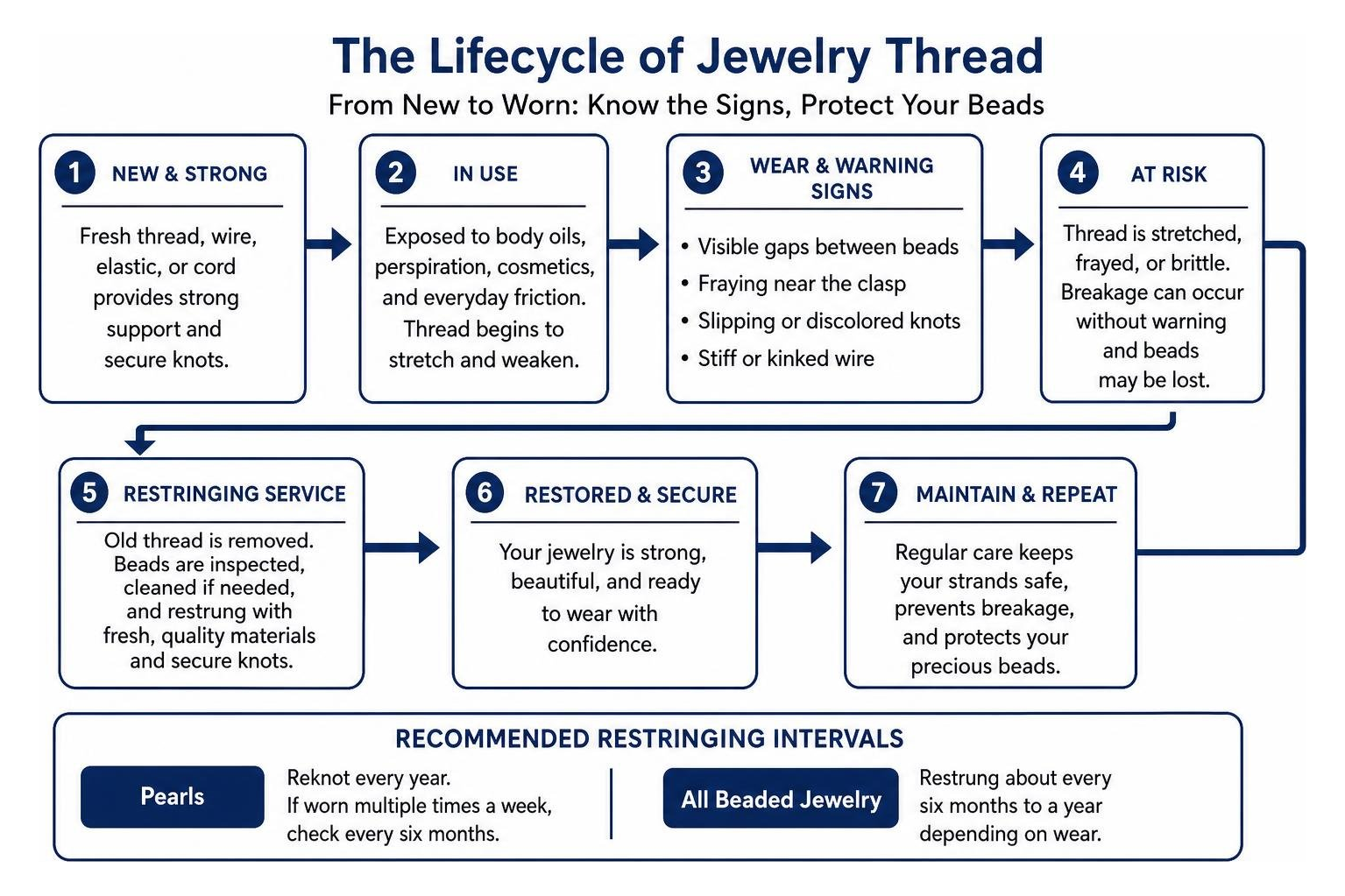
Signs of Stretched or Frayed Threads
You do not have to wait for an accidental snap to know your jewelry needs attention. Watch for these distinct warning signs:
- Visible Gaps: If you hold your necklace vertically and notice excess space between beads, the core cord has stretched beyond its elastic limit.
- Fraying Near the Clasp: The connection points near jump rings and clasps endure the highest friction. Look for tiny loose fibers or thinning threads.
- Slipping or Discolored Knots: If the individual knots between your pearls look dirty, flattened, or loose enough that beads slide back and forth, the structural integrity is compromised.
- Stiff or Kinked Wire: For beaded jewelry strung on flexible wire, permanent kinks or visible nylon coating wear mean a break is imminent.
Recommended Restringing Frequency
How often should you bring your pieces in for maintenance? Industry guidelines from organizations like the Gemological Institute of America (GIA) recommend restringing frequently worn pearls annually to maintain their beauty and structural durability. If you wear your favorite strand multiple times a week, oils and perfumes build up faster, making a checkup every six months a smart precaution to prevent sudden breakage.
Heavy mineral beads like turquoise, onyx, and jade exert significant downward pressure on stringing materials. We recommend having your pearls or bead jewelry restrung about every six months to a year depending on your wearing habits, ensuring you never find yourself chasing rolling beads across the floor.
Materials, Styles, and Customization Options for Restrung Jewelry
Choosing the right cord and stringing technique ensures your jewelry drapes naturally and lasts for years. Different gems and beads require tailored foundations to look their best.
| Material | Best Used For | Durability | Flexibility & Drape | Knotting Style |
|---|---|---|---|---|
| Pure Silk Thread | Cultured & Natural Pearls, Fine Gemstone Beads | Moderate (degrades with moisture) | Superior, fluid drape | Individual hand knots between every bead |
| Braided Nylon / Cord | Heavy Gemstones, Daily-Wear Necklaces, Mala Beads | High (resists moisture and oils) | Excellent drape, low stretch | Hand knots or continuous stringing |
| Flexible Beading Wire | Sharp-edged Beads, Metal Spacers, Heavy Crystals | Very High (abrasion resistant) | Structured, clean curve | Unknotted, secured with crimps and wire protectors |
| Elastic / Stretch Cord | Everyday Gemstone Bracelets, Stretch Bands | Moderate (stretches out over time) | Stretches to slip over hand | Secured with hidden surgical knots and jeweler's adhesive |
| Leather & Deerskin | Casual Statement Pieces, Cuffs, Men's Beaded Cords | High tensile strength | Softens over time, rustic drape | Macrame sliding knots, wire wrapping, or crimp ends |
Comparing Thread Types: Silk, Nylon, Wire, and Leather
Pure silk remains the gold standard for luxury pearl stringing because of its softness and gentle texture against delicate drill holes. Silk stretches slightly to absorb movement, creating a graceful hang that synthetic lines struggle to duplicate.
Braided nylon provides extra tensile strength for heavier beads and malas, standing up to daily friction and humidity without weakening quickly.
Flexible multi-strand beading wire is ideal for glass, crystal, or raw stone beads with sharp edges around their drill holes that would quickly cut natural thread.
For quick-wear pieces, high-grade elastic cord makes everyday stretch bracelets simple to enjoy, while deerskin and leather cords lend an organic, contemporary finish to statement designs.
Restyling, Clasp Replacements, and Hand Knotting
Restringing is the perfect moment to modernize an older piece. Many clients choose to upgrade from traditional spring rings to user-friendly magnetic clasps, sturdy lobster claws, or elegant 14K gold safety clasps.
You can also explore custom adjustments such as:
- Graduated Stringing: Arranging beads symmetrically from smallest near the clasp to largest at the center.
- Length Adjustments: Converting a long opera-length strand into a choker and a matching bracelet set.
- Spacer Additions: Inserting gold, silver, or diamond spacers to refresh an antique layout.
- Hand Knotting: Placing a precise knot between every bead so that if the strand ever catches and breaks, only one single bead can slip off.
How to Choose the Best Bead Restringing Service Near Me
When searching for a bead restringing service near me, selecting an experienced bench jeweler or specialized restringing artisan makes all the difference in the final look and security of your piece.
Evaluating Local Repair Shops vs. Mail-In Services
Local walk-in jewelers offer immediate consultations where an expert evaluates your strand right in front of you, measures its exact length, and checks your clasp integrity.
Mail-in services can be convenient if you live in a remote area, though they require secure packaging, shipping labels, and transit time. Many trusted repair studios offer both options. If you need a fast turnaround for an upcoming event, finding a local studio that provides on-site jewelry repair for bracelets and necklaces allows you to inspect the work the moment it is finished.
Questions to Ask a Bead Restringing Service Near Me Before Dropping Off
Before leaving your precious jewelry, ask these essential questions:
- Do you complete restringing in-house? In-house stringing ensures your items never leave the custody of the shop.
- What cord material do you recommend for my specific stones? The jeweler should tailor their recommendation (silk, nylon, or wire) to the weight and sharpness of your beads.
- Is hand knotting included in the quote? Confirm whether individual knotting between every bead is factored into the base price or billed as an add-on.
- Do you inspect and clean the clasp and beads first? Professional services gently clean and check your mounting components before threading new cord.
- What is your repair guarantee? A reputable jeweler stands behind their knot tension and knot security.
Booking a Bead Restringing Service Near Me: Pricing and Turnaround
Standard turnaround for professional stringing typically runs 7 to 10 business days from the moment your piece is evaluated. Pricing is generally calculated per inch of the strand, with individual hand knotting commanding a modest premium over unknotted stringing.
Base pricing for basic stringing often starts around $15.00 to $20.00 for simple cords, while full hand-knotted single-strand bracelets up to 9 inches generally cost around $60. Complete hand-knotted necklaces up to 18 inches average $125, with longer lengths, heavy mineral beads, or intricate multi-strand pieces scaling upward accordingly.
Frequently Asked Questions About Bead and Pearl Restringing
How much does professional bead restringing typically cost?
Costs depend on the total strand length, the bead size, and whether hand knotting is required. A standard 16-to-18-inch pearl necklace with individual silk knots generally costs between $100 and $130. Simpler unknotted bead strands or stretch bracelet elastic replacements range from $15 to $40. Adding a new 14K gold clasp or replacing damaged spacer beads will add to the overall estimate.
How do I safely package and mail beaded jewelry for repair?
If you choose a mail-in repair option:
- Place the jewelry in a soft pouch, then seal it inside a secure zip-top bag to catch any loose beads if the strand is already broken.
- Wrap the bag in protective bubble wrap and place it inside a rigid cardboard shipping box (avoid thin paper envelopes).
- Use a trackable shipping carrier with signature confirmation and purchase insurance matching the replacement value of your piece.
What should I look for in jeweler reviews and before-and-after photos?
Examine portfolio photos for consistent, uniform knots that sit snugly against each pearl without puckering. The strand should lay flat and fluid without looking stiff, warped, or wavy. Look for client reviews that praise open communication, transparent pricing, and gentle handling of delicate heirlooms.
Conclusion
Regular restringing is an essential part of caring for fine beaded jewelry. By spotting fraying cords early, choosing the proper thread materials, and partnering with experienced jewelers across our Washington DC, Tysons, VA, and Rockville, MD showrooms, you can enjoy your favorite pearls and gemstones with complete confidence.
Alongside your classic beaded strands, keeping your rings, diamonds, and precious metals in pristine condition preserves their brilliance across generations. To keep your entire collection sparkling its brightest, explore our expert guide on how to care for a diamond ring and let our team assist you with all your fine jewelry maintenance needs.