

What You Should Realistically Pay for a 2-Carat Lab Diamond
Real-World Price Comparison: Lab-Grown vs. Natural Diamonds
A quality 2-carat lab-grown diamond realistically costs between $1,800 and $3,800 for the loose stone, depending on its color, clarity, and cut grade. That is a fraction of what a comparable natural diamond would cost, and the savings come directly from how the two stones are produced. When comparing mined gems to laboratory stones, the price contrast is stark. Because lab creation eliminates the immense costs of earth-moving equipment, geological exploration, and deep-earth mining, the consumer savings are substantial. Typically, buyers save anywhere from 60% to 85% on a lab-created stone compared to an earth-mined counterpart possessing identical optical, chemical, and physical attributes.
To understand the difference in practical terms, consider the retail landscape for loose diamonds across various standard weights:
| Carat Weight | Natural Diamond (F–G Color, VS1–VS2) | Lab-Grown Diamond (F–G Color, VS1–VS2) | Average Percentage Savings |
|---|---|---|---|
| 1.00 Carat | $4,000 – $6,000 | $600 – $1,500 | 75% – 85% |
| 1.50 Carats | $8,500 – $12,000 | $1,200 – $2,200 | 80% – 85% |
| 2.00 Carats | $16,000 – $24,000 | $1,800 – $3,800 | 80% – 88% |
| 2.50 Carats | $25,000 – $38,000 | $2,800 – $5,000 | 85% – 89% |
| 3.00 Carats | $40,000 – $65,000+ | $3,500 – $7,000 | 88% – 91% |
In wholesale trading, these differences are just as clear. While a natural 1-carat benchmark stone might trade on the wholesale exchange for approximately $4,500, a comparable lab-grown diamond trades near $800. As carat weights climb, natural diamond prices rise exponentially due to natural geological rarity. Lab-grown diamonds, by contrast, experience a much more linear, gentle price increase per carat, allowing shoppers to scale up in size without incurring exponential cost penalties.
For instance, an exquisite D VVS2 2.01 oval lab diamond delivers collection-grade color and clarity at a fraction of the cost required for a natural stone of that scale.
What a 2-Carat Lab Diamond Costs Today
A top-tier 2-carat lab-grown diamond generally ranges between $1,800 and $3,800 for the loose gem.
Where a stone lands within that spectrum depends entirely on fine grading criteria:
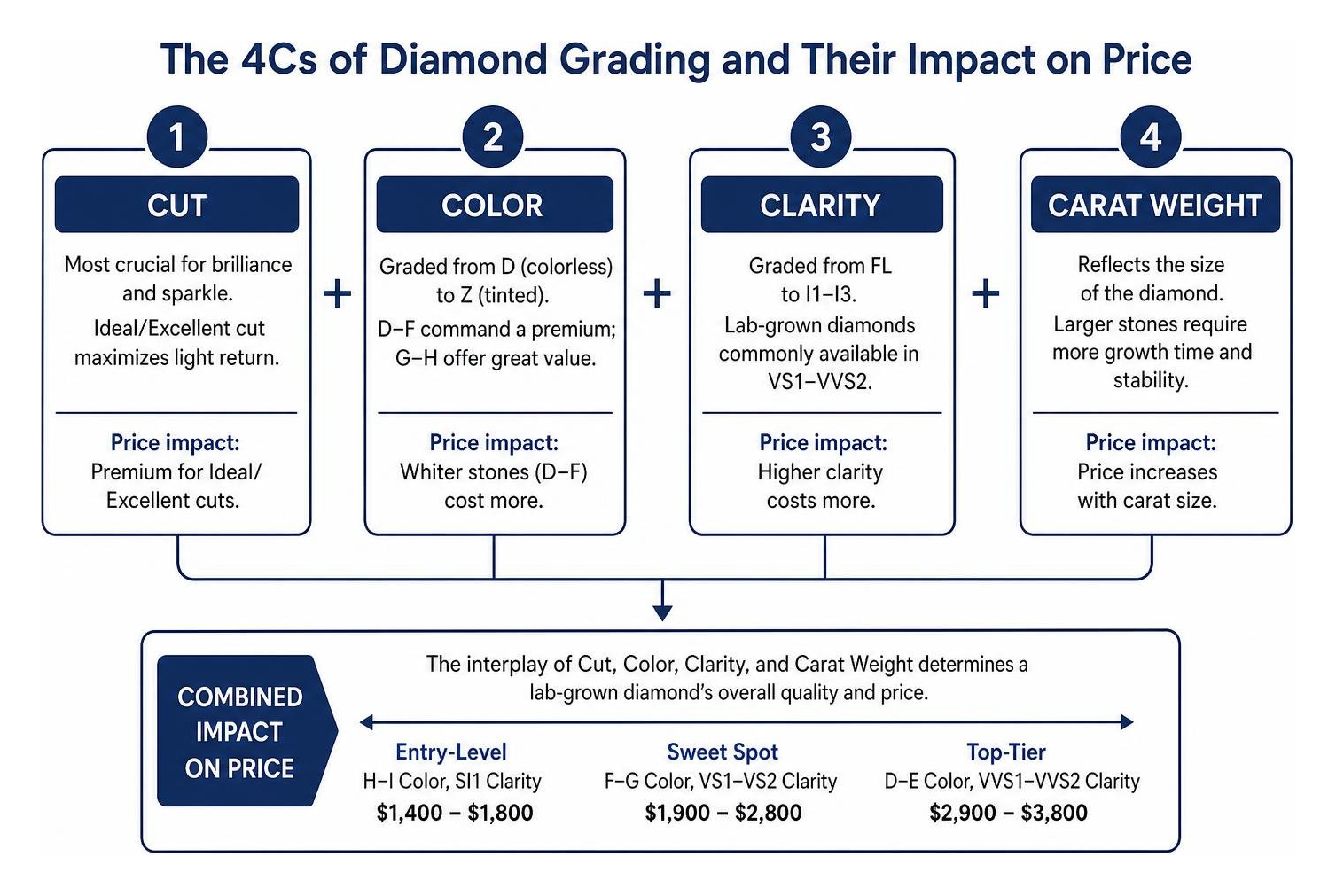
- Entry-Level Quality (H–I Color, SI1 Clarity): Around $1,400 to $1,800. These stones may exhibit minor tint or inclusions that require careful inspection to ensure they are eye-clean.
- The Sweet Spot (F–G Color, VS1–VS2 Clarity): Around $1,900 to $2,800. This tier provides complete visual purity and a bright white look without paying a premium for invisible perfection.
- Top-Tier Collection Grade (D–E Color, VVS1–VVS2 Clarity): Around $2,900 to $3,800. Stones such as an E VVS2 2.58 round lab diamond sit at the absolute pinnacle of optical clarity and whiteness.
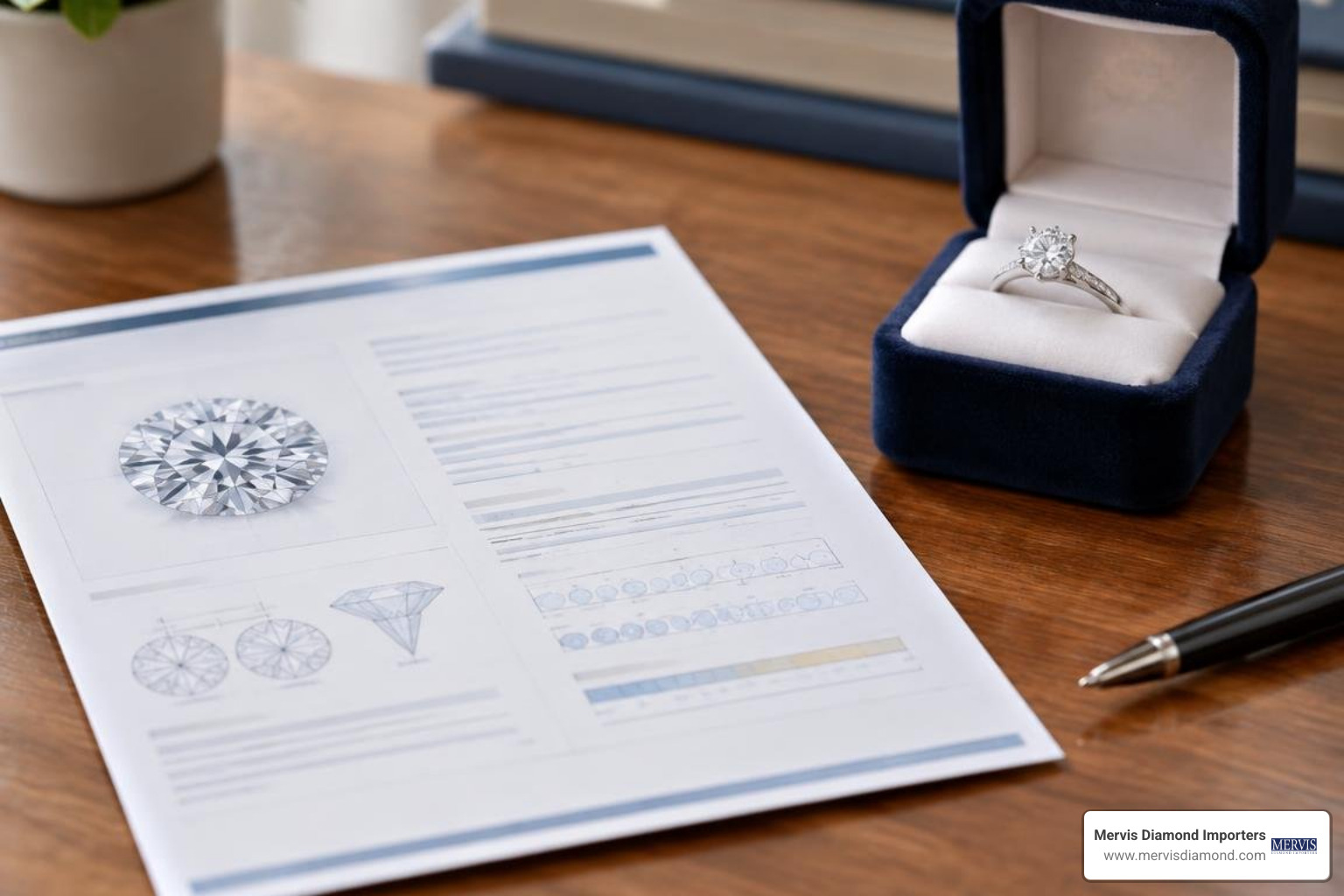
Independent gemological certification from respected laboratories such as IGI (International Gemological Institute) or the Gemological Institute of America (GIA) ensures that every quality claim is verified, giving you full transparency when choosing a stone.
Key Factors Influencing the Cost of Man Made Diamonds
Two primary modern methods are used to grow gem-grade diamonds:
- High Pressure High Temperature (HPHT): This technique mimics the natural crushing pressure and intense heat found miles beneath the Earth's mantle. HPHT uses multi-anvil presses operating at over 2,000°F and extreme atmospheres of pressure to crystallize dissolved carbon around a diamond seed.
- Chemical Vapor Deposition (CVD): A diamond seed plate is placed in a vacuum chamber filled with carbon-rich gases (such as methane and hydrogen). When heated with microwave plasma, pure carbon atoms settle layer by layer onto the seed, growing a rough diamond over several weeks.
Both processes yield authentic diamonds, though CVD allows for ultra-fine control over internal purity and crystal structure. Innovations across the wider ethical fine jewelry sector have helped streamline both methods, yielding cleaner rough crystals with significantly less energy consumption.
How the 4Cs Dictate the Cost of Man Made Diamonds
Just like earth-mined diamonds, every lab-grown gem is assessed by the universal 4Cs:
- Cut: This is the most crucial attribute. A masterfully cut diamond reflects incoming light through its crown facets, maximizing fire and brilliance. An "Ideal" or "Excellent" cut commands a modest premium, but it makes all the difference in everyday sparkle. An expertly proportioned stone like an E VS1 2.91 round diamond showcases how ideal symmetry creates remarkable light return.
- Color: Color is graded from D (completely colorless) to Z (noticeable yellow/brown tint). The premium for D–F colorless stones remains steady, but G and H colors often offer great value, presenting as bright white once set in precious metal.
- Clarity: Measured from Flawless (FL) down to Included (I1–I3). Because lab environments are carefully monitored, finding stones in the VS1–VVS2 range is widely accessible, ensuring no visible flaws distract from the beauty of the center gem.
- Carat Weight: As size increases, more machine run-time and growth stability are required. While the overall cost of man made diamonds increases with carat size, it does not spike exponentially the way mined diamonds do.
Retail Markups, Settings, and Brand Premiums
A finished piece of jewelry consists of both the loose center stone and the mounting that holds it. Your overall investment will reflect the precious metal and craftsmanship of the ring itself.
A classic 14k or 18k gold solitaire mounting generally adds $600 to $1,400 to your budget, while platinum or intricate pavé bands with accent diamonds can range from $1,200 to $3,000+. Unique bespoke styles, such as a lab-created diamond bezel set ring, require precision benchwork to fit the diamond's exact dimensions.
When budgeting, consider the whole piece:
- Center Stone: The primary cost driver.
- Setting & Metal: Chosen precious metal (platinum, yellow, white, or rose gold) plus accent stones.
- Retailer Experience: Working with our team at Mervis Diamond Importers means personal guidance across our showrooms in Tysons, VA, Rockville, MD, and Washington, DC, without high-pressure tactics or inflated brand surcharges.
Resale Value, Depreciation, and Long-Term Value
A common consideration when choosing jewelry is how well it holds financial value over time.
Mined diamonds traditionally retain a portion of their initial value on the secondary market, though they generally trade back into wholesale channels at a discount from original retail. Lab-grown diamonds, however, experience steep secondary-market depreciation. Because laboratories continue to expand manufacturing capacity, used lab diamonds carry minimal trade-in or liquidation value.
Lab-grown diamonds should be purchased for their personal meaning, beauty, and day-to-day enjoyment rather than as a financial asset. The real financial advantage is immediate: you keep thousands of dollars in your pocket on the day of purchase.
Always secure comprehensive jewelry insurance for your finished ring. Insurers write policies based on professional gemological appraisals to ensure full replacement coverage against accidental loss, damage, or theft.
Historical Trends: Why the Cost of Man Made Diamonds Has Dropped
Over the past decade, production costs for lab diamonds have fallen by approximately 80%. What once required weeks of specialized laboratory time can now be produced more reliably thanks to advanced reactor designs and refined plasma physics.
Between 2020 and 2024, retail prices fell roughly 30% to 40% year-over-year as global supply expanded. Today, prices have reached a much more consistent baseline, tied primarily to standard manufacturing overhead, precision cutting, gemological certification, and fine metal mountings.
Frequently Asked Questions About Lab Diamond Pricing
Why are 2-carat lab diamonds so much cheaper than natural ones?
Natural diamonds require millions of years under the earth, followed by deep excavation, complex supply chains, and limited natural supply. Lab diamonds are grown in advanced facilities using controlled energy and carbon. Because supply can scale to meet demand, production costs remain far lower, resulting in retail prices that are 60% to 85% less for identical physical and visual characteristics.
Do lab-grown diamonds hold resale value?
No, lab-grown diamonds generally do not hold meaningful financial resale value on the secondary market. As manufacturing technology improves and supply grows, older stones rarely appreciate. Buyers choose lab-grown diamonds for their visual appeal, size-to-budget ratio, and ethical appeal—not as an investment.
Is an appraisal necessary for a lab diamond?
Yes. An independent insurance appraisal confirms the documented characteristics of the stone (carat, cut, color, clarity) and provides a realistic replacement value for your insurance company. This ensures that in the event of loss or damage, your ring can be replaced with an equivalent stone and setting.
Conclusion
Choosing a 2-carat lab diamond lets you maximize your design budget without compromising on size, brilliance, or quality. By focusing on cut quality and selecting an eye-clean stone in the near-colorless or colorless range, you can create a stunning engagement ring that fits your financial goals comfortably.
If you are exploring your diamond options across the DC metropolitan area, visit our local showrooms in Tysons, VA, Rockville, MD, or downtown Washington, DC, to view certified loose stones in person with our experienced, family-owned team.