

Wear Your Memorial Rings in Comfort and Style
Do Widows Wear Wedding Rings on the Right Hand?
Yes, many widows move a wedding ring to the right ring finger after a spouse dies. It can honor the marriage while marking a change in marital status. But it is not a rule, and a right-hand ring does not carry one universal meaning.
A widow may also keep her ring on the left hand, wear it on a necklace, combine it with a memorial piece, redesign it, or put it away safely. The best choice is the one that brings comfort - not the one others expect.
Culture and faith can shape ring customs, too. For example, some Orthodox Christian traditions use the right hand for wedding rings throughout marriage, while many people in the United States associate the left ring finger with marriage. That means ring placement alone cannot always explain a person's story.
I am Morris Mervis, and this guide will help you consider respectful, comfortable ways to wear or preserve a meaningful ring after loss.
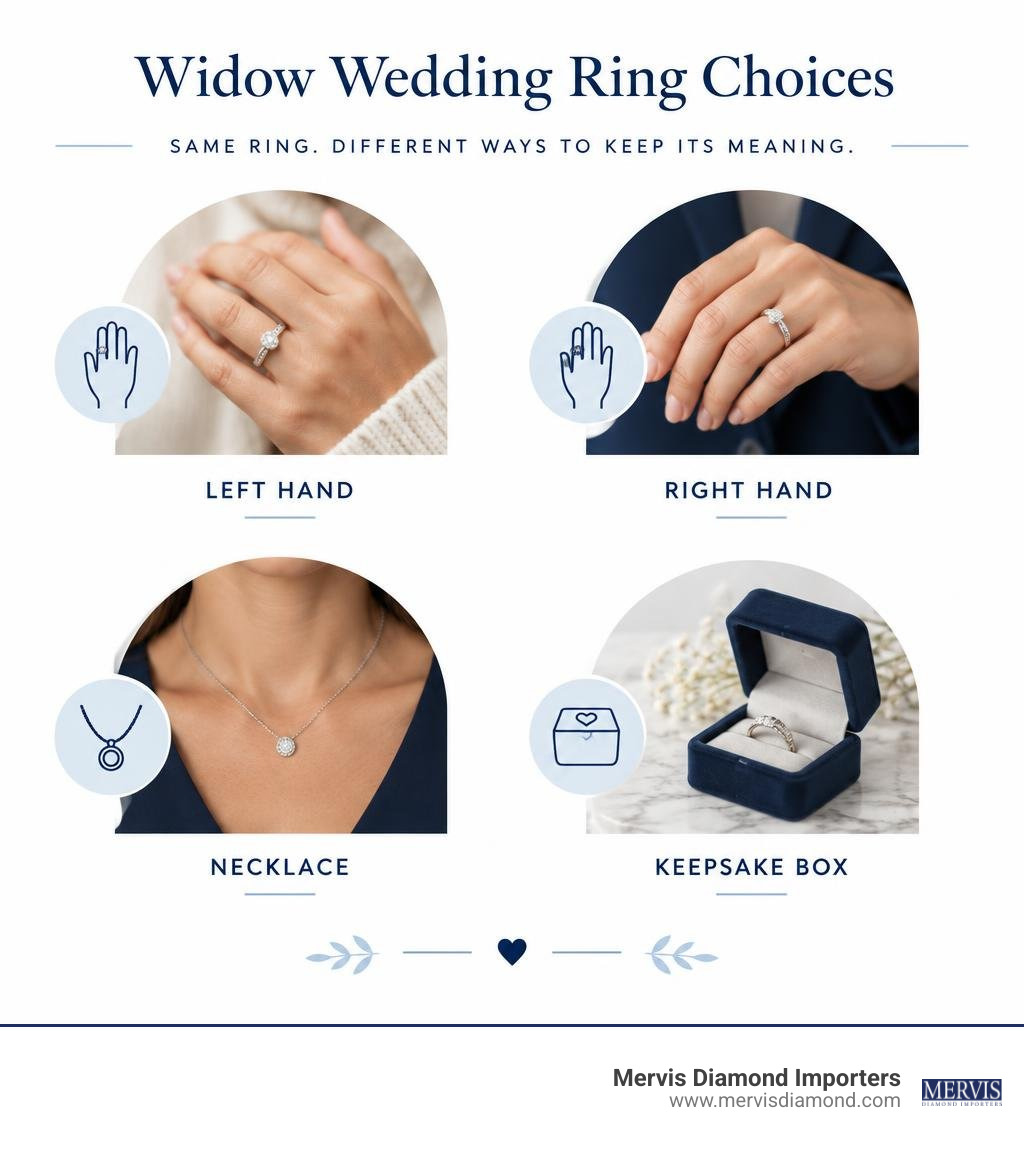
Why Do Widows Wear Wedding Rings on Right Hand?
Losing a life partner brings profound emotional shifts, and physical symbols often take on new layers of meaning. For decades, you may have worn your rings without giving them a second thought. When circumstances change, deciding how to wear wedding rings becomes an intentional choice rather than a routine habit.
Many people ask: do widows wear wedding rings on right hand fingers out of tradition or personal preference? The answer is often a blend of both. Shifting a band to the right hand serves as a visual bridge between past and present. It allows a person to honor enduring love while privately or publicly signaling that their life circumstances have changed.
For some, leaving the ring on the left hand feels like denying the loss, while taking it off completely feels far too sudden. Moving it to the right hand acts as a comforting transition ritual—a middle ground where memories are treasured without presenting oneself as currently married in day-to-day interactions.
| Placement Choice | What It Commonly Signifies | Emotional & Practical Purpose |
|---|---|---|
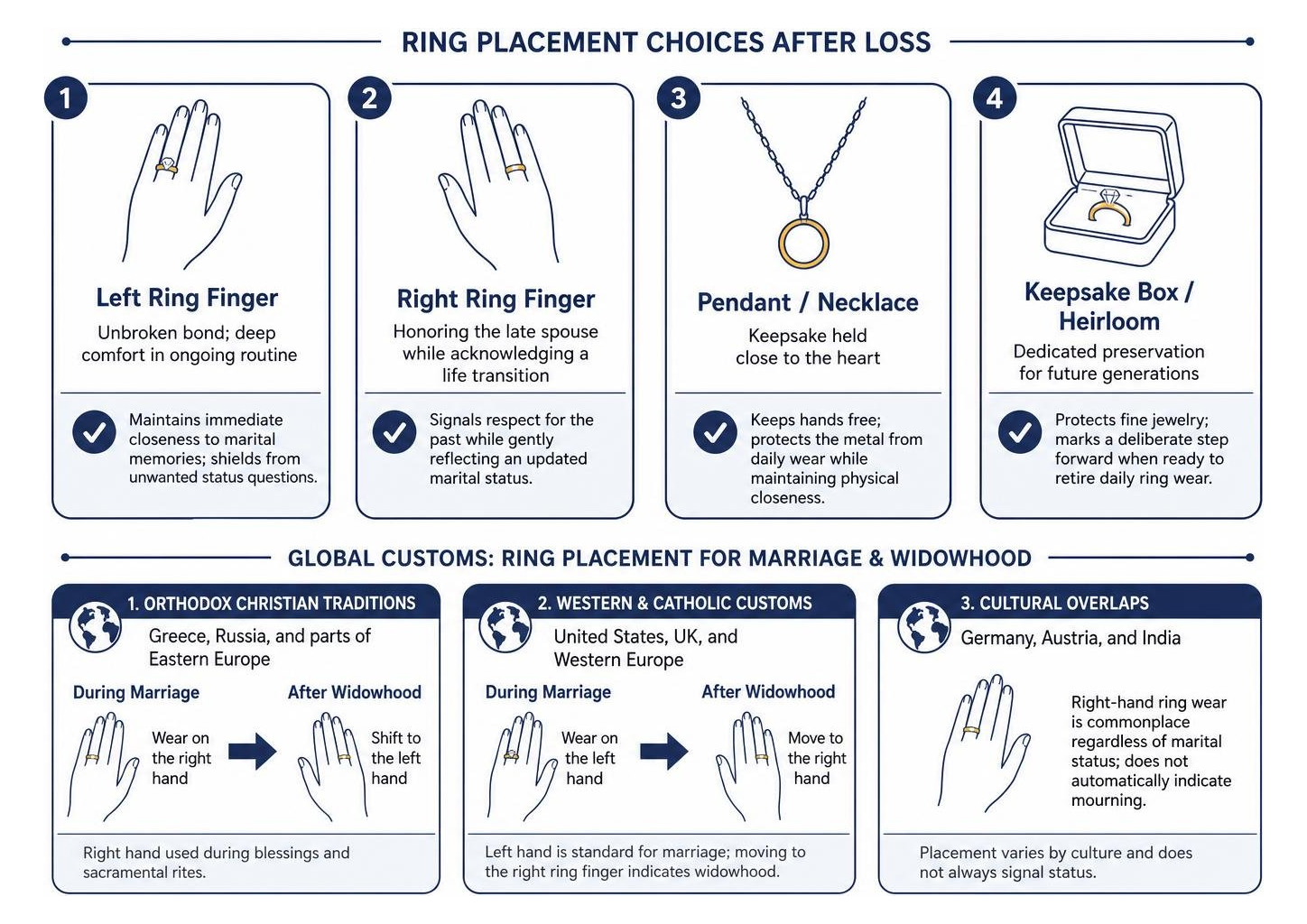
| Left Ring Finger | Unbroken bond; deep comfort in ongoing routine | Maintains immediate closeness to marital memories; shields from unwanted status questions. |
| Right Ring Finger | Honoring the late spouse while acknowledging a life transition | Signals respect for the past while gently reflecting an updated marital status. |
| Pendant / Necklace | Keepsake held close to the heart | Keeps hands free; protects the metal from daily wear while maintaining physical closeness. |
| Keepsake Box / Heirloom | Dedicated preservation for future generations | Protects fine jewelry; marks a deliberate step forward when ready to retire daily ring wear. |
Cultural Traditions: Do Widows Wear Wedding Rings on Right Hand Globally?
Ring placement is heavily influenced by geography, heritage, and religious faith. In many Western cultures, tradition stems from the ancient Roman belief in the vena amoris—the "vein of love"—which was thought to run directly from the fourth finger of the left hand to the heart. Understanding why wedding rings worn 4th finger left hand became standard practice helps explain why shifting hands feels so symbolic in Western societies.
However, global customs vary widely:
- Orthodox Christian Traditions: In Greece, Russia, and parts of Eastern Europe, spouses traditionally wear wedding bands on the right hand throughout marriage because the right hand is used during blessings and sacramental rites. When exploring public norms and religious rules on widow rings, widows in these communities often shift their ring to the left hand to mark their bereavement.
- Western & Catholic Customs: In the United States, the UK, and Western Europe, the left hand is standard for marriage. Moving the band to the right ring finger is the conventional way to indicate widowhood.
- Cultural Overlaps: In countries like Germany, Austria, and India, right-hand ring wear is commonplace regardless of marital status, meaning right-hand placement does not automatically indicate mourning.
Emotional Significance: Why Do Widows Wear Wedding Rings on Right Hand After Loss?
Beyond geography and dogma, emotional comfort is the primary motivator. Moving a band over to the right ring finger gives grief a physical resting place. Many widows share that wearing their ring on the right hand allows them to look down, see the sparkle of their diamond or gold, and feel grounded by decades of shared memories without carrying the weight of public misunderstanding.
As outlined in various guides detailing practical options after a spouse's death, this shift can provide immense personal closure. It honors a lifelong bond while giving the wearer permission to move forward at their own pace.
Meaningful Ways to Wear and Honor Wedding Rings After Loss
There is no single formula for handling your jewelry after bereavement. Whether you prefer subtle adjustments, practical jewelry accessories, or a bespoke redesign, your rings can continue bringing you solace.
Transferring the Band to the Right Hand
Switching your rings from the left ring finger to the right is the most traditional step. However, human hands are rarely identical. For most right-dominant individuals, the right ring finger is a half-size to a full size larger than the left.
If you are transitioning a complete bridal set, you might explore how to wear a wedding ring set comfortably on the opposite hand. Some widows choose to wear both their original wedding band and their late spouse's band stacked together on the right hand. If you need a complementary piece to balance your set or want to wear a standalone memorial band like our classic Wedding Band 16, professional resizing ensures your heirloom sits securely without pinching or slipping.
Wearing Bands on Necklaces, Cords, or Mourning Sets
If wearing a ring on your fingers feels uncomfortable or interferes with daily work, moving the band onto a necklace keeps your memories close to your heart.
Popular memorial methods include:
- Sturdy Precious Metal Chains: Platinum, yellow gold, or white gold chains that securely support the weight of one or two rings.
- Ring Holder Pendants: Specialized geometric or clasp pendants that allow you to slip rings on and off without unclasping the chain.
- Leather or Silk Cords: A minimalist, understated way to wear a late husband's wider band comfortably.
- Mourning Rings: Drawing inspiration from historic memorial jewelry practices, some choose to stack a thin black enamel band alongside their gold or platinum ring to represent their period of mourning.
Redesigning Rings into Memorial Keepsakes
Redesigning your wedding jewelry is a creative, therapeutic way to honor your past while crafting a piece tailored for your current life. Custom jewelry design allows you to repurpose existing stones into fresh heirlooms.
You might choose to:
- Combine diamonds from your bridal set and your late spouse’s band into a single right-hand cocktail ring.
- Review how to wear your engagement ring and wedding ring as separate pieces, wearing the engagement diamond on a right-hand band and resting the wedding band in a memory box.
- Add meaningful accent stones, such as your late spouse's birthstone, around your original center diamond.
- Transform your center diamond into a solitaire pendant necklace or a custom memorial bracelet that can eventually become a family heirloom for children or grandchildren.
Emotional Timelines: When to Move or Remove Your Band
One of the most frequent questions we hear in our showrooms across Washington DC, Tysons VA, and Rockville MD is: "When is the right time to change how I wear my ring?"
The short answer is simple: whenever you are ready.
Navigating Grief Without Rigid Rules
Grief does not follow an itinerary. In the early stages of loss—often called "widow fog"—routine tasks can feel overwhelming. You might find yourself removing your rings one day, putting them back on the next, and trying them on a necklace the following week. That emotional fluctuation is entirely natural.
Some individuals move their ring after a few months; others continue wearing their full bridal set on the left hand for thirty, forty, or fifty years. Neither choice is better or more respectful than the other. You owe no explanation to outside observers for the timeline that brings you peace.
Addressing Social Expectations and Future Dating
Navigating society while grieving can sometimes feel intrusive. Wearing a ring on your left hand signals to strangers that you are married, which can be a comforting shield if you do not wish to discuss your personal life.
Conversely, moving a band to the right hand or removing it altogether can be a gentle way of signaling personal readiness to engage with new social chapters, make new connections, or eventually date again. If someone asks about your rings, you are free to share as much or as little of your story as you wish.
Frequently Asked Questions About Widow Ring Traditions
On which finger does a widower traditionally wear a ring?
While widows frequently use the right ring finger, widowers traditionally move their band to the left little finger (pinky finger) or wear it on a necklace chain. However, many men also choose the right ring finger or preserve the ring inside a keepsake box.
Is it disrespectful to take off a wedding ring after a spouse passes?
No, it is never disrespectful. Removing a wedding ring is a personal milestone that reflects how you process change, not the depth of your love. Your relationship and memories remain intact regardless of whether you wear metal and gemstones on your hands.
What is the difference between a mourning ring and a right-hand band?
A right-hand band is typically your original wedding band simply moved to the opposite hand. A mourning ring is a distinct piece of commemorative jewelry—a tradition popular since Victorian times—often featuring black enamel, onyx, or personalized memorial engravings designed specifically to honor someone who has passed.
Honoring Your Journey with Care and Expertise
Your wedding rings represent a lifetime of dedication, joy, and shared stories. Whether you decide to move your original band to your right hand, wear your spouse’s ring on a chain, or design a custom memorial piece, the right choice is the one that brings you quiet comfort.
At Mervis Diamond Importers, our team across our Tysons, Rockville, and Washington DC showrooms provides a warm, respectful, and pressure-free environment to assist you. Whether you need a simple sizing adjustment for your right hand, a custom necklace mount, or guidance on how to wear your engagement and wedding rings during life transitions, we are here to help preserve your most cherished memories with fine craftsmanship and care.