

The Smart Way to Wear a Pear-Shaped Ring with a Wedding Band
How to Wear a Pear-Shaped Ring with a Wedding Band
Wear your wedding band closest to your palm, with your pear-shaped engagement ring above it. That is the traditional order. Try the pear's point toward your fingernail for an elongated look, but turn it toward your knuckle if you prefer. If a straight band leaves an awkward gap, try a curved or V-shaped band that follows the ring's outline. Make sure the diamond's pointed tip is protected by a prong.
I'm Morris Mervis, and I'll help you find a pairing that looks balanced and feels good to wear. A pear-shaped diamond is one of the most distinctive engagement ring choices because its teardrop silhouette combines the fire of a round brilliant with the sleek taper of a marquise. That same asymmetry, however, means the way you stack it with a wedding band deserves a little extra thought. The right pairing can make your center stone look larger, keep the set from spinning on your finger, and protect the diamond's vulnerable tip during everyday wear.
The Traditional Ring Order: How to Wear a Pear Shaped Ring with Wedding Band
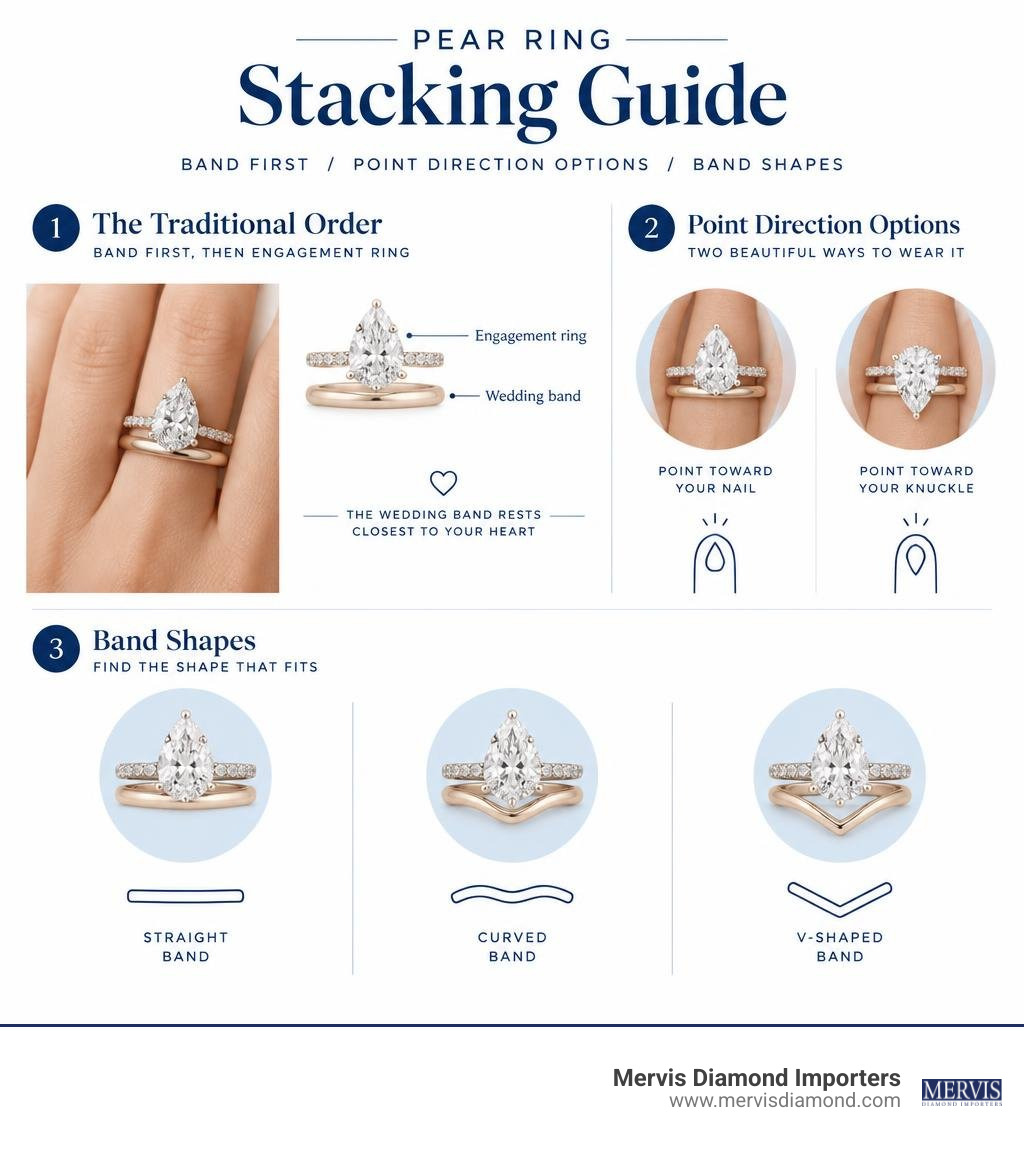
When deciding how to wear a pear shaped ring with wedding band sets, the question of sequence often comes up first. Rooted in centuries-old customs, etiquette suggests that your wedding band sits at the base of your left ring finger, resting closest to your heart. Your engagement ring then sits directly above it, toward your fingernail.
According to traditional etiquette guidance on wedding ring order, this practice symbolizes that the wedding band is the permanent foundation of the marriage, while the engagement ring represents the promise leading up to it.
While tradition provides a helpful starting point, personal comfort and individual ring proportions often shape the final decision. Pear-shaped diamonds feature an asymmetrical silhouette, meaning their stacking dynamics differ from standard round or cushion cuts. The rounded base and tapered point create two very different contact zones against a wedding band, so the order you choose can affect how the set sits, spins, and wears throughout the day.
Step-by-Step Stacking for Your Wedding Day
To maintain this classic arrangement during your ceremony without awkward ring-fumbling at the altar, follow these simple steps:
- Before the Ceremony: Move your pear-shaped engagement ring over to your right ring finger. This leaves your left hand open and ready.
- During the Exchange: Your partner slides the wedding band smoothly onto your bare left ring finger.
- After the Vows: During the reception or right after signing the registry, slide your engagement ring back onto your left hand, placing it on top of your wedding band.
This sequence keeps the wedding band in its traditional position closest to your heart while giving you a clean, uncluttered left hand for the ring exchange. If you are wearing a curved or chevron band, take a moment after the ceremony to align the contour with your pear diamond so the two rings nest together rather than pressing against each other at an awkward angle.
Diamond Orientation: Pointing Toward Fingernail vs. Knuckle
One of the most distinct qualities of a pear-shaped diamond is its tapered teardrop shape. This unique cut combines the brilliance of a round cut with the sleek tapering of a marquise cut. However, this distinct outline raises an everyday styling question: which direction should the point face?
Pointing Toward the Fingernail (North)
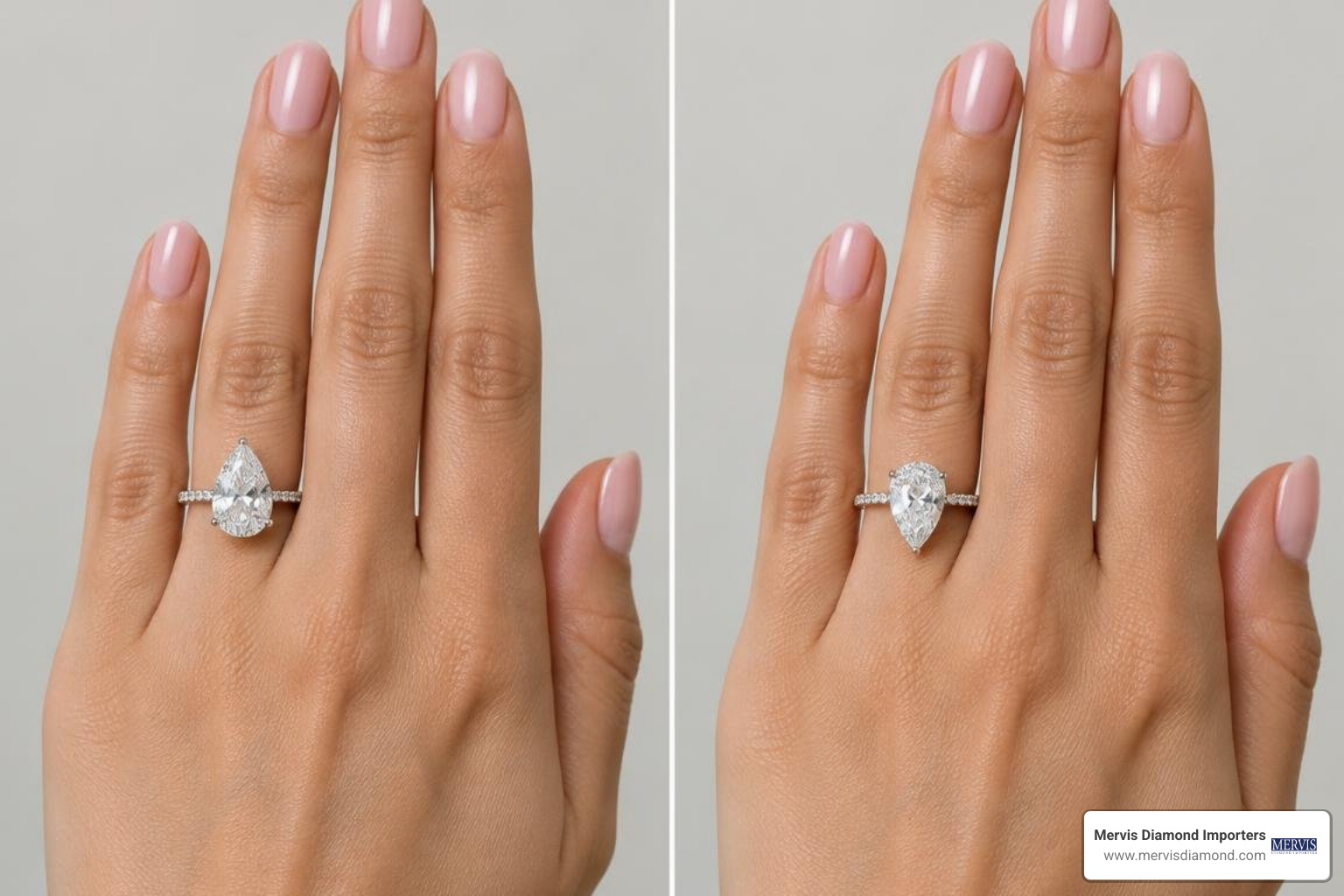
Orienting the pointed end upward toward your fingernail is the most popular choice. This alignment creates an optical illusion that visually elongates your fingers, giving the hand a slender, graceful appearance. It also allows the rounded base of the stone to nestle naturally against contoured or curved bands.
Pointing Toward the Knuckle (South)
Wearing the point facing down toward your wrist offers an avant-garde, vintage-inspired look. In this position, the broader, rounded top faces outward, catching light across the finger while creating a distinctive focal point.
The Best Direction for How to Wear a Pear Shaped Ring with Wedding Band Comfortably
There is no strict rule dictating stone orientation. Comfort and daily movement play significant roles in choosing what works best for you:
- Daily Tasks: If you frequently reach into pockets, wear gloves, or work with fine textiles, you may find that pointing the tip toward your knuckle reduces snagging.
- Stacking Fit: If you select a chevron or V-shaped band, pointing the stone toward the fingernail allows the rounded base to sit neatly against a curved lower band, or allows the point to nestle inside a V-shaped band above it.
- Hand Anatomy: Try both orientations for a few days to see how each feels during regular activities before finalizing your ring stack.
Your finger length and knuckle shape can also influence the choice. Shorter fingers often benefit from the north-facing orientation because the vertical line of the pear's point draws the eye along the finger. Longer fingers can carry either direction well, and a south-facing point can add a subtle, unexpected detail that feels more contemporary. Whichever way you turn the stone, make sure the tip is protected by a V-prong so the orientation change does not expose it to extra impact.
Choosing the Best Wedding Band Styles for a Pear-Shaped Ring
Because pear-shaped diamonds are asymmetrical, standard straight bands can sometimes leave unintended gaps. Choosing the right band style ensures that your bridal stack looks harmonious and feels comfortable throughout the day.
| Band Style | Best Pairing Feature | Visual Effect | Fit Type |
|---|---|---|---|
| Curved / Contour | Matches the rounded base | Soft, seamless, organic | Flush fit |
| Chevron / V-Shaped | Nests around pointed tip or base | Geometric, modern, framed | Snug fit |
| Straight Band | High-profile cathedral settings | Classic, intentional negative space | Floating fit |
| Open / Gap Band | Accommodates low-set baskets | Minimalist, balanced symmetry | Seamless bypass |
Curved and Contour Bands
Curved bands are specifically designed with a gentle arch that frames the rounded bottom of a pear diamond. Pairing your engagement ring with a classic curved diamond wedding band creates a unified look that eliminates unwanted gaps, keeping the set securely aligned on your finger.
Chevron and V-Shaped Bands
Chevron bands feature a sharp, pointed silhouette that complements the angular side of pear cuts. Selecting a V-shaped diamond wedding band offers flexible styling: it can hug the pointed tip of your diamond or frame the rounded base to create an elegant geometric pattern.
Straight and Open Bands
If you prefer a traditional aesthetic, a straight band paired with a high-set engagement ring allows the band to slide underneath the diamond basket for a snug stack. Alternatively, wearing a straight band with a low-set ring creates intentional negative space, giving your stack an airy, modern feel. You can explore a wide collection of versatile wedding bands to compare how different band profiles interact with your center stone.
Open or gap bands are another practical option for low-set pear engagement rings. These bands feature a small opening that lets the band sit flush against the shank on both sides of the center stone, bypassing the basket entirely. The result is a clean, symmetrical look that works especially well when you want the pear diamond to remain the undisputed focal point of the stack.
Setting and Prong Considerations for Daily Wear
A classic pear-shaped diamond typically features 58 facets and has a traditional length-to-width ratio between 1.45 and 1.75. Understanding the detailed anatomy of pear-shaped teardrop diamonds helps highlight why secure settings are essential for daily wear and stacking.
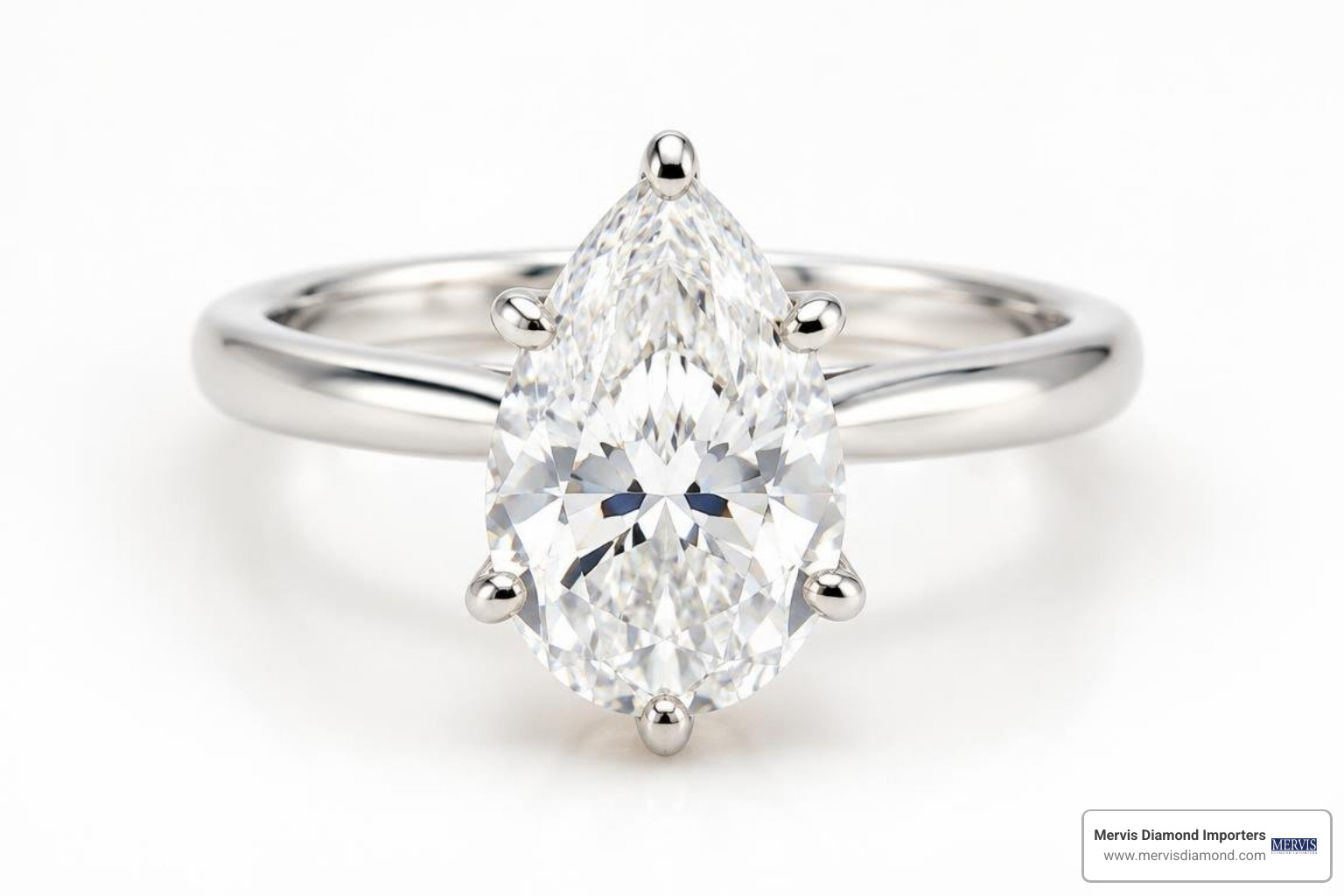
Because the pointed tip is the thinnest part of the diamond, it is the most vulnerable to accidental bumps or chipping.
Prong Protection for How to Wear a Pear Shaped Ring with Wedding Band Stacks
To keep your diamond secure and prevent damage when wearing it alongside a wedding band:
- V-Prong (Chevron Prong): A specialized V-shaped metal cap wraps around the delicate tip, shielding it from impacts and preventing it from catching on clothing.
- Six-Prong Setting: A well-crafted pear solitaire engagement ring typically utilizes six prongs—five supporting the rounded curves and shoulders, and a sixth protecting the tip.
- Basket Height: A medium-to-high basket setting provides clearance for wedding bands, protecting the prongs of both rings from rubbing against each other.
When two rings sit side by side, the metal surfaces can wear against each other over time. A basket with enough height keeps the engagement ring's prongs from grinding against the wedding band's metal, which is especially important for softer metals like 18-karat gold. If you notice the two rings shifting or rubbing, a thin spacer band can also help preserve the prongs without changing the look of your stack.
Frequently Asked Questions About Pear Rings and Wedding Bands
Does a pear-shaped engagement ring look better with the point facing up or down?
Most people prefer wearing the point facing up toward the fingernail because it creates an elongating effect on the hand. However, wearing the point facing down toward your wrist offers a unique silhouette and may feel more comfortable for some hand shapes.
Can a pear-shaped ring sit flush with a standard straight wedding band?
Yes, if the engagement ring features a high cathedral setting that elevates the center stone above the band. If the diamond sits in a low basket, pairing it with a curved, chevron, or open band will provide a flush fit without awkward gaps.
What is the most durable setting for a pear engagement ring in a stack?
A six-prong setting featuring a protective V-tip cap on the pointed end offers the highest durability. This configuration protects the vulnerable tip while securely anchoring the stone for everyday wear alongside other bands.
Should the wedding band or engagement ring go on first?
Traditionally, the wedding band goes on first, sitting closest to your palm and your heart. The engagement ring then sits above it toward your fingernail. During the ceremony, many brides move the engagement ring to the right hand so the band can be placed directly on the left ring finger first.
Can I wear a pear-shaped ring with a straight band without a gap?
It depends on the setting height. A high-profile cathedral or basket setting often leaves enough clearance for a straight band to slide underneath the diamond, creating a flush or near-flush fit. For low-set pear rings, a curved, chevron, or open band is usually the better choice if you want to avoid a visible gap.
Conclusion
Finding the ideal way to wear your pear-shaped ring with a wedding band comes down to balancing classic etiquette, everyday comfort, and personal style. Whether you choose a flush-fitting curved contour or an eye-catching chevron band, your stack should feel natural and secure.
If you are styling your ring stack or exploring complementary bands, read our expert advice on how to wear your engagement and wedding rings or visit us at our Mervis Diamond Importers showrooms in Washington DC, North Bethesda (Rockville, MD), and Tysons, VA. Our team is here to help you craft a timeless, comfortable stack you will love wearing every day.