

How to Buy a 3 Carat Diamond Ring Without Losing Your Mind
3 Carat Diamond Advice for Buying With Confidence
3 carat diamond advice starts with one simple rule: prioritize how the diamond looks in real life, not just the most impressive grades on a lab report.
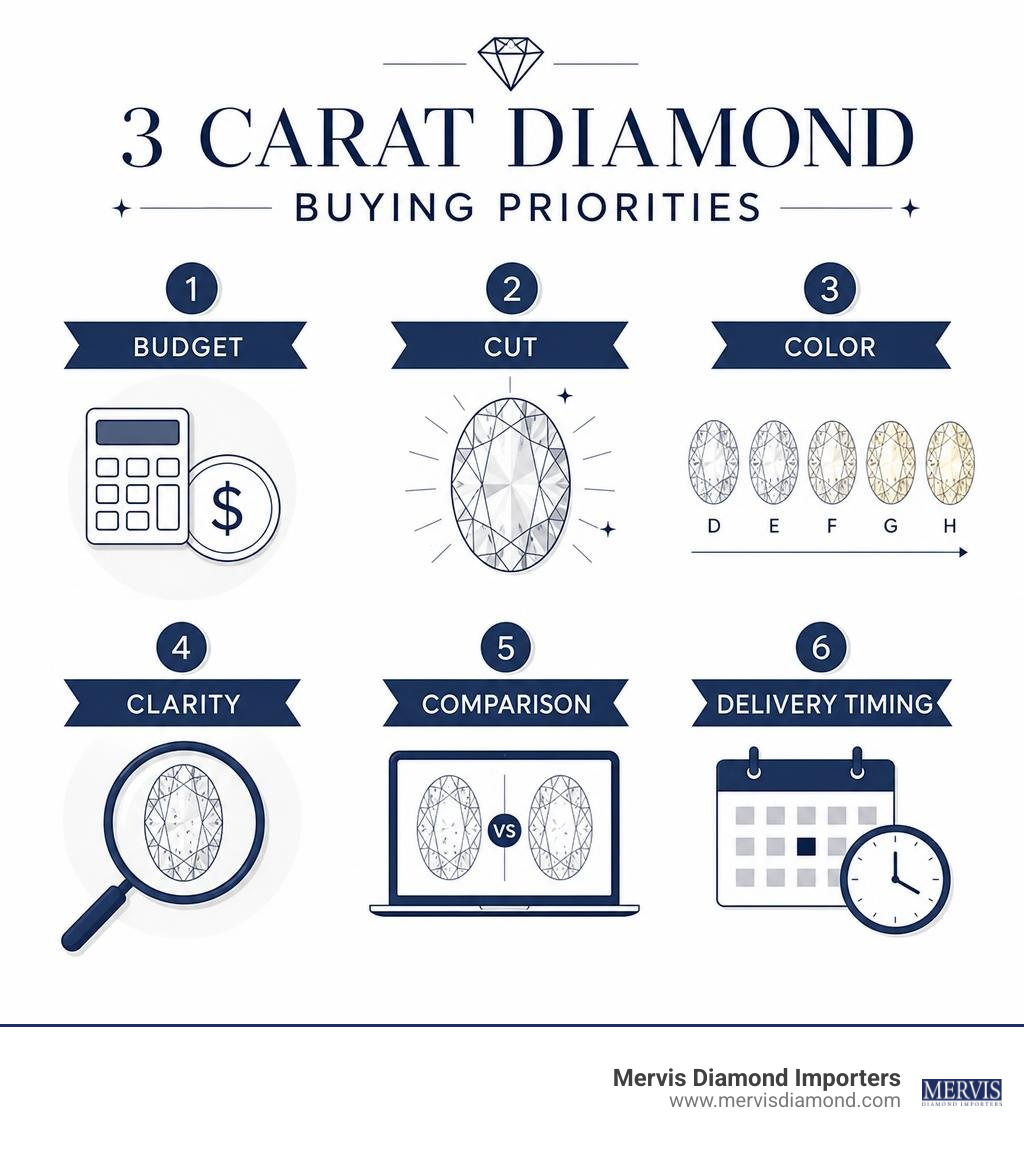
For a quick answer, use this checklist:
- Set a realistic budget. A high-quality 3 carat lab-grown oval center stone may cost roughly $600 to $1,500, while the finished ring price also depends on the setting and design.
- Put cut first. With oval diamonds, strong light return and a minimal dark "bow tie" matter more than chasing D color or flawless clarity.
- Buy smart grades. An eye-clean E or F color diamond with VS1, VVS2, or similar clarity can look the same as a D/IF stone once set, often for far less.
- Compare the actual stones. Videos, detailed images, and side-by-side viewing reveal sparkle and shadow patterns that a certificate cannot.
- Plan for timing. Imported loose diamonds can face tariff changes and customs delays, so do not leave the purchase until the last minute.
A 3 carat diamond makes a statement. It also makes small differences in cut, color, and setting easier to see. That is why this purchase can feel overwhelming: there are many grades, prices, sellers, and opinions, and not all of them help you get better value.
The good news is that you do not need to become a gemologist to choose well. You need a clear way to separate meaningful quality from expensive paper upgrades.
I am Morris Mervis, and I will walk you through the decisions that matter most before you invest in a 3 carat diamond ring.
Essential 3 Carat Diamond Advice: Understanding Realistic Pricing and Value
When you start shopping for a 3 carat diamond, the sheer variation in prices can make your head spin. One seller quotes $15,000 for a completed ring, while a loose stone of the exact same size and visual appeal appears elsewhere for a tiny fraction of that price. Understanding where these price differences come from is the single most effective way to protect your wallet while securing a spectacular diamond.
To get your footing, you must separate the center stone cost from the setting. Center stone pricing for lab-grown 3 carat diamonds has evolved rapidly. In 2026, realistic market benchmarks for a loose 3 carat lab-grown oval diamond range between $600 and $1,500 depending on specific cut quality, color, and clarity parameters. For example, high-performing stones like a 3.08 carat E color VVS2 clarity oval can be acquired around $857, while a 3.06 carat G color VS1 clarity oval center stone routinely sits near $971.

Why do completed ring quotes vary so wildly? Much of the inflation comes down to heavy retail markups, brand premiums, and bundled pricing strategies used by high-overhead e-commerce platforms. Knowing how to evaluate loose center stones individually gives you the power to secure maximum value. For a comprehensive look at setting costs, natural versus lab-grown pricing tiers, and design budgets, explore our guide on How Much is a 3 Carat Diamond Ring.
Expert 3 Carat Diamond Advice on Color and Clarity Trade-offs
A common mistake buyers make when purchasing a large center stone is paying for paper perfection. It is easy to fall into the trap of assuming that only a D color (completely colorless) and IF (Internally Flawless) clarity grading will produce a stunning ring. In reality, choosing D/IF on a 3 carat stone adds an enormous price premium for features that are completely invisible to the naked eye.
When looking at 3 carat diamond advice, smart budget allocation is all about prioritizing visual appearance over gemological paperwork.
- Color: The color scale runs from D down through Z. While a 3 carat stone has enough depth to show body color more easily than a 1 carat stone, E and F color grades still look brilliant white to the naked eye. An E or F color diamond set in platinum or white gold provides the exact same icy appearance as a D color stone, saving you significant capital without compromising beauty.
- Clarity: Flawlessness on paper sounds romantic, but diamonds graded VS1 or VVS2 are completely eye-clean. This means that even under scrutiny, you cannot see inclusions without gemological magnification.
By stepping back from D color and Internally Flawless clarity to E or F color paired with VVS2 or VS1 clarity, you preserve thousands of dollars while gaining a stone that is visually identical once mounted in a setting. To explore how light reflects through larger surface areas and how subtle tints show up in fancy shapes, read our detailed article on 3 Carat Diamond Color.
3 Carat Diamond Advice for Navigating Retail Markups vs Wholesale Value
Many online shoppers assume that massive, big-box online diamond sellers offer the best pricing simply because of their scale. However, industry analysis reveals that some giant internet retailers apply markups as high as 10x on lab-grown oval diamonds compared to actual wholesale market values. A customer might be quoted $15,000 for a complete ring package online when the underlying 3 carat diamond actually costs under $1,000 at true market value.

How can you protect yourself against inflated retail quotes?
- Unbundle the Purchase: Evaluate the loose diamond independently from the setting. Knowing the direct center stone market value prevents a retailer from hiding heavy markups inside a "package" price.
- Select Custom Benchwork: Purchase a hand-selected loose center stone and pair it with an expertly crafted custom setting from a trusted local jeweler. This guarantees superior ring construction and structural durability while keeping stone costs transparent.
- Inspect the Cut in Person: Massive online databases rely on automated inventory feeds and certificate numbers. They rarely evaluate visual cut execution, light leaks, or face-up brilliance—factors that truly define a diamond's beauty.
Mastering the 4 Cs: Cut Quality and the Oval Bow-Tie Effect
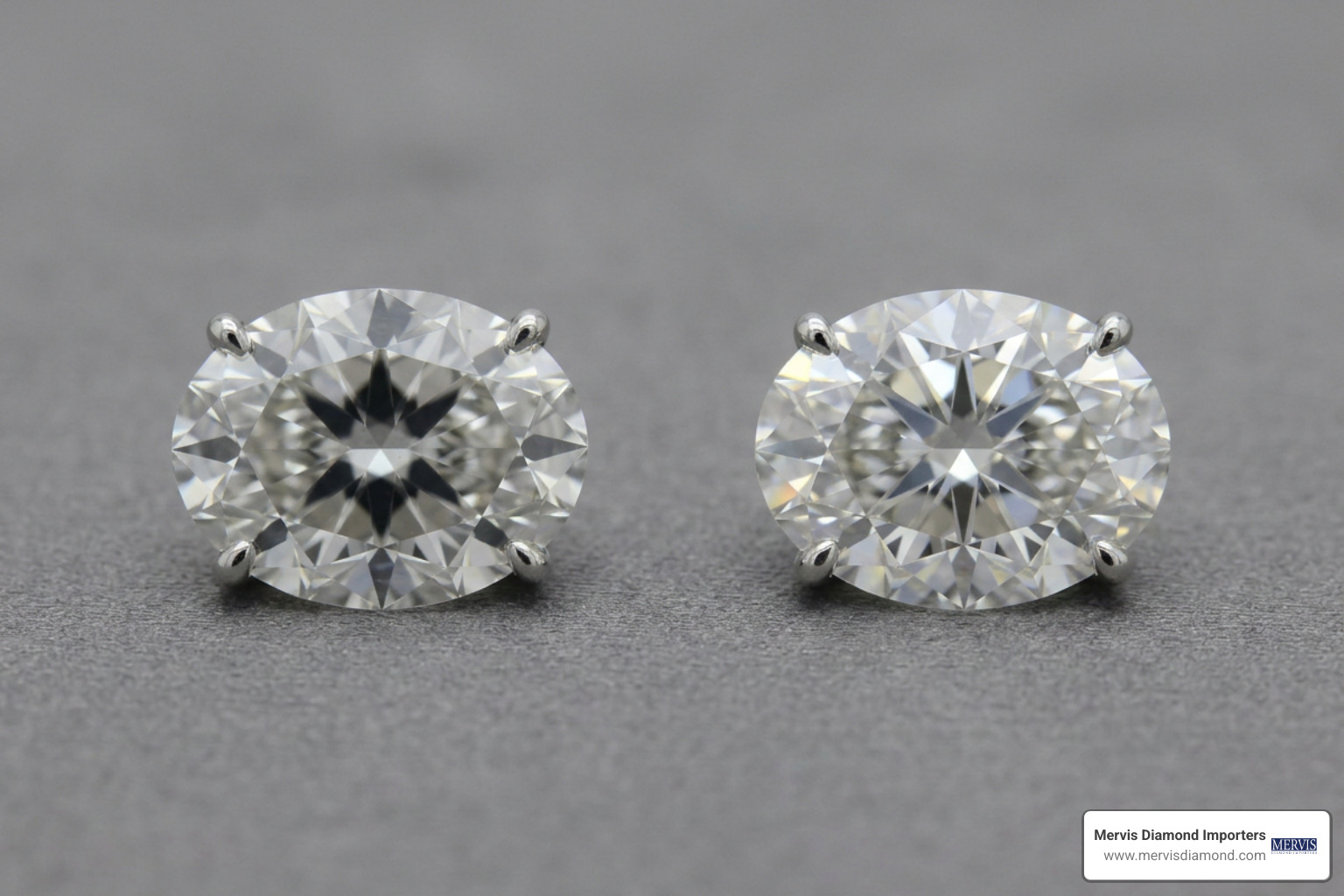
While carat weight dictates size and clarity/color dictate purity, cut quality determines sparkle. Cut is the absolute motor of a diamond’s brilliance. Unlike round brilliant diamonds, which receive an official cut grade from major gemological laboratories like the Gemological Institute of America (GIA) or IGI, fancy shapes—including oval cuts—do not have a standardized, industry-wide cut grade printed on their certificates.
Because there is no standard "Ideal" or "Excellent" cut grade assigned to ovals on paper, you must evaluate the diamond's physical geometry and light return yourself. The defining optical feature to watch for in oval cuts is the "bow-tie" effect.
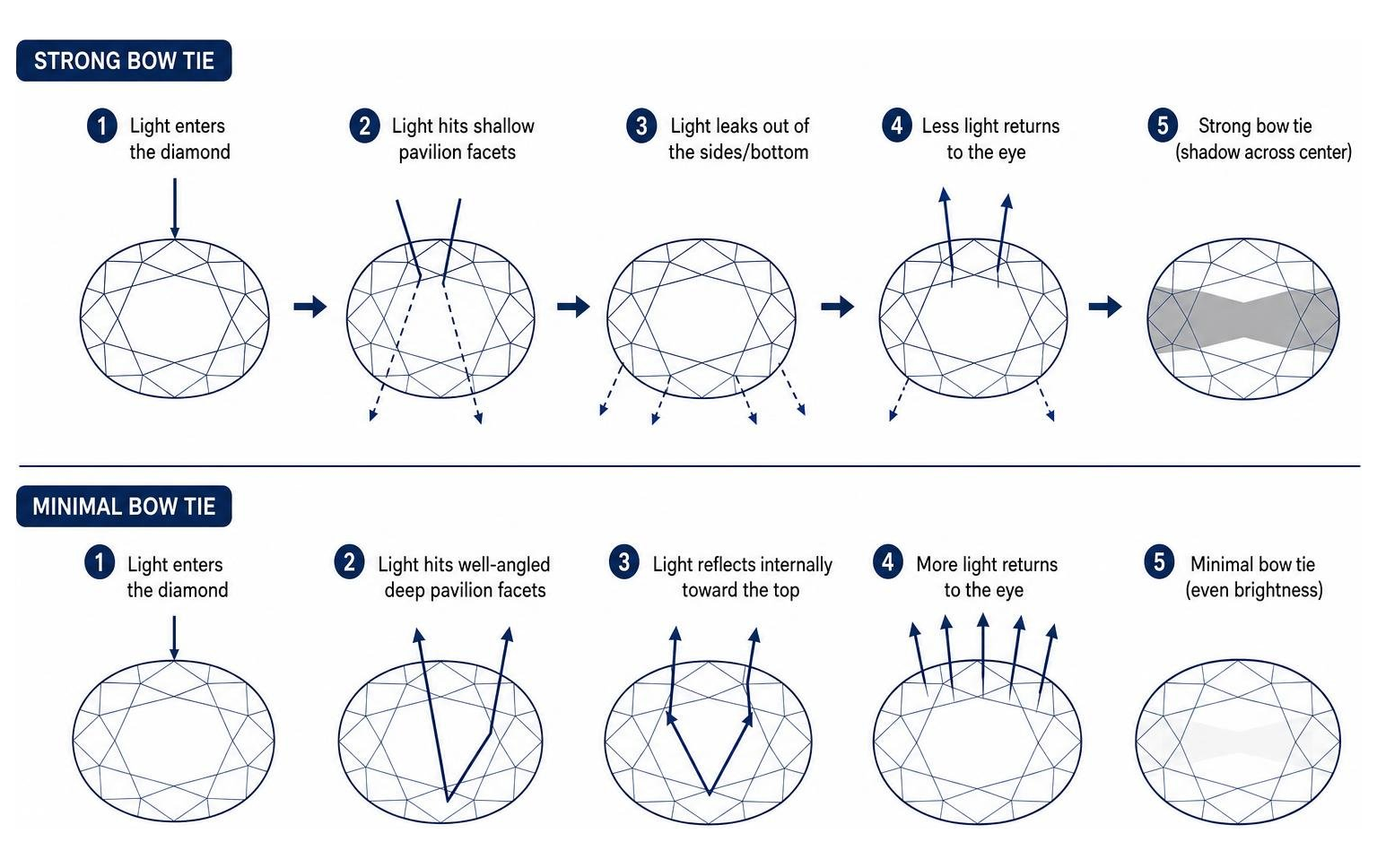
A bow tie is a dark, shadow-like bow-tie shape running horizontally across the center of an oval diamond. It occurs when light passing through the diamond is not reflected back up to the viewer's eye due to uneven facet angles. Every oval diamond possesses a slight degree of shadow across its center, but a well-cut oval minimizes this effect, producing consistent sparkle from end to end.
To understand how facet structure changes performance, consider the internal pavilion layout:
| Oval Facet Structure | Visual Characteristics | Light Performance | Bow-Tie Risk |
|---|---|---|---|
| Standard Oval Cut (8-Main Pavilion) | Broader reflection pattern, classic look | Moderate to high sparkle; dependent on depth % | Moderate to High shadow density across center |
| 4-Main Facet Pavilion | Pin-fire, crushed-ice or distinct linear flash optics | High light return across center width | Significantly reduced bow-tie effect |
When inspecting a 3 carat oval diamond, rely on high-resolution video analysis or Angular Spectrum Evaluation Tool (ASET) imagery to verify that light return is strong across the middle of the stone. Prioritizing cut brilliance over certificate grades ensures your 3 carat diamond captivates from every angle.
Sourcing and Logistics: Tariffs, Customs Delays, and Side-by-Side Evaluation
Finding the right diamond is only half the battle; getting it into your hands safely and on schedule is the other. In 2026, international trade policies, changing import regulations, and shifting tariff structures have introduced unexpected friction into the diamond supply chain.
When loose lab-grown diamonds are ordered directly from international overseas cutting houses, they frequently encounter customs backlogs. What used to take a few days can now face 3-4 week delays at entry ports. If you are shopping on a tight engagement deadline, ordering an unverified stone directly from an international vendor can jeopardize your proposal plans.
Working with a premier local jeweler eliminates these logistical risks. At Mervis Diamond Importers, we manage import logistics, inspect every loose diamond in our hands, and maintain an accessible local inventory in our showrooms across Tysons, VA, Rockville, MD, and Washington, DC.
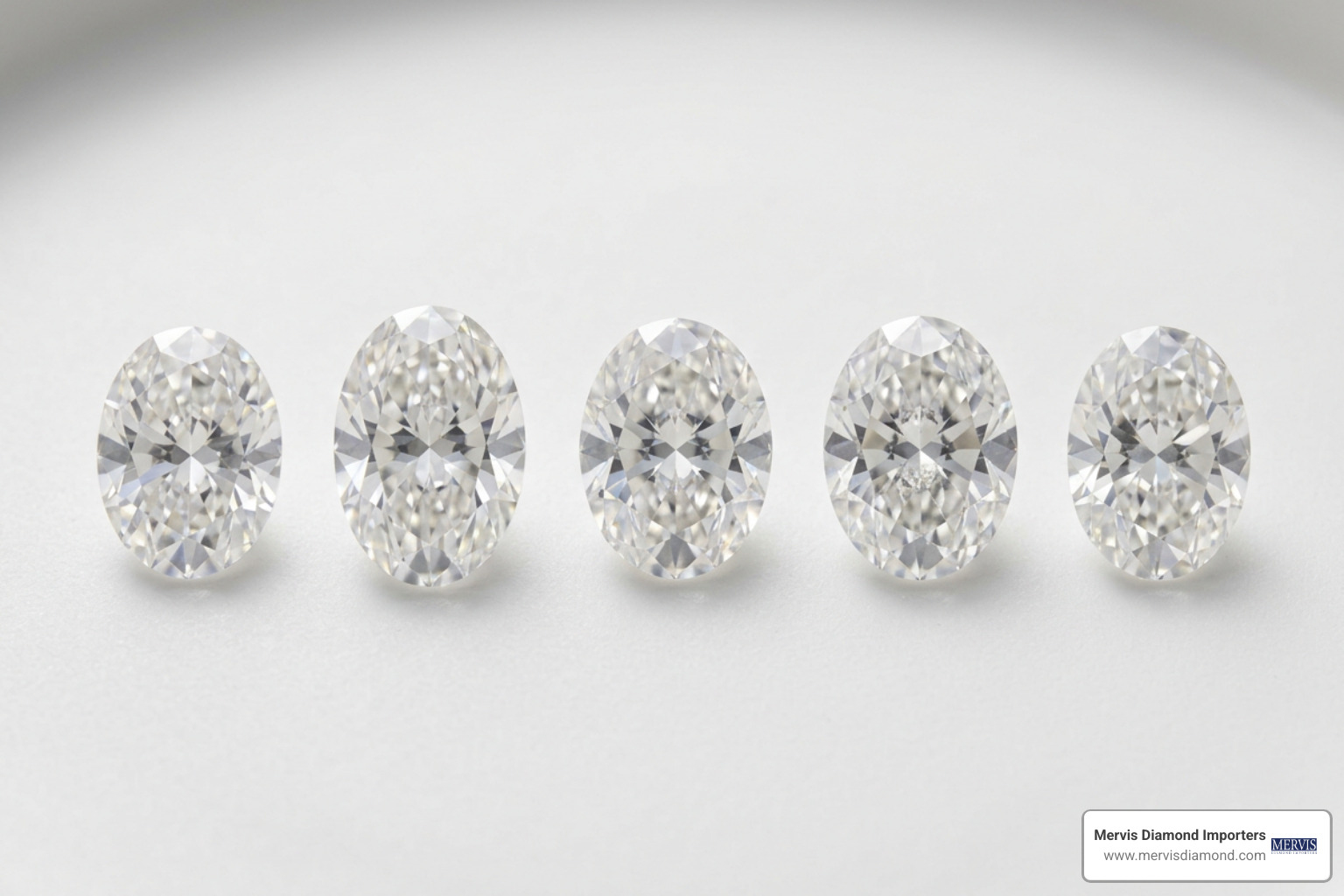
To make an informed choice, nothing replaces side-by-side comparison in real-world lighting:
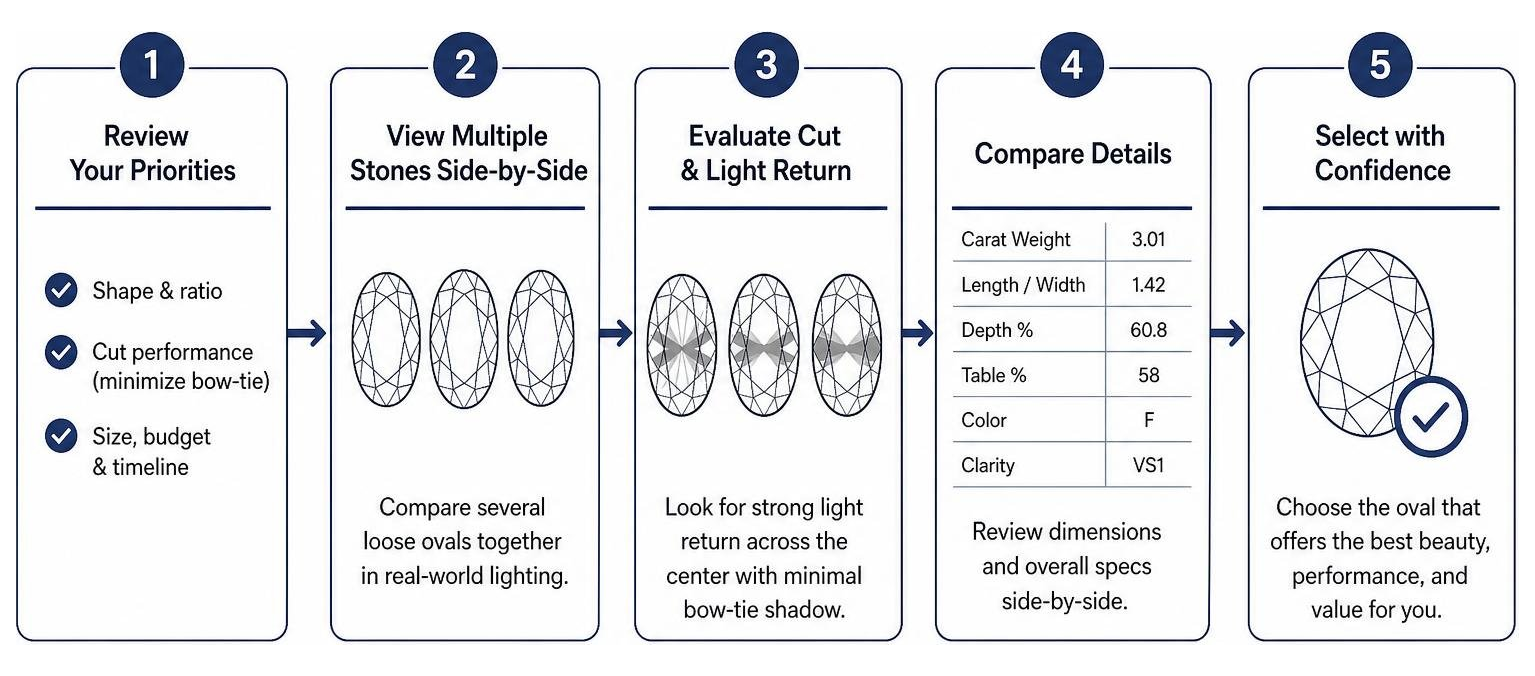
Viewing multiple stones side-by-side allows you to judge light return under natural daylight, spot dark bow-tie shadows, and compare length-to-width ratios (such as a classic 1.40 ratio versus a sleeker 1.45 ratio). For more strategies on navigating current diamond market trends, consult our comprehensive 3 Carat Diamond Guide 2026 or explore our A-Z Guide to Comparing 3 Carat Diamond Rings in DC.
Frequently Asked Questions About 3 Carat Diamonds
What is a realistic price range for a 3 carat lab-grown oval diamond?
A realistic price range for a high-quality loose 3 carat lab-grown oval center stone sits between $600 and $1,500. Specific prices vary based on specs: high-grade stones such as a 3.08 carat E VVS2 can be found near $857, while a 3.06 carat G VS1 sits around $971. Complete custom ring pricing will depend on the choice of precious metal (such as platinum or 18k gold) and setting complexity.
Is D color and IF clarity necessary for a 3 carat diamond?
No, D color and IF clarity are entirely unnecessary to achieve a breathtaking diamond. Choosing E or F color paired with VS1 or VVS2 clarity yields a diamond that is visually identical to a D/IF stone to the naked eye. By avoiding paper perfection, you can reallocate your budget toward a superior cut execution or a custom designer setting.
How do customs tariffs and import rules impact diamond purchases?
Updated tariff rules and international trade regulations can lead to customs backlogs of 3 to 4 weeks when importing loose stones directly from overseas suppliers. Purchasing through a established domestic jeweler guarantees verified, hand-selected inventory without unexpected import taxes or proposal-delaying shipping holds.
Conclusion
Selecting a 3 carat diamond ring should be an exciting journey, not a stressful ordeal. The key 3 carat diamond advice to remember is simple: clear visual performance always trumps grading reports on paper. By focusing on cut quality, avoiding severe bow-tie shadows, choosing eye-clean E/F color and VS1/VVS2 clarity, and sourcing your stone through trusted local specialists, you guarantee incredible value and a lifetime of brilliance.
At Mervis Diamond Importers, we take pride in offering hand-selected, premium natural and lab-grown diamonds backed by expert, pressure-free service. Visit our showrooms in Tysons, VA, Rockville, MD, or Washington, DC to view our loose oval diamonds side-by-side and create the custom ring of your dreams.
Curious whether a 3 carat center stone is the perfect proportions for your hand? Check out our article on What Diamond Carat Size is Right for You, or explore current stone availability and ring pricing in our guide on How Much is a 3 Carat Diamond Ring.