

The Complete Guide on How to Wear a Bridal Ring Set
How to Wear a Bridal Ring Set: Quick Guide and What You Need to Know
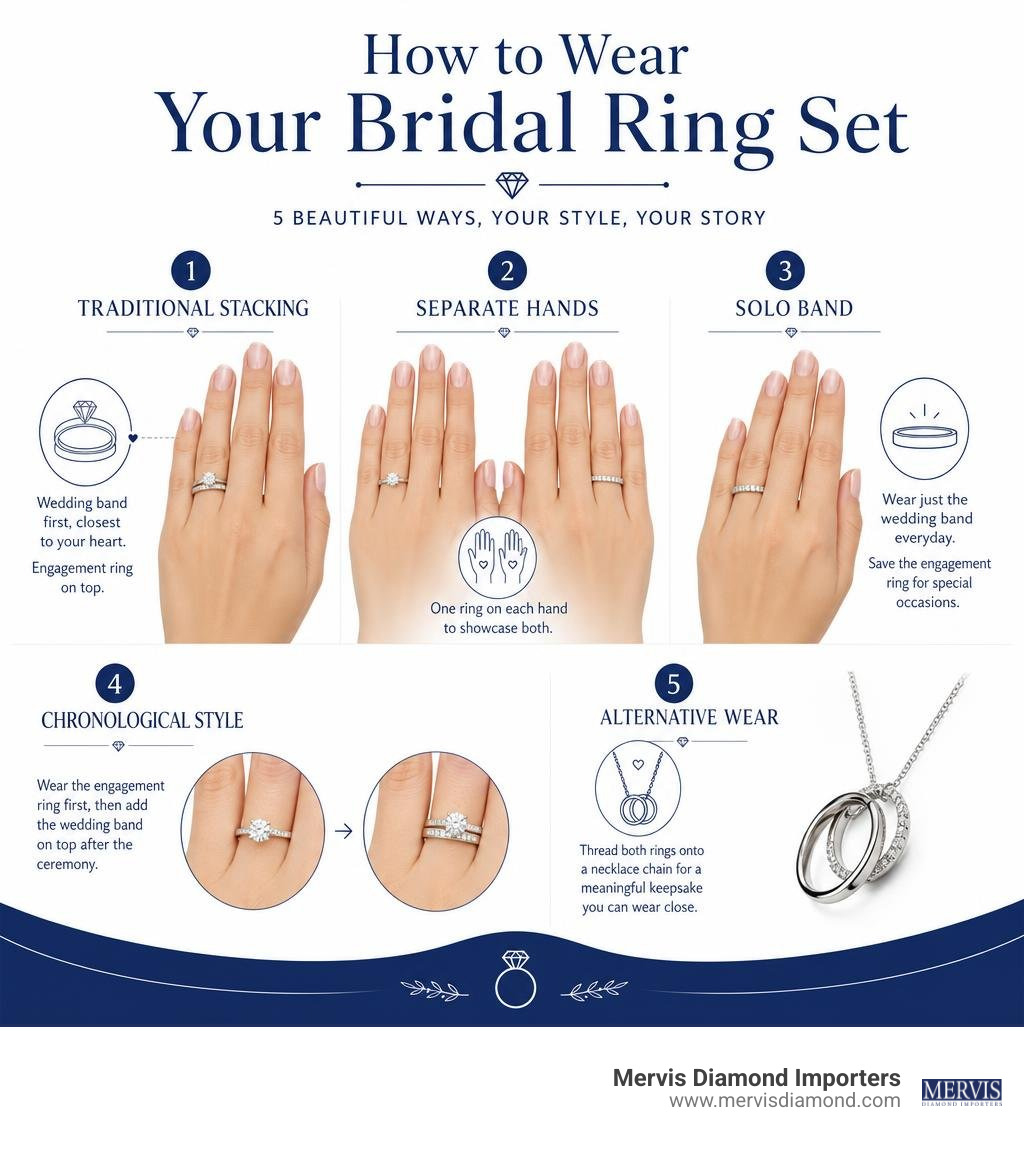
Knowing how to wear a bridal ring set comes down to a few simple choices — and there is no single "right" answer. Here is the quick version:
- Traditional style: Place the wedding band on first (closest to your heart), then stack the engagement ring on top.
- Chronological style: Wear the engagement ring first, then add the wedding band on top after the ceremony.
- Separate hands: Wear one ring on each hand to showcase both individually.
- Solo wear: Wear just the wedding band daily and save the engagement ring for special occasions.
- Alternative wear: Thread both rings onto a necklace chain if your lifestyle or profession calls for it.
The rest of this guide goes deeper — covering history, cultural traditions, seasonal fit, layering tips, and care advice.
That said, ring etiquette has shifted a lot. According to Zola's 2024 First Look Report, 83% of couples are actively challenging traditional wedding day expectations — and how you wear your rings is no exception. Whether you follow centuries-old custom or create your own rules, what matters most is that your rings feel meaningful and comfortable to you.
I'm Morris Mervis, and in this guide I'll walk you through everything you need to know to wear your bridal set with confidence.
History and Global Traditions Behind Ring Placement
To fully appreciate how we wear our rings today, it helps to take a quick peek back in time. For centuries, ring placement has been tied to folklore, spiritual symbolism, and local customs. While modern brides often focus on personal comfort and aesthetic harmony, understanding these historic traditions gives wonderful context to the rituals surrounding your bridal set.
The Vena Amoris Lore
The custom of wearing a wedding ring on the fourth finger of the left hand dates back thousands of years. The ancient Romans believed that a specific vein ran directly from the tip of the fourth finger on the left hand straight to the heart. They dubbed this mythical blood vessel the Vena Amoris, or the "Vein of Love." By placing a metal band around this finger, partners believed they were directly binding their hearts together.
Modern science, of course, has given us a bit of a reality check. We now know that every single finger on both hands has a circulatory network leading back to the heart—there is no unique single vein. But even if the anatomy doesn't quite hold up under a microscope, the sentiment remains as charming as ever. That belief is precisely why wedding rings worn 4th finger left hand remain the classic choice across many Western cultures today.
Global Differences in How to Wear a Bridal Ring Set
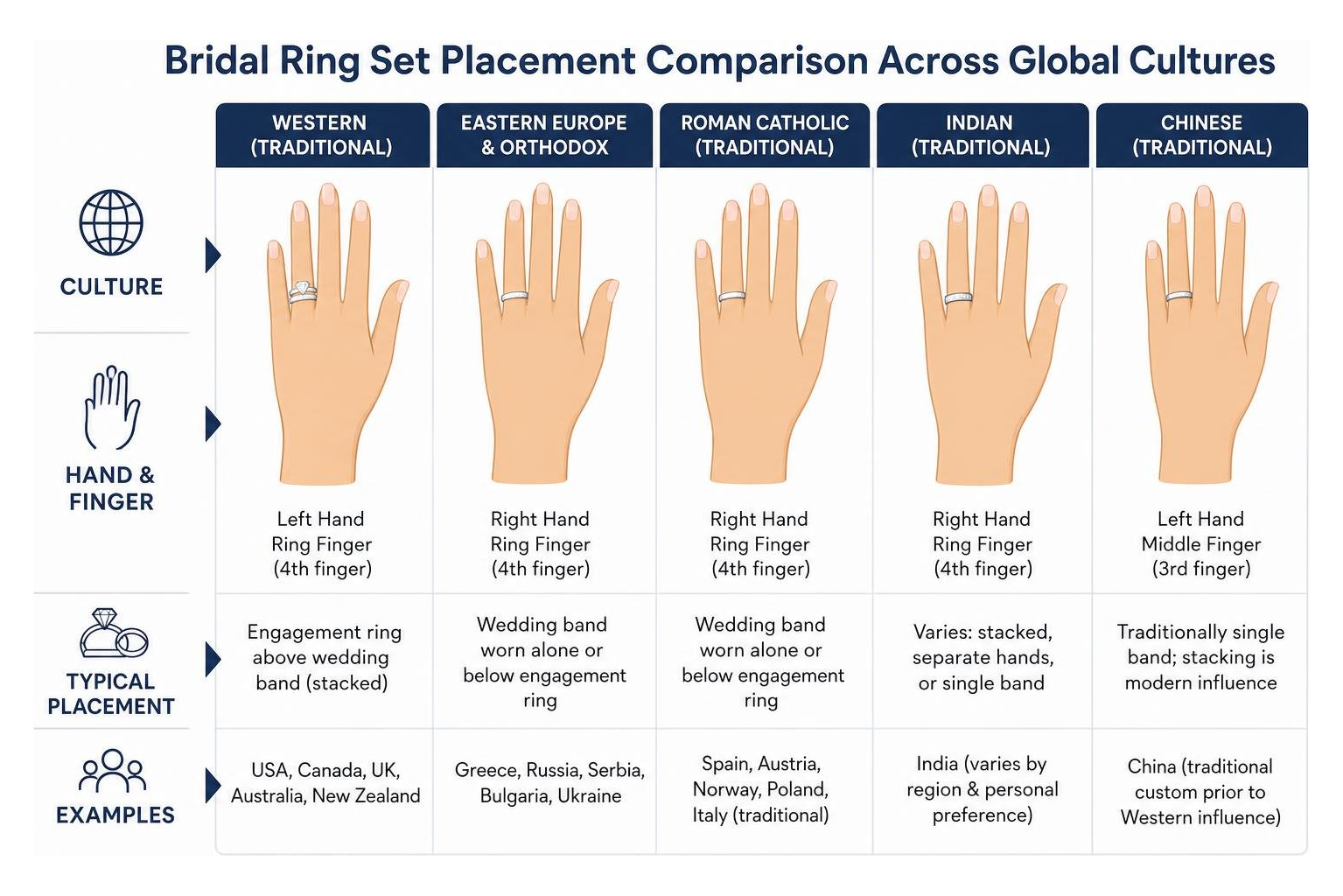
While the left hand is standard in many English-speaking countries, global wedding etiquette is wonderfully diverse. Where and how you wear your rings often depends on your family background or regional customs:
- Right-Hand Traditions: In many Eastern European nations, Eastern Orthodox Christian communities, and traditional Roman Catholic cultures across parts of Western Europe (such as Spain, Austria, and Norway), the wedding ring is worn on the right hand. In these traditions, the right hand is historically associated with honor, trust, and oaths.
- Indian Traditions: In traditional Indian culture, the right hand was historically considered the auspicious hand for ceremonial jewelry, though many modern Indian couples now blend both left and right-hand traditions.
- Traditional Chinese Customs: Historically, rings were worn on the middle finger in traditional Chinese customs prior to modern Western influences, with specific fingers symbolizing different familial relationships.
As highlighted in How to Wear Your Wedding and Engagement Ring With Style, wedding bands are traditionally worn beneath an engagement ring, but there is no absolute "right" rule. Today's globalized world allows you to honor your specific heritage or simply choose the arrangement that brings you the most joy.
Traditional and Creative Ways How to Wear a Bridal Ring Set
When you pick up your bridal set, learning how to wear a wedding ring set gives you a canvas for self-expression. There are several popular arrangements to consider, ranging from time-tested stacking methods to creative modern alternatives.
Below is a quick visual guide comparing the primary ways couples wear their bridal sets today:
| Wearing Style | Ring Configuration | Best Suited For | Key Benefit |
|---|---|---|---|
| Traditional Stack | Wedding band on bottom, engagement ring on top (left hand) | Classic traditionalists | Symbolizes band closest to the heart |
| Chronological Stack | Engagement ring on bottom, wedding band on top (left hand) | Practical wearers, large solitaire stones | Keeps engagement ring secured by band |
| Split Hands | Engagement ring on right hand, wedding band on left hand | Active routines, intricate or vintage settings | Prevents friction and highlights each ring individually |
| Solo Band | Wedding band alone on left hand | Workplaces with safety risks, manual hobbies | Maximum comfort and minimal wear on delicate stones |
| Ring Necklace | Both rings threaded onto a pendant chain around the neck | Healthcare workers, chefs, hands-on professions | Complete hand safety while keeping rings close to heart |
Stacking Order: Wedding Band vs. Engagement Ring
The most common question we hear from clients in our Tysons, Rockville, and Washington DC showrooms is: which ring goes on first?
In classic Western tradition, the wedding band is placed onto the left ring finger first during the ceremony. Later, the engagement ring is placed on top. The romantic philosophy behind this configuration is that the wedding band should rest closest to your heart.
However, many brides choose the chronological order instead: placing the engagement ring on first (since it was received first) and stacking the wedding band over it. This is especially popular when the engagement ring features a dramatic center stone, as a snug metal band stacked on top can act as a secure physical guard. Understanding how to wear your engagement ring and wedding ring comes down to whether you prioritize historical symbolism or visual preference.
Wearing Rings on Separate Hands or Solo
You are under no obligation to stack both rings on a single finger! Wearing your engagement ring on your right ring finger while keeping your wedding band on your left is a stylish and practical solution. This works exceptionally well if:
- Your engagement ring has an intricate, split-shank, or low-set design that prevents a wedding band from sitting flush against it.
- You prefer to avoid metal-on-metal friction that might wear down delicate side detailing.
- You want both pieces to shine independently without competing for visual attention.
Alternatively, many people opt to wear only their wedding band during daily activities—such as working out, gardening, or traveling—and reserve their diamond engagement ring for special occasions or formal outings.
Alternative Styles: Ring Necklaces
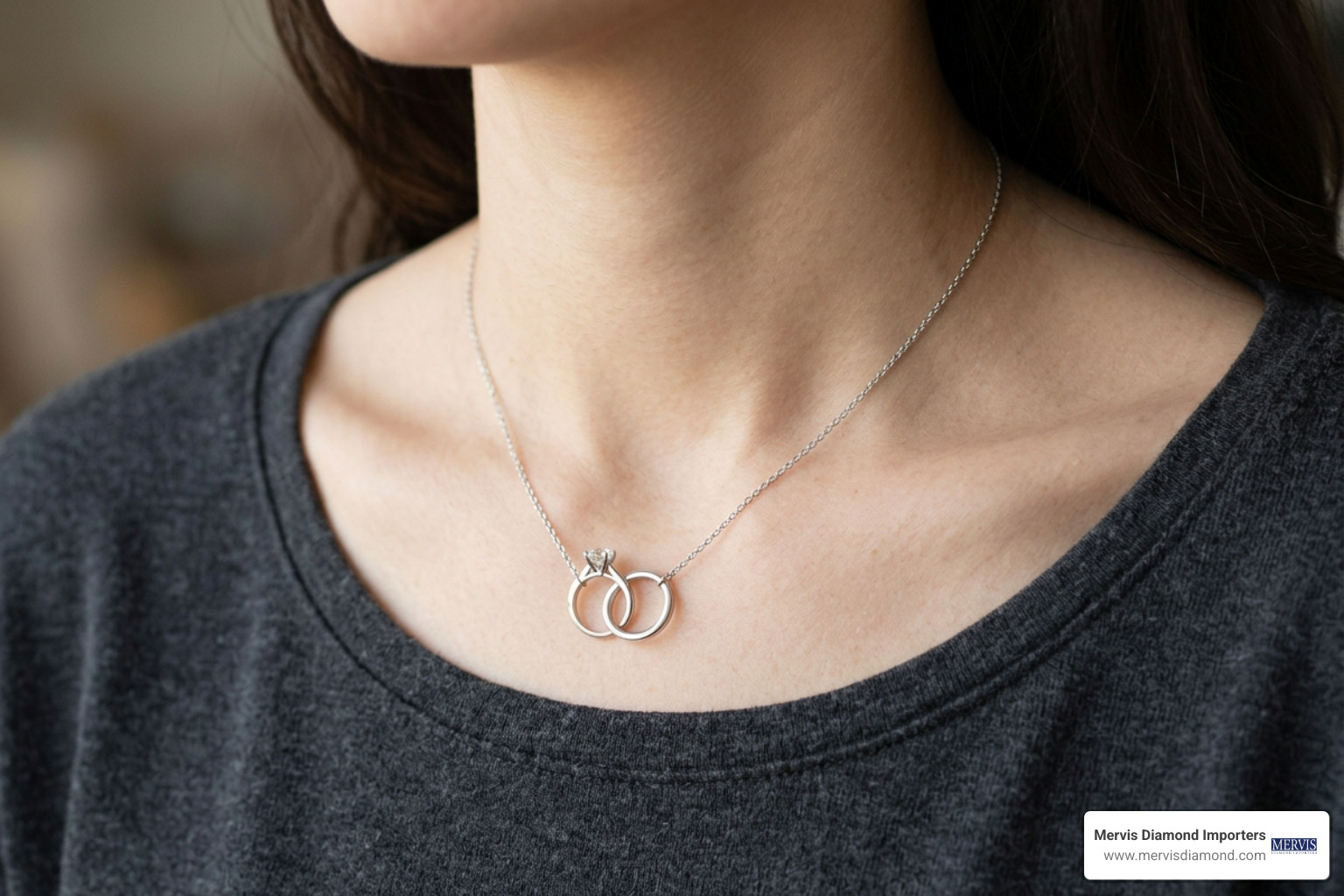
For medical professionals, fitness instructors, chefs, artists, or anyone who works extensively with their hands, wearing rings on the fingers isn't always practical or safe.
In these cases, wearing your bridal set on a secure metal necklace chain or a specialized "ring holder pendant" is an elegant alternative. This keeps your rings safe from harsh environments, tight gloves, or heavy machinery while keeping them resting literally right against your heart.
Practical Tips for Comfort, Safety, and Maintenance
Bridal ring sets are designed for a lifetime of daily wear, but fine jewelry still requires thoughtful care. Factors like seasonal temperature swings, personal activities, and everyday cleaning routines play a big role in keeping your rings comfortable and bright.
Seasonal Ring Fit and Sizing Adjustments
Did you know your finger size changes throughout the day and across seasons?
- Summer Heat: Warm weather, humidity, and physical activity cause blood vessels to expand, making your fingers swell. Rings that feel perfect in autumn might feel snug in July.
- Winter Cold: Cold weather causes fingers to contract. A ring that fits comfortably during warm months can suddenly slide around loosely during winter.
When getting fitted at our showrooms in Virginia, Maryland, or Washington DC, we take these environmental fluctuations into account. If you plan to wear a wide stack of multiple rings on one finger, keep in mind that stacked bands fit tighter than a single narrow ring. You may need a slightly larger size for comfortable multi-ring wear.
Protecting and Cleaning Your Ring Set
To maintain the brilliant sparkle of your diamonds and precious metals, establishing a safe daily routine is key. According to helpful tips in How To Wear A Bridal Set Ring Guide, taking off your rings during high-impact tasks prevents accidental stone displacement or prong bending.
Here are essential safety guidelines to follow:
- Avoid Cold Water Swimming: Never wear your rings while swimming in cold water (such as the ocean or unheated pools). Cold water quickly shrinks your fingers, and water acts as a lubricant—a classic recipe for losing a precious ring.
- Remove During Cleaning and Workouts: Household chemicals like bleach and ammonia can discolor alloy metals. Heavy gym equipment like barbells can easily bend ring shanks or crush delicate prongs.
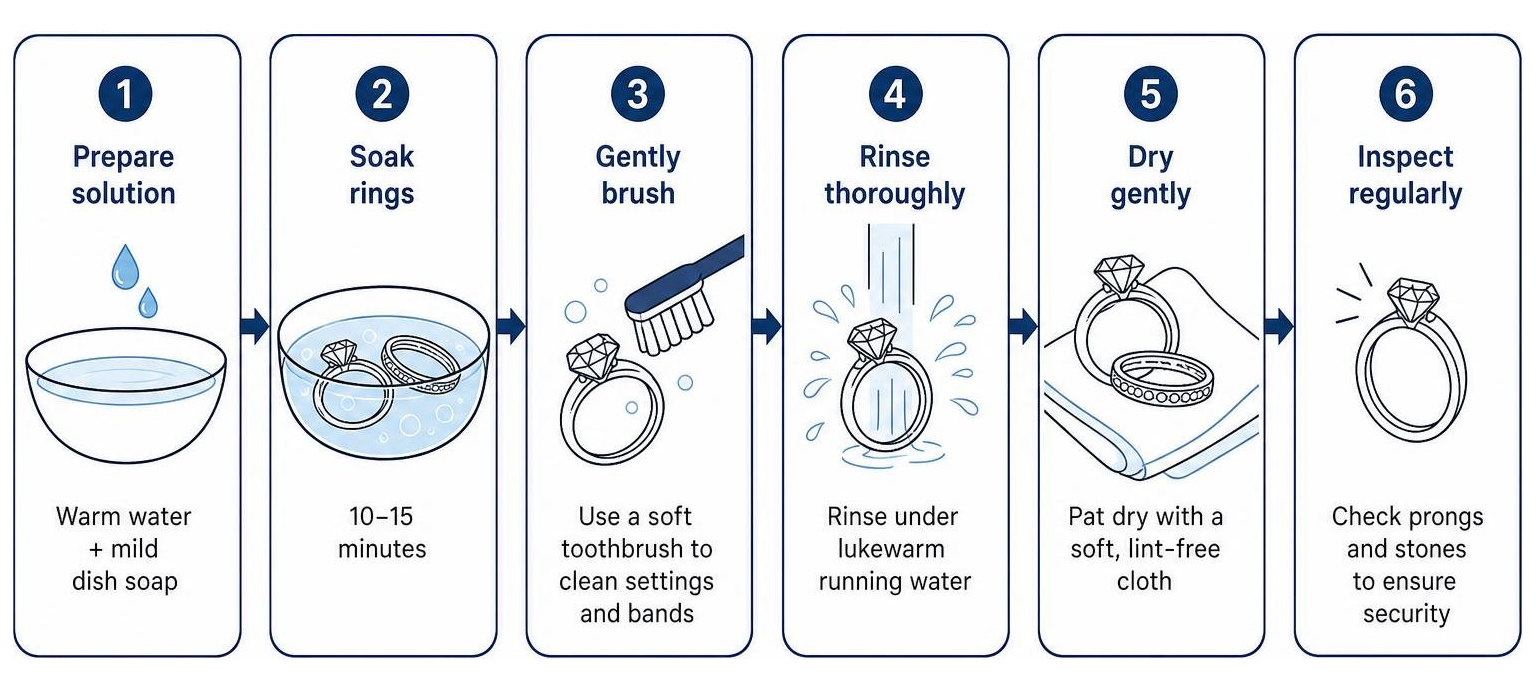
- Simple At-Home Cleaning: Clean your bridal set regularly by soaking it in a bowl of warm water mixed with a few drops of mild dish soap. Gently brush around the diamond settings using a soft-bristled toothbrush to clear away lotion and soap buildup, then rinse thoroughly and dry with a soft lint-free cloth.
How to Style and Layer Your Bridal Set
A great bridal set should reflect your personal aesthetic. Whether your style leans minimalist, modern, or vintage, achieving a cohesive look across your rings makes all the difference.
When choosing a wedding band to match your engagement ring, consider how the two profiles physically meet:
- Flush Fit Sets: Designed so both bands rest completely flat against one another with no gap.
- Contour or Curved Bands: Custom-shaped bands that curve around a low-set engagement ring center diamond, creating a seamless frame.
- Jacket or Enhancer Rings: Dual-band designs where the engagement ring sits neatly in the middle of a double-band frame.
If you are currently selecting your companion band, exploring a thoughtful wedding band engagement ring match will help ensure your pieces complement each other in both metal weight and physical shape.
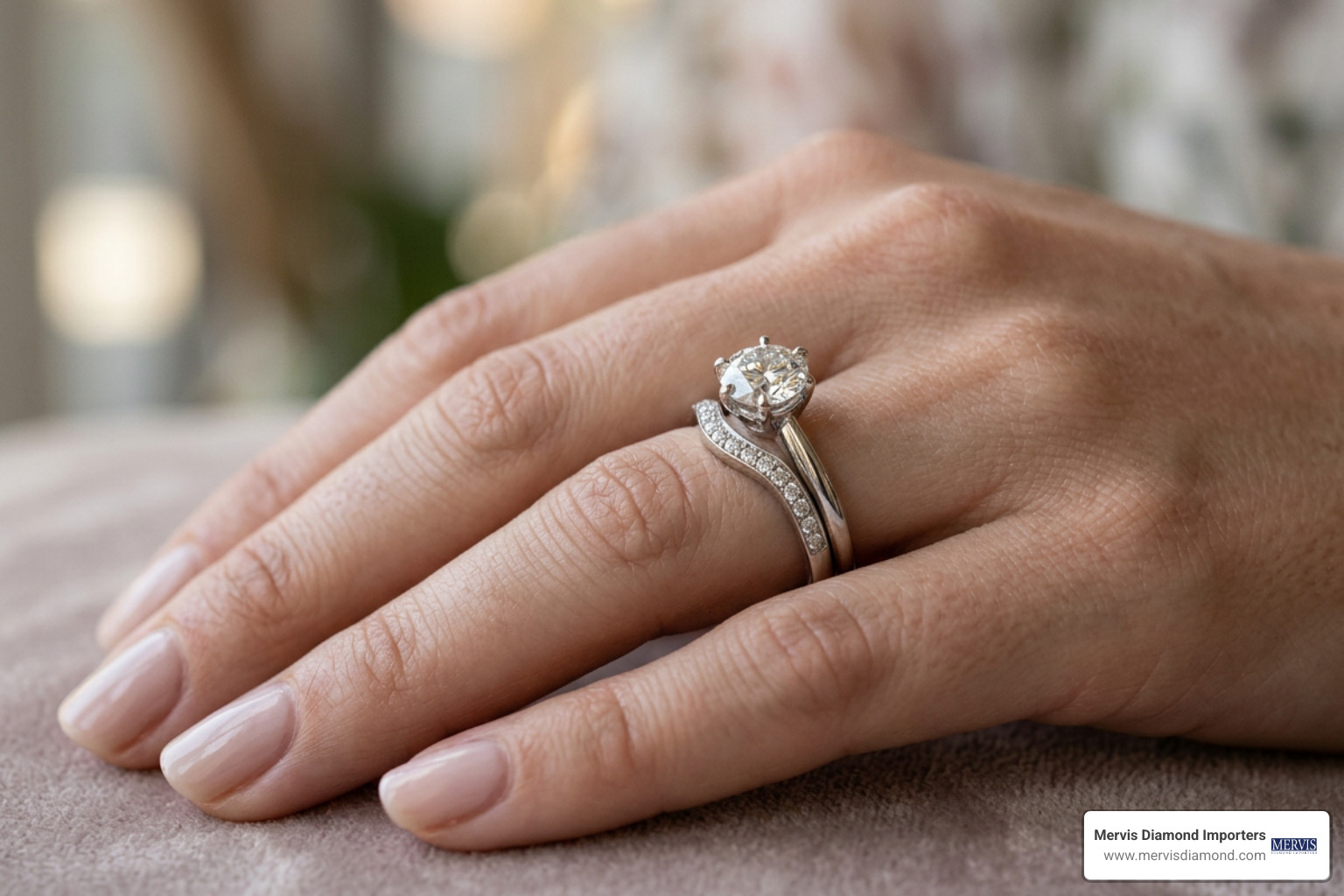
How to Wear a Bridal Ring Set with Anniversary Bands
As years go by, many couples choose to celebrate major milestones—like a 5th, 10th, or 25th wedding anniversary or the birth of a child—by adding extra bands to their bridal stack.
Adding anniversary bands creates a rich, textured ring stack. You can frame your engagement ring symmetrically by placing one eternity band below it and another above it. Alternatively, you can mix metal colors (like white gold paired with rose gold) for a chic modern contrast. For additional inspiration on expanding your collection over time, check out the ultimate stacking guide and see how couples celebrate all of lifes milestones with ring stacks.
Frequently Asked Questions About Wearing Bridal Ring Sets
Should I wear my engagement ring on my wedding day?
Yes, most brides choose to wear their engagement ring on their wedding day, but they temporarily shift it over to the right hand before walking down the aisle.
During the ceremony, your partner places the new wedding band directly onto your left ring finger. After the ceremony (or during the reception), you can transfer your engagement ring back to your left hand, stacking it over your new wedding band. If you want a complete walk-through of ceremony-day ring etiquette, read our full guide on do i wear my engagement ring on my wedding day.
Do I have to wear both rings every day?
Not at all! There are no strict laws or social rules that require you to wear both pieces every single day. Many people choose to wear just their plain or pave wedding band during workdays, gym visits, or outdoor trips, bringing out their diamond engagement ring for dinners, weekends, and special celebrations. Choose whatever combination feels comfortable and convenient for your daily routine.
How do I prevent stacked rings from rubbing against each other?
When two metal rings rest side-by-side, natural finger movement causes them to rub against one another, which can wear down metal shanks or loose prongs over time. You have three great options to prevent this:
- Soldering: Ask a jeweler to solder (join) your wedding band and engagement ring together into a single unified piece. This keeps them perfectly aligned, prevents spin, and eliminates friction wear entirely.
- Spacer Bands: Wear a thin, smooth metal band between your engagement ring and wedding band to act as a protective barrier.
- Matching Metals: Ensure both rings are made of the same metal purity (e.g., matching 14k gold with 14k gold, or platinum with platinum) so that a harder metal doesn't scratch a softer one.
Conclusion
Learning how to wear a bridal ring set comes down to honoring your personal style, comfort, and story. Whether you choose to follow classic Western traditions, embrace global customs, or build a personalized stack that grows over time, your rings are a powerful daily reflection of your love and commitment.
At Mervis Diamond Importers, we take pride in offering hand-selected, exceptionally high-quality natural and lab-grown diamonds with expert, pressure-free guidance. If you need help finding the perfect companion wedding band, adjusting your ring size, or custom-building your dream stack, visit us at our showrooms in Tysons, VA, Rockville, MD, or Washington, DC. Explore our full collection and guide on how to wear your engagement wedding rings today!