

Emerald Wedding Bands: What to Look for Before You Buy
The Enduring Appeal of Emerald Wedding Bands
Emerald wedding bands bring rich green color and a sense of renewal to a wedding ring. If you plan to wear one every day, start with a secure, low-profile setting that helps protect the stone from knocks. Then compare emeralds by color, visible inclusions, and cut. Ask whether each stone is natural or lab-grown and whether it has been treated before you judge its price.
Emeralds can chip despite their 7.5 to 8 Mohs hardness, so the right setting and care matter as much as the look. I'm Morris Mervis, and I'll help you sort through those choices before you buy.
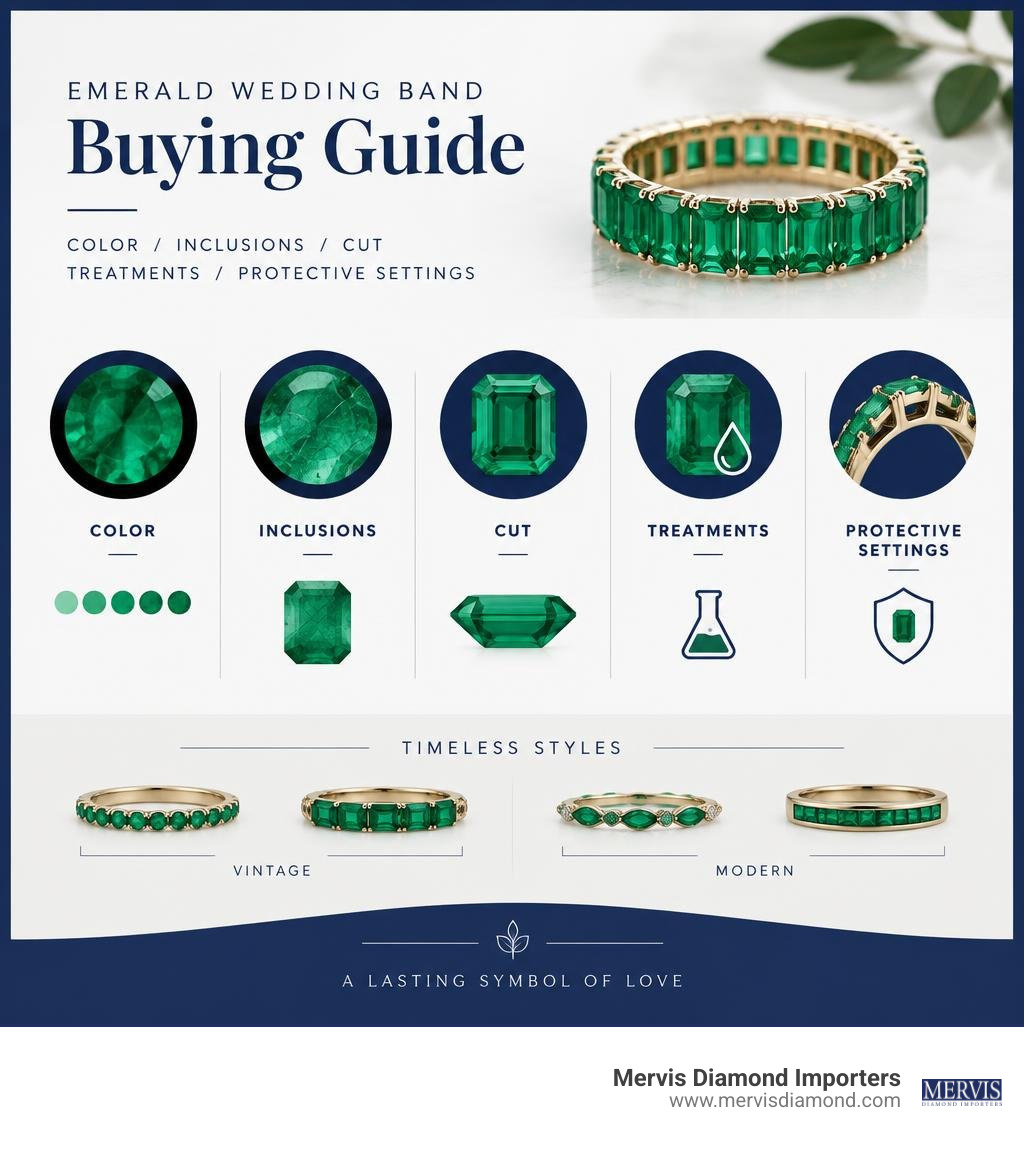
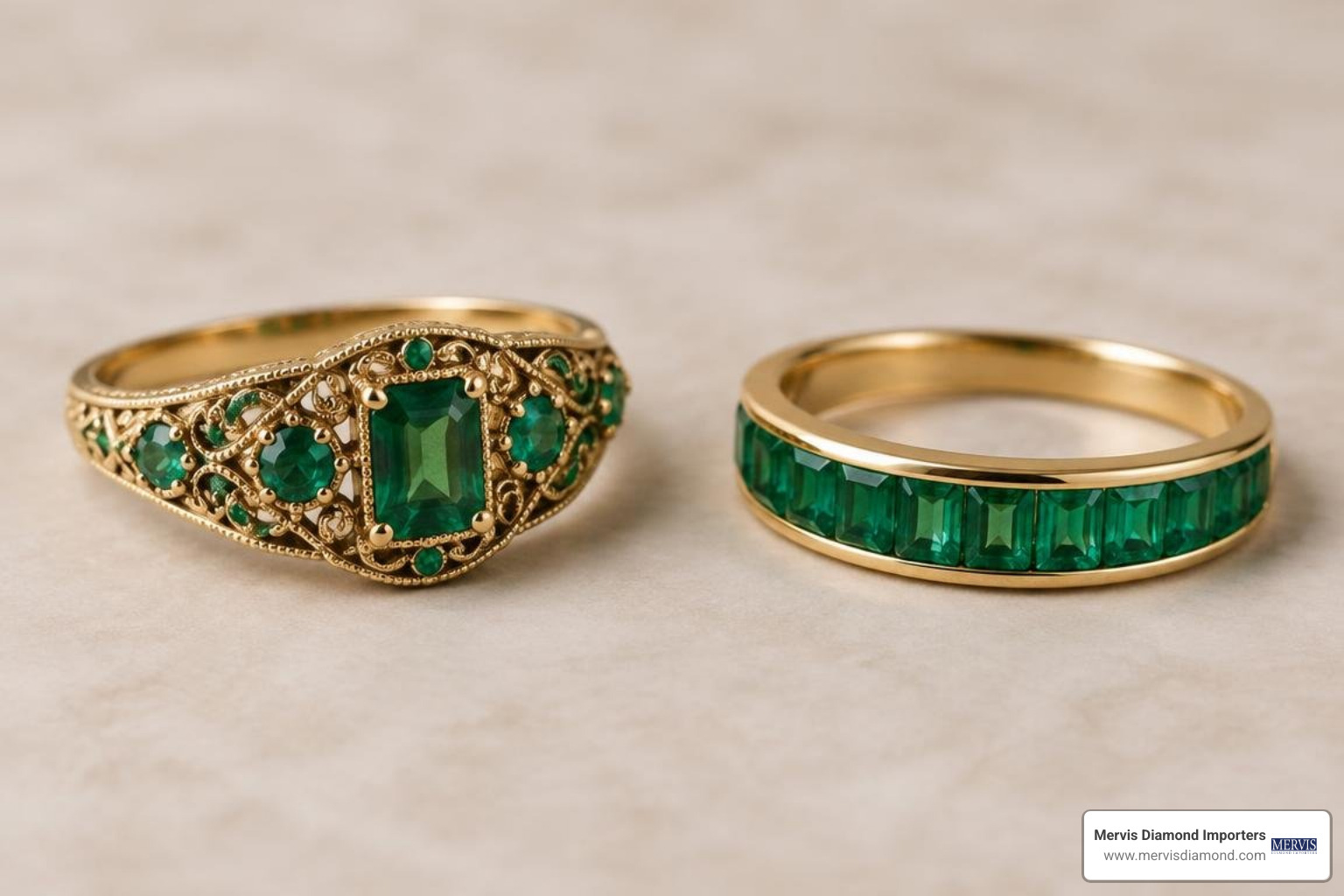
Emeralds have captivated humanity for well over 4,000 years. As one of the traditional "big four" precious gemstones—alongside diamonds, rubies, and sapphires—emeralds possess an undeniable regal heritage. Cleopatra famously adorned herself with them, ancient royalty wore them as amulets of protection, and today they remain a favorite choice for couples seeking distinctive bridal jewelry.
Beyond their historical prestige, emeralds carry deep emotional symbolism. Traditionally representing rebirth, eternal love, fidelity, and prosperity, an emerald serves as a meaningful marker for the start of a lifelong union. Its lush green hue evokes life and fresh beginnings, making it a poetic alternative to an all-diamond ring.
Geology also plays a role in their allure. Colombia produces approximately 70% to 90% of the world's finest emeralds, prized globally for their intense, glowing green color and exceptional quality. Whether you choose a ring featuring natural Colombian gems or responsibly cultivated stones, an emerald band instantly sets your bridal stack apart from conventional designs.
Evaluating Emerald Quality: Color, Clarity, Cut, and Carat Weight
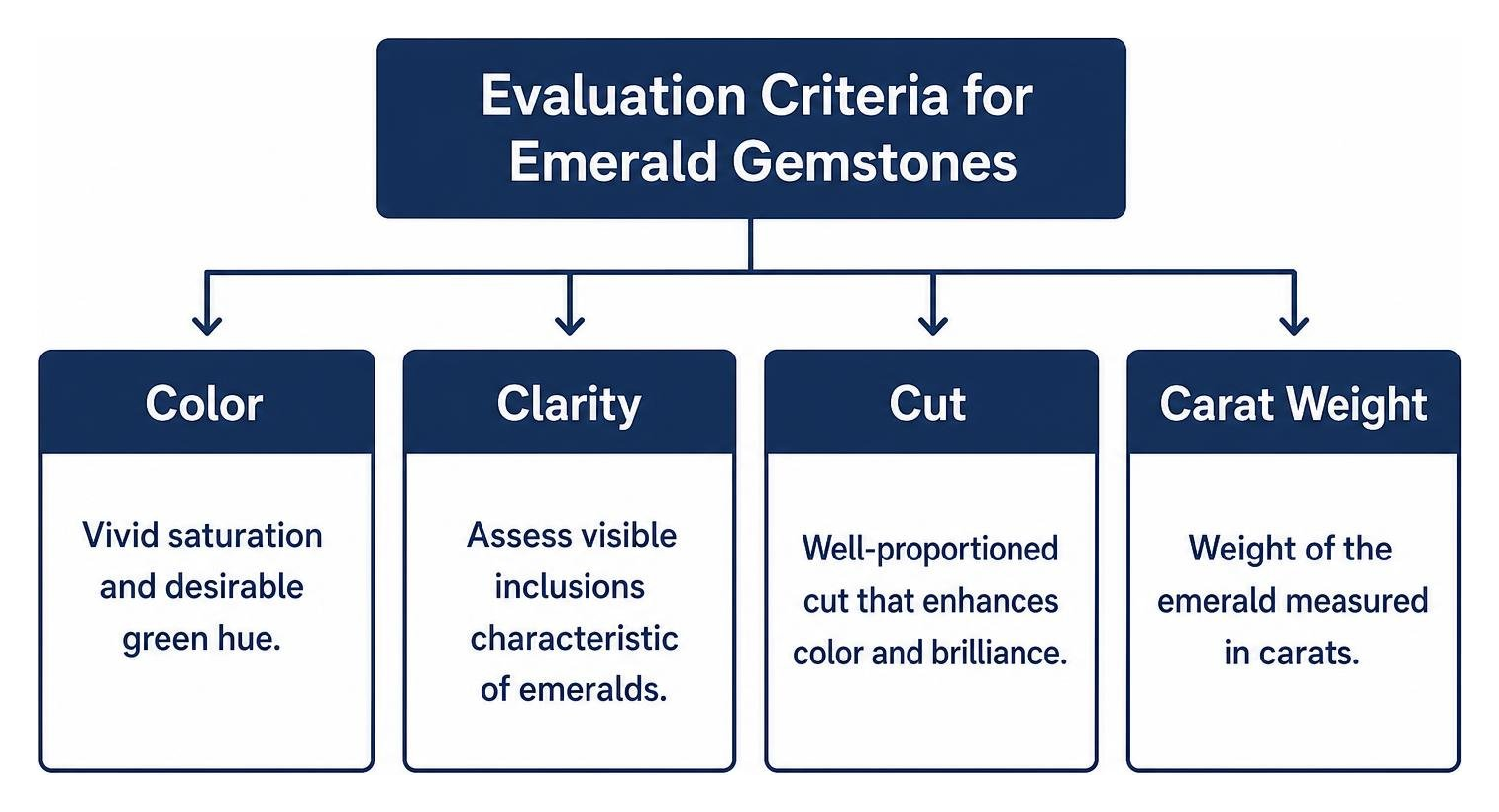
Evaluating an emerald requires a slightly different approach than assessing a diamond. While diamonds are often graded on an absence of color and near-flawless clarity, emeralds are prized above all for their vivid saturation and distinct character.
Understanding Emerald Color and Saturation
Color is the most critical value factor when selecting an emerald. Gemologists evaluate emerald color across three main dimensions:
- Hue: The primary green color, often accompanied by secondary blue or yellow undertones. A slight bluish-green is widely considered the most desirable balance.
- Tone: How light or dark the green appears. The ideal tone sits comfortably in the medium to medium-dark range; if a stone is too light, it may be classified simply as green beryl, whereas an overly dark stone loses its brilliance.
- Saturation: The purity and intensity of the color. High saturation produces that unmistakable, glowing neon-green quality, primarily caused by natural trace amounts of chromium and vanadium within the beryl crystal.
Emerald Clarity and the Jardin
Almost every natural emerald contains internal inclusions and microscopic surface-reaching fractures. In the gemstone world, these internal patterns are affectionately called the jardin—the French word for "garden"—because they often resemble delicate moss or foliage floating inside the gem.
A visible jardin is not considered a defect; rather, it serves as natural proof of the stone's authenticity. However, you should check that internal fissures do not compromise the gemstone's structural integrity, especially near the edges or corners.
To improve clarity, over 90% of natural emeralds undergo traditional clarity enhancement, most commonly using colorless cedarwood oil or specialized resins. This accepted industry practice gently fills micro-fissures, reducing their visual prominence and enhancing the emerald's natural transparency.
Cuts and Carat Weight for Wedding Rings
Emeralds are cut to maximize their color while protecting their crystal structure. The iconic rectangular step cut—known worldwide as the emerald cut—was specifically developed for this gem. Its beveled corners and elongated facets highlight rich hues while safeguarding delicate edges from everyday knocks.
When choosing a band, you will also encounter round brilliants, ovals, and baguette-cut stones. Because emerald has a lower specific gravity than diamond, a one-carat emerald will look visually larger than a one-carat diamond of identical weight. Balancing carat size with everyday wearability is essential to ensure the stones sit comfortably against neighboring fingers.
Best Metals and Protective Settings for Everyday Wear
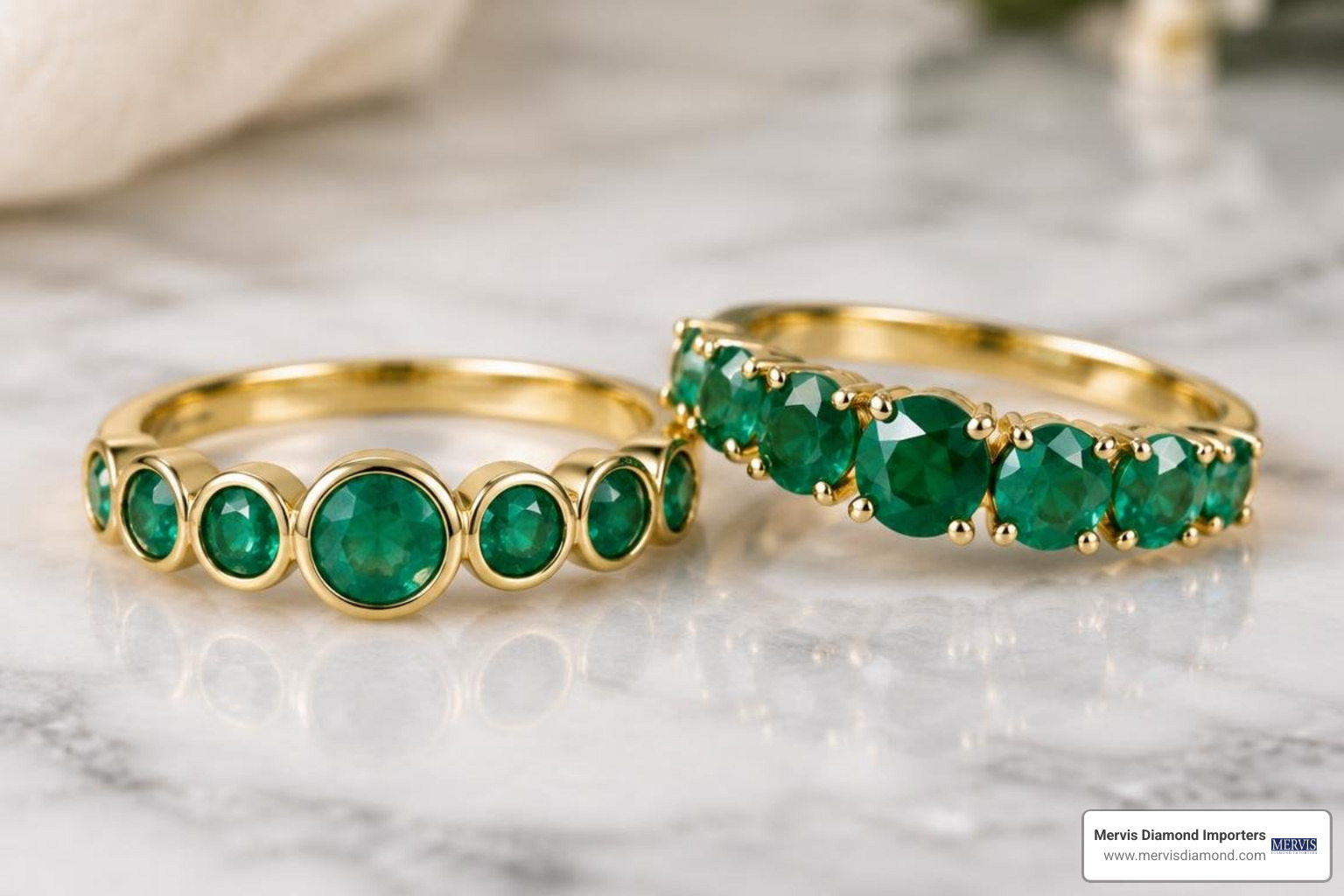
Emeralds register between 7.5 and 8 on the Mohs hardness scale. While this makes them durable enough for fine jewelry, their internal inclusions mean they can chip if subjected to sharp, direct impacts. Choosing the right metal and setting style ensures your band remains secure for decades.
| Setting Style | Everyday Protection | Cleanability | Visual Style |
|---|---|---|---|
| Bezel Setting | Exceptional | Moderate | Modern, sleek, snag-free |
| Channel Setting | Very High | Easy | Classic, smooth profile |
| Flush / Burnished | Maximum | Easy | Subtle, minimalist |
| Shared Prong | Moderate | High | Maximum light return, delicate |
Metal Choices: Platinum and Gold Alloys
The metal you choose frames your stones and provides the structural foundation for your ring:
- Platinum: Naturally hypoallergenic and remarkably dense, platinum holds gemstones with unmatched security. Its cool white luster creates a striking contrast against vivid green stones.
- 18k Yellow Gold: A timeless pairing. Yellow gold warms the green tones of emeralds, creating an opulent, vintage-inspired aesthetic.
- Rose Gold: The pink undertones of rose gold offer an earthy, romantic contrast that complements deeper forest-green shades.
- 14k or 18k White Gold: Delivers a crisp, bright look similar to platinum, coated with rhodium for added brilliance.
Protective Setting Styles
To safeguard emeralds against accidental bumps, consider protective mounting styles:
- Bezel Settings: A thin rim of precious metal encircles the perimeter of each stone, shielding corners from lateral impacts.
- Channel Settings: Stones are nested between parallel metal walls, creating a snag-free surface. For example, gentlemen often appreciate the smooth, secure architecture of an 18k yellow gold square emerald-cut diamond single row channel set men's wedding band, which offers an identical standard of everyday protection.
- Low-Profile and Flush Mounts: Keeping stones set close to the finger minimizes catching on clothing, bags, or everyday objects.
Styling and Pairing Options for Emerald Rings
Emerald bands offer incredible versatility, functioning beautifully as standalone statements, vibrant additions to a bridal stack, or colorful anniversary upgrades.
Popular Styles for Emerald Wedding Bands
- Eternity Bands: Gemstones encircle the entire finger for continuous color.
- Half-Eternity Bands: Stones cover the top half of the band, allowing for easier resizing and reduced wear on the palm side.
- East-West Settings: Stones are set horizontally along the band rather than vertically. A sleek platinum emerald cut diamond single row east west band showcases how modern geometry transforms classic rectangular cuts into contemporary bridal pieces.
- Vintage and Art Deco Designs: Featuring milgrain borders, filigree metalwork, and geometric arrangements reminiscent of the 1920s.
Pairing Emeralds with Diamonds
Combining emeralds with diamonds creates an eye-catching interplay of brilliance and deep color. White diamonds act as natural spotlights, enhancing the green saturation of neighboring stones.
If you love geometric symmetry, you can explore multi-stone bands like an 18k yellow gold emerald cut and round diamond single row band, which alternates shapes for added texture. For those who appreciate classic step cuts, pairing colored gemstones alongside a signature single row emerald cut diamond band in platinum creates a sophisticated, cohesive bridal stack.
Emerald Authenticity, Pricing, and Maintenance
Understanding what determines emerald pricing helps you invest with confidence. Natural emerald wedding bands typically range from $500 to upwards of $5,000 depending on color quality, origin, carat weight, and whether diamonds are incorporated into the setting.
Lab-grown emeralds share the exact chemical, optical, and physical properties of mined stones but are cultivated in controlled hydrothermal environments. Because they bypass rare geological mining conditions, lab-created emeralds cost approximately 30% to 50% less than natural stones of comparable visual grade, providing a vibrant, budget-friendly alternative.
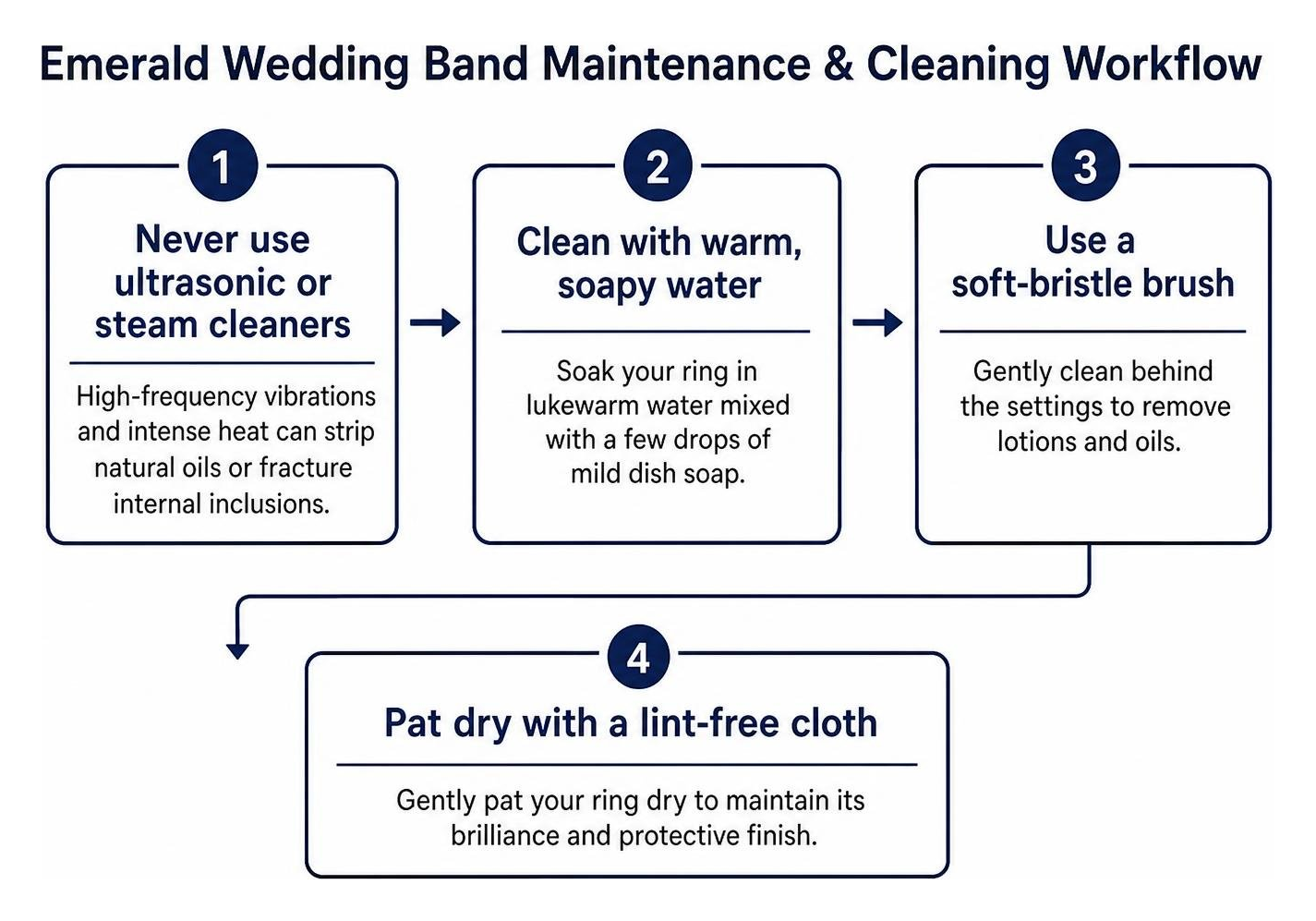
Caring for an emerald ring requires gentle, regular habits:
- Never use ultrasonic or steam cleaners: High-frequency vibrations and intense heat can strip natural oils or fracture internal inclusions.
- Clean with warm, soapy water: Soak your ring in lukewarm water mixed with a few drops of mild dish soap.
- Use a soft-bristle brush: Gently clean behind the settings to remove lotions and oils, then pat dry with a lint-free cloth.
- Remove during heavy tasks: Take your band off before gym workouts, gardening, swimming, or handling household chemicals.
- Schedule professional inspections: Visit an expert jeweler annually to inspect prongs and check whether your natural emeralds could benefit from routine re-oiling.
Frequently Asked Questions About Emerald Bands
Are emerald wedding bands durable enough for daily wear?
Yes, provided you choose an appropriate setting and exercise sensible care. With a Mohs hardness of 7.5 to 8, emeralds withstand daily contact well. Choosing bezel, channel, or low-profile mounts significantly reduces the chance of chips or abrasion during everyday activities.
What is the price difference between natural and lab-created emeralds?
Lab-created emeralds generally cost 30% to 50% less than mined natural emeralds of equivalent size and color saturation. While natural emeralds hold long-term collector value and historical rarity, lab-grown options allow you to maximize carat size and clarity within a modest budget.
How do I safely clean my emerald wedding ring at home?
Soak the band in a bowl of lukewarm water with mild dish soap for five to ten minutes. Use a baby toothbrush or soft-bristle brush to gently clear away residue around the stones, rinse thoroughly in clean water, and dry with a soft microfiber cloth. Avoid hot water, harsh detergents, steam, and ultrasonic machines.
Conclusion
Choosing an emerald wedding band allows you to wear a piece of natural artistry steeped in history, rich symbolism, and unforgettable color. By prioritizing rich saturation, choosing a secure mounting, and practicing gentle maintenance, your emerald ring will remain a radiant heirloom for generations.
At Mervis Diamond Importers, our family has spent generations hand-selecting premier natural and lab-grown stones to craft exceptional fine jewelry. If you are exploring your options, our non-commissioned experts are here to guide you through every cut, metal alloy, and custom setting in a pressure-free environment across our Tysons, Rockville, and Washington, DC showrooms.
To see how colored gemstones and classic cuts complement each other across different silhouettes, explore our complete guide to different styles of wedding bands and find the piece that tells your unique love story.