

Master the 3 Carat Emerald Cut Buying Guide for Natural and Lab Stones
What to Know Before Buying a 3 Carat Emerald Cut Diamond
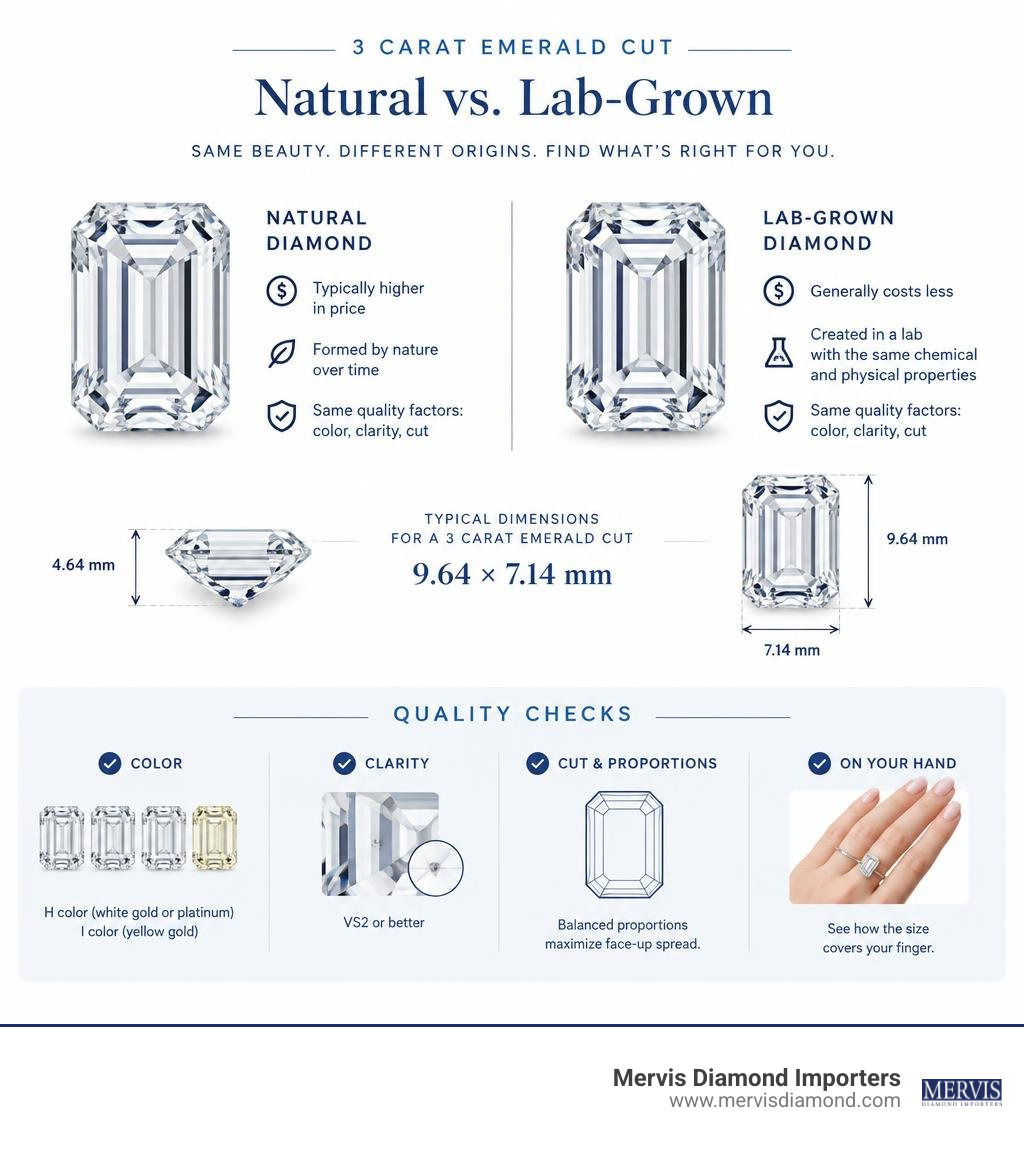
A 3 carat emerald cut diamond typically measures about 9.64 × 7.14 mm face-up. If you're comparing prices, start with natural versus lab-grown stones: lab-grown diamonds generally cost less, but prices for both depend on color, clarity, and how well the stone is cut. Compare diamonds with similar grades and measurements, not just the same carat weight.
Emerald cuts have broad, clear facets that can make color and inclusions easier to see. A useful starting point is H color and VS2 clarity in white gold or platinum; I color may work well in yellow gold. Then inspect the actual stone rather than relying on its grade alone.
I'm Morris Mervis, and I'll help you sort through the details that matter most before you choose.
Understanding 3 Carat Emerald Cut Dimensions and Proportions
When shopping for an emerald cut of this size, weight alone does not tell the full story. A well-proportioned 3 carat emerald cut stone weighs exactly 0.6 grams (or 300 points) and possesses a volume of roughly 170.45 mm³. In standard, beautifully balanced cuts, you will see average physical dimensions of 9.64 × 7.14 × 4.64 mm, delivering an expansive face-up surface area of approximately 65.39 mm².
Evaluating how these measurements translate to everyday wear is critical. You can review tools showing finger coverage and actual dimensions on hand to better visualize how a stone covers the finger width. Because step cuts distribute their carat weight differently than round or cushion cuts, keeping a close eye on our emerald proportions guide ensures you select a diamond that maximizes face-up spread rather than hiding wasted weight in an overly deep pavilion.
Length-to-Width Ratio and Step-Cut Faceting
The emerald cut is renowned for its vintage sophistication, featuring a rectangular silhouette, cropped corners, and 58 parallel step-cut facets. Instead of the chaotic scintillation of a brilliant cut, step cuts produce a mesmerizing "hall-of-mirrors" effect, creating flashes of broad, clear light.
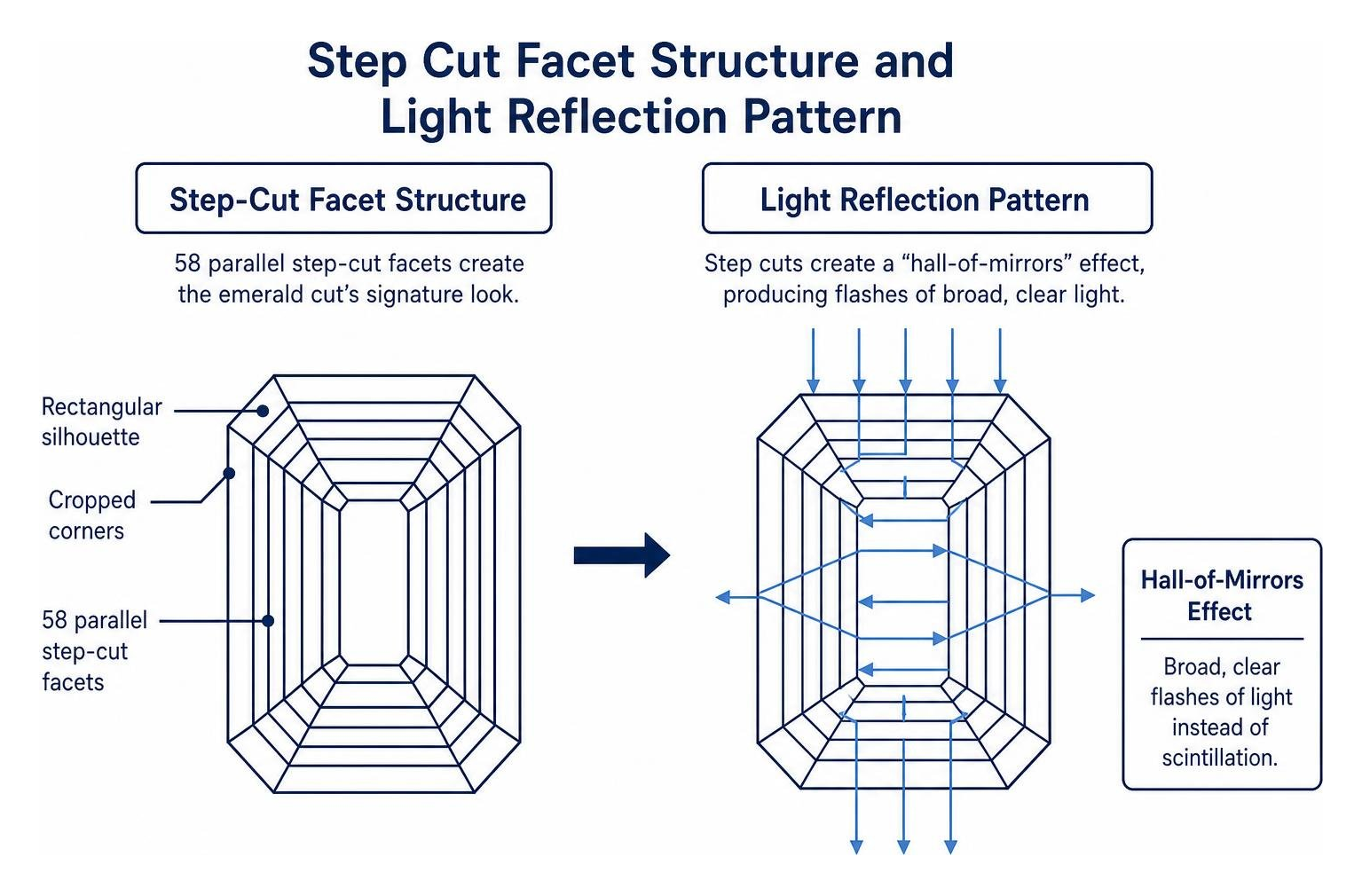
The visual character of the stone depends heavily on its length-to-width (L/W) ratio:
- 1.25 to 1.30: A stockier, broader rectangle suited for wider fingers.
- 1.35 to 1.45: The classic, traditional emerald cut shape that provides optimal balance.
- 1.50 to 1.65: A distinctly elongated profile that flatters and lengthens the hand.
An L/W ratio around 1.35 represents the timeless benchmark for most collectors, offering the ideal harmony between slender elongation and structural symmetry.
Face-Up Size Comparison Across Diamond Shapes
Different diamond shapes distribute their carat weight in distinct ways. Step cuts retain slightly more depth than shallow elongated shapes, but their expansive table still delivers remarkable presence.
| Diamond Shape (3.00 Carats) | Typical Dimensions (mm) | Face-Up Surface Area (mm²) | Spread (mm² per Carat) |
|---|---|---|---|
| Emerald Cut | 9.64 × 7.14 mm | 65.39 mm² | 21.8 mm²/ct |
| Round Brilliant | 9.35 × 9.35 mm | 68.66 mm² | 22.9 mm²/ct |
| Oval Cut | 11.50 × 7.80 mm | 70.45 mm² | 23.5 mm²/ct |
| Radiant Cut | 8.50 × 8.50 mm | 64.20 mm² | 21.4 mm²/ct |
While an oval diamond offers a slightly larger surface area per carat, the clean geometric corners and long parallel facets of an emerald cut create an unmatched architectural presence that makes the stone look substantial on the hand.
The 4Cs Strategy for Emerald Cut Diamonds
Because step cuts feature a large, unobstructed table facet, they act like a clear window into the heart of the stone. Flaws or body color that would easily hide behind the multifaceted sparkle of a round brilliant are much more visible here.
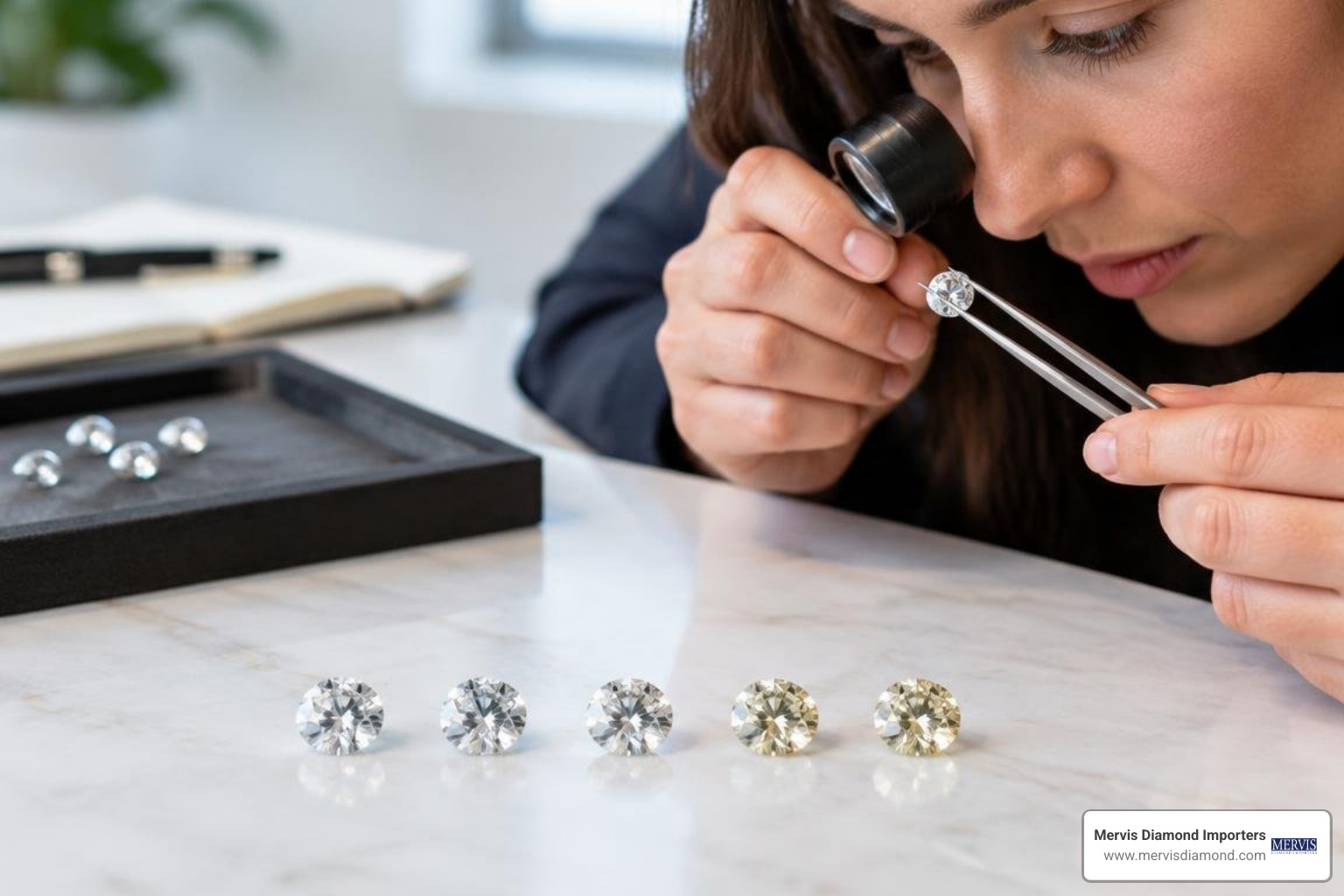
Selecting the Best Color and Clarity for a 3 Carat Emerald Cut
To secure maximum beauty without paying for invisible grading premiums, use these baseline parameters:
- Clarity: Aim for VS2 or higher. In a 3-carat step cut, inclusions under the table facet are easy to spot. A clean VS2 or VS1 grade guarantees that the diamond remains completely eye-clean.
- Color: An H color grade provides a bright, icy-white look when set in platinum or white gold. If you choose yellow or rose gold, you can safely move down to an I or J color, as the warm metal masks subtle body tint.
When you examine a certified stone—such as a fine GIA certified emerald cut stone—always verify that any plotted inclusions are located along the stepped outer edges rather than directly beneath the center table.
Depth, Table, and Cut Parameters
To avoid "windowing" (where light passes straight through the diamond like clear glass) or excessive darkness, stick to these proportion ranges:
- Total Depth Percentage: 60% to 69% (65% is ideal)
- Table Percentage: 58% to 69% (61% to 67% offers the best balance)
- Polish & Symmetry: Excellent or Very Good
A properly proportioned cut ensures sharp contrast between light and dark steps as the stone moves, delivering clean light return across every facet.
Price Comparison: Natural vs. Lab Stones and Smart Buying Tactics
As of October 2026, diamond pricing reflects clear differences between natural earth-mined stones and lab-grown alternatives created through HPHT or CVD processes.
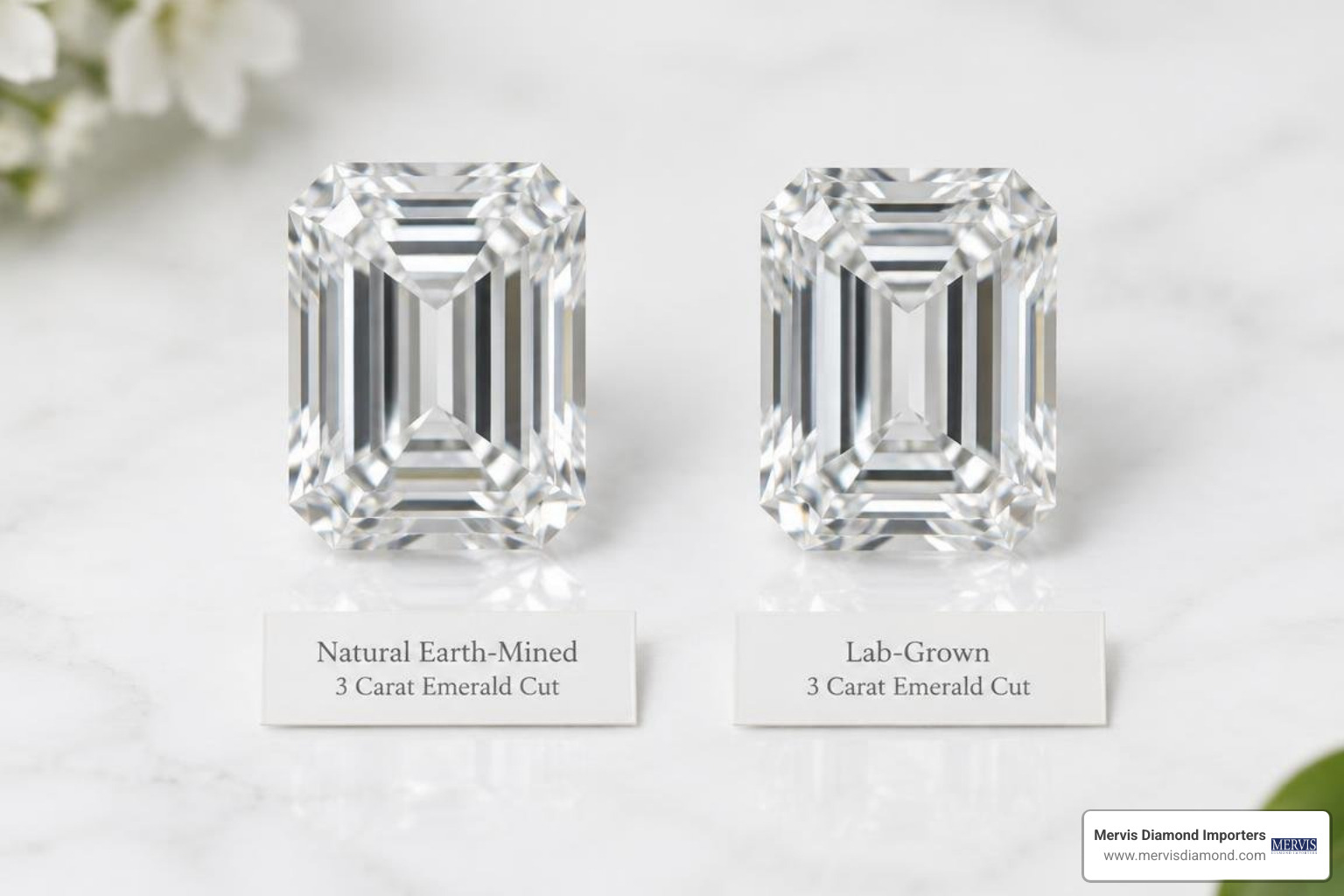
Natural vs. Lab-Grown 3 Carat Emerald Cut Pricing
| Diamond Category | Typical Color / Clarity | Approximate Price Range (Oct 2026) | Primary Appeal |
|---|---|---|---|
| Natural Earth-Mined | G–H / VS1–VS2 | $32,000 – $58,000+ | Geological rarity, enduring heirloom value |
| Natural Earth-Mined | D–F / VVS1–VVS2 | $60,000 – $95,000+ | Elite investment quality, ultra-rare status |
| Lab-Grown | E–F / VVS2–VS1 | $2,200 – $4,500 | Accessible modern luxury, maximum size for budget |
For shoppers seeking modern, high-clarity alternatives, exploring lab grown emerald diamond selections allows you to secure top-tier color (D-F) and clarity (VVS) grades at a fraction of the cost of mined stones.
The "Buying Shy" Strategy and Fluorescence Impact
To maximize your budget, consider "buying shy." Diamond prices jump at round carat marks (such as 3.00 carats). Selecting a 2.85 to 2.95 carat emerald cut can save you 10% to 15% on price while offering virtually identical face-up dimensions.
When evaluating fluorescence:
- None to Faint: Recommended for D–G color diamonds to avoid milky or hazy optical effects in step cuts.
- Medium Blue: Can make lower-color stones (I–J) appear whiter in natural sunlight, often providing a subtle price discount.
For a broader look at carat benchmarks, explore our 3 carat diamond buying overview.
Choosing the Perfect Setting and Metal Pairing
A 3-carat center stone requires a setting that balances everyday security with clean visual balance.
Solitaire and Multi-Stone Setting Styles
- Classic Solitaires: Clean four-prong settings let the stone take center stage. Explore classic solitaire ring designs or organic, floral-inspired sculpted petal solitaire styles.
- Three-Stone Configurations: Flank your center stone with tapered baguettes, trapezoids, or side stones using three-stone emerald engagement rings to create an elegant geometric transition across the finger.
- East-West Orientations: Setting the stone horizontally offers a bold, contemporary take on classic Art Deco styling.
Metal Color Considerations: Platinum vs. Yellow Gold
Metal choice influences both the security and color perception of your diamond:
- Platinum & White Gold: Naturally hypoallergenic and ultra-secure. These bright white metals pair best with D–H color stones, as seen in our platinum single row diamond bands.
- 18k Yellow & Rose Gold: Rich yellow gold adds warm vintage contrast and allows you to select an I or J color diamond without showing unwanted tint. Pair your ring with complementary 18k yellow gold diamond bands for a unified aesthetic.
Frequently Asked Questions About 3 Carat Emerald Cuts
What are the standard dimensions for a 3 carat emerald diamond?
A well-proportioned 3 carat emerald cut diamond measures roughly 9.64 × 7.14 × 4.64 mm, with a 65% depth ratio, a 1.35 length-to-width ratio, and approximately 65.39 mm² of face-up surface area.
Is VS2 clarity safe for a large step-cut diamond?
Yes, provided the diamond is eye-clean upon visual inspection. Look for inclusions situated toward the outer step facets rather than centered beneath the primary table.
Why is GIA or AGS certification essential for a 3 carat stone?
Independent grading from GIA or AGS protects your purchase by verifying exact color, clarity, and cut proportions without artificial grade inflation.
Conclusion
Finding the perfect 3-carat emerald cut diamond comes down to balancing proper proportions, an eye-clean clarity grade, and a setting that complements your personal style. Whether you choose an earth-mined heirloom or a modern lab-grown stone, focusing on depth percentage, table spread, and independent certification will ensure your ring delivers remarkable brilliance for a lifetime.
To see how overall design and metal choices shape total costs, review our comprehensive 3 carat diamond ring pricing guide, or visit our experts in Tysons, Rockville, or Washington DC to view hand-curated stones in person.