

Antique Looking Wedding Bands Bring Unmatched Character to Your Big Day
Antique Looking Wedding Bands: Old-World Detail, Made for Today
Antique looking wedding bands pair historic design cues with modern construction. Look for hand engraving, milgrain beaded edges, filigree, floral or wheat motifs, and geometric Art Deco patterns. Choose durable platinum, 14K or 18K gold, then add character with rose-cut or old-style diamonds, sapphires, or a softly textured finish.
The key difference is simple: a true antique band was made roughly 100 years ago or more, while an antique-inspired band is newly made to capture the romance of Victorian, Edwardian, or Art Deco jewelry. That means couples can get an heirloom look without accepting the wear, sizing limits, or fragile settings that sometimes come with an original piece.
For many couples, that balance matters. Antique-style bands offer detail and individuality that a plain modern band may not, while still being practical enough for everyday life. From delicate Edwardian scrollwork to bold Art Deco geometry, the right design should feel personal, comfortable, and built to last.
I am Morris Mervis, and in this guide, I will help you recognize the details that make an antique-style wedding band truly special. For a broader look at how these designs fit into the wider world of bridal jewelry, the history of wedding rings offers useful context on how ring traditions have evolved.
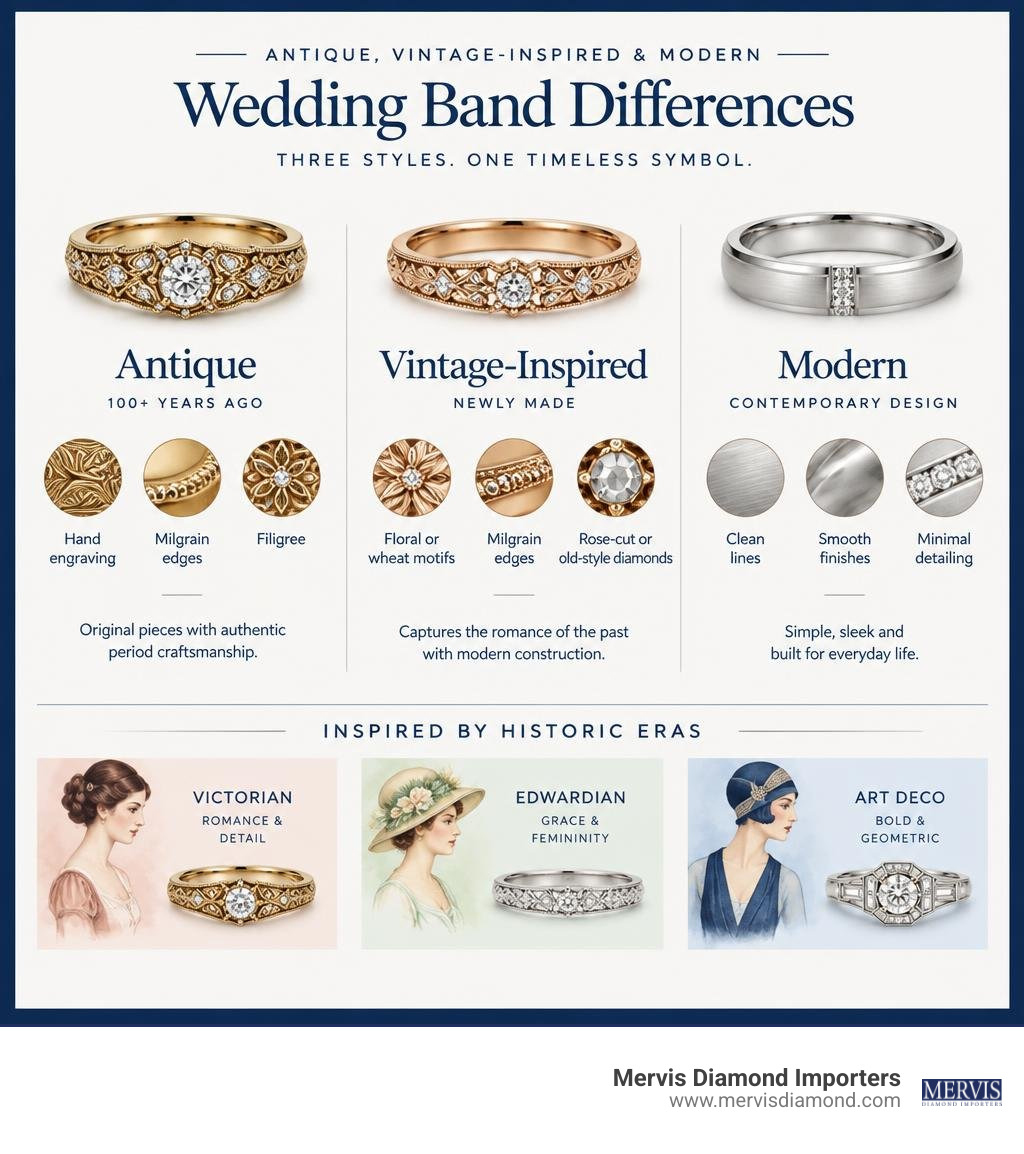
Defining Characteristics and Historical Eras of Vintage Jewelry
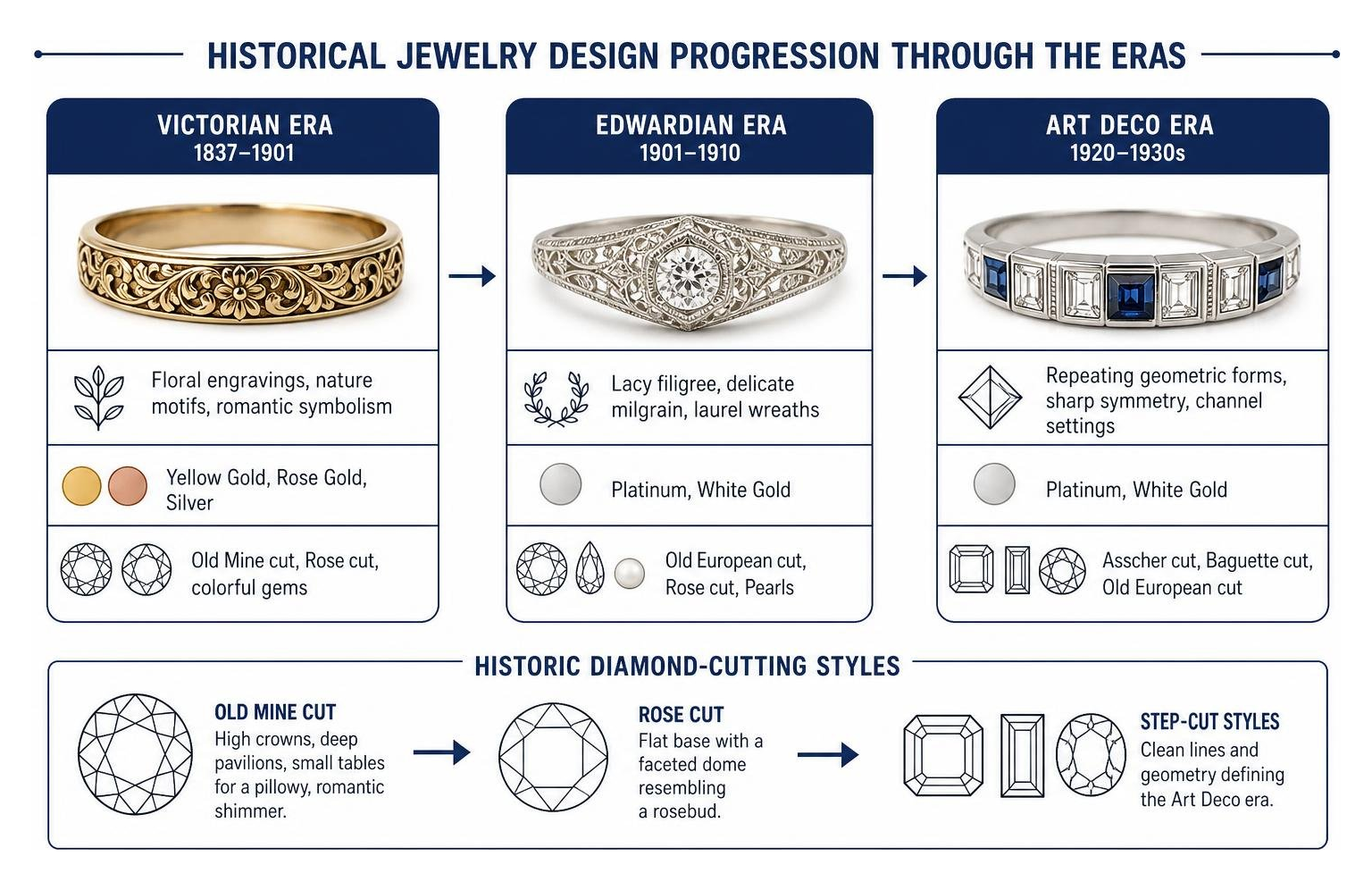
When exploring historic ring design, it helps to understand the key eras that inspire modern jewelers. Over 60% of buyers looking for historical aesthetics gravitate toward the Victorian and Edwardian eras, while the sleek sophistication of the Art Deco movement remains an enduring favorite.
Each era reflected the art, culture, and technological advances of its time:
- Victorian Era (1837–1901): Named for Queen Victoria, this period embraced sentimental symbolism, floral patterns, serpent motifs, and romantic intimacy. Early and mid-Victorian jewelry frequently incorporated warm yellow or rose gold, colorful gemstones, and nature-inspired engravings.
- Edwardian Era (1901–1910): Known for its grace and regal lightness, the Edwardian period marked the rise of platinum work. Jewelers used fine piercing techniques to create intricate, lace-like filigree, delicate garlands, and ornate ribbon patterns.
- Art Deco Era (1920–1930s): A sharp pivot from floral curves, Art Deco celebrated bold geometry, symmetry, clean lines, and vibrant color contrasts. Step-cut stones, baguettes, and repeating architectural shapes defined this glamorous era.
| Era | Prominent Metals | Signature Design Elements | Common Gemstone Cuts |
|---|---|---|---|
| Victorian (1837–1901) | Yellow Gold, Rose Gold, Silver | Floral engravings, nature motifs, romantic symbolism | Old Mine cut, Rose cut, colorful gems |
| Edwardian (1901–1910) | Platinum, White Gold | Lacy filigree, delicate milgrain, laurel wreaths | Old European cut, Rose cut, Pearls |
| Art Deco (1920–1930s) | Platinum, White Gold | Repeating geometric forms, sharp symmetry, channel settings | Asscher cut, Baguette cut, Old European cut |
Beyond metalwork, antique aesthetics are heavily defined by historic diamond-cutting styles. Before computer-guided lasers, diamonds were shaped entirely by hand under candlelight.
Old Mine cuts featured high crowns, deep pavilions, and small tables, giving them a pillowy, romantic shimmer. Rose cuts, dating back centuries, feature a flat base and a faceted dome resembling a rosebud.
For those who love this timeless proportion paired with contemporary elegance, a vintage cushion cut diamond band offers the perfect blend of historical geometry and modern structural reliability.
Iconic Metalwork and Handcrafted Textures
The heart and soul of an heirloom ring lie in its metalwork. In modern minimalist jewelry, high-polished flat surfaces reign supreme. By contrast, antique-style bands feature dimensional artistry that catches light from every angle:
- Milgrain Borders: Derived from the French mille-grains ("a thousand grains"), milgrain is a delicate border of tiny raised metal beads. It frames diamonds and band edges, providing an instantly recognizable vintage texture.
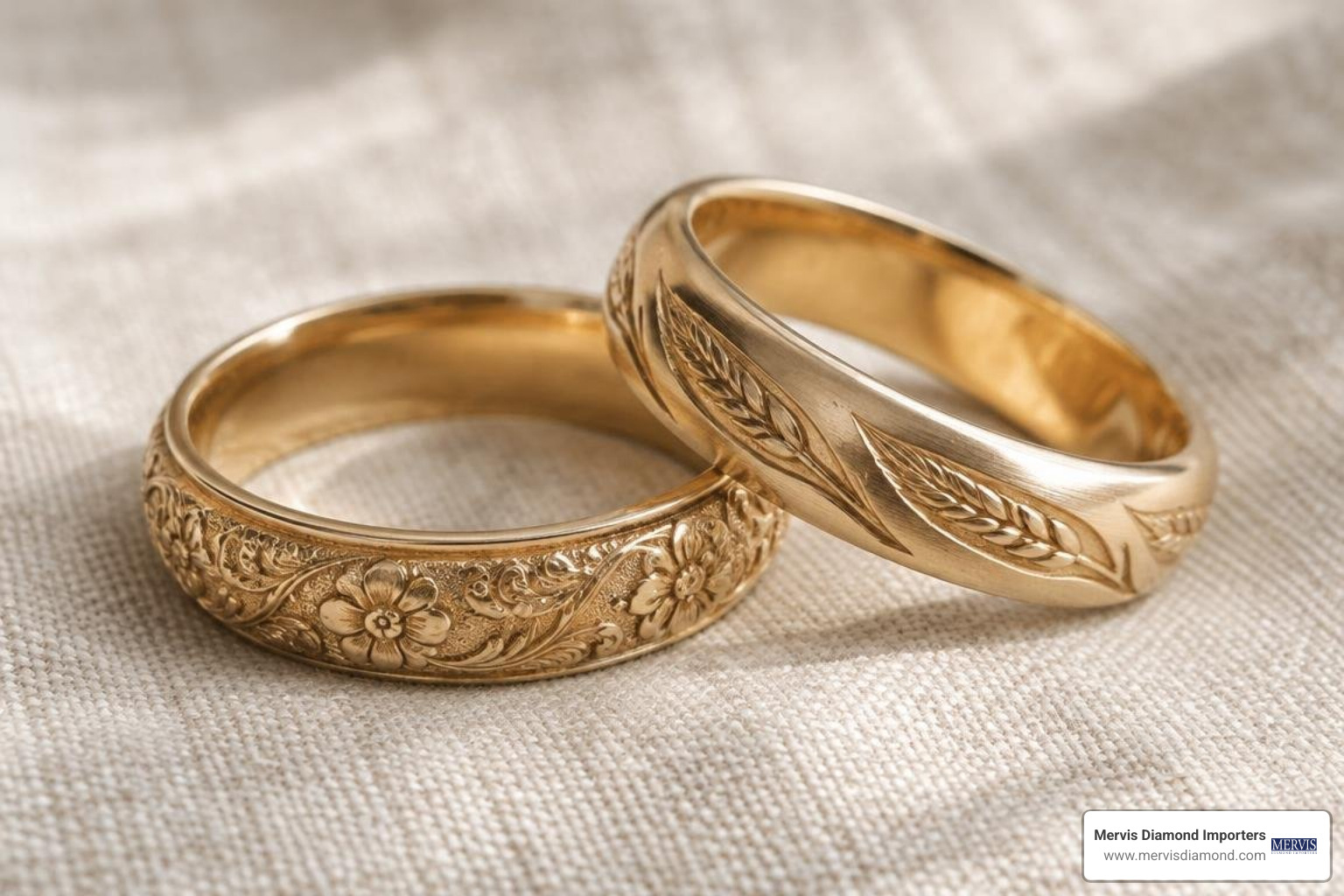
- Hand Engraving & Scrollwork: Master engravers carve intricate flourishes, acanthus leaves, and botanical swirls directly into the metal. Rings like this wheat motif wedding band showcase how hand-carved textures bring historic symbolism—such as abundance and prosperity—into daily wear.
- Hammered and Brushed Finishes: Soft satin, wire-brushed, or lightly hammered surfaces give the metal a lived-in warmth, muting modern mirror-shine in favor of an authentic vintage patina.
Choosing the right metal enhances these historic textures. Platinum provides the crisp strength needed for ultra-fine Edwardian milgrain, while warm yellow gold and romantic rose gold echo the cozy, candlelit ambiance of 19th-century Victorian workshops.
Choosing Gemstones for Antique Looking Wedding Bands
Gemstones in antique-inspired jewelry do far more than add sparkle; they tell a story. While classic diamonds remain the most requested choice, incorporating colored gems or historic cuts creates authentic charm.
Deep blue sapphires, rich emeralds, and velvety rubies were frequently set alongside diamonds during the Edwardian and Art Deco periods. For brides seeking a harmonious contour around a distinctive engagement ring, a curved band with milgrain accents integrates diamond petals with beaded metalwork to create a romantic, bespoke stack.
Top Design Elements of Antique Looking Wedding Bands
The global vintage and antique jewelry market is projected to grow at a CAGR of 5.2% from 2023 to 2030. Furthermore, approximately 35% of couples now consider vintage or antique-style wedding rings as their top choice, citing individuality, artisan craftsmanship, and romantic character as primary motivators.
When selecting an heirloom-style ring, look for these distinctive design hallmarks:
- Filigree Lace: Intricate metal threads bent and soldered into openwork lace patterns.
- Beaded Rims and Halos: Micro-beading that traces the perimeter of the ring or encircles individual stones.
- Symbolic Carvings: Floral vines, laurels, and historic scroll motifs. If you appreciate heritage symbolism, intricate Celtic style rings offer a timeless take on endless devotion through interwoven knotwork.
- Rolled and Textured Edges: A comfort fit engraved wedding band softens the transition between hand-carved patterns and the finger, ensuring historical styling feels seamless in daily wear.
Customizing Antique Looking Wedding Bands for Modern Daily Wear
One of the greatest advantages of choosing an antique-inspired reproduction over a fragile historical artifact is customizability. Today's couples can tailor every element to match their personal aesthetic while ensuring the ring stands up to active lifestyles.
Consider these customization options:
- Two-Tone Metal Accents: Combine yellow gold detailing with a platinum foundation for rich visual contrast.
- Custom Interior Inscriptions: Add secret dates, family crests, or meaningful phrases in traditional calligraphic engraving inside the band.
- Curated Ring Stacks: Layer your antique-style band with timeless anniversary bands featuring modern micro-pave or eternity diamond layouts. Mixing clean lines with detailed vintage engravings creates a textured, one-of-a-kind bridal set.
Care and Maintenance for Heirloom-Style Rings
Because antique-inspired bands feature intricate grooves, milgrain beads, and delicate prongs, they require thoughtful maintenance to keep their detail sharp and dirt-free:
- Gentle Cleaning at Home: Soak the ring in warm water mixed with a few drops of mild dish soap for 15 minutes. Use an extra-soft baby toothbrush to gently sweep away dust and lotions from tiny filigree crevices.
- Be Careful with Ultrasonic Cleaners: While plain bands handle ultrasonic vibrations effortlessly, rings with extensive pave work, micro-prongs, or softer colored gemstones (like emeralds) can be damaged by high-frequency vibration. Stick to gentle manual washing or professional steam cleanings.
- Schedule Semi-Annual Prong Inspections: Handcrafted settings and beaded prongs should be inspected by a professional jeweler every six months to ensure stones remain firmly secured.
- Mindful Wear: Remove your ring before heavy gym workouts, gardening, rock climbing, or working with harsh household chemicals. Platinum and gold are strong, but sharp physical impacts can flatten delicate milgrain beading over time.
For more detailed guidance on keeping fine jewelry in excellent condition, the jewelry cleaning overview from Wikipedia explains common cleaning methods and precautions.
Frequently Asked Questions about Antique-Inspired Wedding Rings
How does the cost of antique-style bands compare to authentic antiques?
The average price of an authentic antique wedding band on major marketplaces ranges from $800 to $3,500, depending on metal type, gemstones, and rarity. In many cases, authentic antique wedding bands can cost 20–30% less than newly manufactured custom rings of similar quality because you are purchasing an existing estate piece without new fabrication costs.
However, antique-inspired modern rings offer distinct cost advantages in long-term maintenance, as they do not require costly restoration, prong rebuilding, or structural reinforcement.
Can modern antique-style bands withstand daily wear and tear?
Yes. Authentic 100-year-old bands often suffer from thinning shanks, brittle solder joints, and worn prongs from decades of use. Modern antique-style bands solve this problem completely.
By utilizing modern casting methods, high-density metal alloys, and precision diamond setting, you receive the charming aesthetic of the Victorian or Edwardian eras combined with the structural strength required for lifelong daily wear.
What is the difference between authentic antique and vintage-inspired rings?
In the jewelry industry, the distinction comes down to age:
- Antique: Any piece crafted 100 years ago or earlier (currently 1926 or before).
- Vintage: A piece crafted between 20 and 99 years ago.
- Antique-Inspired / Vintage-Style: A brand-new ring manufactured today that incorporates design motifs, cuts, and finishes characteristic of historic eras.
In a survey of 1,000 brides, 42% noted they would choose an antique or vintage-inspired wedding band over a modern design for its sentimental value and craftsmanship. Choosing an antique-inspired band provides that rich historical narrative while offering modern durability, flexible sizing, and the ability to customize your dream piece.
Conclusion
Your wedding band is an enduring emblem of your commitment. Choosing an antique-inspired design infuses your ring with romantic craftsmanship, rich texture, and timeless elegance that will never go out of style.
At Mervis Diamond Importers, we take immense pride in helping couples across our Tysons, VA, Rockville, MD, and Washington, DC showrooms discover rings that resonate with their individual stories. Whether you are captivated by Edwardian lace, Victorian botanicals, or Art Deco geometry, our expert team provides a welcoming, pressure-free experience to help you find the ring of a lifetime.
To explore all your options and find the perfect match for your engagement ring, explore different wedding band styles and discover the piece that speaks to you.