

Celtic Style Wedding Rings: History, Symbolism, and Designs
Choosing a wedding band is one of the most meaningful decisions you will make during your wedding planning journey. While classic polished metal bands remain timeless, celtic style wedding rings offer an added layer of rich cultural narrative, historical depth, and intricate artistry.
When you choose a Celtic design, you are choosing a symbol that has endured for centuries. Modern master jewelers craft these pieces using a wide array of options, blending ancient openwork filigree with solid metal rails to make the designs pop. Understanding what a wedding ring symbolizes becomes even more poignant when every weave and loop of the metal tells a specific story.
From subtle single-knot accents to bold, full-circle weaves around the band, exploring different styles of wedding bands allows you to select a ring that speaks directly to your relationship's unique story.
The Symbolic Meaning Behind Celtic Style Wedding Rings
The defining feature of Celtic knotwork is its endless nature. Ancient Celtic artists created patterns without a visible beginning or end. In the context of marriage, these unbroken loops represent eternal love, infinite unity, devotion, and a life woven seamlessly together.
Here is how the iconic Celtic motifs break down symbolically:
- The Trinity Knot (Triquetra): Composed of three intersecting arcs, this pattern originally represented the three natural elements (earth, sea, and sky) or stages of life. Today, many view it as a representation of love, honor, and protection, or the unity of mind, body, and spirit.
-
The Claddagh Design: Originating in the small Irish fishing village of Claddagh, this motif features three distinct elements:
- The Heart: Symbolizes deep, unconditional love.
- The Hands: Represent trust, partnership, and true friendship.
- The Crown: Signifies fierce loyalty and devotion.
- Continuous Celtic Knots: Intricate interlacing geometric loops that wrap entirely around the finger, reinforcing the idea that true love has no finish line.
Customizing and Engraving Your Celtic Style Wedding Rings
While the Celtic patterns themselves carry profound meaning, adding personalized touches transforms a ring into an irreplaceable family heirloom. Customization allows you to blend ancient symbolism with your private romantic language.
Popular ways to personalize celtic style wedding rings include:
- Gaelic Phrase Engravings: Inscribing classic Irish phrases inside the inner band adds secret romance. Popular choices include "Mo Anam Cara" (My Soulmate) or "Gra Go Deo" (Love Forever).
- Significant Dates: Adding your wedding date or the day you first met in classic typography or Roman numerals.
- Bespoke Finishes: Choosing a dual-tone precious metal design—such as 14k white gold knotwork set against 14k yellow gold outer rails (a gorgeous design often seen in regional knot styles like the 'Lochy' ring design)—or adding an oxidized dark background to give the knotwork dramatic visual depth.
Exploring popular wedding band engravings gives you plenty of inspiration for what to etch on the inside of your ring.
Metals and Materials Used in Celtic Ring Designs
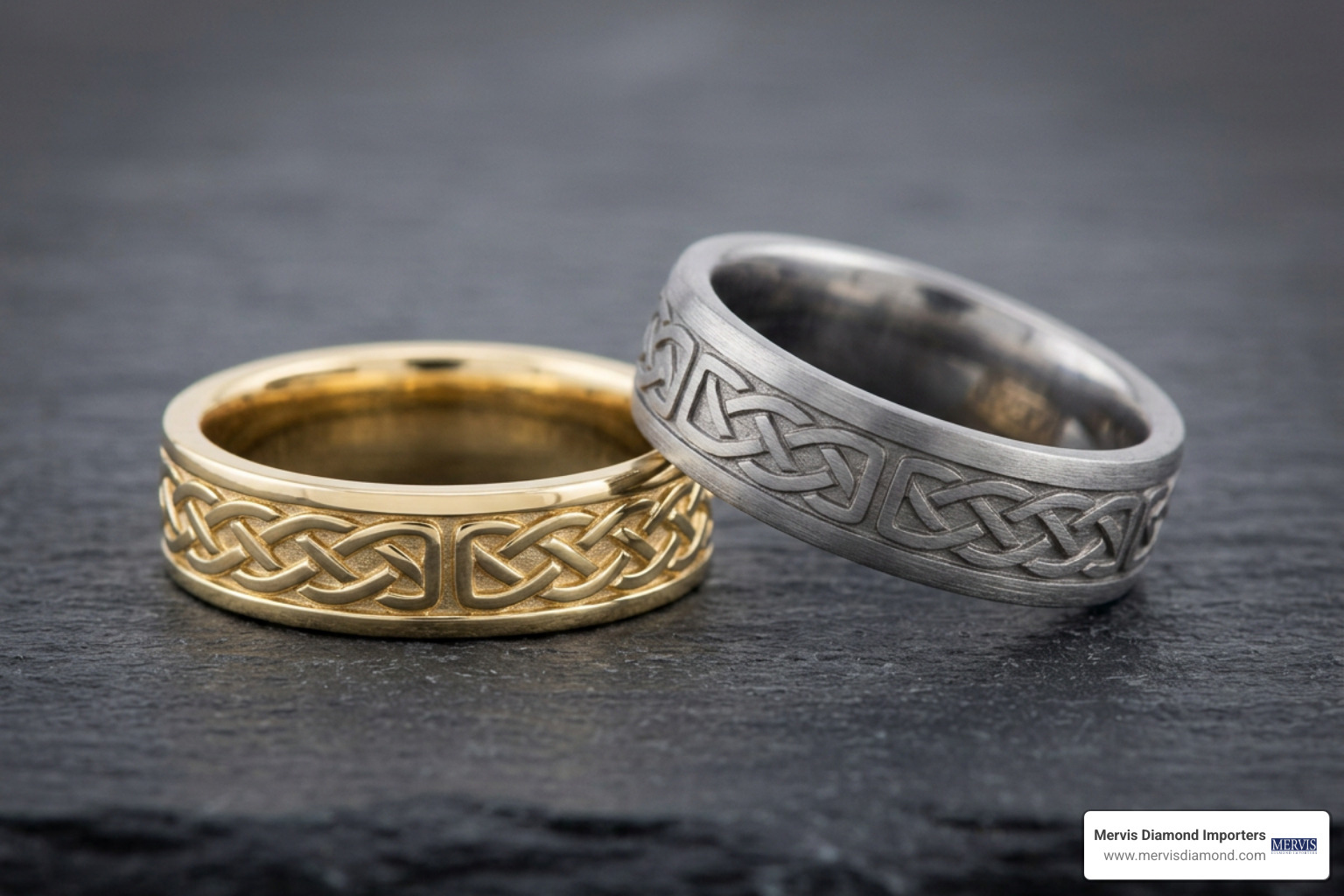
The metal you choose for your wedding ring dictates not only its visual color and character, but also its weight, maintenance needs, and longevity. Celtic rings are crafted across a vast spectrum of traditional precious metals and modern engineered elements.
Understanding the pros and cons of different metal types ensures your ring fits your personal daily routine.
| Metal Type | Key Characteristics | Durability & Daily Wear | Price Range |
|---|---|---|---|
| Sterling Silver | Bright white shine, highly affordable, classic traditional look | Soft metal; prone to scratching and natural tarnishing | Very Budget-Friendly |
| 14k Yellow Gold | Warm traditional glow, classic aesthetic, high value | Highly durable for daily wear; easily polished | Mid-to-High Investment |
| 14k White Gold | Sleek, modern silvery appearance; pairs well with diamonds | Durable; requires occasional rhodium re-plating over time | Mid-to-High Investment |
| Platinum | Heavy weight, hypoallergenic, natural brilliant white hue | Extremely durable; develops a soft vintage patina | Premium Investment |
| Titanium | Extremely lightweight, cool grey tone, hypoallergenic | Highly scratch-resistant; cannot be easily resized | Budget-Friendly |
| Tungsten | Heavy weight, dark gunmetal shine, extremely tough | Virtually scratch-proof; brittle under extreme impact | Budget-Friendly |
For gentlemen exploring warm, classic tones, a classic 14k yellow gold men's wedding band featuring subtle Celtic etching offers the ultimate balance of tradition and luxury.
Precious Gold and Platinum Options
Gold remains the ultimate traditional choice for Celtic jewelry. Fine yellow gold brings out the antique warmth of traditional knotwork, while white gold offers a crisp, contemporary backdrop for intricate filigree. Rose gold provides a unique, romantic warmth that makes Celtic detailing stand out in a crowd.
When purchasing precious gold or platinum jewelry made in Ireland, authentic pieces carry an official hallmark from the Irish Assay Office located in Dublin Castle. This mark guarantees that the metal purity has been independently tested and certified.
If you ever decide to update your ring's aesthetic down the road, you might wonder can you change a yellow gold ring to white gold. While white rhodium plating can temporarily transform yellow gold, opting for solid metal choices up front gives you lasting satisfaction. Furthermore, platinum buyers often ask can platinum jewelry be scratched. While platinum does scratch, the metal is merely displaced rather than lost, developing a cherished vintage texture known as a patina over time.
Durable Alternative Metals: Titanium and Tungsten
If you lead an active lifestyle, work extensively with your hands, or prefer a contemporary industrial vibe, modern alternative metals are fantastic options.
Titanium and tungsten have surged in popularity for men's and unisex Celtic bands. Titanium provides incredible strength while remaining amazingly lightweight on the finger. Tungsten boasts a substantial, heavy feel and an extremely hard surface that resists scratches from daily wear and tear.
Reviewing 4 tips for choosing a wedding band that matches your lifestyle will help you decide whether traditional gold or a rugged alternative metal best fits your daily routine.
Sizing, Width, and Fit for Celtic Bands
Because Celtic patterns wrap around the ring, selecting the right band width and size is critical. Band widths typically range from narrow 4 mm bands up to bold 10 mm statement profiles. The 6 mm width represents the most popular sweet spot for balancing design visibility with day-to-day comfort.
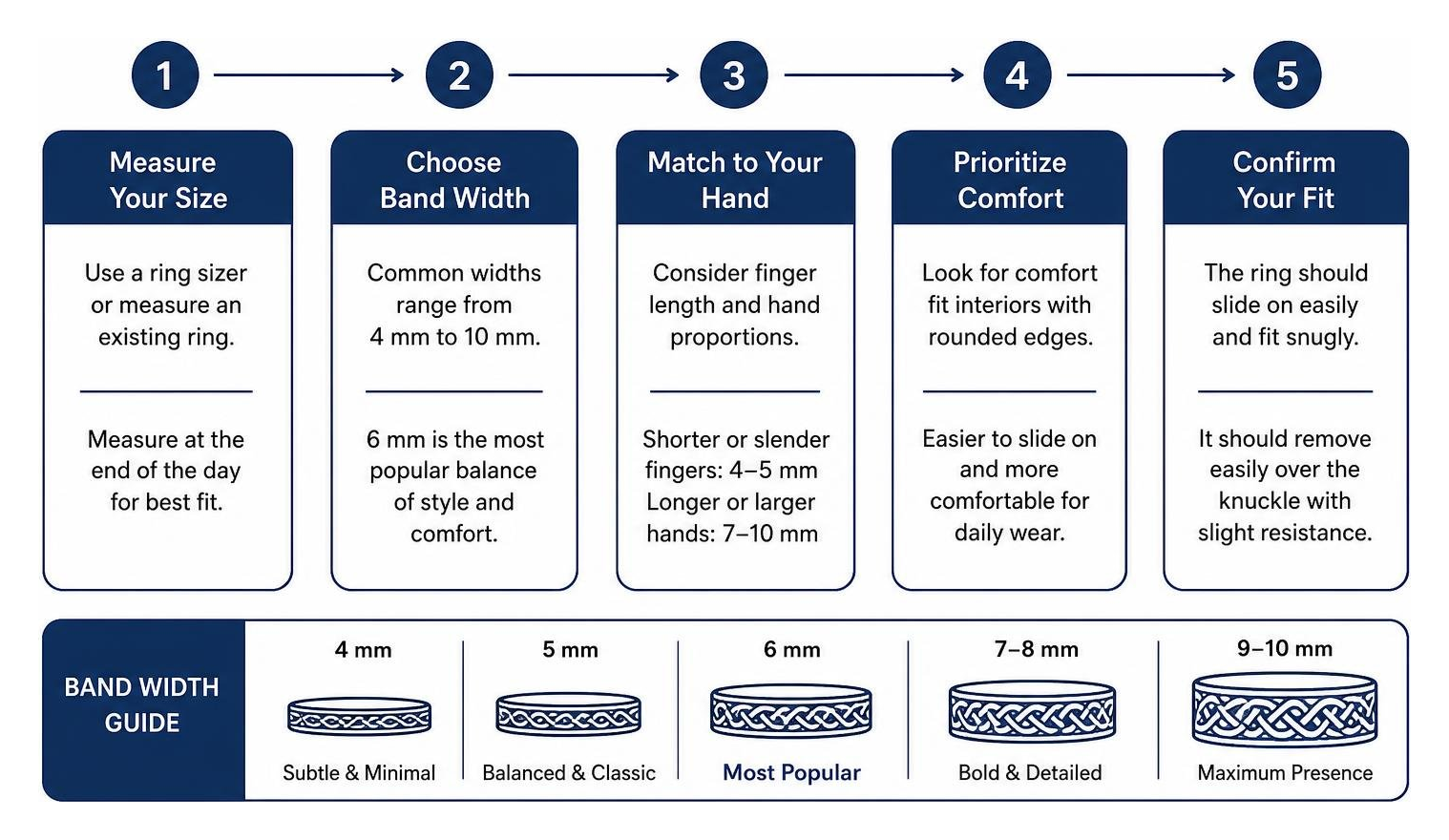
When selecting your ideal size and width, keep these key factors in mind:
- Visual Real Estate: Complex knotwork designs, such as dual-tone filigree or detailed Trinity Knots, are much easier to see on medium-to-wide bands (5 mm to 8 mm).
- Hand Proportions: Slender or shorter fingers often look best with 4 mm to 5 mm bands (such as a classic 5mm 14k gold wedding band), whereas longer fingers or larger hands can easily accommodate 7 mm to 10 mm widths.
- Comfort Fit Edges: Many Celtic bands feature a "comfort fit" interior—meaning the inner metal edge is slightly rounded. Comfort fit rings slide over knuckles more easily and feel smoother during daily activity.
- Sizing Accuracy: Standard ring sizes generally run from size 4 to size 15. Because wide bands cover more skin and trap more moisture, you may need a quarter or half-size larger than your standard thin ring size.
Learning how to pick the perfect wedding band involves physically trying on different band profiles to feel the difference on your hand.
Gender Styling and Stackable Sets
Celtic style wedding rings offer incredible flexibility across men's, women's, and gender-neutral designs. Women's rings often feature narrower widths (around 4 mm to 5.6 mm) with intricate openwork filigree or delicate single Trinity Knots. Men's rings lean toward broader profiles (6.9 mm to 10 mm) with strong outer rails, oxidized backgrounds, or heavy tungsten bevels.
If you plan to wear your Celtic band alongside a solitaire diamond engagement ring, ensuring a harmonious wedding band engagement ring match is essential. Detailed Celtic patterns look striking against simple solitaire bands, creating a textured contrast.
Mastering how to wear your engagement ring and wedding ring helps you decide whether to wear your wedding band closest to your heart on your left ring finger or stack them in a creative combination. For those building a multi-ring look over time, consulting the ultimate stacking guide will help you layer metal textures seamlessly.
Buying Online: Custom Craftsmanship vs. Ready-to-Ship
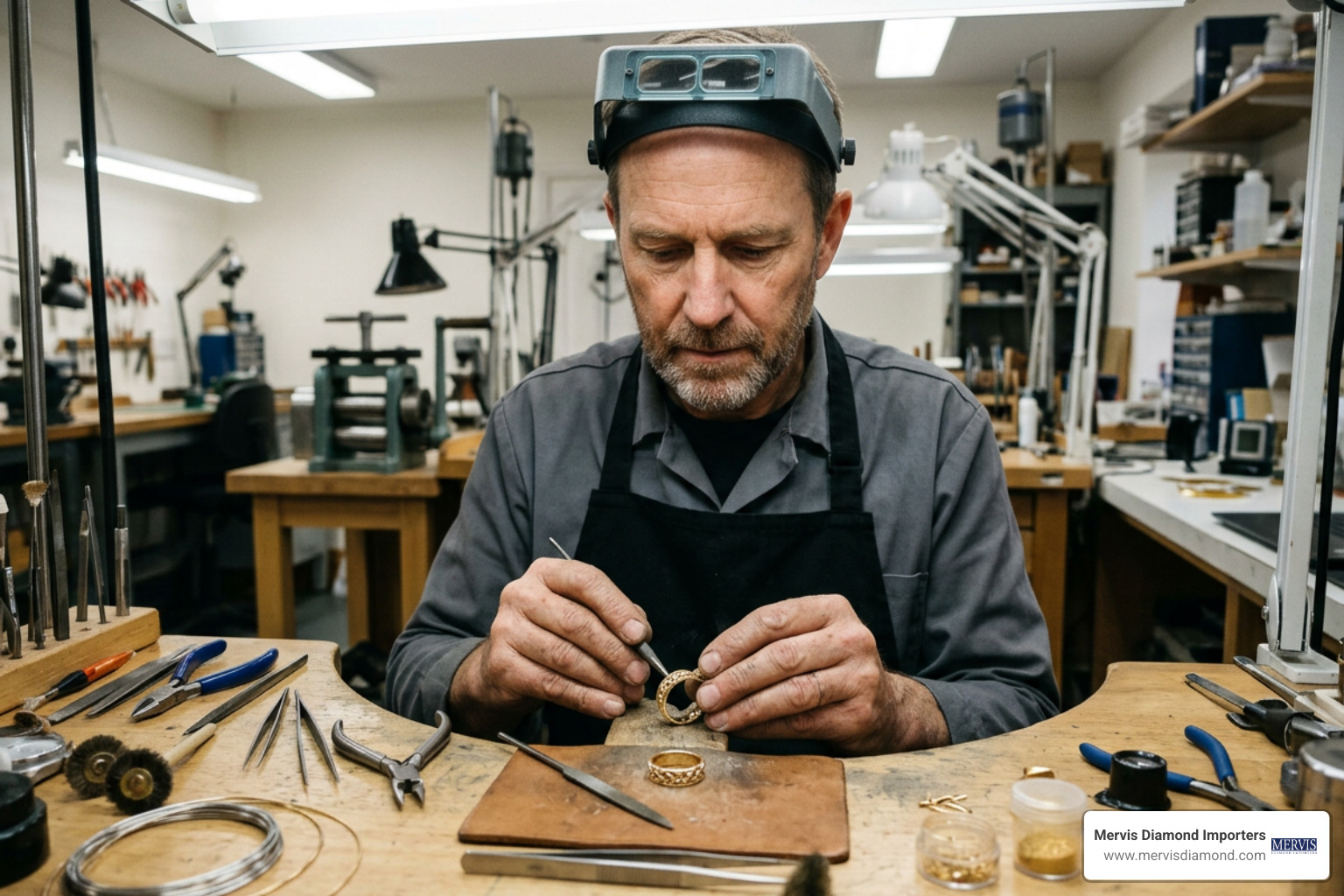
When shopping for celtic style wedding rings, understanding the logistics behind manufacturing, shipping, and delivery timelines ensures you aren't left ringless on your wedding morning!
You generally have two paths when purchasing Celtic jewelry:
- Ready-to-Ship Rings: Standard stock styles in popular metals (like sterling silver, titanium, or standard gold sizes) shipped directly from domestic distributors. These ship quickly, making them ideal if your wedding date is right around the corner.
- Custom-Made & Imported Craftsmanship: Bespoke gold or platinum rings ordered directly from artisanal workshops in Ireland. Custom handcrafted pieces must be created, polished, and sent to the official Irish Assay Office for hallmark testing before traveling across the Atlantic.
Custom hallmarked gold pieces from Ireland typically take 2 to 3 weeks for standard production and testing, while highly specialized custom gold configurations can require up to 8 to 10 weeks of lead time. Knowing the right time to purchase your wedding band gives you a comfortable window before your big day.
Buying through established domestic fine jewelers like Mervis Diamond Importers protects you from unexpected international customs fees, transit delays, or complex overseas return policies.
Care and Maintenance Guidelines for Celtic Rings

The detailed textures, grooves, and recessed areas of Celtic knotwork require correct cleaning techniques to stay radiant for a lifetime.
To keep your Celtic ring looking its absolute best:
- Cleaning Oxidized Jewelry: Many silver and gold Celtic rings feature an intentionally darkened, oxidized background in the recessed knotwork to make the high-polish details stand out. Never use liquid chemical dip cleaners on oxidized jewelry! Liquid cleaners strip away the dark oxidation entirely, flattening the ring's artistic contrast. Instead, wipe high points gently with a treated polishing cloth.
- Standard Gold & Platinum Care: Clean un-oxidized gold or platinum Celtic rings in lukewarm water mixed with a few drops of mild, non-citrus dish soap. Use a soft-bristled toothbrush to gently clear buildup out of the tight crevices of the knotwork. Rinse thoroughly with clean water and dry completely with a lint-free cloth.
- Avoiding Chemical Exposure: Always remove your fine rings before swimming in chlorinated pools, soaking in hot tubs, or handling harsh household cleaning products.
- Safe Storage: Store fine metal rings in individual soft fabric pouches to prevent harder metals (like tungsten or diamond rings) from scratching softer gold or silver pieces.
Frequently Asked Questions about Celtic Wedding Rings
How do I clean an oxidized silver Celtic ring?
To safely clean an oxidized silver Celtic ring, wipe the raised polished surfaces gently with a soft jewelry polishing cloth. Avoid using liquid silver dip solutions, ultrasonic cleaners, or abrasive polishes, as these chemical treatments will dissolve the dark oxidized finish from the recessed grooves of the knotwork. For light dirt removal, rinse briefly with lukewarm water and mild dish soap, then dry thoroughly with a soft cloth.
How long does a custom Celtic wedding band take to make?
Custom Celtic wedding bands crafted in specialized goldsmith workshops typically take between 2 to 3 weeks to be cast, hand-finished, hallmarked at an official Assay Office, and shipped. Highly customized gold or platinum designs with unique width or gemstone requirements can take up to 8 to 10 weeks. It is always wise to order your bands 2 to 3 months before your wedding date to allow time for final fitting.
What is the most popular band width for a Celtic ring?
While ring widths range from narrow 4 mm bands up to bold 10 mm styles, 6 mm is the most popular width for Celtic wedding rings. A 6 mm width offers the ideal surface area to highlight intricate continuous knot patterns or Claddagh motifs clearly, while remaining extremely comfortable for daily wear on most finger sizes.
Conclusion
Celtic style wedding rings offer a powerful blend of ancient cultural heritage, enduring symbolism, and modern jewelry craftsmanship. Whether you are drawn to the eternal promise of the Trinity Knot, the romantic loyalty of the Claddagh, or the continuous flow of traditional woven filigree, these unique bands serve as daily reminders of your love's infinite path.
At Mervis Diamond Importers, we believe your wedding bands should be as extraordinary as your unique love story. Whether you are seeking expert guidance on selecting high-quality metals, finding your perfect comfort-fit sizing, or choosing a band that complements your engagement ring, our team is here to provide pressure-free, expert service.
Visit us today at our showrooms across Washington DC, Virginia, and Maryland—including our locations in Tysons, VA, and Rockville, MD—to explore our collection and discover the perfect heirloom wedding rings for your journey together.