

Colored Lab Grown Diamonds: A Practical Buyer's Guide
Shop Colored Lab Grown Diamonds With Confidence
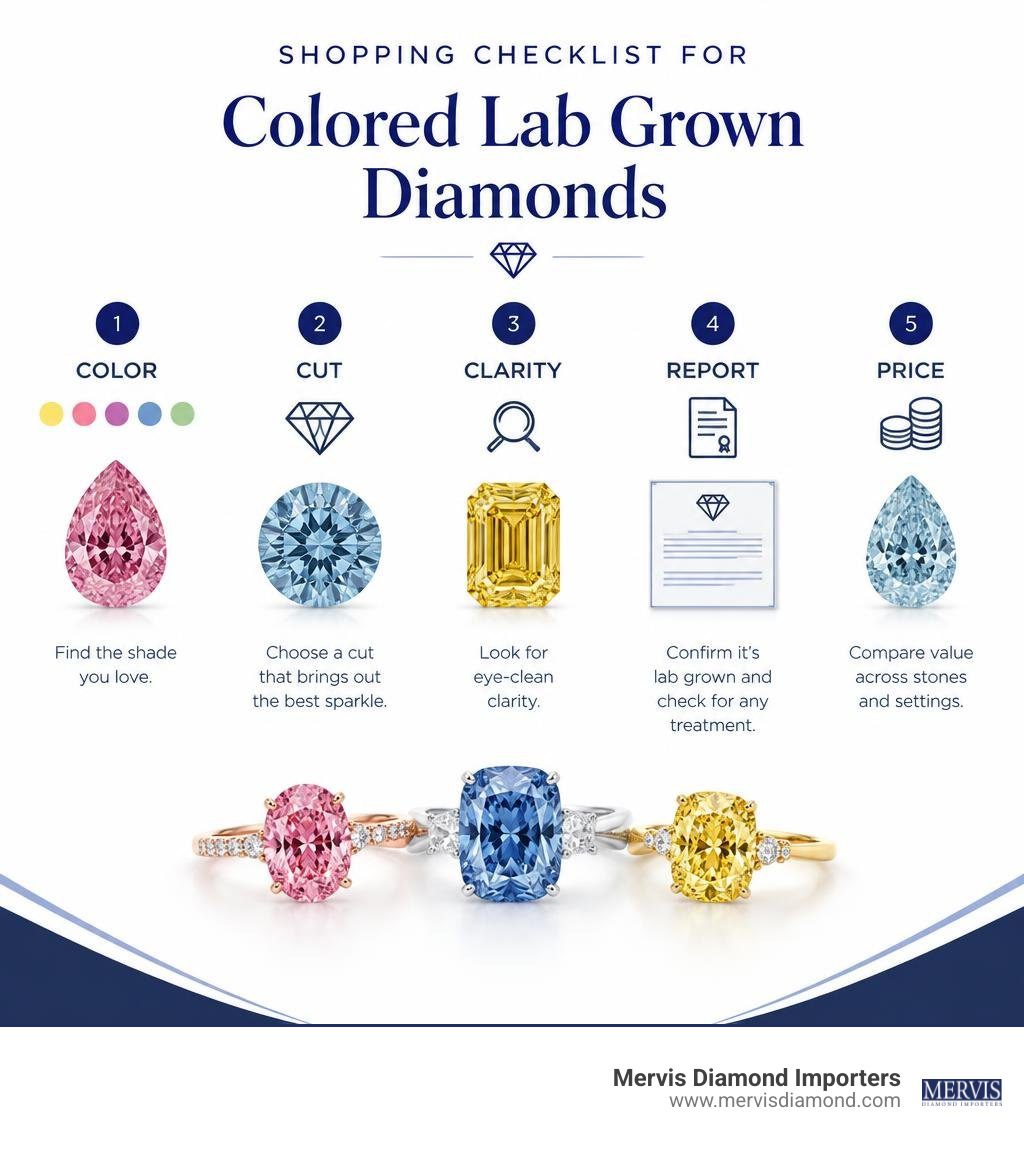
Colored lab grown diamonds are real diamonds with shades ranging from soft yellow to vivid pink and blue. If you're shopping for a ring, start with the color you love, then compare stones by color intensity, cut, eye-clean clarity, and price. Ask for a grading report that identifies the diamond as lab grown and discloses any color treatment. That gives you a better basis for comparing stones than carat weight alone.
Lab-grown color can make a distinctive ring more accessible than a comparable natural fancy-color diamond. But prices and appearance vary from stone to stone, so it pays to see how each diamond looks in the setting you want.
I'm Morris Mervis, and I'll help you sort through those choices without losing sight of what matters to you.
Introduction
Fancy colored diamonds have fascinated jewelry collectors for centuries. For generations, natural fancy diamonds—such as vivid pinks, deep canary yellows, and royal blues—were so exceptionally rare that they were reserved for museum collections, royal treasuries, and high-profile auction houses.
Today, advanced modern synthesis allows us to create these exact same captivating gems in specialized laboratory environments. The global lab-grown diamond market was valued at $22.8 billion in 2023 and is projected to reach $37.9 billion by 2028, reflecting a steady compound annual growth rate of 10.7%. Within this expanding market, colored stones now account for roughly 15% to 20% of total sales. In fact, colored lab diamond sales grew by 25% year-over-year in 2023 alone, driven by jewelry lovers seeking distinctive, personalized, and ethically conscious statement pieces. Today, in 2026, approximately 70% of shoppers under 35 say they are completely open to choosing a colored lab diamond for an engagement ring or custom jewelry design.
What Are Colored Lab Grown Diamonds and How Are They Created?
A colored lab grown diamond is chemically, physically, and optically identical to a mined fancy diamond. It is made of pure carbon crystallized in an isometric cubic system. It is not an imitation like cubic zirconia or moissanite; it rates a perfect 10 on the Mohs hardness scale and exhibits the exact same fire, brilliance, and thermal conductivity as an earth-extracted gem.
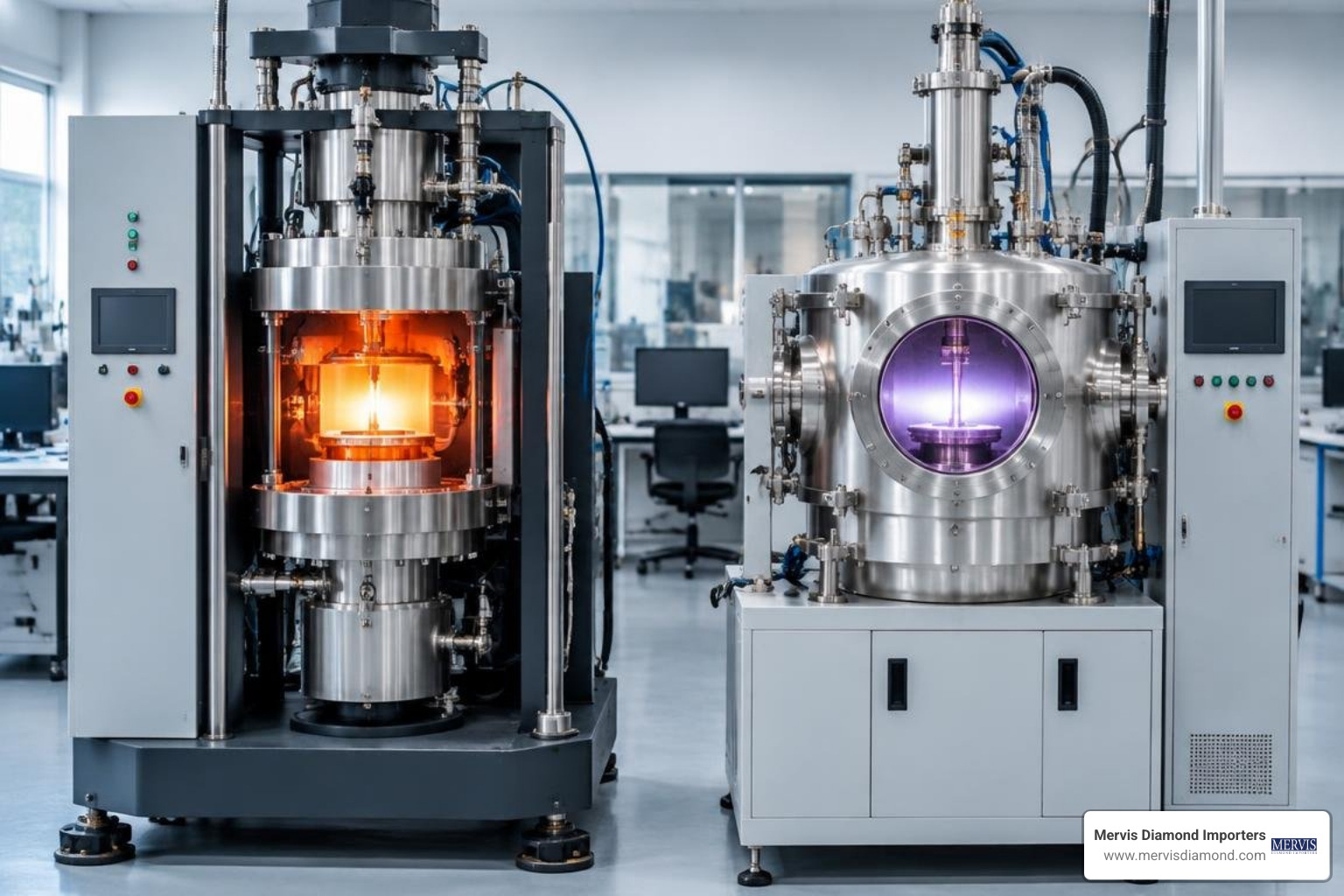
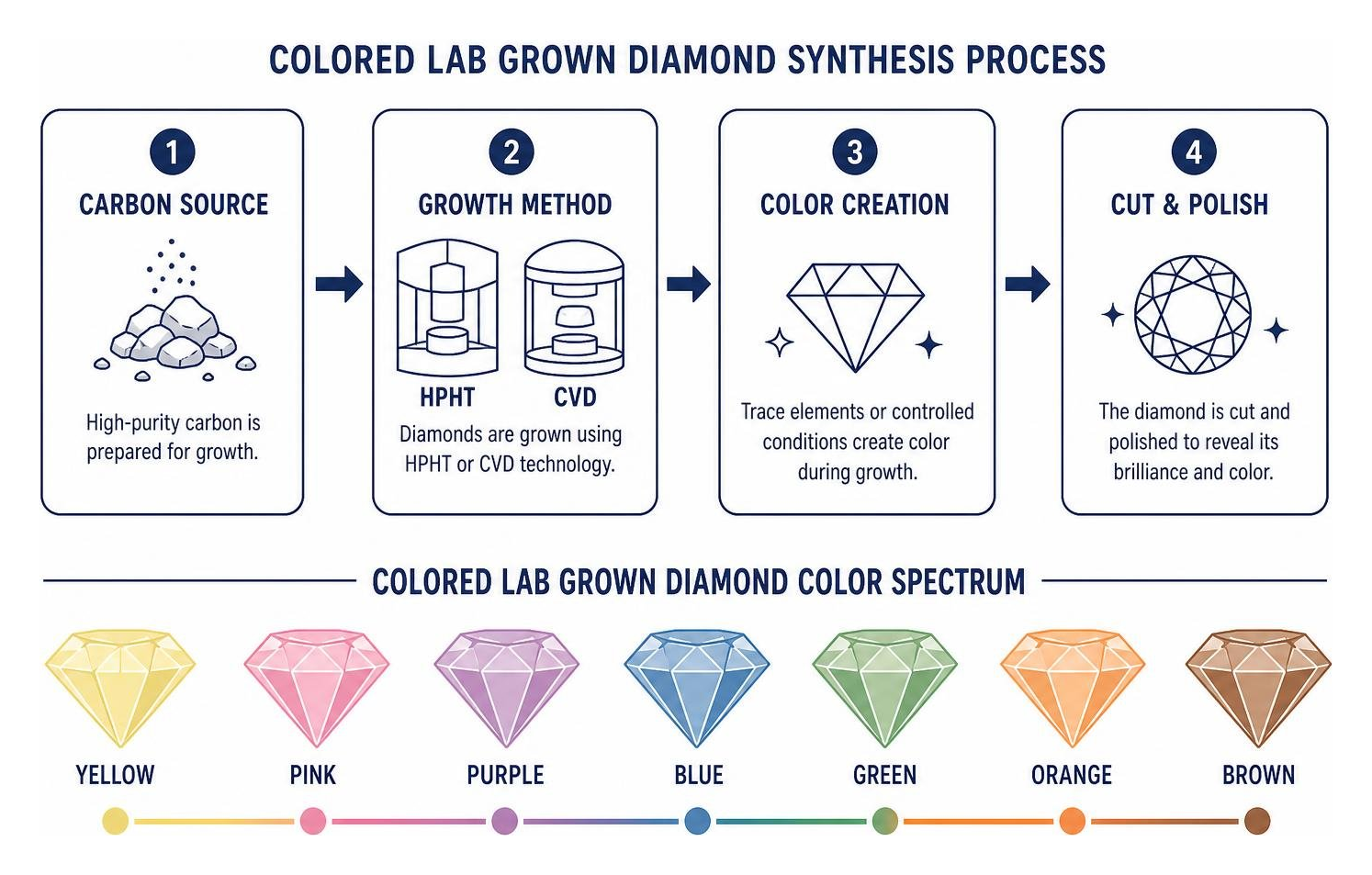
To create these stones, diamond growers rely on two primary technological methods:
- High Pressure High Temperature (HPHT): This method recreates the extreme conditions found deep within the Earth’s mantle (temperatures above 2,000°C and pressures exceeding 60,000 atmospheres). HPHT is particularly effective for producing vibrant yellow, orange, and blue diamonds.
- Chemical Vapor Deposition (CVD): This technique breaks down carbon-rich gas mixtures in a vacuum chamber, allowing carbon atoms to settle layer by layer onto a diamond seed plate. Those curious about the specific gas mixtures and plasma physics can read more about understanding what is a CVD diamond.
The coloration of a lab-grown diamond occurs either through deliberate atomic doping during crystal growth or via precise post-growth enhancements. By introducing specific trace elements into the growth chamber, technicians replace occasional carbon atoms in the diamond crystal lattice. The Gemological Institute of America provides a detailed overview of laboratory-grown diamond production methods for those who want to explore the science further.
After initial crystallization, many colored diamonds undergo controlled post-growth treatments, such as high-energy electron irradiation followed by thermal annealing. This process realigns lattice vacancies to achieve stable, vivid hues like bubblegum pink or rich emerald green. Today's major production facilities yield roughly 1,000 carats per month with an exceptional 90% gem-quality yield, ensuring steady availability of fine material. For broader context on how these production methods compare with mined stones, the comprehensive mined vs lab grown diamonds guide explains the key differences in sourcing and value.
Popular Colors, Trace Elements, and Scientific Origins
Every color in a diamond is the result of scientific phenomena occurring at the subatomic level. When white light enters the stone, specific trace elements or structural imperfections absorb chosen wavelengths of the visible spectrum while reflecting others back to your eye.
Popular Colors of Colored Lab Grown Diamonds: Pink, Yellow, and Blue
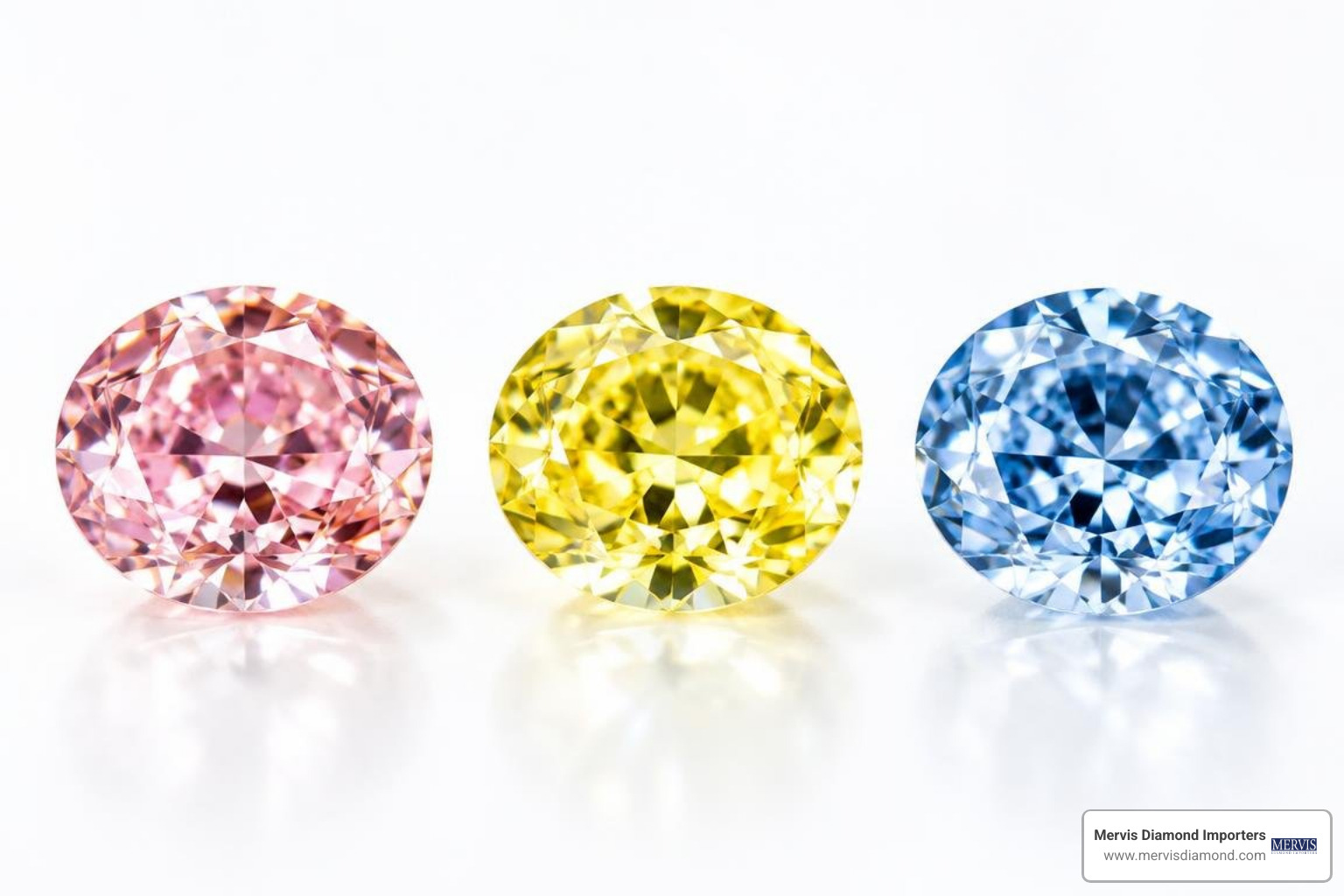
The market for fancy lab diamonds features a stunning palette, with several shades leading the way in consumer popularity:
- Canary and Warm Yellow (45% of sales): Yellow remains the most sought-after colored lab diamond. Ranging from subtle pastel lemon to intense canary, yellow stones offer unmatched warmth and radiance.
- Vivid Pink and Blush (30% of sales): Pink diamonds have historically symbolized romance and luxury. Lab-grown pinks provide pure blush, magenta, and fancy intense hues that were once virtually unobtainable for everyday buyers.
- Fancy Blue and Teal (15% of sales): Reminiscent of ocean depths and clear skies, blue diamonds provide cool elegance and sophisticated contrast against white or yellow metals.
- Rare Greens, Purples, and Oranges (Remaining 10%): These exotic shades are grown in smaller quantities, making them standout choices for one-of-a-kind bespoke creations.
Trace Elements and Crystal Lattice Dynamics
The precise science behind each shade mirrors the geological conditions of natural diamonds:
- Yellow: Caused by single or clustered nitrogen impurities. Nitrogen atoms substitute for carbon atoms in the lattice, absorbing blue light and transmitting a bright yellow color.
- Blue: Caused by boron integration. When boron is introduced into the chamber, it creates an electronic absorption band in the red region of the spectrum, yielding an alluring blue color. Boron-doped diamonds are also natural semiconductors of electricity.
- Pink and Red: Produced by plastic deformation or nitrogen-vacancy (N-V) centers. High-energy processing shifts the crystal lattice slightly, causing the diamond to absorb green light and transmit rich pink and red tones.
- Green: Created when electron irradiation creates vacant lattice positions (vacancies) that absorb red light, reflecting a vibrant green.
Because these colors are locked inside the carbon crystal lattice, they are completely permanent and will never fade with daily wear.
Comparing Lab-Grown and Natural Fancy Colored Diamonds
Natural fancy colored diamonds are among the rarest geological treasures on Earth. Only one out of every 10,000 mined diamonds possesses noticeable natural color, which drives prices to astronomical heights. By contrast, lab synthesis makes these colors accessible at a fraction of the cost without compromising visual beauty or physical durability.
| Feature | Natural Fancy Colored Diamond | Colored Lab Grown Diamond |
|---|---|---|
| Chemical Composition | Pure crystallized carbon (C) | Pure crystallized carbon (C) |
| Hardness & Durability | 10 on the Mohs Scale | 10 on the Mohs Scale |
| 1-Carat Blue Diamond Price | ~$10,000+ (depending on saturation) | ~$3,500 |
| 1-Carat Pink Diamond Price | ~$15,000 to $100,000+ | 30% to 40% lower baseline than standard mined equivalents |
| Color Stability | Permanent | Permanent |
| Environmental Impact | Significant land displacement & mining footprint | Grown in controlled facilities using clean energy options |
| Supply Predictability | Extremely limited, finite deposits | Scalable and consistently accessible |
To understand how pricing structures have evolved across various shapes and sizes, take a look at our Cost of Man Made Diamonds Guide 2026. When comparing options locally, reviewing regional pricing in the lab grown vs natural diamonds market can help you decide how to balance budget, carat size, and visual impact.
How to Buy and Grade Fancy Lab Diamonds
Grading colored diamonds requires a different approach than grading colorless stones. While colorless diamonds are graded on the absence of color (D through Z scale), colored diamonds are evaluated on the presence, richness, and purity of their hue.
Evaluating Quality in Colored Lab Grown Diamonds
When selecting your stone, consider these key elements:
- Color Intensity and Saturation: Color is the most critical factor. Laboratories classify stones using terms like Faint, Light, Fancy Light, Fancy, Fancy Intense, and Fancy Vivid. The deeper and more saturated the color, the more striking the stone appears.
- Hue and Modifiers: A stone can possess a pure hue (e.g., Fancy Vivid Yellow) or include secondary modifying tones (e.g., Fancy Brownish Pink or Fancy Greenish Blue). Pure hues are generally preferred, though secondary undertones can offer subtle character.
- Cut Quality and Shape: Fancy shapes such as radiant, cushion, oval, and pear cuts are specifically designed to maximize color saturation. Their facet arrangements bounce light internally across multiple angles, intensifying the hue.
- Clarity Considerations: Because intense color naturally conceals minor internal inclusions, an eye-clean VS1, VS2, or SI1 clarity grade provides outstanding visual beauty while keeping costs sensible.
- Independent Certification: Always insist on an independent laboratory report from recognized gemological authorities such as the International Gemological Institute (IGI) or the Gemological Institute of America (GIA). These reports detail the exact color grade, carat weight, measurements, and confirm whether the stone is lab-created.
Ring Settings and Fine Jewelry Styles
The setting you choose plays a significant role in framing and enhancing your colored diamond:
- Signet and Bezel Mountings: A secure bezel wraps the diamond in metal, protecting its edges while accentuating its profile. The Lab Created Diamond Emerald Bezel Set Signet Ring offers a sleek, modern, low-profile presentation suitable for daily wear.
- Multi-Stone and Two-Stone Rings: Pairing contrasting colors or mixing a colored diamond with a bright white diamond creates an eye-catching visual interplay. Modern designs like the Lab Created Diamond East West Oval and Marquise Two Stone Ring highlight how different diamond shapes complement one another.
- Metal Pairing: Match the precious metal to the diamond's undertone. Yellow gold intensifies canary diamonds, rose gold enhances pink stones, and platinum or white gold provides a clean backdrop for vibrant blue diamonds.
Frequently Asked Questions About Fancy Colored Diamonds
Are colored lab grown diamonds real diamonds?
Yes, absolutely. They possess identical chemical, physical, and optical properties to mined diamonds. They are made of crystallized carbon, register 10 on the Mohs scale of mineral hardness, and display identical light refraction and brilliance.
Do colored lab created diamonds fade or change color over time?
No. The colors in lab-grown diamonds result from atomic substitutions (such as nitrogen or boron) or stabilized lattice shifts deep within the crystal structure. These atomic bonds are permanent and will not fade, discolor, or degrade from sunlight, heat, or daily wear.
How do gemological laboratories grade fancy lab diamond colors?
Laboratories evaluate fancy colored diamonds under standardized lighting environments. Graders assess three core attributes: hue (the dominant color family), tone (the relative lightness or darkness), and saturation (the strength and purity of the color). Stones are then assigned a grade ranging from Faint to Fancy Deep or Fancy Vivid.
Conclusion
Colored lab grown diamonds combine modern scientific innovation with timeless beauty. By choosing a lab-created fancy diamond, you gain access to an extraordinary spectrum of vivid yellows, blush pinks, and deep blues—all with transparent sourcing, sustainable production advantages, and accessible pricing.
At Mervis Diamond Importers, we hand-select every diamond to ensure it meets our exacting standards for cut, saturation, and brilliance. Whether you visit our showrooms in Tysons, VA, Rockville, MD, or Washington, DC, our team is here to guide you through a relaxed, pressure-free buying experience.
If you are weighing your options between mined and lab-grown stones, explore our comprehensive mined vs lab grown diamonds guide or stop by one of our locations to see these colors in person.