

The Art of Wearing Your Engagement Ring and Wedding Band Perfectly
How to Wear Engagement Rings and Wedding Bands Together
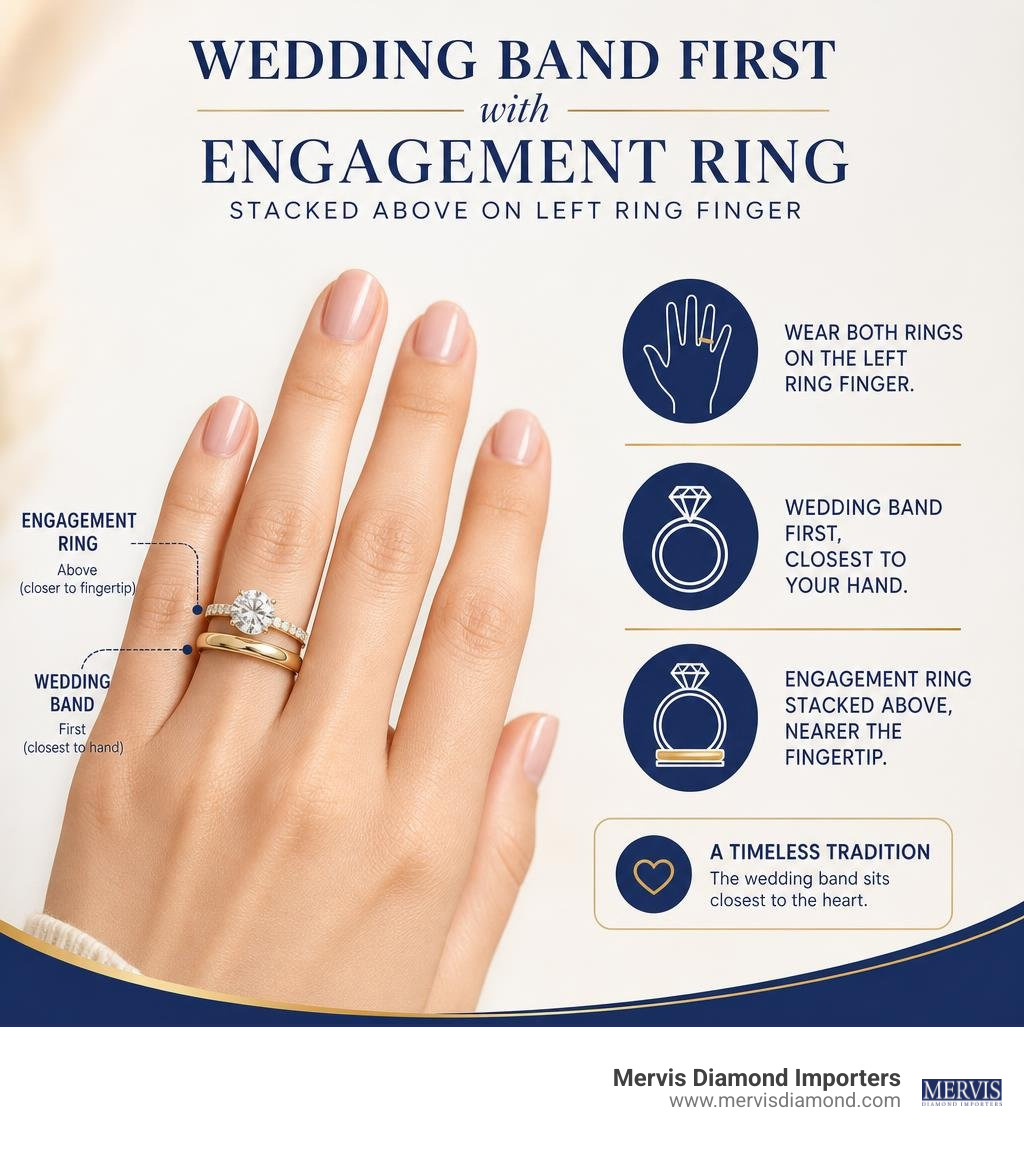
For the classic look, wear both rings on the left ring finger, with the wedding band closest to your hand and the engagement ring above it, nearer the fingertip. Many people move the engagement ring to their right hand before the ceremony so the wedding band can be placed on first, then restack both rings afterward.
That said, there is no rule you must follow. You can wear your rings on separate fingers, on different hands, or wear only one ring day to day. The best arrangement is one that feels comfortable, protects your jewelry, and reflects your style.
The traditional order comes from the idea that the wedding band sits "closest to the heart." It is a symbolic custom, not a requirement. Whether your rings are a perfectly matched set, mixed metals, or a single meaningful piece, your ring stack should work for your life.
I am Morris Mervis, and I will help you understand the traditions and practical choices so you can wear your rings with confidence.
Understanding the Difference Between Engagement Rings and Wedding Bands
While both pieces celebrate a lifelong commitment, they serve distinct roles in your love story and feature fundamentally different designs.
An engagement ring is presented during the proposal. It typically showcases a prominent center stone—often a brilliant solitaire diamond, a halo, or a cluster setting—elevated so light can enter from all angles. Because the center gemstone serves as the visual focal point, the setting often sits slightly higher off the finger. You can explore a wide variety of these styles in our diamonds engagement showcase.
A wedding band, by contrast, is exchanged during the marriage ceremony. These rings are generally subtler: a smooth precious metal band, an eternity ring lined with delicate pavé stones, or a textured contour ring. Wedding bands are intentionally crafted with a lower profile so they can rest comfortably against an engagement ring without unnecessary rubbing or awkward spacing. Discovering how to pick the perfect wedding band comes down to finding a profile and curvature that complements your existing ring.
| Feature | Engagement Ring | Wedding Band |
|---|---|---|
| Primary Timing | Given at the proposal | Exchanged during the wedding ceremony |
| Typical Design | Prominent center stone (solitaire, halo, three-stone) | Low-profile metal band, eternity band, or contoured diamond ring |
| Height Profile | Elevated setting to maximize light and presence | Sleek and low-profile to sit flush against other rings |
| Daily Wear Role | Can be worn daily or saved for formal occasions | Designed for effortless, durable everyday wear |
| Symbolism | The initial promise to marry | The official, enduring bond of marriage |
Can You Use Your Engagement Ring as Your Wedding Band?
Yes, absolutely. While many people love building a stacked set, there is no requirement to wear two rings. Some couples prefer the simplicity of a single bridal piece.
Opting for one ring keeps daily maintenance minimal and allows you to invest your entire bridal jewelry budget into a standout heirloom piece. For those seeking a unique single-ring style, creating custom engagement rings in Washington DC allows you to blend the bold presence of a center gemstone with the sleek comfort of a traditional band.
Engagement Rings and Wedding Bands: How to Wear Them Together
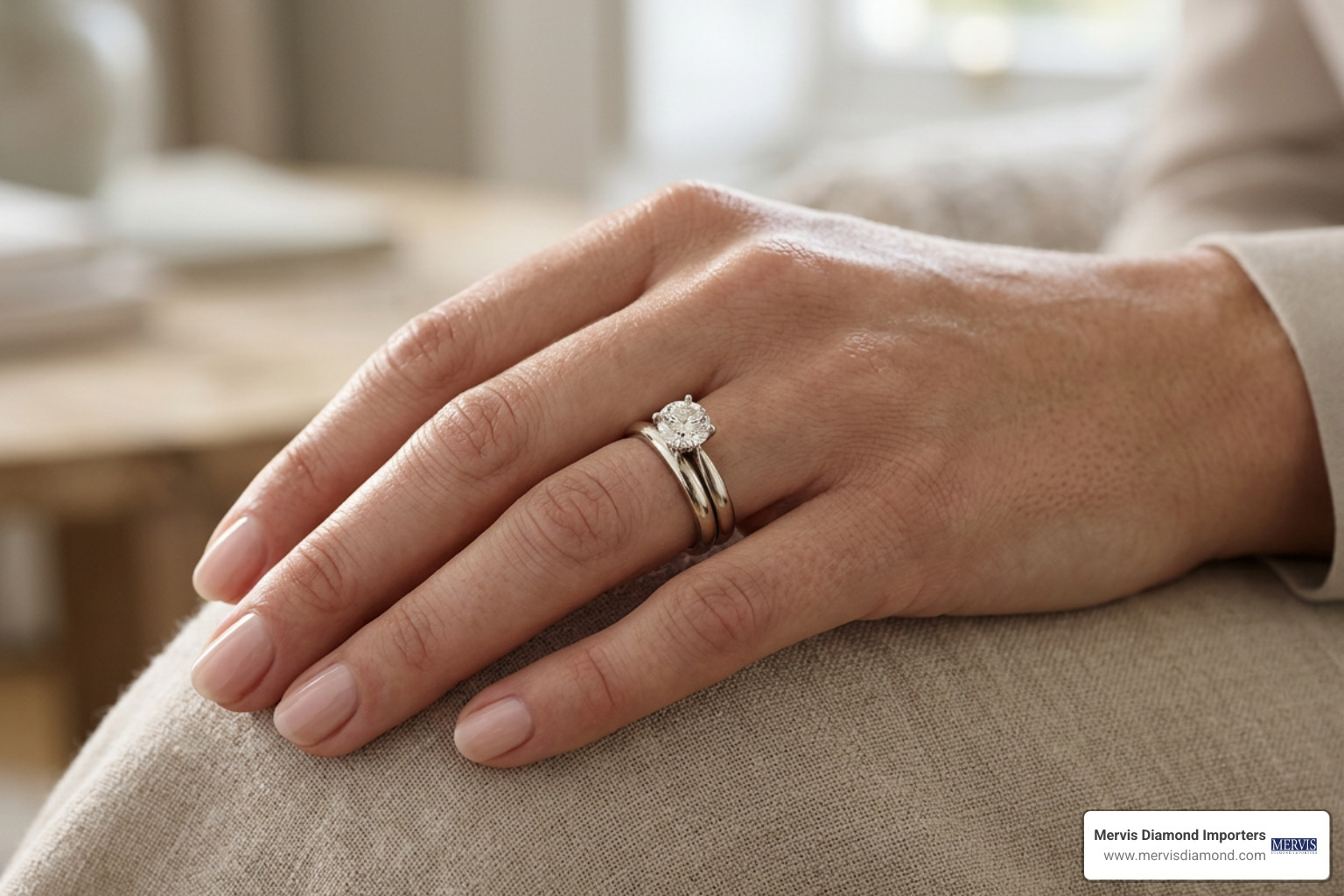
When navigating engagement rings and wedding bands how to wear them harmoniously comes down to balancing heritage with your daily lifestyle. According to recent wedding industry data from Zola, 83% of modern couples are challenging normative wedding expectations—from traditional timelines to bridal styling. Ring wearing is no exception.
Modern bridal styling is all about personal alignment. Whether you are browsing our luxury bridal jewelry in Washington DC or seeking a timeless heirloom in our Tysons or Rockville showrooms, you have complete freedom over how you wear your jewelry.

Traditional Order for Engagement Rings and Wedding Bands: How to Wear Closest to the Heart
The time-honored Western custom places the wedding band on the bottom of the left fourth finger and the engagement ring on top.
The logistical trick lies in the wedding ceremony itself. Before walking down the aisle, the bride moves her engagement ring to her right hand. During the vows, the partner slides the wedding band onto the bare left fourth finger. Later, the bride slides her engagement ring back over the wedding band.
This arrangement pairs beautifully when combining low-profile classic bands prong set 17 styles with timeless engagement rings solitaire 1 designs.
Alternative Finger and Hand Placements for Engagement Rings and Wedding Bands: How to Wear in Daily Life
If stacking both rings on one finger feels bulky or pinches your skin, you have practical alternatives:
- Separate Hands: Wear your wedding band on the left ring finger and your engagement ring on the right ring finger. This avoids metal-on-metal friction and lets elaborate designs stand out independently.
- Chronological Stacking: Wear the engagement ring on the bottom and the wedding band on top, reflecting the order in which you received them.
- The Milestones Stack: Many couples add additional bands for milestones or children. You can explore creative multi-ring arrangements by celebrating all of life's milestones with ring stacks.
The History and Cultural Traditions of the Ring Finger
Finger placement customs have evolved across millennia, blending romantic folklore with regional customs. For an editorial perspective on modern and historical styling, see How to Wear Your Wedding and Engagement Ring With Style | Vogue.
Roman Lore and the Vena Amoris
The Western convention of using the fourth finger traces back to ancient Roman belief. The Romans believed a distinct vein ran directly from the fourth finger of the left hand to the heart, calling it the Vena Amoris (the "vein of love").
While modern anatomy shows that circulatory pathways are identical across all fingers, the sentiment endured. To explore the deep roots of this custom, learn more about why wedding rings are worn on the 4th finger left hand.
Global and Cultural Variations Across the World
Global bridal customs demonstrate that there is no universal standard:
- Orthodox Christian and Roman Catholic Communities: In countries such as Greece, Russia, and Colombia, wedding rings are traditionally worn on the right hand.
- India: The right hand is the customary choice for wedding rings, as the left hand has historically been viewed as spiritually impure.
- China: Traditional customs once favored placing marital bands on the middle finger, though modern Western-style ring finger placement is increasingly popular.
- African Ceremonial Traditions: In several African cultures, exchanging ornate beaded jewelry and family heirlooms takes precedence over metal bands.
Modern commitments celebrate individuality, and exploring same sex marriage engagement rings and wedding bands for everyone ensures every couple finds jewelry that represents their personal values.
Matching, Styling, and Caring for Your Rings Daily
Do Engagement Rings and Wedding Bands Need to Match?
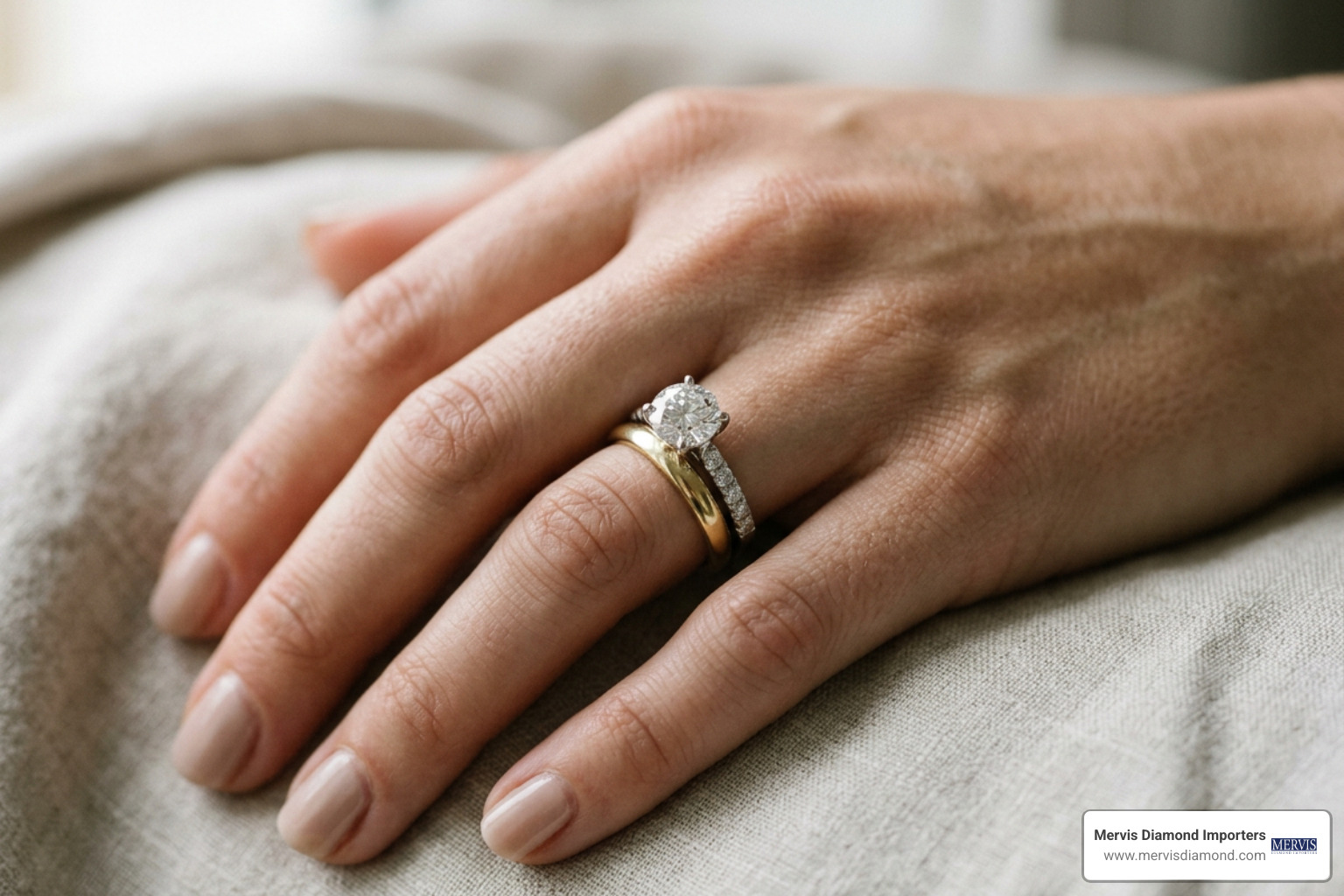
Your rings do not need to be a carbon copy of each other. While matching sets offer balanced symmetry, mixed-metal stacks create texture and individuality.
Pairing a yellow gold band with a platinum diamond ring creates a striking contrast. If you have an intricate setting from our vintage inspired engagement rings collection, a curved or open chevron band can sit flush around the center stone without overshadowing its fine filigree.
Alternative Ways to Wear and Display Rings
If your daily life involves frequent hand-washing, heavy lifting, or clinical gloves, keeping rings on your fingers might not always be practical:
- Pendant Chains: Thread your rings onto a sturdy platinum or gold chain around your neck to keep them close to your heart while protecting them from physical wear.
- Silicone Substitutes: Many active professionals wear temporary silicone bands at work or the gym, reserving their fine diamonds for social occasions.
- Tailored Fits: When shopping for durable everyday options like men's wedding bands, prioritize rounded comfort-fit inner edges for easy all-day wear.
Should You Wear Your Rings All the Time?
Even well-crafted diamonds and precious metals require sensible care. We recommend taking your rings off during:
- Gym Workouts & Heavy Lifting: Gripping weights can bend metal shanks and loosen prong settings.
- Swimming & Beach Outings: Cold water shrinks finger circumference, making rings slip off easily, while chlorine can discolor and weaken gold alloys.
- Household Cleaning: Harsh chemicals such as bleach can pit precious metals and dull gemstones.
- Skincare & Showering: Lotions, soaps, and conditioners leave residues beneath diamonds, reducing their brilliance over time.
Frequently Asked Questions About Wearing Rings
What should I do with my engagement ring during the wedding ceremony?
The easiest approach is to switch your engagement ring to your right ring finger before the ceremony begins. This leaves your left hand open for the wedding band during your vows. After the ceremony, you can slide the engagement ring back over the wedding band.
Can I solder my engagement ring and wedding band together?
Yes. Soldering joins both bands into a single unit, which stops them from spinning out of alignment and eliminates metal friction between the rings. However, soldering means you can no longer wear the wedding band on its own.
How do anniversary bands fit into an existing ring stack?
Anniversary bands are often added directly on top of the engagement ring, creating a balanced "ring sandwich" with the engagement diamond framed between two bands. You can explore creative configurations in our anniversary wedding bands guide 2026.
Conclusion
How you wear your engagement ring and wedding band is an intimate, personal choice. Whether you prefer the classic left-hand stack, split your rings across both hands, or curate a one-of-a-kind multi-metal stack, the best arrangement is the one that brings you joy every day.
At Mervis Diamond Importers, our family has helped couples across Washington DC, Maryland, and Virginia find and care for their dream bridal jewelry for generations. For more advice and styling inspiration, take a look at our expert guide on how to wear your engagement and wedding rings, or visit one of our showrooms to create your perfect stack in person.