

Don't Lose Your Sparkle: A Guide to Fixing Engagement Rings
When You Need to Fix an Engagement Ring
To fix engagement ring damage safely, start with a professional inspection rather than trying to bend prongs, tighten a stone, or reshape the band at home. A qualified jeweler can identify loose gemstones, worn prongs, bent bands, broken shanks, and damaged settings before a small issue becomes a lost diamond.
Common engagement-ring repairs include:
- Tightening or rebuilding worn prongs
- Resetting a loose or missing stone
- Reshaping or resizing a bent band
- Repairing cracks, breaks, or weak solder joints
- Restoring finish through polishing or, for white gold, rhodium plating
Daily wear can slowly weaken a ring, even when it looks fine at first glance. The right repair depends on the metal, setting style, gemstone, and extent of damage. It should also protect the ring's value, documentation, and the stone's security.
I am Morris Mervis, and I will walk you through what to look for before trusting your engagement ring to any repair service.
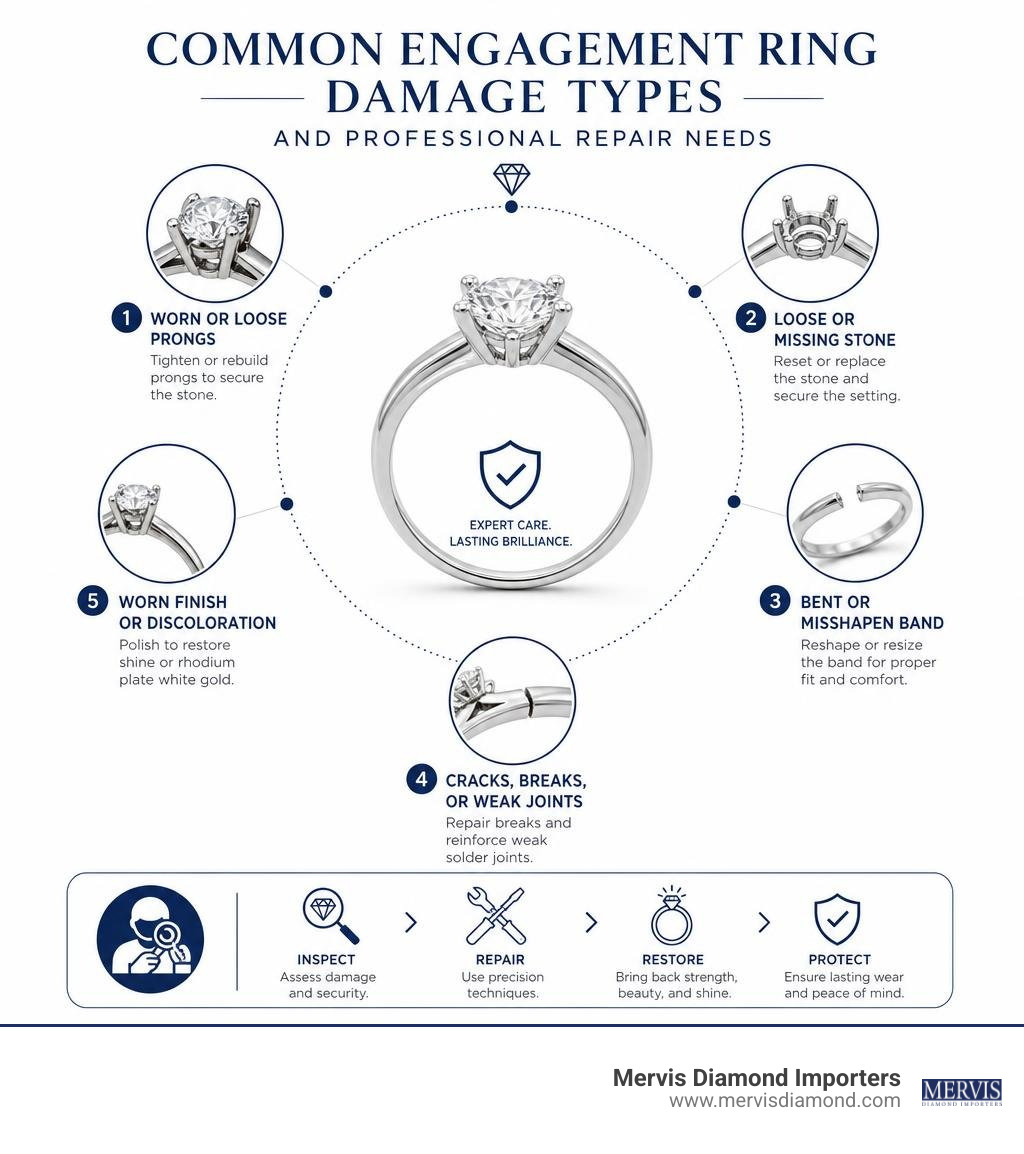
Common Engagement Ring Issues and Repair Tasks
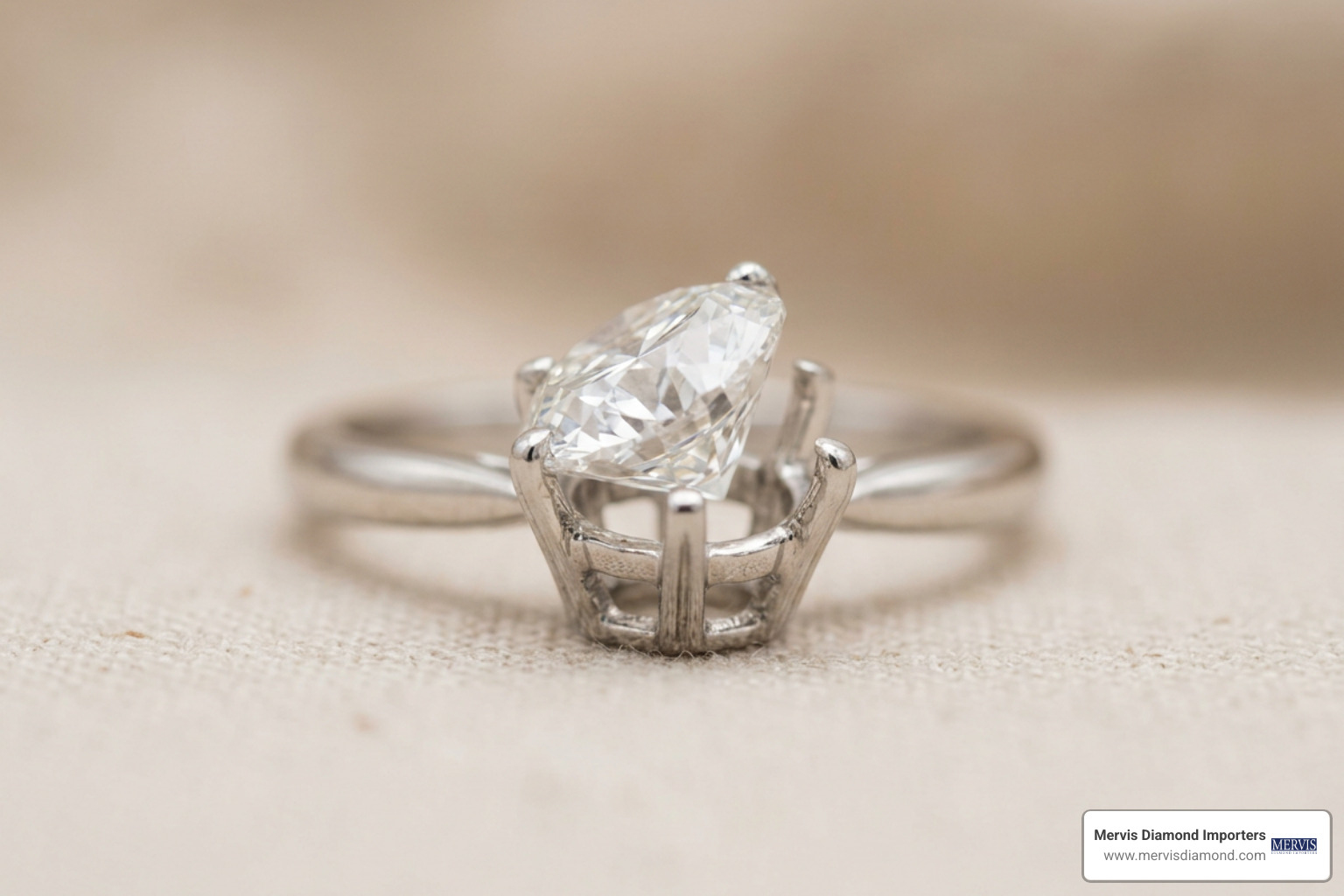
Engagement rings undergo continuous wear every day. Over years of being worn during chores, workouts, workdays, and weekend outings, even the best-crafted rings inevitably face physical stress. Knowing how to spot early signs of damage helps keep your precious center stone secure and preserves the ring's overall structural integrity. For a quick overview of immediate maintenance steps, check out our guide on Quick Jewelry Repair Tips 2026.
Damaged Prongs and Loose Gemstones
Prongs act as small metal claws holding your center diamond or gemstone firmly in place. Over time, friction from clothing, blankets, and hard surfaces gradually wears these metal tips thin.
- Worn or Flattened Prongs: As metal thins out, it loses its grip on the stone's girdle, leaving room for movement.
- Bent or Snagged Prongs: Impact with hard objects can knock a single claw out of alignment, creating an opening where the center stone could slip free.
- Loose Stones: If you shake your ring near your ear and hear a subtle clicking sound, or notice the gemstone shifting when gently nudged with a fingernail, your setting requires immediate claw tightening or stone resetting.
- Channel and Bezel Wear: Channel settings can stretch or warp under pressure, while bezel edges can thin over time, requiring professional re-building to lock stones back in place.
Band Deformities and Sizing Needs
The band (or shank) bears the weight of your ring and undergoes constant force from gripping objects, lifting weights, or accidental impacts.
- Thinning or Bent Shanks: Years of contact against steering wheels or heavy doors can bend a delicate gold band into an oval shape or thin out the bottom of the shank.
- Sizing Adjustments: Weight shifts, seasonal temperature variations, or life changes like pregnancy can alter your finger size. If your band slips around uncomfortably or becomes painfully tight, professional ring resizing is essential. If a ring gets dangerously stuck on a swollen finger, refer to our detailed advice on how to Remove Stuck Ring 4 Ways Remove Ring Safely.
- Cracks and Solder Joint Failures: Previous resizing joints or seam welds can weaken over time, leading to micro-fractures along the bottom of the band.
Step-by-Step Guide to Fix Engagement Ring Problems

When you bring your piece to us to fix engagement ring issues, our master bench jewelers follow a meticulous step-by-step restoration workflow.
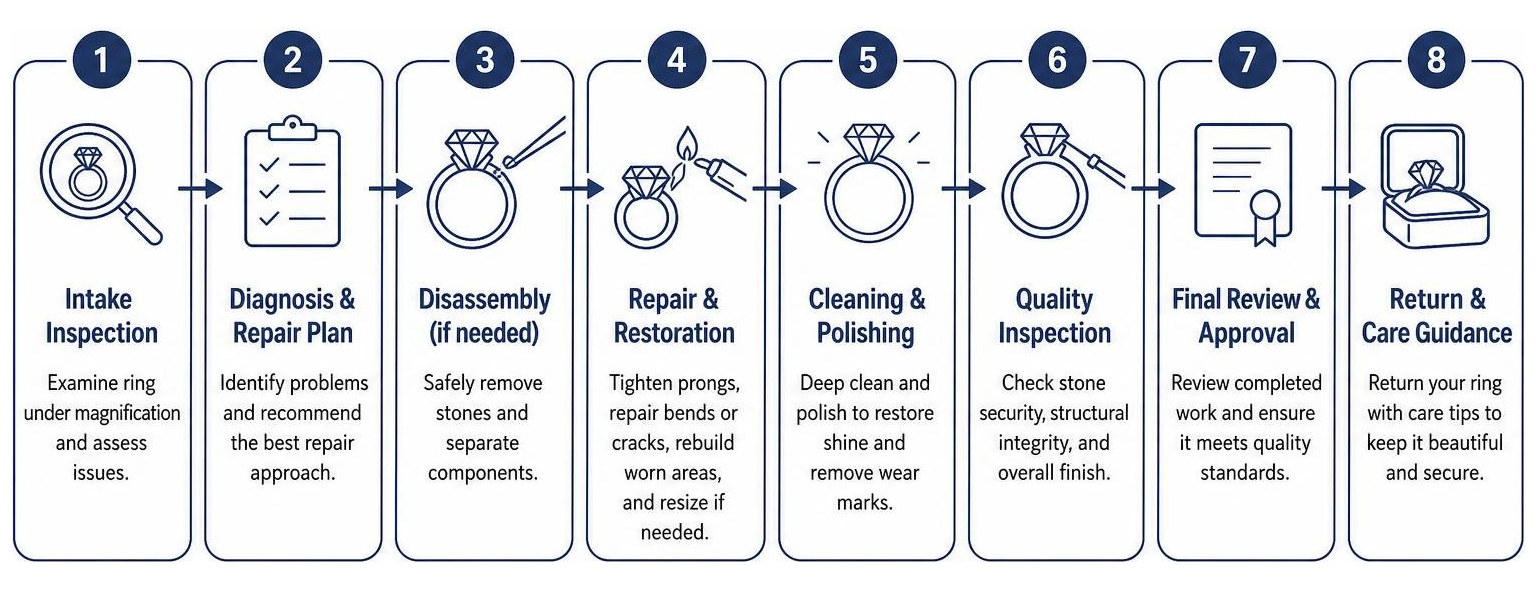
How to Fix Engagement Ring Prongs and Loose Stones
Fixing a loose diamond or worn claw requires precision bench techniques:
- Intake Inspection: We examine the gemstone and setting under 10x magnification to evaluate prong thickness, stone girdle stability, and micro-fractures in the setting.
- Stone Removal (if necessary): If the prongs are severely worn, we safely remove the gemstone to prevent heat damage during metal soldering or laser rebuilding.
- Prong Retipping or Rebuilding: Using advanced laser welding technology, our jeweler melts fresh gold or platinum directly onto the worn claw tip. Laser welding directs pinpoint heat precisely where needed without exposing delicate gemstones to extreme temperatures.
- Resetting and Tightening: The jeweler seats the stone evenly inside the head, carefully folding the newly formed prongs over the crown angles to secure the gemstone symmetrically without putting excess pressure on the stone's edges.
- Polishing and Finishing: We clean away firescale and polish the metal to a mirror finish.
When to Fix Engagement Ring Metals: Resizing and Re-plating
Metal repairs require a solid understanding of metal alloys and expansion properties:
- Resizing Down: The jeweler cuts out a precise section of metal from the base of the shank, brings the ends together perfectly, and welds them seamlessly.
- Resizing Up: We split the bottom shank and insert an identical piece of matching precious metal alloy, soldering or laser-welding both sides to preserve the band's uniform thickness.
- Re-plating White Gold: White gold naturally features a subtle warm tint because pure yellow gold is mixed into its alloy. Jewelers coat white gold in rhodium—a bright, durable precious metal from the platinum family. Over 1 to 2 years, rhodium plating gradually wears off. As part of our repair process, we polish away surface scratches, clean the ring electrolytically, and submerge it in a rhodium bath to restore its crisp, brilliant white finish. Curious about changing metal hues altogether? Learn more in our article explaining Can You Change a Yellow Gold Ring to White Gold.
Material Impacts, Documentation, and Service Verification
Different metals and gemstones respond uniquely to heat, pressure, and bench techniques. Understanding these differences helps set realistic expectations for repair budgets and timelines.
| Metal / Material Type | Repair Complexity | Heat Tolerance | Common Maintenance Needs |
|---|---|---|---|
| Platinum (950) | High | Extremely High | Reshaping, burnishing scratches, heavy-duty prong building |
| 14k / 18k Yellow Gold | Moderate | High | Solder joint repair, prong retipping, band resizing |
| 14k / 18k White Gold | Moderate | High | Prong retipping, resizing, periodic rhodium re-plating |
| Rose Gold | Moderate to High | Moderate (Prone to cracking) | Careful resizing, precise laser welding to preserve alloy hue |
| Sterling Silver | Low to Moderate | Low to Moderate | Resizing, oxidation removal, re-polishing |
Material Impact on Repair Difficulty and Cost
- Platinum: Platinum is a dense, highly durable metal. It doesn't wear away when scratched; instead, the metal shifts. Working with platinum requires higher melting temperatures and specialized laser equipment, which increases labor complexity.
- Gold Alloys: Gold is easier to work with, but gold market fluctuations influence raw alloy replacement costs. You can learn more about how precious metal costs work in our breakdown of Understanding the Gold Market How Gold Prices Are Set.
- Gemstone Sensitivity: Diamonds are exceptionally hard and withstand bench heat better than colored gemstones. Emeralds, opals, and pearls are sensitive to thermal shock and chemical exposure, requiring jewelers to un-set them before doing any torch or laser work on the metal band.
Verifying Service Security and Documenting Provenance
Leaving a cherished, high-value item like an engagement ring for repairs requires trust and clear documentation. To ensure complete peace of mind, follow these verification steps when dropping off your ring:
- Plotting and Inscription Verification: Ask the jeweler to show you your diamond's laser inscription or unique inclusion plot map under a loupe or digital microscope before handing over the ring.
- Detailed Intake Receipt: Ensure your receipt notes the exact metal type, estimated carat weight, center stone dimensions, and any pre-existing stone characteristics.
- Insurance Coverage Verification: Confirm that the jeweler maintains comprehensive in-house insurance protecting customer goods against loss or damage while on the premises.
- Testing Protocols: Reliable repair centers use accurate testing techniques to verify diamond authenticity upon drop-off and pickup. Read our insights on Are Diamond Testers Accurate to learn how jewelers confirm stone authenticity.
Costs, Turnaround Times, and Repair vs. Replacement
Repair costs depend on the labor required, the type of metal, and the replacement gems needed. Simple jobs cost significantly less than complex structural overhauls.
-
Typical Cost Factors:
- Prong Retipping: $30 to $75 per prong (platinum tends to sit on the higher end).
- Basic Ring Resizing: $40 to $150 (depends on whether the size is moving up or down and metal thickness).
- Rhodium Re-plating: $60 to $120.
- Stone Resetting: $50 to $200+ (varies by stone size and setting type).
- Full Head Replacement: $150 to $400+.
-
Turnaround Expectations: Standard ring repairs typically take anywhere from 2 to 7 business days depending on shop work load and parts availability. Express, same-day repair services exist for basic sizing or simple claw retipping, while custom structural rebuilds can take 1 to 2 weeks. For local repairs across the Washington DC metropolitan area—including Tysons VA and Rockville MD—routine fixes can often be completed quickly, though complex heirloom restorations should always be entrusted to experienced master bench jewelers following standards established by organizations like the Gemological Institute of America.
-
Repair vs. Replacement Evaluation: If repair quotes exceed 50% to 60% of the cost of buying a new ring setting, evaluate whether the original mounting retains structural integrity. However, sentimental value often outweighs monetary calculations. Rebuilding worn prongs or replacing a thin shank preserves the original piece that marked your proposal.
-
Preventative Care: Regular home cleaning reduces abrasive grit that accelerates prong wear. You can clean your ring safely between routine maintenance visits by checking out our guides on How to Clean Diamond Rings with Windex and Cleaning Diamonds Easy Way. Additionally, minimize mechanical strain by removing rings before high-impact sports, heavy lifting, or entering hot tubs—and read our take on Can I Wear My Diamond Ring in the Shower. If you enjoy wearing multiple rings together, explore The Ultimate Stacking Guide to learn how to stack bands without causing metal-on-metal friction damage.
Frequently Asked Questions About Engagement Ring Repair
How long does a typical ring repair take?
Most routine ring repairs—such as simple resizing, prong retipping, or rhodium re-plating—take between 2 and 7 business days. Express options are often available for basic fixes, while complex restorations, metal rebuilds, or custom stone sourcing can take 1 to 2 weeks.
Who should I contact to repair my engagement ring?
We recommend working with a dedicated jewelry retailer or specialized repair facility staffed by experienced bench jewelers equipped with modern laser welders. While quick kiosks can handle minor tasks, an established jeweler with transparent intake procedures, micro-inspections, and fully insured premises offers the safest environment for valuable engagement rings.
Is it cheaper to fix or replace a damaged ring?
In almost all cases, repairing a ring component (like retipping prongs, resizing, or replacing a head) is significantly less expensive than purchasing a completely new setting or center diamond. Replacement is typically reserved for settings that have suffered catastrophic metal degradation where long-term stone security can no longer be guaranteed.
Conclusion
Your engagement ring represents one of life's most meaningful milestones. When everyday life takes a toll on its setting, prongs, or band, taking swift action ensures your ring stays secure for a lifetime. Rather than waiting for a worn prong to snap or a loose diamond to slip away, schedule regular professional inspections to catch minor wear before it causes major stone loss.
At Mervis Diamond Importers, our master jewelers treat every piece with the utmost care, precision, and craftsmanship. Whether you need a quick prong check, professional resizing, or a full setting restoration, we are here to help your ring keep its brilliance. To keep your favorite jewelry shining bright for decades to come, explore our comprehensive guide on How to Care for a Diamond Ring.