

Band on the Run? How You Are Actually Supposed to Wear Your Wedding Band
The Wedding Band Rules You Didn't Know You Were Breaking
If you've ever wondered how are you supposed to wear your wedding band, here's the short answer:
The traditional way to wear your wedding band:
- Place the wedding band on your left ring finger first (closest to your hand)
- Stack your engagement ring on top of the wedding band
- This keeps the wedding band "closest to the heart" — a tradition dating back to ancient Rome
That said, there is no single rule you must follow. Modern couples wear their rings in whatever order, hand, or style works for them.
You've got the ring. You've said yes. Now comes a surprisingly tricky question: which ring goes where, and does it even matter?
It turns out, a lot of people aren't sure. According to Zola's research, 83% of couples are actively pushing back on traditional wedding-day expectations — including how they wear their rings. The old rules are being rewritten in real time.
The tradition itself goes back centuries. Ancient Romans believed a vein called the vena amoris — the "vein of love" — ran directly from the fourth finger of the left hand straight to the heart. Modern anatomy has since debunked that idea, but the tradition stuck. And now, on top of that centuries-old foundation, couples are layering in their own personal styles, cultural backgrounds, and practical needs.
There's a lot to consider, from ceremony-day logistics to long-term comfort and fit. I'm Morris Mervis, and I've spent decades helping couples find rings they'll love wearing every day — so let me walk you through everything you need to know.
How Are You Supposed to Wear Your Wedding Band? The Traditional vs. Modern Debate
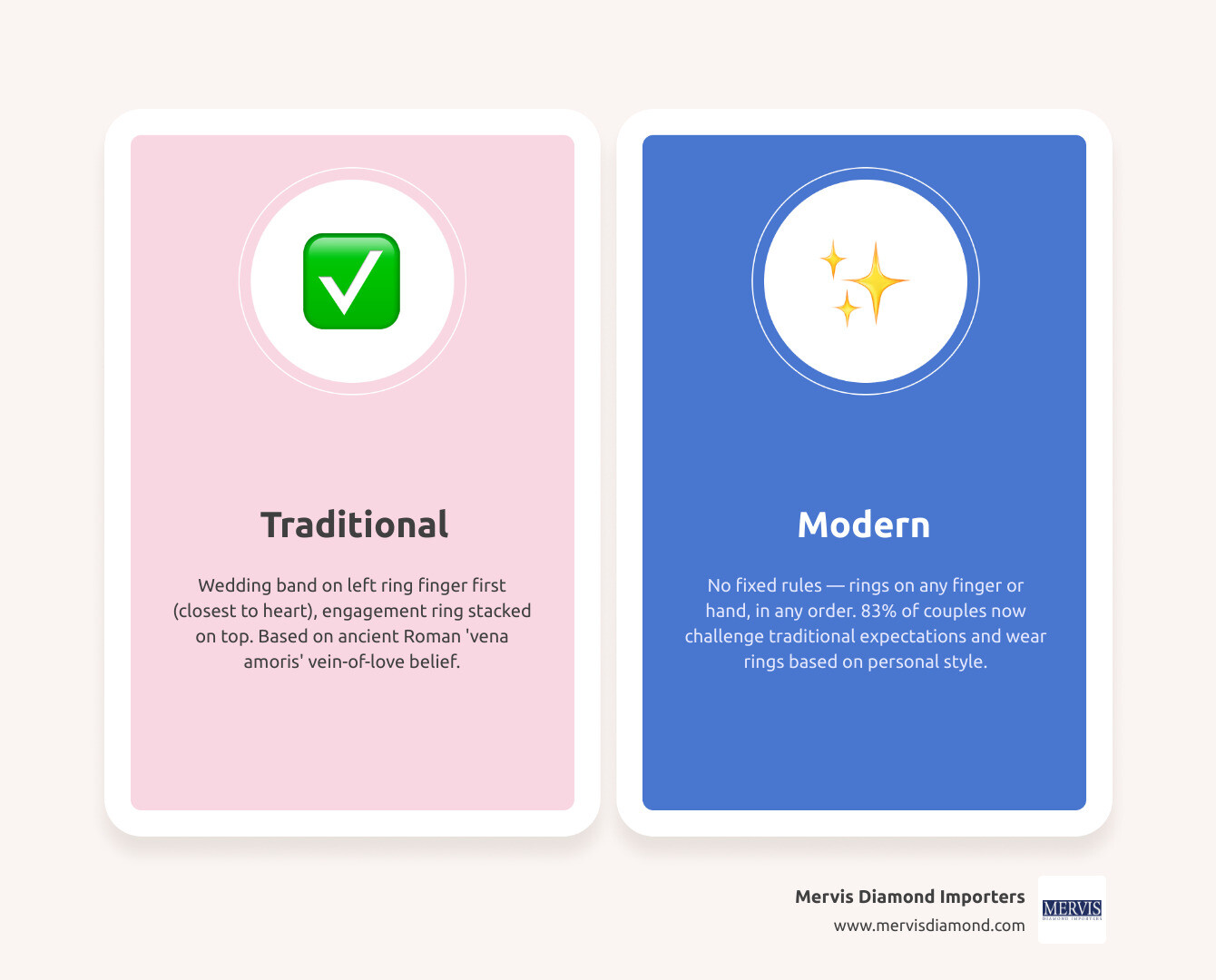
When it comes to deciding how are you supposed to wear your wedding band, the debate usually pits centuries of tradition against modern self-expression.
The traditional custom of wearing both the engagement ring and wedding band on the fourth finger of the left hand is deeply romantic. As we mentioned, the ancient Romans popularized this because of the vena amoris (vein of love). Even though we now know that every single finger has blood vessels leading back to the heart, the sentiment remains incredibly powerful.
However, today's couples are realizing that rules are meant to be styled. Whether you live in Washington DC, Tysons, or Rockville, you’ll see a wide variety of ring styles on display. Some people prefer the classic look, while others choose to break the mold entirely.
To explore the foundational styling choices available to you, you can read more about How do you Wear an Engagement Ring and Wedding Band? - Styling Mania and check out our comprehensive guide on How Do You Wear Wedding Rings.
Your hands are your canvas. While history gives us a beautiful starting point, your lifestyle, comfort, and personal taste should dictate how you display your commitment.
How Are You Supposed to Wear Your Wedding Band with an Engagement Ring?
If you choose to wear both rings on the same finger, you have two primary options for the stacking order:
1. The Traditional Approach: Wedding Band First
Traditionally, the wedding band is placed on the finger first, followed by the engagement ring. The logic behind this is purely sentimental: because the wedding band sits at the base of your finger, it rests physically closer to your hand and, symbolically, closer to your heart.
2. The Chronological Approach: Engagement Ring First
Some couples prefer to wear their rings in the exact order they received them. In this scenario, the engagement ring goes on first, and the wedding band is placed on top. Visually, this can act as a "lock," securing the engagement ring in place. This order is highly effective when pairing a large solitaire diamond engagement ring with a delicate, curved, or contoured wedding band that frames the center stone from above.
To help you decide which look works best for your bridal jewelry, we've broken down the key differences:
| Stacking Method | Visual Appeal | Symbolic Meaning | Practical Benefit |
|---|---|---|---|
| Traditional (Band First) | Highlights the engagement ring's center diamond on top. | Places the ultimate symbol of marriage closest to your heart. | Keeps the typically wider or more detailed engagement ring secure. |
| Chronological (Engagement Ring First) | Can perfectly frame unique or low-set center stones. | Reflects the true timeline of your relationship's milestones. | Helps hold a slightly loose engagement ring in place with a tighter band. |
If you are looking for more visual inspiration and expert advice on how to coordinate these two pieces, take a look at our detailed breakdown on How To Wear Your Engagement Ring And Wedding Ring.
How Are You Supposed to Wear Your Wedding Band on Your Wedding Day?
One of the most common logistical questions brides ask us during their consultations in our Maryland and Virginia showrooms is: What do I do with my engagement ring during the wedding ceremony?
If you want to follow the traditional route of having your wedding band placed closest to your heart, your left ring finger needs to be completely bare when you stand at the altar. You don't want to fumble with removing your engagement ring in front of all your guests just to slide the wedding band on first!
Here is the step-by-step process we recommend for a seamless ceremony:
- Before the Ceremony: Slip your engagement ring onto the ring finger of your right hand.
- During the Vows: Your partner will easily slide the wedding band onto your bare left ring finger.
- After the Ceremony: Before the reception or during photos, simply transfer your engagement ring back to your left hand, stacking it on top of your brand-new wedding band.
If your engagement ring doesn't fit comfortably on your right hand (which is common, as our dominant hands are often slightly larger), you can leave it in a safe place, entrust it to your maid of honor or best man, or simply wear it on your left hand and swap the order of the rings privately after the ceremony.
For a complete guide on navigating this special day, check out our article on Do I Wear My Engagement Ring On My Wedding Day.
Cultural and Global Traditions of Ring Placement
The "left hand, fourth finger" rule is far from universal. Depending on where you are in the world, cultural, religious, and historical traditions dictate entirely different ways to wear wedding jewelry.

The Right-Hand Tradition
In many parts of the world, the right hand is the traditional choice for wedding rings. This is highly common in:
- Northern and Eastern Europe: Countries such as Germany, Norway, Poland, Denmark, and Russia.
- Orthodox Christian and Roman Catholic Communities: Many religious traditions prefer the right hand because of its historical association with oaths, authority, and blessings.
- India: Historically, the left hand was considered auspiciously unclean for sacred rituals, meaning wedding rings were traditionally placed on the right hand.
In places like Germany and the Netherlands, couples often play a game of musical chairs with their rings: they wear their engagement ring on the left hand, and then move it to (or replace it with a wedding band on) the right hand after exchanging vows. In Brazil, couples wear plain matching bands on their right hands while engaged, and simply switch them to the left hand on their wedding day.
Unconventional Finger Placement
Cultural customs also extend to which specific finger holds the ring. For example, in traditional Chinese culture, wedding bands were historically worn on the middle finger. In other cultures, particularly in parts of Africa, the exchange of ornate beaded jewelry or bracelets takes the place of metal finger rings entirely.
To discover more about how history and geography shape these beautiful customs, read our article on why Wedding Rings Worn 4Th Finger Left Hand became the dominant tradition in the Western world.
Modern Alternatives and Creative Stacking Styles
In July 2026, personalization is the ultimate luxury. Over 80% of engagement rings in the United States contain diamonds, and the average cost sits at approximately $5,500. Because these rings represent a significant emotional and financial investment, couples want to wear them in ways that feel entirely authentic to their personal styles.

The Rise of the Ring Stack
Why stop at two rings? More than 40% of couples add anniversary bands within five years of marriage. This has fueled the massive trend of ring stacking.
Instead of a simple pair, many partners build a beautiful, evolving stack that tells the story of their life together. You can mix metals (like pairing a platinum engagement ring with a yellow or rose gold band) or play with different diamond cuts.
For inspiration on building your own unique look, explore The Ultimate Stacking Guide and learn how to Celebrate All Of Lifes Milestones With Ring Stacks.
Alternative Ways to Wear Your Rings
If wearing rings on your fingers doesn't suit your day-to-day life, there are several creative alternatives:
- On a Necklace Chain: Many medical professionals, chefs, athletes, and artists choose to wear their rings on a beautiful gold or platinum chain around their neck. This keeps the rings safe from damage, chemicals, and loss while keeping them close to the heart.
- Tattoos: Some couples opt for matching ring finger tattoos, either in place of metal bands or underneath them.
- Silicone Bands: For heavy gym days or outdoor adventures, many substitute their diamond rings for lightweight, flexible silicone bands.
Practical Tips for Comfort, Fit, and Lifestyle
While aesthetics are important, you have to live in your rings. Over 60% of couples customize their wedding bands, which means you have the power to design a ring that matches your daily routine.
Sizing for a Stack
A common mistake couples make is ignoring how multiple rings fit when worn together. Stacked rings feel tighter than a single ring.
When you slide two or three bands onto one finger, they push flesh outward and cover a wider portion of your finger. If you plan to stack your rings, we highly recommend being professionally measured at one of our showrooms in Tysons, Rockville, or Washington DC to ensure your bands are sized comfortably.
Matching Your Lifestyle
If you have an active lifestyle or work heavily with your hands, choose your metals and settings wisely:
- Platinum is incredibly durable and holds diamonds very securely.
- Bezel or flush settings protect diamonds from snagging on clothing or getting knocked against hard surfaces.
- Curved or contoured bands are designed to sit flush against unique engagement ring shapes, preventing the rings from rubbing together and wearing down the metal prongs over time.
To find a set that is as durable as it is beautiful, read our guide on How To Wear A Wedding Ring Set and check out our 4 Tips For Choosing A Wedding Band That Matches Your Lifestyle.
Frequently Asked Questions About Wedding Band Etiquette
Can you wear your engagement ring and wedding band on different hands?
Absolutely! If your engagement ring has a very large center stone or an unusual shape, a wedding band might not sit flush against it. Wearing your wedding band on your left hand and your engagement ring on your right hand is a practical, comfortable, and highly stylish solution.
This is also a great option if you love the look of both rings but prefer not to mix different metal colors on a single finger. To see how to coordinate this look, check out our advice on Wedding Band Engagement Ring Match.
Do you have to wear both rings together, or can you wear them separately?
You do not have to wear both. Many people choose to wear only their wedding band for daily wear—especially when traveling, working out, or doing chores—and save their diamond engagement ring for special occasions.
If you think you'll often wear your wedding band solo, we recommend choosing a band that has enough detail, sparkle, or presence to stand beautifully on its own. For help choosing a standalone band, read our tips on How To Pick The Perfect Wedding Band.
Can you solder your engagement ring and wedding band together?
Yes, a professional jeweler can solder your rings together to fuse them into a single cohesive piece.
- The Pros: It stops the rings from spinning independently, keeps them perfectly aligned, and prevents them from rubbing against each other (which can wear down the metal over time).
- The Cons: Once they are soldered, you can no longer wear them separately. If you want to wear just your wedding band to the gym or while traveling, you won't be able to do so.
Conclusion
At the end of the day, there is no wrong answer to the question of how are you supposed to wear your wedding band. Whether you choose to follow ancient Roman traditions, display your rings on separate hands, or build an eclectic, modern ring stack, the only rule that matters is that it feels right to you.
At Mervis Diamond Importers, we specialize in helping couples in the Washington DC, Maryland, and Virginia areas find and customize the perfect rings for their unique love stories. Whether you are searching for a classic natural diamond, a stunning lab-grown center stone, or a fully custom-designed bridal set, our expert team is here to guide you through a pressure-free, personalized experience.
Ready to find your perfect match or need help designing a stack that fits your hand beautifully? Read our guide on How To Wear Your Engagement Wedding Rings, or stop by one of our showrooms in Tysons, Rockville, or DC today to let us help you write your own rules.