

Smart Shopper's Field Guide to Lab-Grown Diamonds for Sale
How to Shop for Lab-Grown Diamonds for Sale
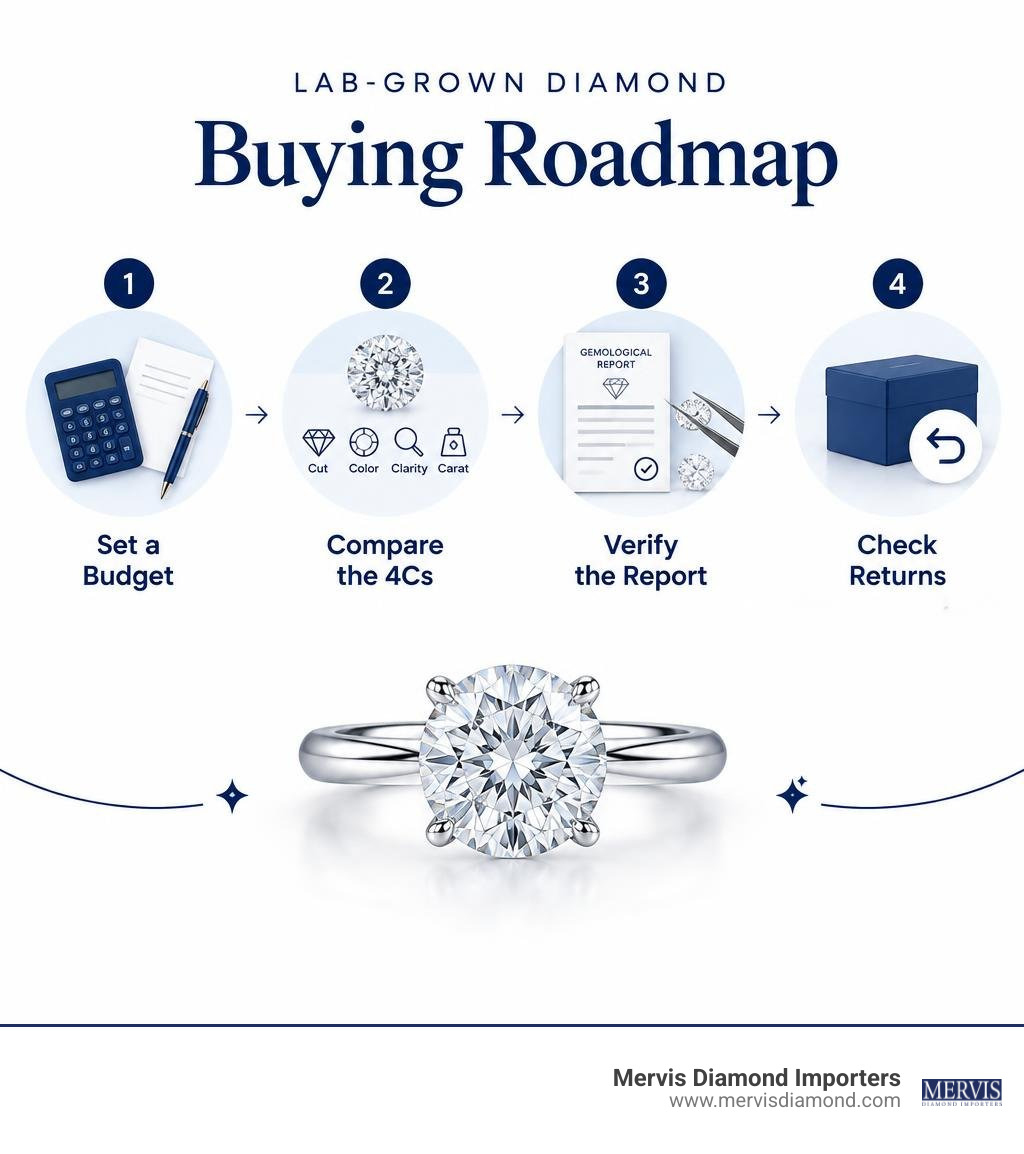
Looking at lab-grown diamonds for sale? Start with a budget, then compare diamonds by cut, color, clarity, and carat weight. Ask for an independent grading report, check that its number matches the diamond's inscription, and read the return policy before you buy. Lab-grown diamonds are real diamonds and often cost much less than mined stones of similar quality.
That lower price can leave more room in your budget for a setting you love. But a good deal is more than a low sticker price: the diamond should look great to you, and the seller should make its grading and terms easy to check.
I'm Morris Mervis, and this guide will help you shop with confidence and without pressure.
What Are Lab-Grown Diamonds and How Are They Created?
A lab-grown diamond is a real diamond in every sense of the word. It consists of pure carbon crystallized into an isometric diamond lattice, giving it the exact same optical symmetry, brilliance, and unbeatable durability as an earth-mined gem.
To understand how they exist outside of the earth's mantle, we look at advanced science. In nature, diamonds formed billions of years ago under intense heat and crushing pressure deep within the earth. Modern technology replicates those exact geological conditions inside specialized laboratories. This controlled environment reduces the physical surface footprint associated with heavy earth-moving equipment and offers a clear, traceable supply chain from start to finish.
Today's master growers rely on two primary methods to produce gem-quality diamonds.
Chemical Vapor Deposition (CVD) Process
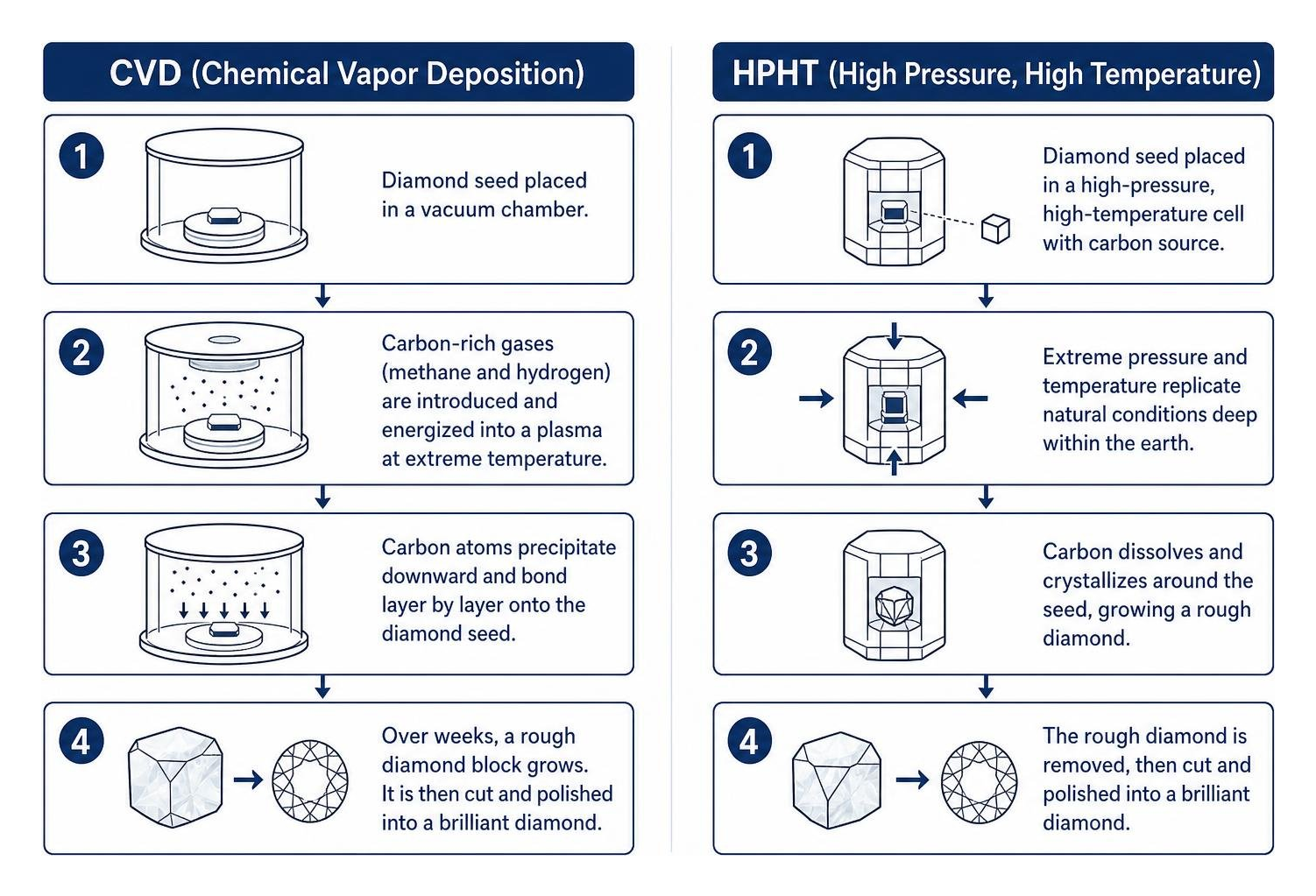
The Chemical Vapor Deposition (CVD) method begins with a microscopic, paper-thin seed crystal of diamond placed inside a specialized vacuum chamber. The chamber is injected with carbon-rich gases (typically methane and hydrogen) and heated to extreme temperatures, creating an energized plasma cloud.
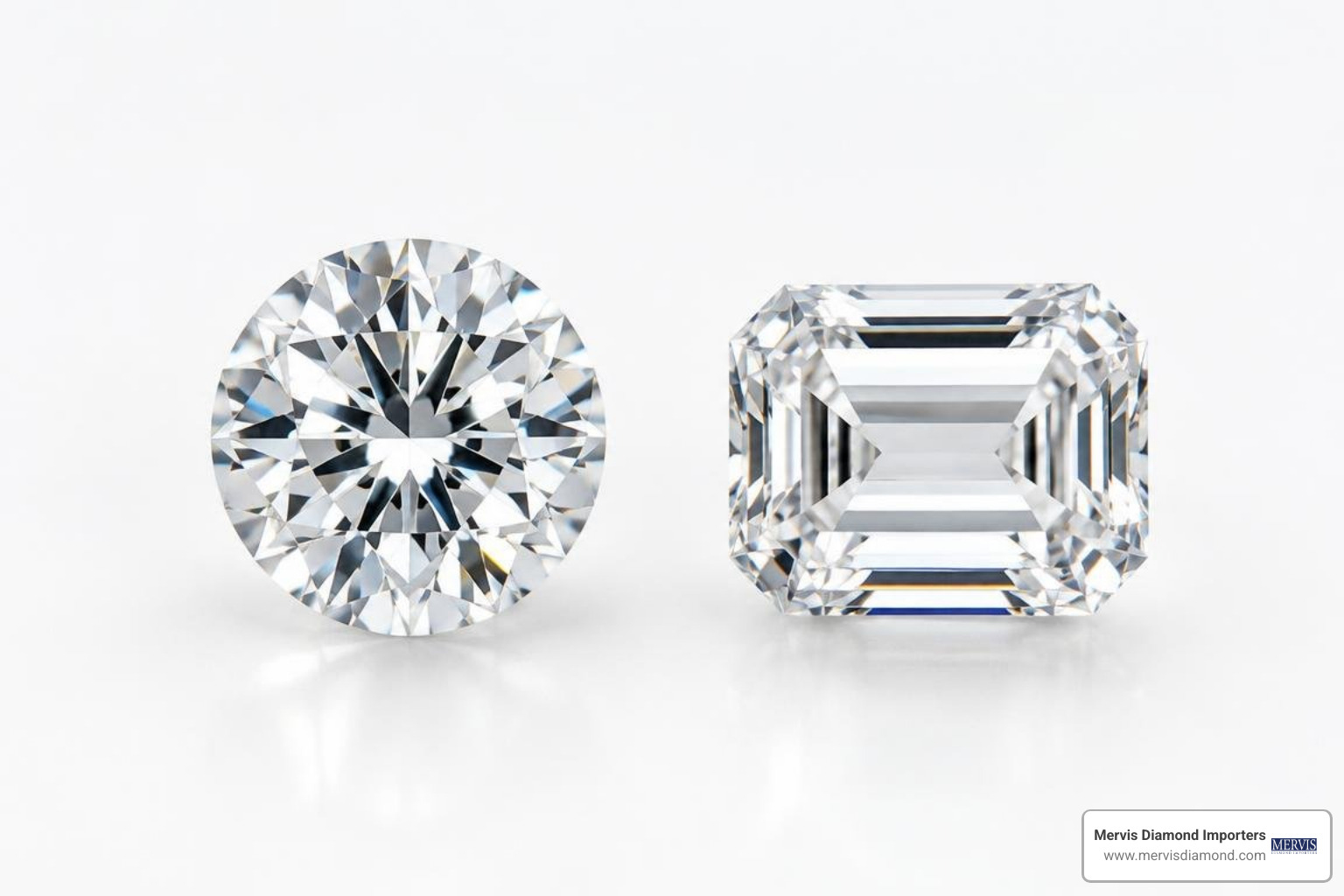
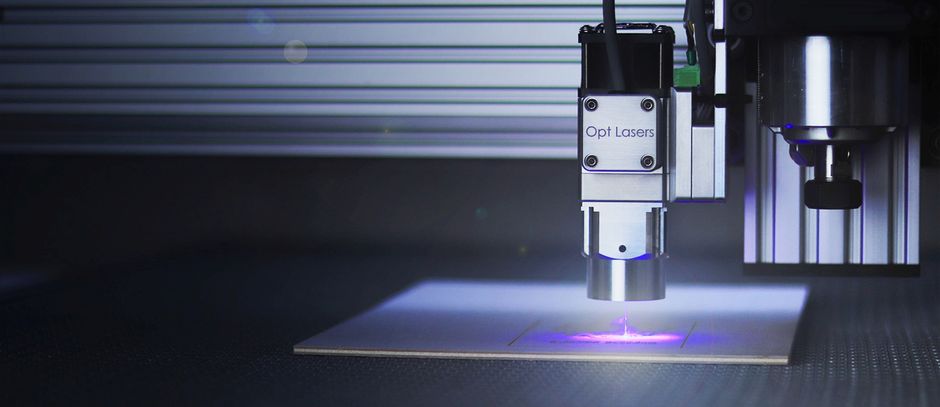
Inside this high-energy plasma, pure carbon atoms break free from the gas molecules and precipitate downward, bonding layer by atomic layer onto the diamond seed. Over several weeks, this carbon crystallizes into a rough diamond block. The rough stone is then precision-cut using advanced lasers and polished by master diamond cutters, resulting in breathtaking stones such as this Lab-Grown Diamond E VVS2 2.58 Round Report selection.
High Pressure High Temperature (HPHT) Growth
High Pressure High Temperature (HPHT) is the original method developed to cultivate diamonds by mimicking nature's raw geological power. A diamond seed is placed inside a mechanical growth cell surrounded by refined carbon (pure graphite) and a molten metallic catalyst flux.
Subjected to crushing pressures exceeding 50,000 to 60,000 atmospheres and scorching temperatures above 1,300°C to 1,600°C, the metal catalyst melts. This dissolves the graphite, allowing carbon atoms to migrate and nucleate around the seed crystal. The resulting rough crystals feature unique crystal growth habits that master cutters craft into brilliant geometric shapes, exemplified by this Laboratory Grown Diamond D VVS2 2.02 Emerald Report piece.
Evaluating Quality and Pricing of Lab-Grown Diamonds for Sale
When exploring fine diamond collections, knowing how lab-grown gems stack up against mined alternatives helps you make an empowered buying decision.
| Characteristic | Lab-Grown Diamonds | Mined Diamonds |
|---|---|---|
| Chemical Composition | Pure crystallized carbon (C) | Pure crystallized carbon (C) |
| Hardness (Mohs Scale) | 10 (hardest known mineral) | 10 (hardest known mineral) |
| Refractive Index | 2.42 | 2.42 |
| Dispersion (Fire) | 0.044 | 0.044 |
| Grading Standards | 4Cs (Cut, Color, Clarity, Carat) | 4Cs (Cut, Color, Clarity, Carat) |
| Average 1ct Cost (approx.) | ~$2,000 | ~$10,000 |
| Price Differential | 60% to 85% less | Higher baseline market pricing |
Comparing Physical, Chemical, and Optical Properties
Lab-grown diamonds are not diamond simulants. Materials like cubic zirconia or moissanite merely imitate the look of a diamond while having different chemical compositions, lower hardness ratings, and divergent light refraction.
A lab-created diamond shares identical thermal conductivity, electrical resistance, and a Mohs hardness rating of 10 with mined stones. Light moves through both at the exact same refractive index (2.42), splitting into identical fireworks of spectral color (fire) and bright white reflections (brilliance). To understand these nuances in detail, read our deep-dive analysis comparing mined vs. lab-grown diamonds.
Cost Analysis, Per-Carat Savings, and Resale Realities
The most striking difference for shoppers is pricing. Lab-grown diamonds generally retail at 60% to 85% below natural stones of equivalent cut, clarity, and color grades. For instance, while a premium 1-carat mined diamond averages roughly $10,000, a comparable lab diamond often sells for around $2,000.
This cost efficiency allows shoppers to expand their design ambitions. Instead of settling for a smaller stone to stay on budget, you can comfortably select larger statement sizes. We walk through the exact dimensions and styling tips in our 2-carat man-made diamond complete guide and our comprehensive 3-carat lab-grown diamond guide.
A realistic understanding of resale value is essential. Diamonds—both mined and lab-grown—should be bought as expressions of love and enduring style rather than speculative financial assets. Because production technology has become more efficient over time, lab-grown diamond resale values reflect lower secondary market recovery compared to natural stones with historic scarcity premiums. The true value of a lab diamond lies in your upfront savings and the daily joy of wearing a showstopping piece.
Essential Buying Framework: Grading, Certification, and Verification
The standard 4Cs—Cut, Color, Clarity, and Carat weight—apply identically to lab-grown gems.
- Cut: The single most vital C. Cut quality dictates how light enters the stone, bounces internally, and projects back to your eye. Never compromise on Cut; choose Excellent or Ideal grades.
- Color: Graded from D (completely colorless) down to Z (light yellow or brown). We suggest stones in the D–F (colorless) or G–H (near-colorless) ranges for clean, icy brilliance.
- Clarity: Measures natural internal inclusions or surface blemishes. Options ranging from VS2 to VVS1 offer an eye-clean appearance where flaws remain completely invisible without high-power magnification.
- Carat: The physical weight of the diamond (1 carat = 0.2 grams).
Understanding Lab Certification Standards
Always demand an independent, third-party grading certificate from reputable gemological authorities like the International Gemological Institute (IGI) or the Gemological Institute of America (GIA).
These reports detail precise measurements, proportion percentages, and clarity maps. Certified diamonds also feature a microscopic laser inscription along the girdle—invisible to the naked eye—identifying the stone's unique report number and laboratory origin. You can review authentic certifications directly on stones like this Lab-Grown Diamond D VVS2 2.01 Oval Report and this elegant Laboratory Grown Diamond E VVS2 2.09 Pear Report.
Sourcing Certified Lab-Grown Diamonds for Sale Online and In-Store
Purchasing a diamond requires confidence in the craftspeople behind the counter. When evaluating jewelers across the Washington DC, Tysons VA, and Rockville MD areas, choose an established partner known for transparent guidance and pressure-free education.
We explain how to evaluate reputable jewelers in our breakdown of the best lab-grown diamond company practices. Whether you are looking at a classic princess cut such as this Lab-Grown Diamond F VS1 2.02 Princess Report or an impressive centerpiece like this Lab-Grown Diamond D VS1 3.51 Round Report, seeing diamonds in person under various lighting environments ensures you pick the perfect stone.
Trending Styles and Jewelry Settings
Modern jewelry design is flourishing, with buyers embracing bold shapes and creative mountings. Fancy diamond cuts—including elongated ovals, sleek emerald cuts, radiant cushions, and romantic pears—are leading contemporary engagement ring trends.
Popular Jewelry Settings and Lab-Grown Diamonds for Sale
The setting you select protects your diamond while framing its personality:
- Solitaire & Hidden Halos: Timeless prongs highlight stone size, while subtle under-halos of micro-diamonds add a flash of surprise brilliance.
- Bezel Mountings: Sleek metal collars encircle the stone for an ultra-secure, contemporary profile, seen on designs like this lab-created diamond heart bezel set ring.
- Elongated Proportions: Oval stones set in delicate four-prong mountings elongate the wearer's finger beautifully. See this aesthetic in our featured Lab-Grown Diamond E VS1 2.01 Oval Report alongside options like this Lab-Grown Diamond F VVS2 2.03 Oval Report.
Fine Jewelry Beyond Engagement Rings: Studs, Necklaces, and Bracelets
Lab-grown diamonds have made everyday fine jewelry more accessible than ever. You no longer have to wait for a milestone anniversary to build an heirloom collection:
- Diamond Stud Earrings: The quintessential jewelry staple. Learn how to choose ideal sizes and backings in our lab-grown diamond stud buying guide.
- Everyday Necklaces: From solitary drop pendants like the lab diamond necklace to dynamic curved bars like the Shooting Star collection lab-grown shared prong diamond necklace, these designs provide effortless everyday radiance.
- Modern Tennis Bracelets: Sleek pieces like the Beacon collection lab-grown diamond bezel bracelet deliver a low-profile touch of luxury suitable for casual days or black-tie evenings.
Frequently Asked Questions About Lab-Grown Diamonds
Are lab-grown diamonds chemically identical to mined diamonds?
Yes. Both share the exact same pure carbon atomic lattice structure, refractive index, dispersion, and hardness rating. They respond identically to all standard gemological tests and are recognized as authentic diamonds by the Federal Trade Commission (FTC).
How can buyers verify that a lab-grown diamond is authentic?
Look for an independent grading certificate from accredited laboratories such as IGI or GIA. Each certified lab diamond features a microscopic laser inscription on its girdle matching the unique certificate number. Specialized gemological laboratories use advanced spectroscopic equipment to identify growth patterns and verify origin.
Do lab-grown diamonds lose their sparkle or change color over time?
No. Because they have the same crystal stability and Mohs 10 hardness as mined diamonds, lab-created diamonds will never cloud, fade, discolor, or lose their brilliance. They can be cleaned, maintained, and enjoyed for generations.
Conclusion
Shopping for a diamond should be an exciting, joyous milestone. Lab-grown diamonds offer an exceptional balance of uncompromising beauty, technological brilliance, and remarkable value—allowing you to secure a larger, higher-clarity stone within your desired budget.
At Mervis Diamond Importers, our family has guided shoppers through life's most meaningful milestones for generations. We invite you to explore our showroom locations in Washington DC, Tysons VA, and Rockville MD to view these breathtaking stones side-by-side in a relaxed, pressure-free setting. To weigh all your options and make the best choice for your personal story, discover our comprehensive comparison between mined and lab-grown diamonds.