

What to Expect When Wearing a 1 Carat Oval on Hand
What a 1-Carat Oval Looks Like on Your Hand
A 1-carat oval on your hand looks long and balanced without covering the whole finger. A typical stone measures about 8.1 mm long by 5.4 mm wide. It will look more prominent on a size 5 finger, balanced on a size 6, and a little more subtle on a size 7. Its long shape can also make the finger appear longer.
Those measurements tell you more about the look than carat weight alone. The oval's proportions, the width of the band, and the setting all change how much diamond you see. I'm Morris Mervis, and I'll help you picture those choices before you pick a ring.
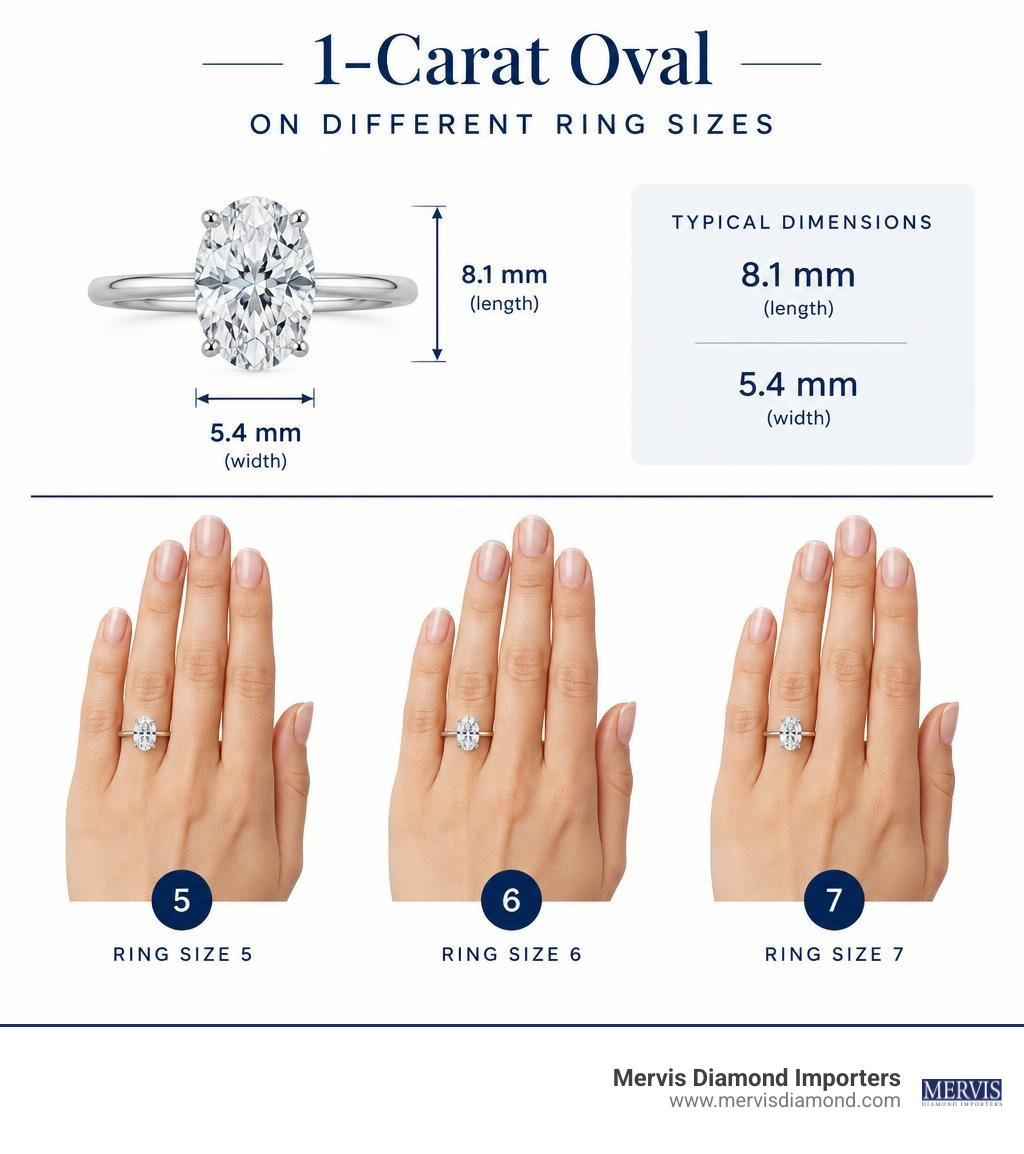
Visualizing a 1 Carat Oval on Hand Across Different Finger Sizes

When evaluating how a diamond presents on the hand, the primary variable is finger coverage: the percentage of the finger's width occupied by the diamond's top surface. Because an oval is an elongated brilliant cut, its vertical span creates an optical illusion that naturally slims and lengthens the hand.
An average 1 carat oval diamond spans roughly 8.12 mm in length and 5.41 mm in width. On a standard human hand, this spread creates a noticeable visual footprint that varies depending on your ring size.
How a 1 Carat Oval on Hand Appears on Ring Sizes 4 Through 6
For petite hands ranging from size 4 to size 6, a 1 carat stone provides substantial presence:
- Size 4 to 4.5: A size 4 finger measures approximately 14.8 mm across the knuckle. A 5.4 mm wide stone covers more than a third of the finger's horizontal diameter. Paired with its 8.1 mm length, the diamond creates significant finger coverage that commands attention.
- Size 5 to 5.5: On a size 5 hand (around 15.7 mm wide), a 1 carat oval sits in a balanced sweet spot. It provides generous surface coverage without spilling over the lateral edges of the finger.
- Size 6: Ring size 6 is close to the average North American women's ring size. Here, the oval exhibits an elegant, proportional silhouette that flatters the natural curves of the hand.
To explore stones that fit this classic scale, you can view our curated 1 ct oval diamond selection.
How a 1 Carat Oval on Hand Looks on Ring Sizes 7 and Above
On finger sizes 7, 8, and larger, a 1 carat oval offers a refined and understated look:
- Size 7 to 7.5: With a finger width near 17.3 mm, an 8.1 mm oval diamond still draws the eye vertically while leaving comfortable negative space along the sides of the band.
- Size 8 and above: On larger hands, the elongated length of the oval becomes an asset, preventing the diamond from appearing swallowed by wider fingers.
If you have a size 7 or larger hand and prefer wider coverage, setting styles such as three-stone arrangements, pavé accents, or halos can expand the horizontal profile. For a detailed breakdown of different ring settings and styling choices, consult our comprehensive oval ring guide.
Face-Up Size Comparison: Oval vs. Other Diamond Shapes
Carat is a measure of weight, not physical size. Because gem cutters distribute weight differently across various geometries, certain shapes appear visually larger than others at the exact same carat weight.
Oval diamonds carry much of their carat weight in a shallow, spread-out table rather than hiding it in a deep pavilion. Consequently, an oval cut delivers significantly more surface area per carat than a round brilliant or princess cut.
| Diamond Shape (1.00 Carat) | Typical Dimensions (L × W) | Approximate Face-Up Area | Visual Size Impression |
|---|---|---|---|
| Oval Cut | 8.12 × 5.41 mm | ~36.02 mm² | Largest (Appears ~10% larger than round) |
| Round Brilliant | 6.50 × 6.50 mm | ~33.18 mm² | Standard Baseline |
| Cushion Cut | 5.50 × 5.50 mm | ~30.25 mm² | Compact (Weight carried in depth) |
| Princess Cut | 5.50 × 5.50 mm | ~30.25 mm² | Compact (Diagonal measurement adds spread) |
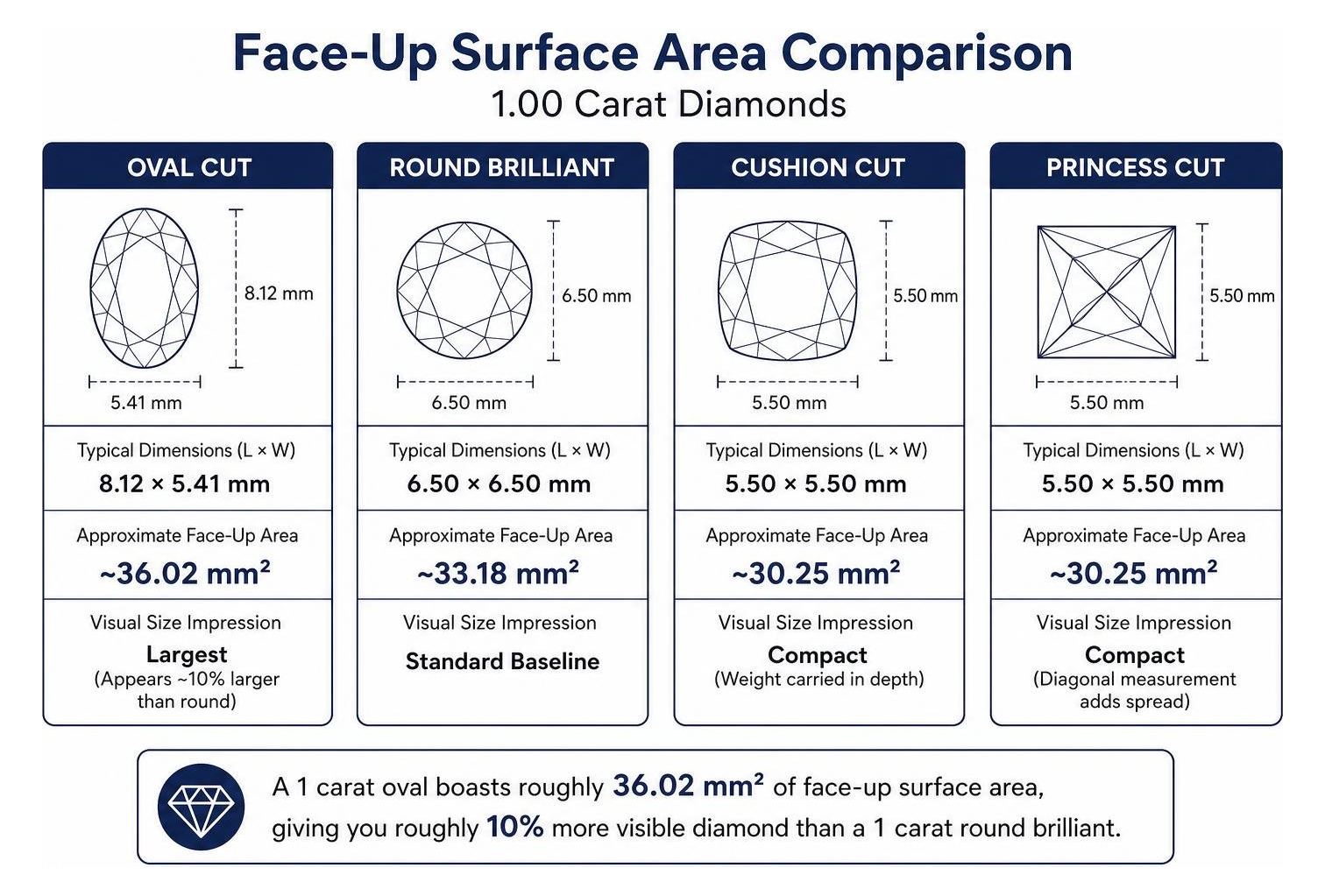
A 1 carat oval boasts roughly 36.02 mm² of face-up surface area, giving you roughly 10% more visible diamond than a standard 1 carat round brilliant (which measures roughly 33.18 mm²).
Key Dimensions, Proportions, and Cut Parameters for a 1 Carat Oval
Unlike round brilliant diamonds, which have standardized GIA cut grades (such as Excellent or Very Good), fancy shapes like ovals do not receive an explicit cut grade on grading certificates. Instead, grading reports outline the stone's physical proportions, polish, and symmetry.
To ensure maximum sparkle and avoid dead spots, look for diamonds that fall within these recommended parameters:
- Depth Percentage: 59% to 65%. A depth below 59% can cause the diamond to look hollow or lifeless, while a depth above 65% conceals weight at the bottom where nobody can see it.
- Table Percentage: 53% to 62%. A balanced table allows optimal light entry while supporting crisp dispersion of color flashes (fire).
- Facets: Typically 58 facets in a modified brilliant arrangement.
- Symmetry & Polish: Excellent or Very Good.
For an in-depth review of how these proportions impact real-world performance, visit our 1 ct oval diamond guide 2026 or review standard gemological principles via the GIA 4Cs oval cut diamond guide.
Length-to-Width Ratio and Finger Elongation
The length-to-width (L:W) ratio determines the overall outline of an oval. You calculate this by dividing the diamond's length in millimeters by its width.
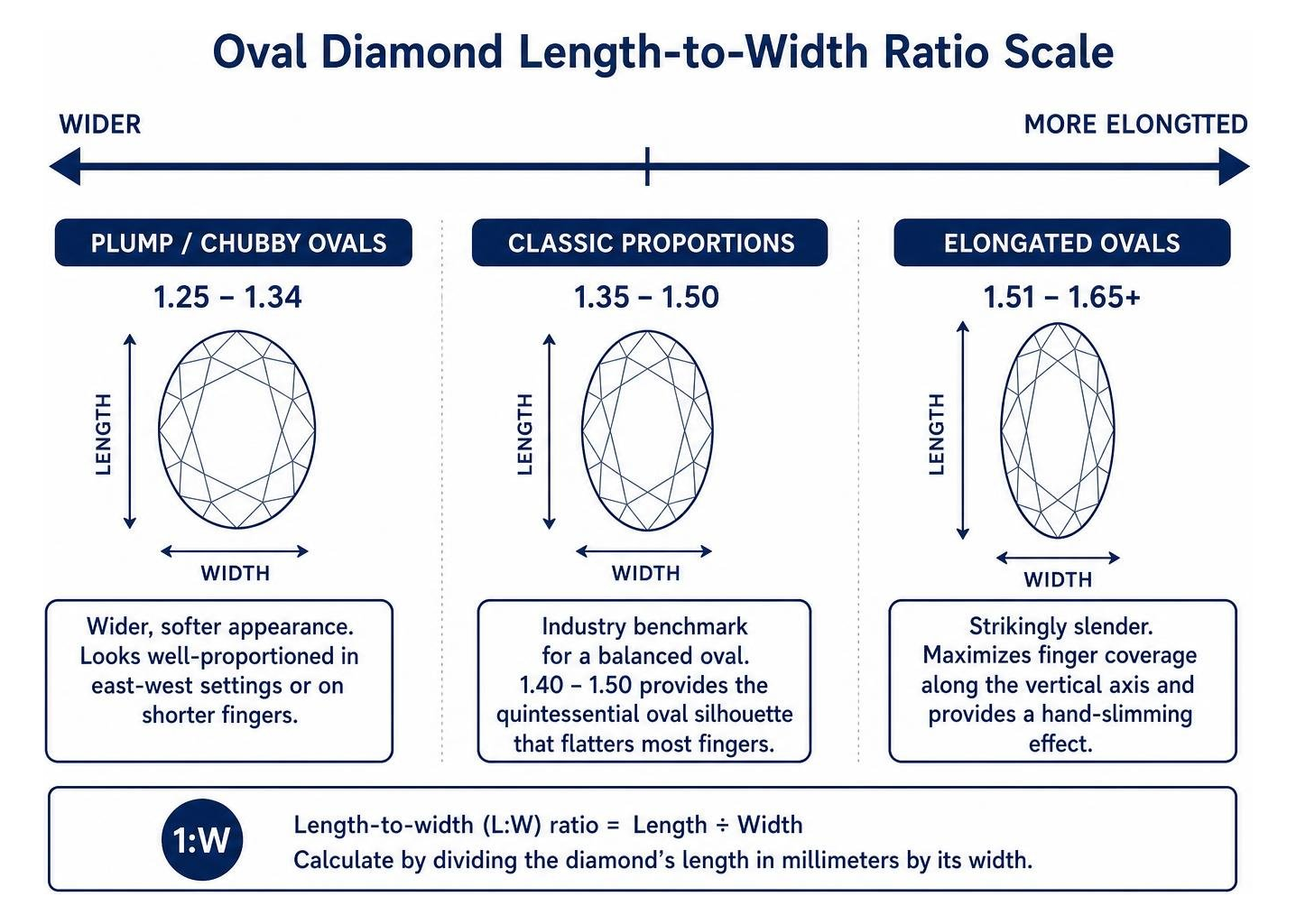
- Plump / Chubby Ovals (1.25 – 1.34): These stones have a wider, softer appearance. They look well-proportioned in east-west settings or on shorter fingers that need width rather than vertical length.
- Classic Proportions (1.35 – 1.50): This is the industry benchmark for a balanced oval. A 1.40 to 1.50 ratio provides the quintessential oval silhouette that flatters the majority of finger shapes.
- Elongated Ovals (1.51 – 1.65+): These diamonds look strikingly slender. They maximize finger coverage along the vertical axis and provide a pronounced hand-slimming effect.
Minimizing the Bow-Tie Effect and Maximizing Brilliance
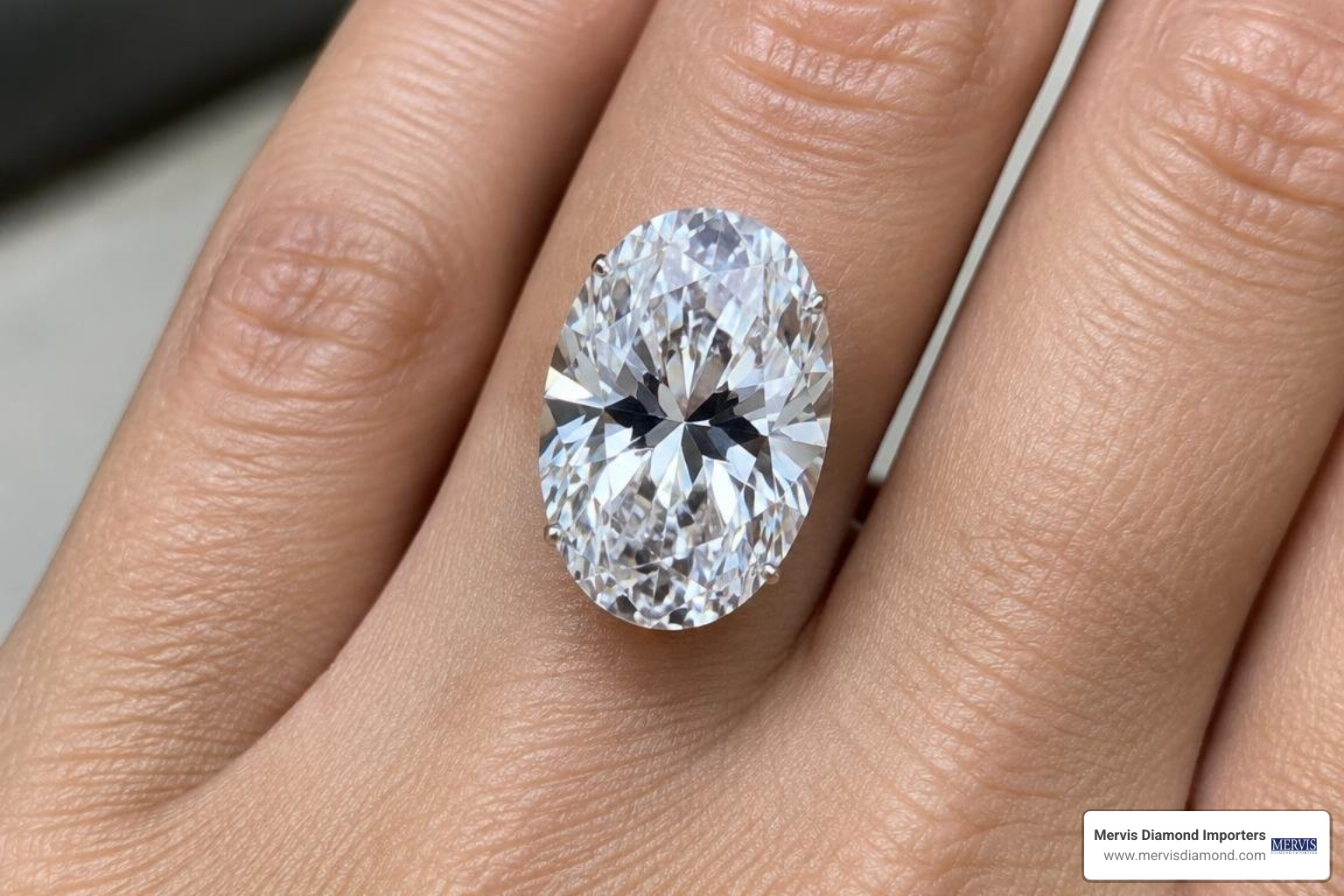
Every oval diamond possesses some degree of a "bow-tie"—a dark, bowtie-shaped pattern of light extinction across the center of the stone caused by head-and-body shadow reflections.
While a mild bow-tie adds contrast and gives an oval its signature brilliance, an overly prominent, dark bow-tie can dull the center of the gem. Because lab certificates do not grade bow-tie intensity, you must evaluate the stone using high-definition 360-degree video or view it in person under natural lighting conditions.
Maximizing Value: The 4Cs, Metal Settings, and Smart Buying Strategies
Because of their modified brilliant facet pattern, oval diamonds reflect light from multiple angles, helping conceal minor natural inclusions. However, they also hold body color more noticeably toward their rounded tips (the "heads") than round brilliants do. Choosing the right combination of color, clarity, and setting metal ensures you do not overspend on imperceptible grading factors.
- White Gold / Platinum Settings: These bright white metals highlight any yellow or brown tint in a diamond. An I color grade or higher ensures the stone faces up crisp and white.
- Yellow Gold Settings: Warm yellow gold naturally complements faint warmth in a stone. A J color grade offers exceptional value, looking distinctly bright and white against the yellow prongs. See our styling advice on pairing a 1 carat oval diamond ring in yellow gold.
- Rose Gold Settings: The pink tones of rose gold pair seamlessly with G through J color stones. Review our oval diamond ring in rose gold guide for metal-pairing tips.
Clarity, Certification, and Avoiding Common Pitfalls
- Clarity Thresholds: An SI1 or eye-clean SI2 is typically the best value for a 1 carat oval. The intricate facet structure masks microscopic inclusions, making higher clarity grades like VVS1 or VVS2 visually indistinguishable without a jeweler's loupe.
- Laboratory Certification: Ensure your diamond is graded by reputable, internationally recognized institutions such as the Gemological Institute of America (GIA) or the American Gem Society (AGS) to ensure accurate color and clarity benchmarks.
- Fluorescence: Avoid stones with strong blue fluorescence in the colorless (D–F) range, as this can create a cloudy or hazy appearance in direct sunlight. Medium-to-faint fluorescence in lower color grades (I–J), however, can make the stone face up slightly whiter without causing haze.
For step-by-step guidance on vetting stone certificates, read our complete 1 carat oval ring buying guide.
The "Buying Shy" Strategy and Pricing Dynamics
Diamond pricing jumps sharply at critical milestone numbers, particularly at the full 1.00 carat mark. You can use the "buying shy" strategy to save on your center stone:
- A 0.90 to 0.95 carat oval often measures approximately 7.85 × 5.25 mm—a fraction of a millimeter difference from a full 1.00 carat stone (8.12 × 5.41 mm).
- To the naked eye, a 0.95 ct diamond on a finger is virtually indistinguishable from a 1.00 ct stone.
- Purchasing a "shy" carat weight can save between 15% and 25% of the diamond's cost, freeing up budget for a more intricate setting or a higher cut quality.
For a breakdown of price tiers and milestone premiums, explore our analysis on 1 carat oval diamond ring cost.
How Band Width and Setting Styles Impact Finger Appearance
The setting and band you choose will directly influence how large the center diamond looks on your hand.
| Band Width | Visual Impact on a 1 Carat Oval | Recommended Style Pairing |
|---|---|---|
| 1.5 mm – 1.8 mm (Delicate) | Maximizes visual contrast, making the center stone look larger and more prominent. | Dainty solitaires, hidden halos, four-prong minimalist settings. |
| 2.0 mm (Classic) | Provides a balanced ratio of metal-to-stone; optimal durability for daily wear. | Classic six-prong solitaires, pavé diamond bands. |
| 2.5 mm – 3.0 mm+ (Substantial) | Integrates the diamond into the band; creates a bold, contemporary look. | Bezel settings, vintage engraved bands, flush mounts. |
- Solitaire Settings: Four or six slender prongs elevate the oval, allowing maximum light return and focusing all attention on the stone's profile.
- Hidden Halos: A ring of micro-diamonds set beneath the center stone adds side-profile sparkle without expanding the ring's top footprint.
- Bezel Settings: Encircling the diamond in a thin rim of gold protects its edges and visually expands its perimeter, giving the illusion of a larger center stone.
To see these design variations in detail, check out our 1 carat oval ring guide 2026.
Frequently Asked Questions About Wearing a 1 Carat Oval Diamond
Does a 1 carat oval look bigger on the hand than a 1 carat round?
Yes. An average 1 carat oval has an 8.12 mm length and roughly 36.02 mm² of face-up surface area, compared to a 6.5 mm diameter and 33.18 mm² area for a standard 1 carat round. This elongated geometry yields approximately 10% more visible diamond.
What is the most flattering length-to-width ratio for an oval diamond?
Most wearers prefer a ratio between 1.35 and 1.50. This range maintains the classic oval outline without appearing too wide or overly narrow, creating a balanced, hand-slimming effect.
What band thickness makes a 1 carat oval diamond look largest?
A band thickness between 1.5 mm and 1.8 mm creates the strongest visual contrast against an 8 mm oval, making the center stone stand out as prominently as possible.
Conclusion
Choosing an engagement ring comes down to understanding how shape, cut proportions, and setting styles interact on your hand. A 1 carat oval diamond delivers an appealing mix of sparkle, visual spread, and finger-flattering elongation that suits a wide range of ring sizes.
At Mervis Diamond Importers, we take pride in offering hand-selected natural and lab-grown diamonds chosen for exceptional cut precision and light performance. If you are in the Washington DC, Tysons, VA, or Rockville, MD areas, we invite you to visit our showrooms for a personalized consultation. Explore our collection of custom oval engagement rings to find a ring tailored to your personal style.