

Why Sourcing Directly from a 3 Carat Diamond Manufacturer Beats Retail Every Time
Why Direct 3 Carat Diamond Sourcing Gives Buyers More Control
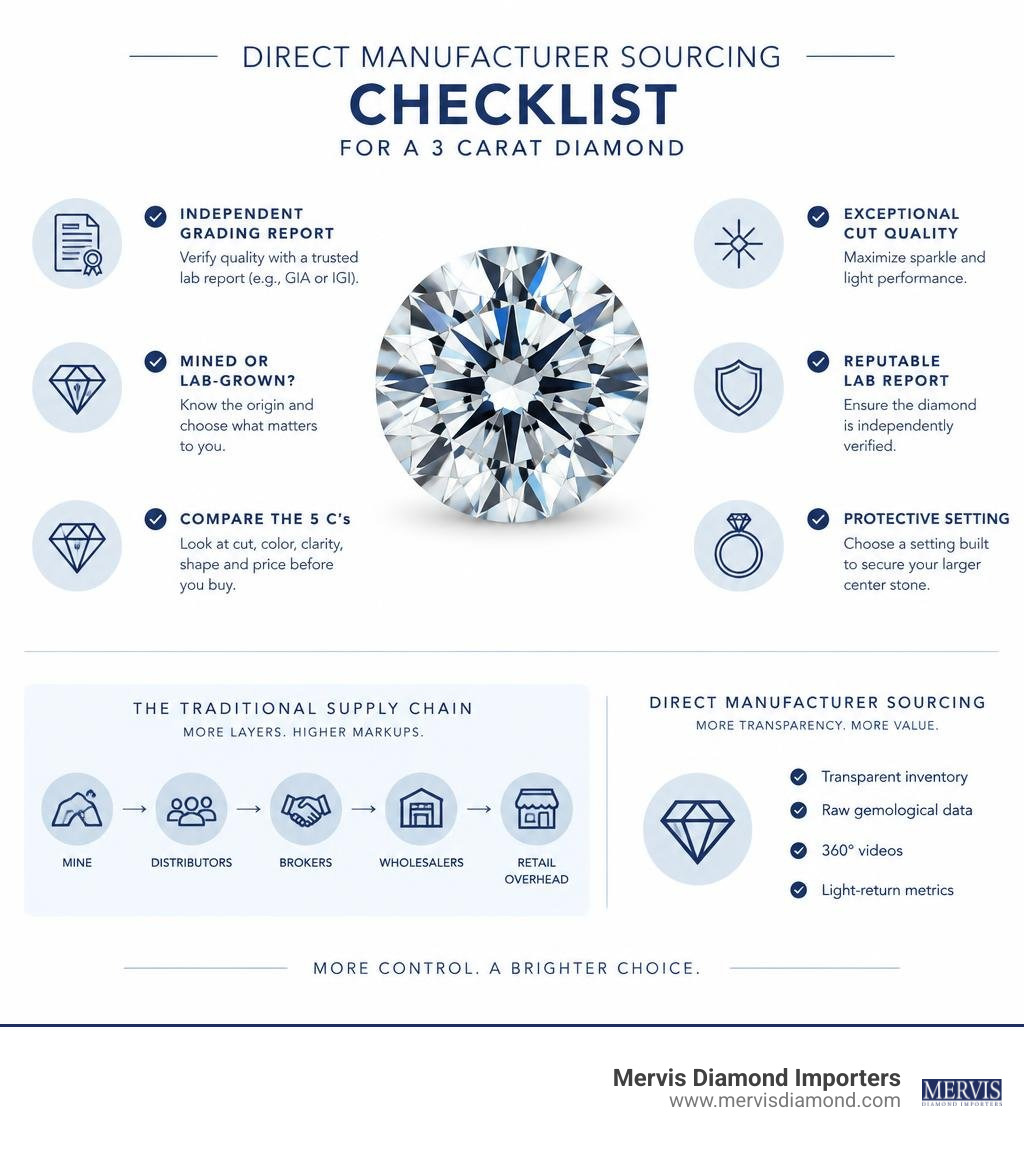
To find the right 3 carat diamond manufacturer, look for one that provides an independent grading report, clearly discloses whether the diamond is mined or lab-grown, and lets you compare cut, color, clarity, shape, and price before committing. Direct sourcing can reduce layers between the maker and buyer, giving you more visibility into a diamond's quality and origin than a typical retail display case.
At three carats, small differences are easier to see. Cut quality drives sparkle, color can be more noticeable, and inclusions that hide in a smaller stone may be visible. A well-chosen 3 carat diamond should have strong light performance, a reputable lab report such as GIA or IGI, and a setting built to protect its larger center stone.
Buying direct is not just about chasing a lower number. It is about asking better questions, seeing the full specifications, and avoiding the common mistake of paying more for a carat weight while compromising on beauty or durability.
I am Morris Mervis, and I will walk you through how to source a large diamond with confidence and without unnecessary sales pressure.
The Financial and Quality Benefits of Direct Diamond Sourcing
When you purchase fine jewelry through conventional retail storefronts, you are not just paying for the gemstone. Traditional supply chains add multiple layers of distributors, brokers, wholesalers, and retail overhead before a finished ring reaches the display case. Each participant adds their own markup, significantly increasing the final price tag on high-carat stones.
By cutting out these intermediary steps, direct diamond sourcing allows you to allocate your budget entirely toward diamond quality rather than administrative markups. This model provides complete inventory transparency, allowing you to review raw gemological data, high-resolution 360-degree videos, and precise light-return metrics. To see how these specifications influence wholesale and direct market value in real time, you can test different parameters using our interactive diamond price calculator.
Working with a 3 Carat Diamond Manufacturer for Custom Cuts
Large diamonds present unique optical challenges. A three-carat rough crystal requires precise 3D mapping to maximize brilliance while preserving carat weight. Working directly with manufacturing channels allows you to source custom-proportioned stones that avoid common cutting flaws like light leakage, shallow crown angles, or heavy pavilions that hide dead weight beneath the girdle.
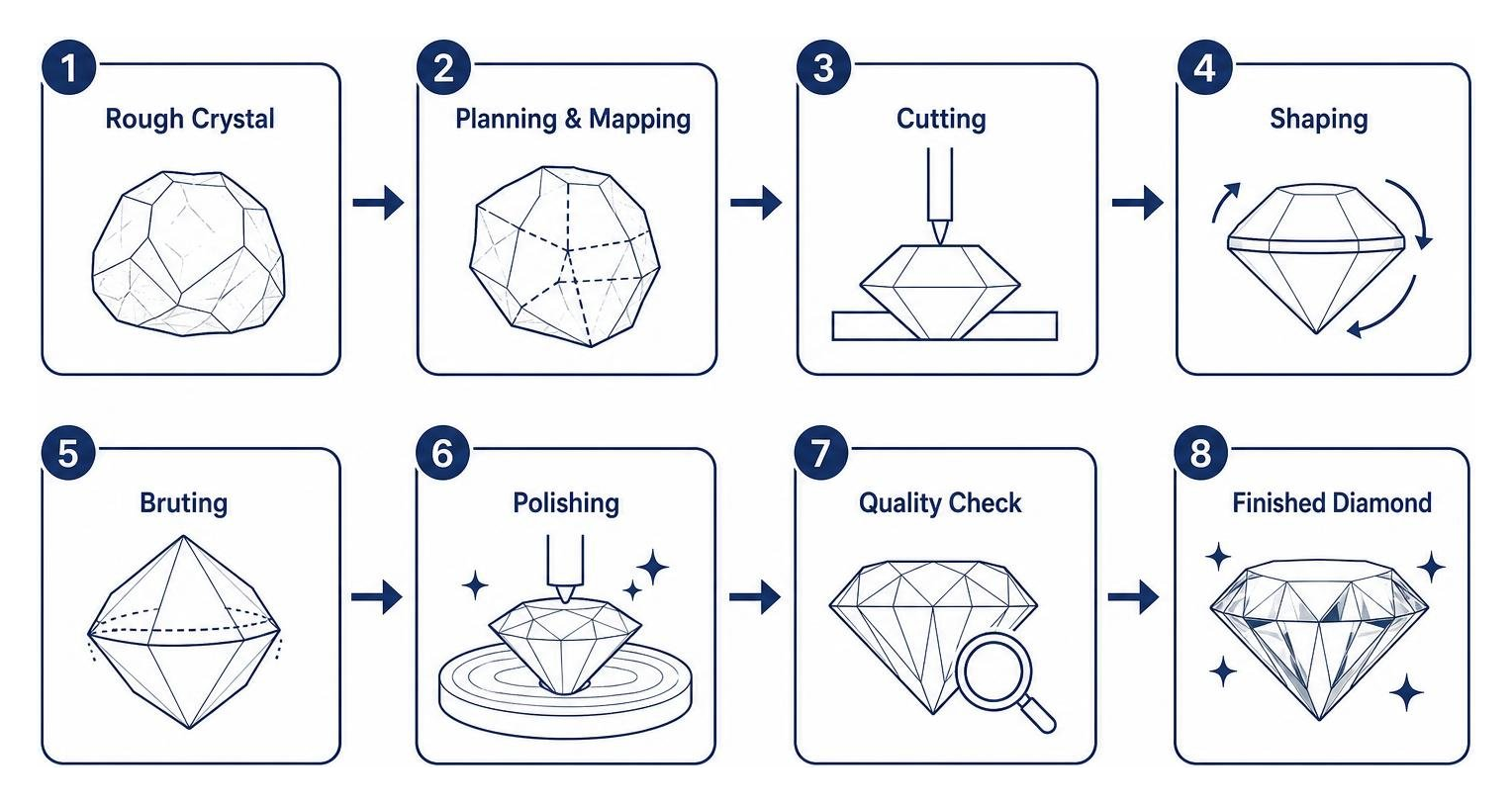
Direct access gives you the freedom to choose stones cut for maximum visual spread and fire rather than stones cut purely to retain carat weight on a scale. You can explore a curated, hand-selected 3 carat diamond assortment that prioritizes visual performance over paper specifications.
Eliminating Middlemen and Showroom Overhead
Every step in the traditional supply chain introduces extra costs:
- The Miner / Synthesizer: Extracts or grows the rough crystal.
- The Master Cutter: Cleaves, saws, and facets the rough stone.
- The International Wholesaler: Aggregates and sorts parcels of polished stones.
- The Regional Broker: Distributes diamonds on consignment to retail storefronts.
- The Retailer: Adds substantial markups to cover retail leases, boutique displays, and marketing overhead.
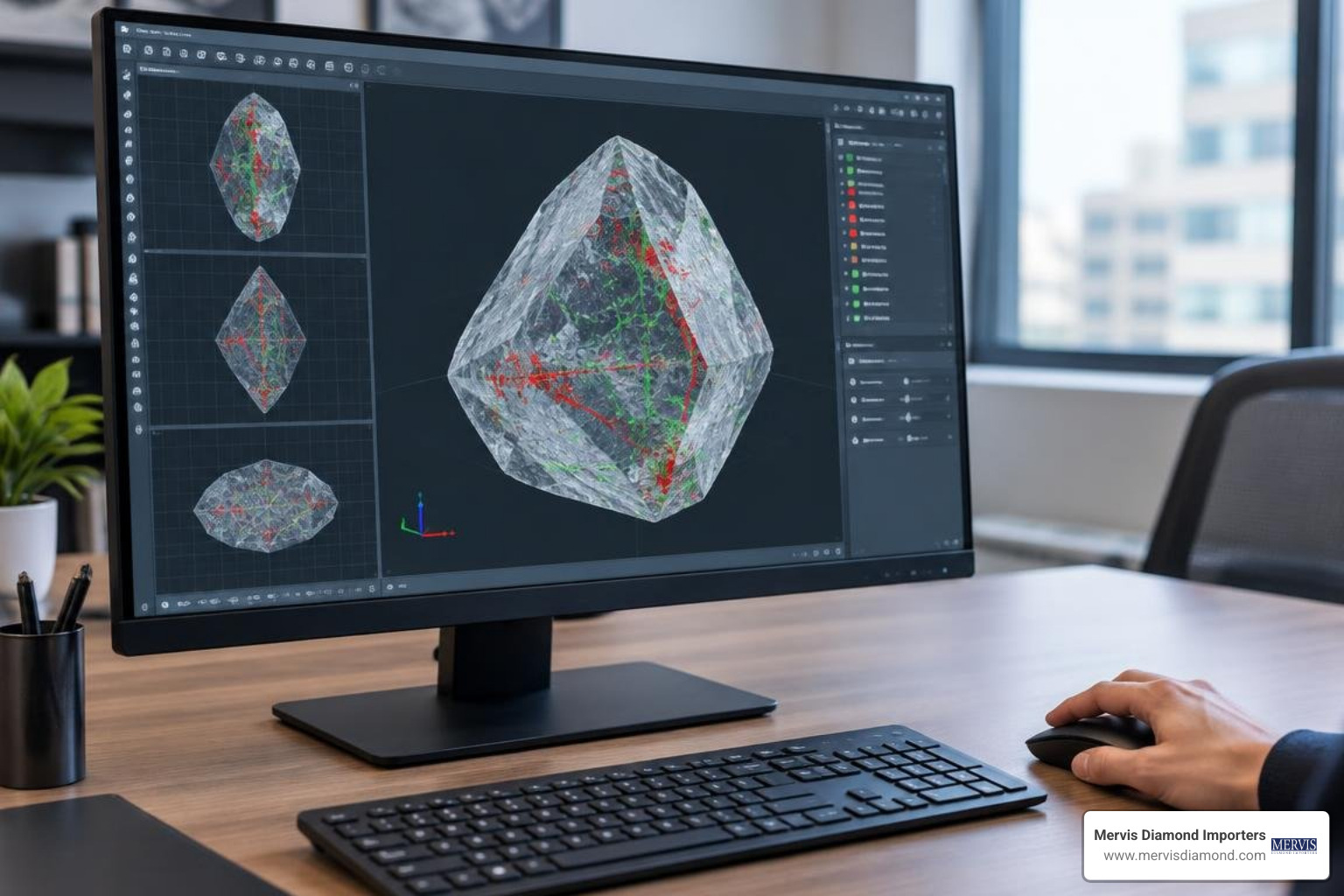
Bypassing consignment and broker layers ensures that the savings remain in your pocket. Direct sourcing gives you direct access to the cutter's bench, ensuring that every dollar spent translates into superior diamond clarity, ideal proportions, and remarkable optical performance.
How a 3 Carat Diamond Manufacturer Produces Large Premium Gems
Creating a three-carat finished diamond requires immense technological precision, whether the stone is grown in a laboratory or recovered from the earth. Because diamond cutting removes approximately 50% to 60% of the original rough crystal, producing a high-clarity 3 carat finished gem requires a starting rough of at least 6 to 8 carats.
The industry has witnessed remarkable advancements in growing large diamonds, including notable breakthroughs in growing large diamonds right here in the Washington, D.C. area. These technical milestones have redefined what is possible in large-carat precision diamond manufacturing.
Lab-Grown Synthesis vs. Mined Diamond Cutting
High-carat lab diamonds are synthesized through two primary methods:
- Chemical Vapor Deposition (CVD): Carbon-rich gases are ionized inside a microwave plasma reactor, depositing atom-by-atom layers of pure carbon onto a diamond seed crystal.
- High Pressure High Temperature (HPHT): Large mechanical presses replicate the extreme heat (over 2,000°C) and pressure (over 60,000 atmospheres) of the Earth's mantle to crystallize molten carbon.
Whether you are seeking traditional mined diamonds formed billions of years ago or looking into verifying lab grown diamond authenticity, both options share identical physical, chemical, and optical properties. In both cases, master cutters use specialized laser faceting systems and high-precision scaifes to ensure optimal light performance.
Diamond Certification and Origin Grading
Every 3 carat diamond must be accompanied by an independent grading report from an accredited gemological laboratory, such as the Gemological Institute of America (GIA) or the International Gemological Institute (IGI). These reports verify:
- Authenticity: Confirmation of natural or laboratory origin.
- 4 Cs Specifications: Exact measurements, proportions, cut grade, color grade, and clarity mapping.
- Growth Method & Treatments: Full disclosure of CVD or HPHT growth processes and any post-growth clarity or color enhancements.
- Laser Inscription: A microscopic report number laser-inscribed on the diamond's girdle matching its official grading dossier.
Evaluating Quality: The 4 Cs for Three-Carat Diamonds
Because facet surface areas are significantly larger on a 3 carat stone (measuring approximately 9.3mm to 9.5mm in diameter for a round brilliant) than on a 1 carat stone (around 6.5mm), optical imperfections and color tints become much more apparent to the naked eye.
| Quality Parameter | 1 Carat Diamond Tolerance | 3 Carat Diamond Standard | Recommendation for 3 Carat Buyers |
|---|---|---|---|
| Cut Grade | Very Good to Excellent | Excellent / Ideal Only | Never compromise on cut; ensures light return |
| Color Grade | D through J (faces up white) | D through H | Stick to G-H for platinum; I-J for yellow gold |
| Clarity Grade | SI1 or SI2 (often eye-clean) | VS2 or higher | Inclusions are magnified; verify 100% eye-clean |
| Table % | 53% – 60% | 54% – 58% | Balances brilliance and rainbow fire |
| Depth % | 59.5% – 62.9% | 61% – 62.5% | Prevents a dark center or shallow fisheye effect |
To master how these characteristics interact, review our comprehensive diamond 4 Cs chart guide.
Cut Precision and Light Performance in Large Diamonds
Cut is the single most critical factor determining a diamond's sparkle. In a 3 carat diamond, a poor cut will cause light to leak out of the bottom or sides of the pavilion, resulting in a lifeless, dull appearance. Ideal proportions create balanced internal reflection, returning maximum light through the crown facets as brilliant white flash (brilliance) and rainbow colors (fire).
Clarity and Color Thresholds for 3 Carat Stones
While an SI1 clarity grade might be eye-clean on a smaller stone, a 3 carat diamond has large open facets—particularly in step cuts like emeralds—that can expose carbon spots or feather inclusions. Choosing a VS2 or VS1 clarity grade ensures your diamond is completely clean to the unaided eye.
For color, G and H color grades represent the best balance of beauty and value. They face up bright white when set in white gold or platinum, without the steep price premiums of colorless D-F diamonds.
Cost Factors, Market Pricing, and Shapes
The diamond market operates on an exponential pricing curve for natural stones. Because large rough diamonds are geologically scarce, price-per-carat rates scale rapidly as carat weight increases.
Conversely, lab-grown production allows buyers to acquire impressive 3 carat stones at a fraction of the cost of mined equivalents. Exploring the differences between lab grown vs natural diamonds in the market can help you decide which option best aligns with your budget and priorities.
Fancy Shapes vs. Round Brilliant Pricing
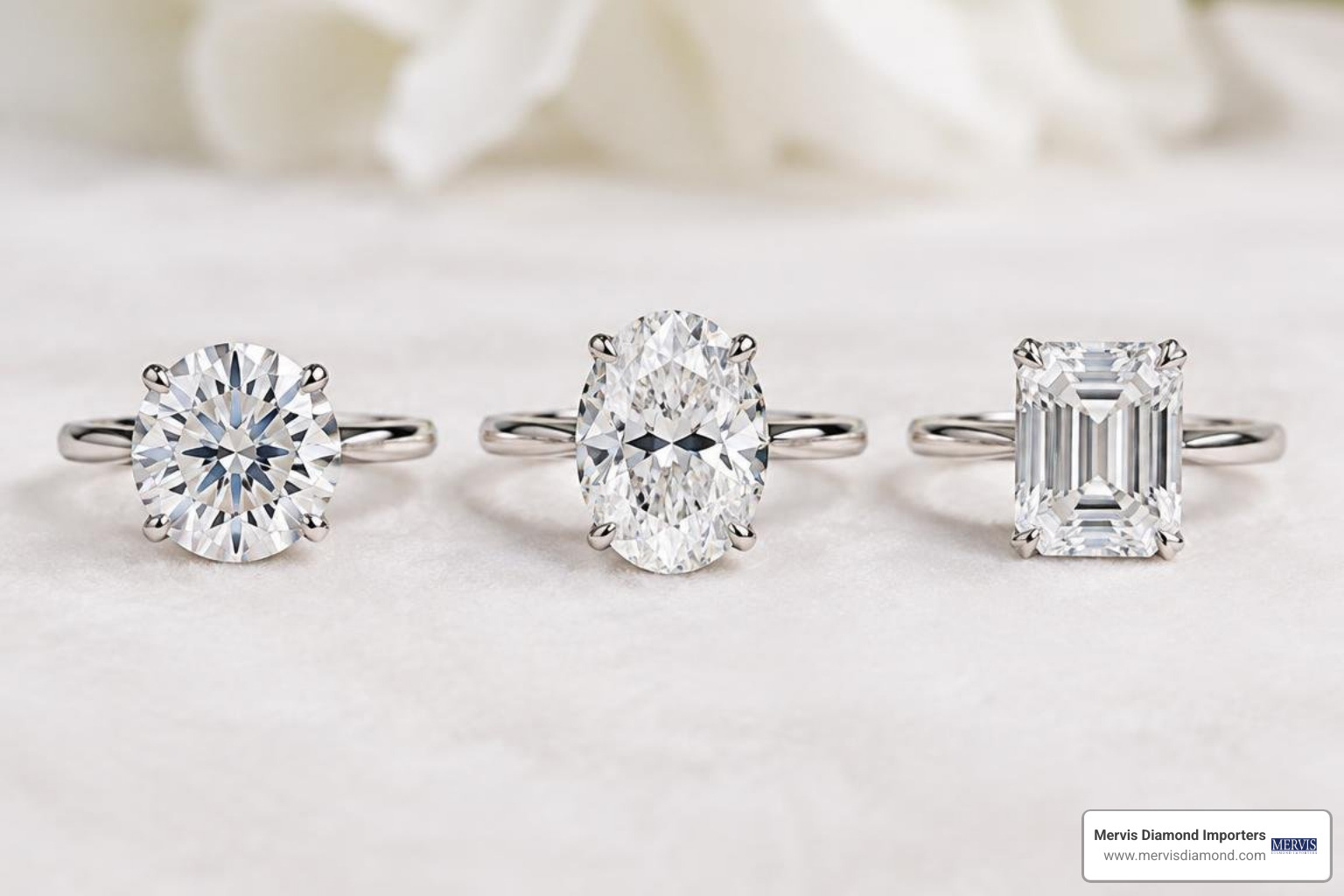
Round brilliant diamonds command the highest price per carat due to the significant rough material lost during the circular cutting process (often up to 60%). Fancy shapes offer greater yield from rough crystals, leading to substantial cost savings:
- Oval Cut: Features an elongated outline that creates an optical illusion of greater size, often appearing 10% to 15% larger than a round diamond of equal carat weight.
- Emerald Cut: A sophisticated step cut showcasing long, parallel facets that highlight exceptional clarity.
- Pear and Marquise Cuts: Distinctive silhouettes that maximize finger coverage while maintaining high brilliance.
Questions to Ask a 3 Carat Diamond Manufacturer Before Buying
Before making your purchase, ensure you ask the right questions:
- Is the stone accompanied by an unedited grading dossier from GIA or IGI?
- Is the diamond 100% eye-clean when viewed from the top and sides?
- Has the lab-grown diamond undergone any undisclosed post-growth HPHT treatments?
- What are the specific return, exchange, and upgrade policies?
If you are shopping in Maryland or the greater Washington area, our team can help you find premium lab grown diamonds near Rockville MD with complete peace of mind.
Ethical Sourcing and Secure Ring Settings
Integrity in sourcing is just as crucial as gemological quality. Ethical diamond sourcing guarantees that natural diamonds are mined under strict labor, safety, and environmental standards, and that lab diamonds are produced using energy-efficient methods.
We maintain a strict commitment to responsible ethical sourcing practices, ensuring every diamond in our collection is conflict-free and responsibly handled.
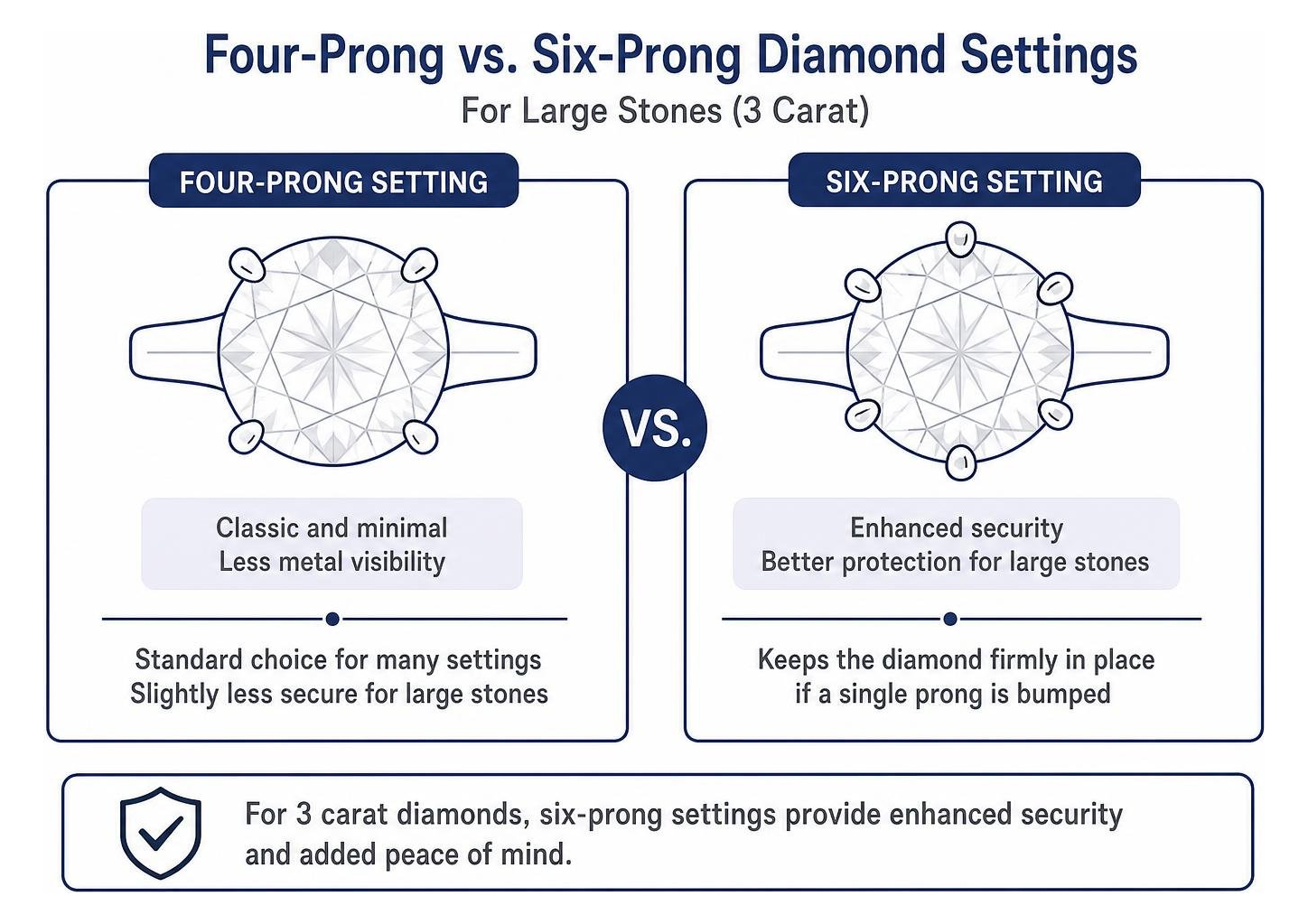
Setting Durability for Large Diamond Jewelry
A 3 carat diamond represents a substantial gemstone that requires a secure, structurally sound mounting. When designing a 3 carat man made diamond ring, keep the following engineering principles in mind:
- Six-Prong Mountings: Provide enhanced security compared to standard four-prong heads, keeping the diamond firmly in place if a single prong is bumped.
- Platinum Prongs: Platinum does not wear away over time like gold; its dense metal structure bends rather than breaks upon impact.
- Under-Bezel / Gallery Rail: A support bar connecting the prongs prevents them from splaying outward under pressure.
- Band Width Balance: Choose a band width of at least 1.8mm to 2.2mm to support the weight of the center stone and prevent the ring from spinning on the finger.
Frequently Asked Questions About 3 Carat Diamonds
How much does a 3 carat diamond cost in 2026?
In 2026, the price of a high-quality 3 carat natural diamond (G-H color, VS2 clarity, Excellent cut) typically ranges from $35,000 to over $75,000 depending on shape and specific certification. A premium 3 carat lab-grown diamond of identical visual and structural quality generally ranges from $2,200 to $4,500. For more common questions about ring pricing and buying strategies, browse our comprehensive diamond buying FAQ.
Can gemologists distinguish between lab-grown and mined 3 carat diamonds?
Yes, but only with advanced gemological laboratory equipment. Because lab-grown and mined diamonds share identical chemical and optical structures, standard handheld diamond testers cannot tell them apart. Gemological labs use photoluminescence spectroscopy and UV fluorescence imaging to detect microscopic crystal growth patterns and verify their origin.
Which 3 carat diamond shape looks largest on the finger?
Elongated shapes—such as marquise, oval, and pear cuts—distribute more carat weight across the surface table, giving them the largest visual footprint per carat. An oval cut 3 carat diamond will consistently appear larger on the hand than a traditional 3 carat round brilliant.
Conclusion
Sourcing your diamond directly provides unmatched value, transparency, and craftsmanship. At Mervis Diamond Importers, our family has spent generations hand-selecting the finest natural and lab-grown diamonds for our clients across Washington, D.C., Tysons, VA, and Rockville, MD. We believe buying a luxury diamond should be an educational, enjoyable, and completely pressure-free experience.
To learn more about current pricing factors and find the perfect diamond for your budget, explore our complete guide on how much a 3 carat diamond ring costs, or visit one of our local showrooms to view our loose stone collection in person.