

Asscher Cut Cocktail Rings: Big, Bold, and Beautifully Faceted
The Asscher Cut Cocktail Ring: A Bold Statement Worth Making
An asscher cut cocktail ring is one of the most striking pieces of jewelry you can own. Before diving in, here's a quick summary of what you need to know:
Quick Facts: Asscher Cut Cocktail Rings
| Feature | Details |
|---|---|
| Best for | Bold, vintage-inspired statement jewelry |
| Origin | Patented in 1902; peaked in 1920s Art Deco era |
| Diamond shape | Square with cropped corners and step-cut facets |
| Facets | ~58, creating a "hall of mirrors" effect |
| Best clarity grade | VS2 or better |
| Worn on | Right hand, ring or middle finger |
| Popular metals | Platinum, 18K white gold, 18K yellow gold |
| Key appeal | Geometric elegance, depth, vintage glamour |
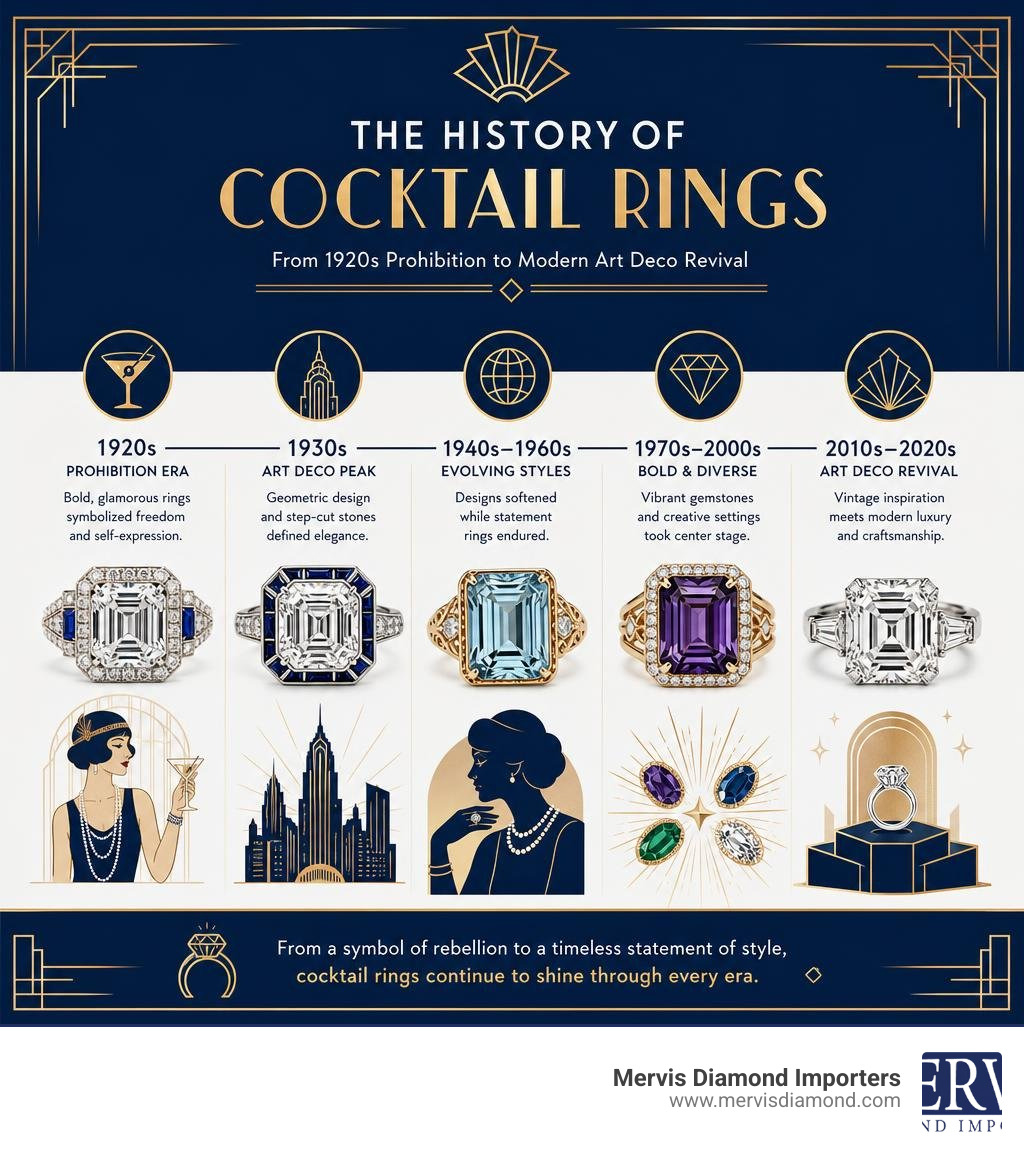
Cocktail rings were born out of a rebellious spirit. During Prohibition in the 1920s, women wore oversized, dazzling rings to social gatherings as a form of self-expression. The Asscher cut — with its deep, mirror-like facets and sharp geometric lines — fit that mood perfectly.
The style never really left. Today, Asscher cut cocktail rings are still a favorite among people who want something sophisticated but unconventional. They don't chase trends. They set them.
What is an Asscher Cut Diamond?
To understand why this cut makes such a spectacular statement on your finger, we have to look at its unique anatomy.
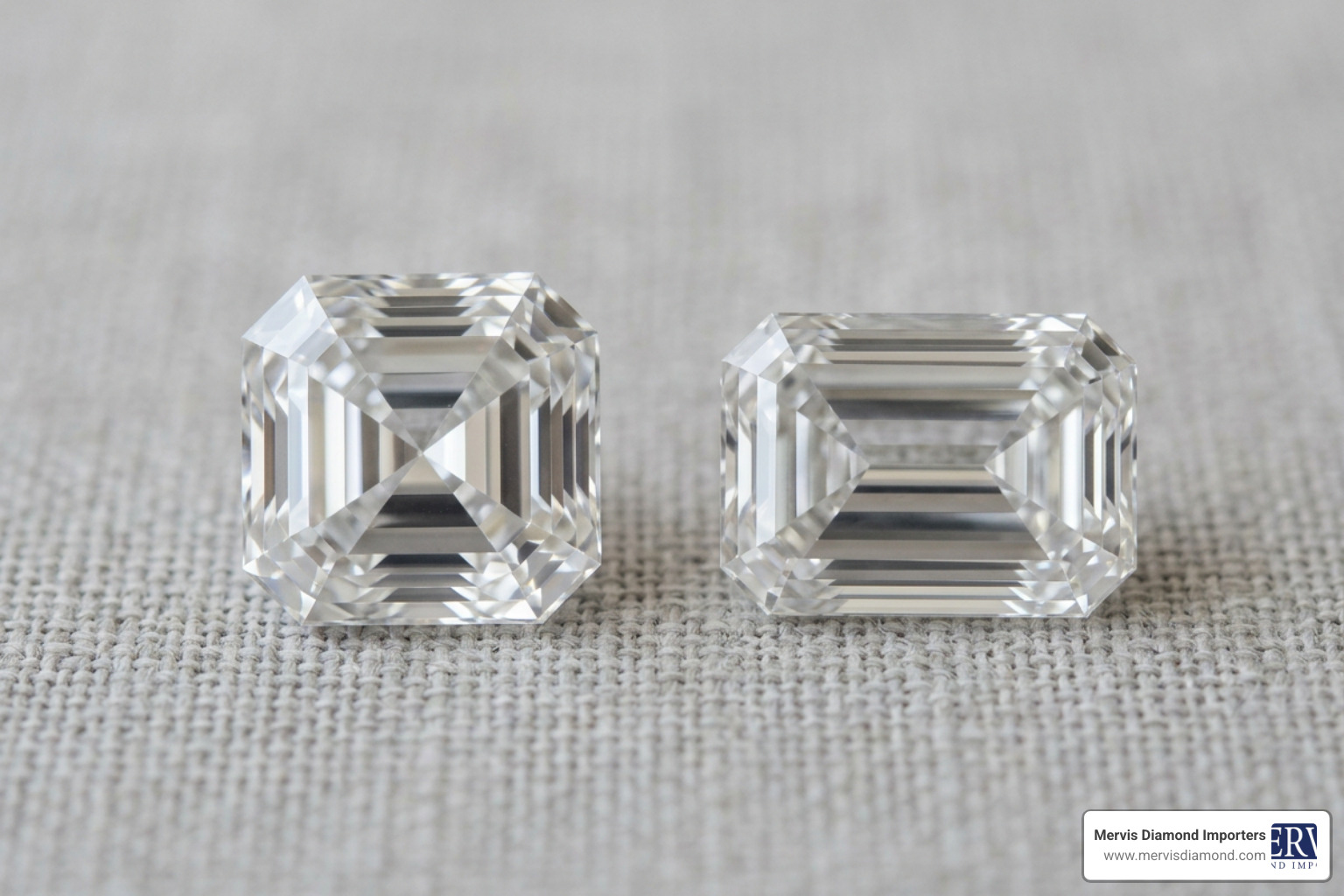
Invented in 1902 by Joseph Asscher of the Royal Asscher Diamond Company, this shape was revolutionary. In fact, it was the first diamond cut in history to be patented. Joseph Asscher designed it to maximize the beauty of rough diamonds, creating a square silhouette with deeply cropped corners.
When you look down into an Asscher cut, you aren't seeing the tiny, crushed-ice sparkle of a round brilliant diamond. Instead, you are looking at step-cut facets that run parallel to the girdle. This linear faceting creates a mesmerizing "hall of mirrors" effect. The light draws your eye deep into the center of the stone, demanding a certain level of purity and symmetry.
Typically featuring 58 facets, the classic Asscher cut looks like a square emerald cut, but with a higher crown, a smaller table, and larger step facets. If you are curious about the technical differences of these shapes, you can read our guide on What is an Asscher Cut Diamond.
Because of its square blueprint and truncated corners, it offers a level of architectural precision that is tough to find in other shapes. When you are Selecting the Right Diamond Shape, the Asscher stands out as the choice for connoisseurs who appreciate clean lines, vintage charm, and structural depth. To learn more about this legendary cut, you can view modern variations from the Royal Asscher Official collection.
The Allure of the Asscher Cut Cocktail Ring
Scale is the defining characteristic of any great cocktail ring. These are statement pieces built for presence, meant to be worn proudly on the right hand (traditionally the ring or middle finger) to keep them visually separate from a left-hand wedding band.

Because an asscher cut cocktail ring relies on dramatic depth and geometry rather than overwhelming surface sparkle, it carries an air of quiet luxury—even when the stone is massive.
The shape has a long history of stealing the spotlight on some of the world's most famous hands:
- Elizabeth Taylor: Perhaps the most famous Asscher cut of all time was the 33.19-carat Krupp Diamond (later renamed the Elizabeth Taylor Diamond). This mind-bogglingly large stone perfectly illustrated how the Asscher cut showcases incredible transparency and structural majesty.
- Pippa Middleton: Her stunning Art Deco-inspired ring features an Asscher cut center stone surrounded by a seamless octagonal halo, proving that the style translates beautifully to modern vintage tastes.
- Nicky Hilton: Her elegant three-stone ring features a large Asscher cut flanked by side stones, showing off the cut's balance and symmetry.
While these celebrity rings are legendary, you don't need a 30-carat diamond to make an impression. However, it is helpful to know that step cuts carry a lot of their weight in their bottom half (the pavilion). Consequently, they can look slightly smaller from the top than a round brilliant of the same carat weight. To understand how weight distribution affects visual scale, take a look at our breakdown of Which Diamond Shape Looks the Biggest.
If you want to make an ultra-bold statement, some collectors look to colored gemstones cut in this geometric style. For instance, a massive Asscher cut citrine cocktail ring or a colorful fancy pink Asscher cut cocktail ring can deliver that eye-catching, oversized look with a playful pop of color.
Why the Asscher Cut Cocktail Ring Defines Art Deco and Vintage Glamour
Though designed in 1902, the Asscher cut reached the absolute peak of its popularity during the 1920s and 1930s. The Art Deco movement was defined by bold geometric patterns, symmetrical lines, and a break from the organic, flowing curves of the Art Nouveau era. The cropped corners and square symmetry of the Asscher cut made it the poster child for this new, modern aesthetic.
When set into a cocktail ring, the Asscher cut immediately evokes this era of jazz, speakeasies, and structural elegance. It has an inherent heirloom quality. Even a brand-new asscher cut cocktail ring feels like a treasured estate piece passed down through generations.
For those who love the elegance of bygone eras, exploring vintage and estate-style designs can provide endless inspiration. The geometric symmetry makes these rings incredibly versatile, allowing them to look right at home whether you are wearing a modern pantsuit or a vintage evening gown.
Evaluating Quality: Clarity, Color, and Carat for Your Asscher Cut Cocktail Ring
Because of the way an Asscher cut is faceted, buying one requires a slightly different strategy than buying a brilliant cut.
With a round brilliant or a princess cut, the tiny, chaotic facets act like a funhouse mirror, hiding minor internal flaws (inclusions) and masking slight color tints. An Asscher cut does the exact opposite. Its wide, flat, step-cut facets are completely transparent, acting like a clear window straight into the heart of the stone.
When preparing to purchase, keep the following guidelines in mind:
- Prioritize Clarity: Because of this step-cut vulnerability, we highly recommend choosing a clarity grade of VS2 or better. Anything lower risks having inclusions visible to the naked eye right under the table. For a deeper dive into choosing the right clarity, check out our guide on What Diamond Clarity is Best.
- Consider Color Carefully: Step cuts tend to retain color more than brilliant cuts, especially in their cropped corners. If you prefer a completely icy, colorless look, aim for a G color grade or higher. However, if you love vintage warmth, a J or K color grade paired with an 18K yellow gold setting can look absolutely spectacular.
- Understand the Four Cs: Balancing these factors is the key to getting the best value for your budget. You can learn how to weigh these trade-offs in our masterclass on Understanding the Four Cs.
Best Settings and Metals for Statement Rings
Choosing the right setting and metal for your asscher cut cocktail ring is about balancing protection with visual impact.
Because of their cropped corners, Asscher cuts are incredibly versatile, but they do require secure settings to keep those corners safe from accidental knocks.
- Platinum: The ultimate choice for durability. Platinum's natural white sheen will never fade or change color, making it the perfect frame to highlight the icy clarity of a high-grade Asscher diamond.
- 18K Yellow Gold: For a rich, classic contrast. Yellow gold looks stunning against the geometric lines of an Asscher cut, giving it a warm, Old World feel.
- Bezel Settings: A bezel setting wraps a thin collar of metal entirely around the edge of the stone. This offers maximum protection and accentuates the bold, square shape of the diamond, making it look incredibly modern and architectural.
- Prong Settings: A classic four-prong setting (often claw prongs) placed on the cropped corners will elevate the stone, allowing maximum light to enter from the sides. This helps to enhance What Makes a Diamond Sparkle by letting light bounce through the step facets.
- Halo Designs: Surrounding your center Asscher cut with a halo of smaller brilliant-cut diamonds adds an extra layer of fire and makes the overall footprint of the ring look significantly larger on your hand.
Frequently Asked Questions about Asscher Cuts
Do Asscher cut diamonds sparkle as much as round brilliant cuts?
No, but they aren't meant to! Round brilliant cuts are engineered to chop light up into fiery, dancing sparkles. Asscher cuts, on the other hand, produce broader, dramatic flashes of light.
It is a more understated, elegant type of flash—often described as a "hall of mirrors" or "liquid light" effect. If you are trying to decide which style fits your personality, check out our comparison on Which Diamond Cut Sparkles the Most.
Why do Asscher cut diamonds look smaller than other shapes of the same carat weight?
Because Asscher cuts are deep stones. A significant portion of their carat weight is concentrated in the pavilion (the bottom half) to create those mesmerizing step-cut layers.
This means that from a top-down view, an Asscher cut will have a smaller surface area (or "face-up size") than a round or marquise diamond of the exact same carat weight. When shopping, focus on the physical millimeter measurements rather than just the carat weight alone.
Are Asscher cut diamonds more expensive than other cuts?
They can carry a premium. Because they are step cuts, diamond cutters must use high-clarity rough crystals, which are rarer and more expensive to source.
Additionally, cutting a square Asscher shape results in a higher loss of rough diamond material during the cutting process. To see where the Asscher lands on the pricing scale, read our article on What is the Most Expensive Diamond Cut.
Conclusion
An asscher cut cocktail ring is more than just a piece of jewelry—it is a conversation starter. With its deep roots in the glamour of the 1920s, its hypnotic geometric faceting, and its bold presence on the hand, it is the perfect choice for anyone looking to make a sophisticated statement.
At Mervis Diamond Importers, we specialize in helping you find the perfect stone. Whether you are looking for a natural diamond with exceptional clarity or a stunning lab-grown alternative, our non-commissioned experts are here to guide you through the process without any pressure.
If you are ready to experience the mesmerizing "hall of mirrors" effect in person, we invite you to visit us at one of our showrooms in Tysons, VA, Rockville, MD, or Washington, DC. Let us help you find a statement piece that you will treasure for a lifetime. To start your journey, explore our educational guide on What is an Asscher Cut Diamond or schedule an appointment with us today!