

Baguette Diamond Insurance: Protecting Your Delicate Sparkler
When Your Baguette Diamond Gets Damaged: What Insurance Actually Covers
Baguette diamond insurance coverage is something most ring owners only think about after something goes wrong — and by then, the stakes are high.
Here is a quick answer if you need it fast:
Does jewelry insurance cover a chipped baguette diamond?
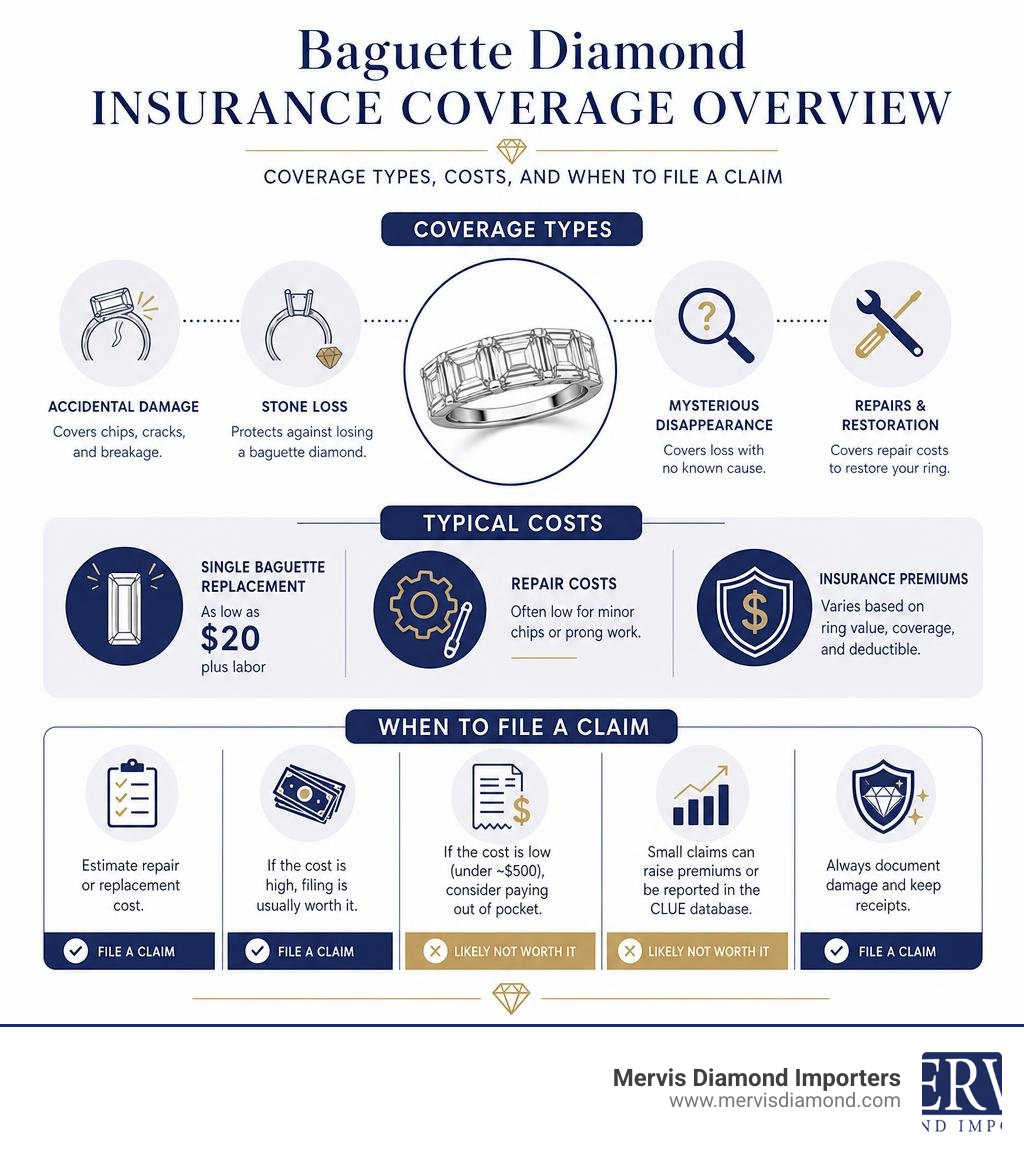
- Yes — most specialized jewelry insurance policies cover accidental damage, including chips and cracks to baguette stones.
- Standard homeowners insurance typically caps jewelry coverage at $1,000–$2,000 total, and often excludes accidental damage entirely.
- Standalone jewelry policies (like Jewelers Mutual) offer broader protection: accidental damage, stone loss, and even mysterious disappearance.
- Filing a small claim (under ~$500) is usually not worth it — repair costs are often low, and claims can raise premiums or trigger the CLUE database.
- Out-of-pocket replacement for a single small baguette stone can be as low as $20 plus labor.
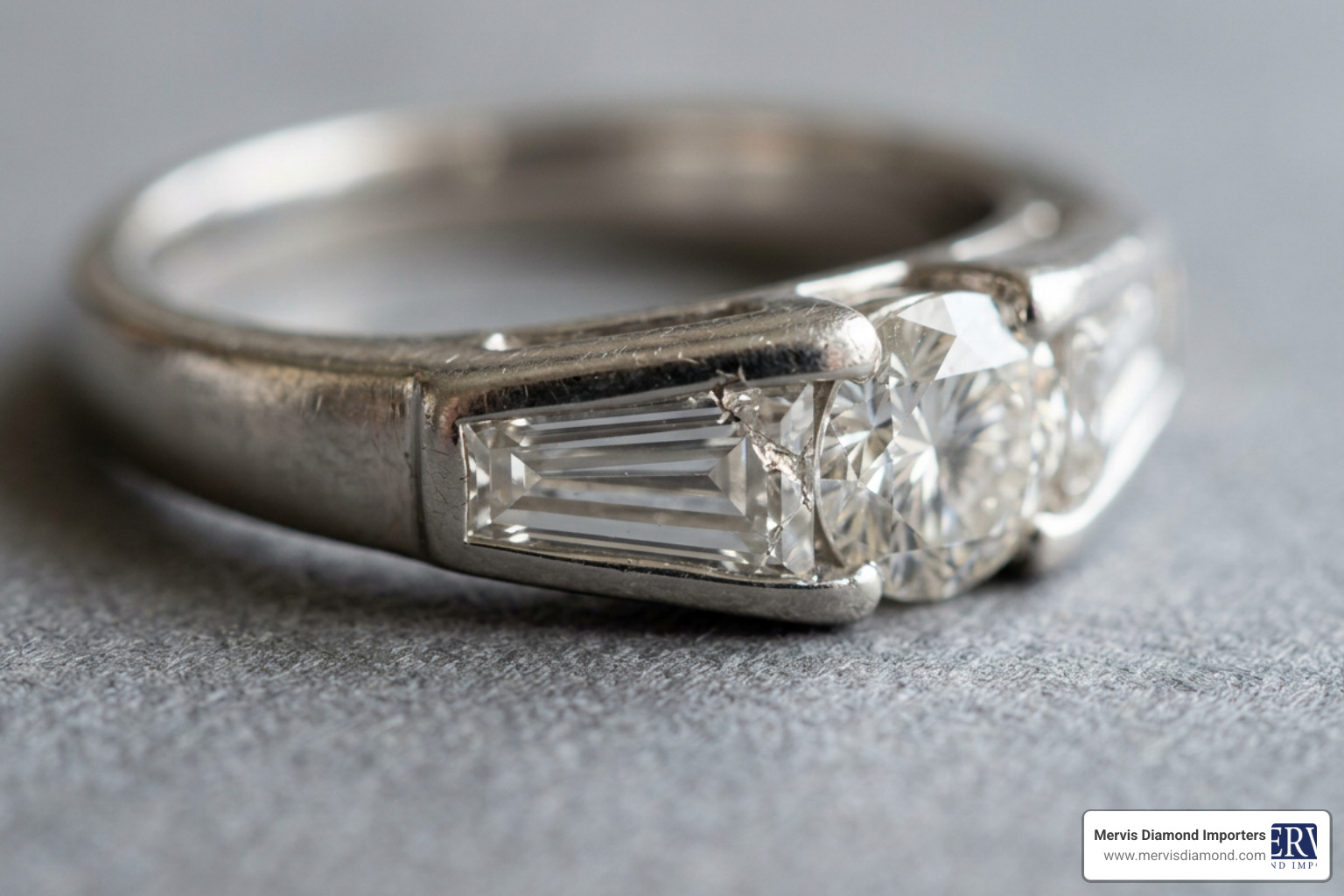
Baguette diamonds are elegant — but they are also one of the most fragile cuts used in engagement rings. Their long, flat step-cut shape and exposed corners make them especially vulnerable to chipping during everyday wear. One knock against a hard surface, a door closing on your hand, or even the pressure of gripping something tightly can crack a baguette stone in half.
That fragility makes understanding your coverage before something breaks genuinely important.
Why Baguette Diamonds Require Specialized Coverage
To understand why baguette diamond insurance coverage is so critical, we have to look at the anatomy of the stone itself. Unlike a round brilliant diamond, which features 58 facets designed to bounce light in every direction (and hide minor imperfections or tiny chips), a baguette diamond is a step-cut stone with only 14 facets.
This minimalistic geometry creates a sleek, mirror-like "hall of mirrors" effect. While incredibly elegant and reminiscent of the Art Deco movement, this design leaves the diamond highly vulnerable.
Here is why baguette diamonds are more prone to damage than other cuts:
- Exposed, Pointed Corners: Rectangular and tapered baguettes have sharp, 90-degree corners. In many settings, these corners bear the brunt of daily impacts.
- Low Facet Count: With only 14 facets, there is nowhere for a chip, crack, or inclusion to hide. A tiny nick on a round brilliant might go unnoticed, but a chip on a baguette acts like a crack on a clean window pane.
- Thin Profiles: Baguettes are often cut thin to serve as accent stones. This means they lack the structural depth to withstand heavy, direct pressure.
Because of these physical traits, a baguette diamond can easily chip if you hit your hand against a granite countertop, drop your ring on a tiled bathroom floor, or even clasp a heavy metal door. If you want to dive deeper into the history and design of these unique stones, check out our Baguette Diamond Complete Guide.
Navigating Baguette Diamond Insurance Coverage: Homeowners vs. Standalone Policies
When it comes to securing baguette diamond insurance coverage, you generally have two paths: adding a rider (also known as a scheduled personal property endorsement) to your existing homeowners or renters insurance, or purchasing a standalone jewelry insurance policy.
To help you visualize the differences, we have broken down how these two options compare:
| Coverage Feature | Standard Homeowners Rider | Standalone Jewelry Policy |
|---|---|---|
| Typical Annual Cost | 1% to 2% of appraised value | 1% to 2% of appraised value |
| Coverage Caps | Often restricted by policy limits | Up to the full appraised value |
| Accidental Damage (Chips/Cracks) | Sometimes excluded or highly restricted | Fully covered |
| Mysterious Disappearance | Rarely covered | Standard coverage |
| Deductible Options | Tied to home deductible (often $500-$2,000) | Flexible (often $0 options available) |
| Impact of Claims | Can raise home premiums or cause cancellation | No impact on home insurance |
Deciding between these two options is a major step in protecting your investment. For a broader look at the overall benefits of protecting your jewelry early on, read our guide on Should I Have My Engagement Ring Insured?.
Standalone Jewelry Policies and Baguette Diamond Insurance Coverage
For most couples in the Washington DC, Tysons, and Rockville areas, we strongly recommend a standalone jewelry insurance policy. Specialized providers, such as Jewelers Mutual® Group, are built from the ground up to handle the unique realities of fine jewelry.
A standalone policy excels in several key areas:
- Accidental Damage Coverage: If your baguette chips, a standalone policy will cover the repair or replacement of that specific stone without hassle.
- Worldwide Travel Protection: Whether you are traveling for business or vacationing abroad, your coverage travels with you automatically—no extra international riders required.
- Flexible Deductibles: You can often choose a $0 deductible, meaning you won't have to pay anything out of pocket if a delicate side stone needs to be replaced.
- Choose Your Own Jeweler: If your ring is damaged, specialized insurers usually allow you to return directly to us at Mervis Diamond Importers to perform the repair, ensuring the replacement stone matches the original's high quality.
Homeowners Insurance Riders and Baguette Diamond Insurance Coverage
While adding a jewelry rider to your homeowners or renters policy might seem convenient, it comes with hidden risks that many owners do not realize until it is too late.
Standard homeowners policies typically cap unscheduled jewelry theft reimbursements at a very low limit—usually between $1,000 and $2,000 combined for all your jewelry. To get full coverage, you must "schedule" the item. However, even with a scheduled rider, you are subject to the rules of the homeowners insurance system.
The biggest drawback is how claims are tracked. Every claim you file on a homeowners policy—even a minor one for a chipped $150 baguette side stone—is logged in the Comprehensive Loss Underwriting Exchange (CLUE) database.
As real-world discussions on forums like this chipped baguette - will insurance cover? thread point out, filing multiple small claims can place you in the "danger zone." Having three claims of any type within a 10-year window can cause your insurer to cancel your homeowners policy entirely or make it incredibly difficult to find coverage elsewhere. A premium hike on your entire home policy over a minor jewelry repair is a financial headache you want to avoid.
The Cost of Repairing vs. Claiming a Chipped Baguette
If you look down and notice a tiny chip on one of your beautiful baguette side stones, your first instinct might be to call your insurance company. But before you dial, it is highly recommended to do some basic math.

The cost to replace a chipped baguette diamond out of pocket is often surprisingly affordable. For small accent baguettes (often referred to as "melee" diamonds), the cost of the replacement stone itself can be quite low—sometimes as low as $20 to $100 plus the jeweler's labor. A typical local repair to replace a small side stone, tighten the surrounding prongs, and polish the ring might run between $150 and $400 total.
Now, let's look at the financial impact of filing an insurance claim for that same repair:
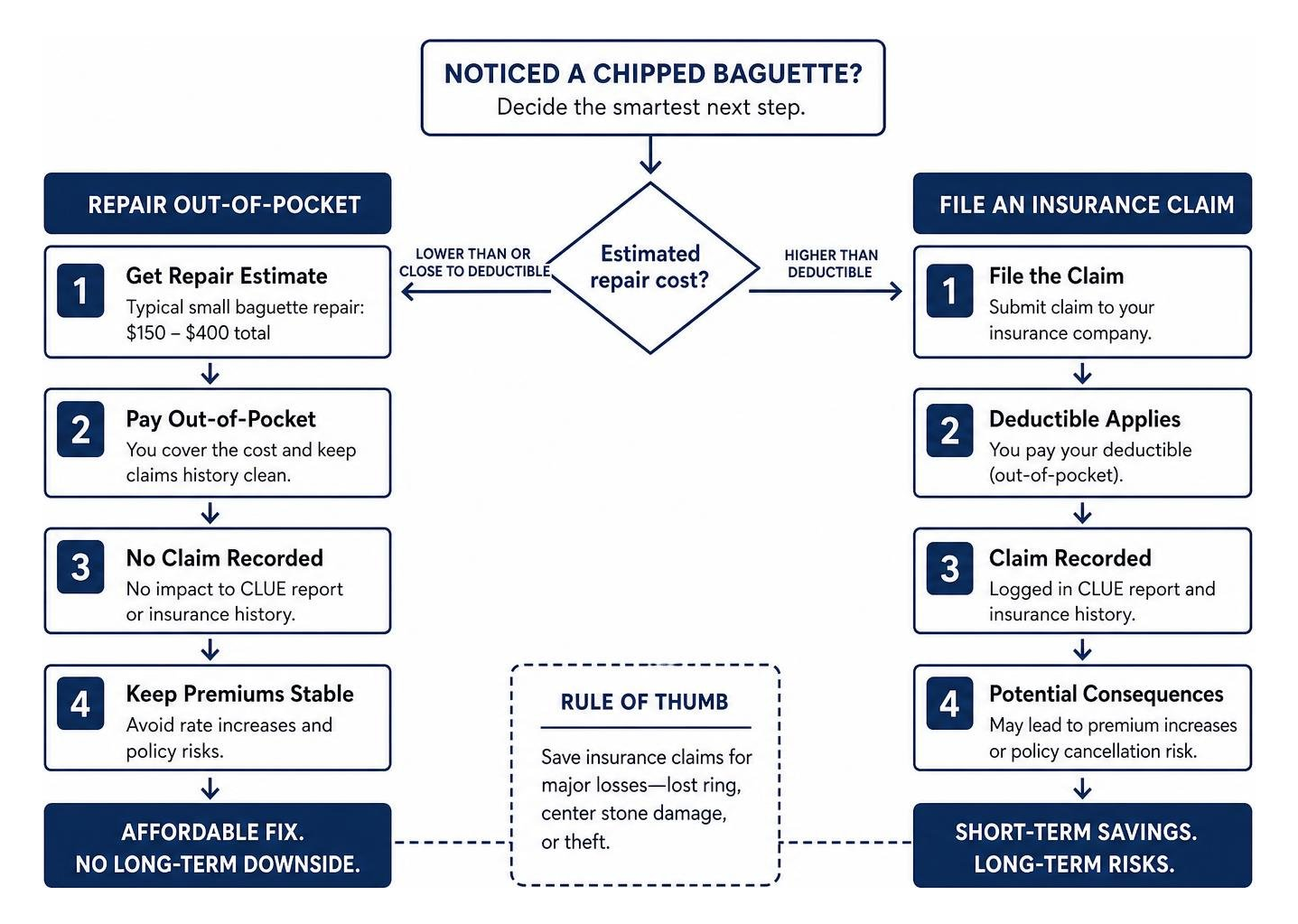
If your deductible is $500, filing a claim for a $300 repair makes no sense because the repair cost does not even cross your out-of-pocket threshold. Even if you have a $0 deductible, filing a claim for a minor repair can result in premium increases that far outweigh the short-term savings.
As a general rule of thumb, save your insurance claims for catastrophic losses—such as losing the entire ring, having the center stone fall out, or experiencing a major theft. For minor accent stone repairs, paying out of pocket keeps your claims history clean and your long-term insurance rates low.
How to Document and Insure Your Baguette Jewelry
If you decide to secure a dedicated policy, the underwriting process requires clear, verified documentation. Insurers will not protect a high-value item based on your word alone.
To set yourself up for a seamless experience, follow this step-by-step documentation checklist:
- Get a Professional Appraisal: Most insurance companies require an independent appraisal for jewelry valued over $5,000. Ensure your appraisal is performed by a certified gemologist. To understand what goes into this process, read about our GIA Certified Diamond Appraisal services.
- Keep Your Purchase Receipts: Always store your original sales receipt digitally. This establishes the initial purchase price and date.
- Secure Diamond Grading Certificates: If your ring features a certified center stone or high-value baguette side stones, keep the GIA or IGI certificates safe. This is equally important whether your stones are natural or created in a lab. For more on this, check out our guide: Can You Insure a Lab Grown Diamond?.
- Take Multi-Angle Photos: High-resolution photographs of the ring from the top, side, and under-carriage help document the exact setting style (such as channel or bezel) and the condition of the prongs.
Frequently Asked Questions About Baguette Diamond Insurance
Does jewelry insurance cover a chipped or damaged baguette diamond?
Yes, standard specialized jewelry insurance policies cover accidental physical damage, which includes chips, cracks, and breakage of baguette diamonds. However, normal wear and tear—such as the gradual wearing down of metal prongs over decades or minor scratches on the metal band—is typically excluded. To keep your coverage valid, most insurers expect you to perform regular maintenance checks to prevent predictable stone loss.
How does a chipped baguette claim affect my insurance premiums?
If you file a claim through a standalone jewelry policy, your premium may see a minor adjustment, but it will not impact your broader personal property or homeowners insurance. However, if you file the claim under a homeowners rider, it will be reported to the CLUE database. This can result in premium hikes for your entire home policy or even non-renewal if you have a history of multiple claims.
Should I reset my ring instead of repairing a chipped baguette?
If you find yourself repeatedly chipping the side stones on your ring, it may be a sign that the setting style is not matching your lifestyle. Baguette diamonds set high in delicate prong settings are highly exposed.
You might want to consider resetting your diamonds into a more protective design, such as a channel setting or a bezel setting, which wraps the vulnerable corners of the baguette in protective metal. While insurance generally does not cover the cost of a voluntary design upgrade or style change, they will cover the replacement value of the damaged stone, which you can then apply toward your new custom design.
Conclusion
Your baguette-cut diamonds offer a spectacular, sophisticated gleam, but their delicate nature means they deserve the right safety net. Protecting your investment with specialized, standalone baguette diamond insurance coverage ensures that you can wear your jewelry every day with total peace of mind.
If you have experienced damage to a side stone, or if you want to explore resetting your diamonds into a more secure, modern design, we are here to help. Visit us at Mervis Diamond Importers for a pressure-free consultation at any of our local showrooms:
- Tysons, VA
- Rockville, MD
- Washington, DC
Our expert team can assist you with professional appraisals, seamless repairs, and custom design options to keep your jewelry looking flawless. To learn more about the unique characteristics of these stunning step-cuts, explore our guide on What is a Baguette Diamond? or schedule an appointment with us today.