

GIA Excellent Cut Diamonds: A Practical Guide to Light Performance
What a GIA Excellent Cut Diamond Tells You
A GIA Excellent cut is the highest cut grade GIA gives a standard round brilliant diamond. It means the diamond meets GIA's top standard for how it handles light, how its proportions affect its appearance, and how well it was finished. It does not mean every Excellent diamond looks the same. Compare a few in person, if you can, and look for the balance of white light, flashes of color, and sparkle you like best.
Cut is not the same as shape: round describes a diamond's outline, while cut describes how its facets work together. I'm Morris Mervis, and this guide will help you understand what the grade means before you choose a diamond. For a broader overview of the grading system, the GIA cut grade page explains how cut affects a diamond's face-up appearance.
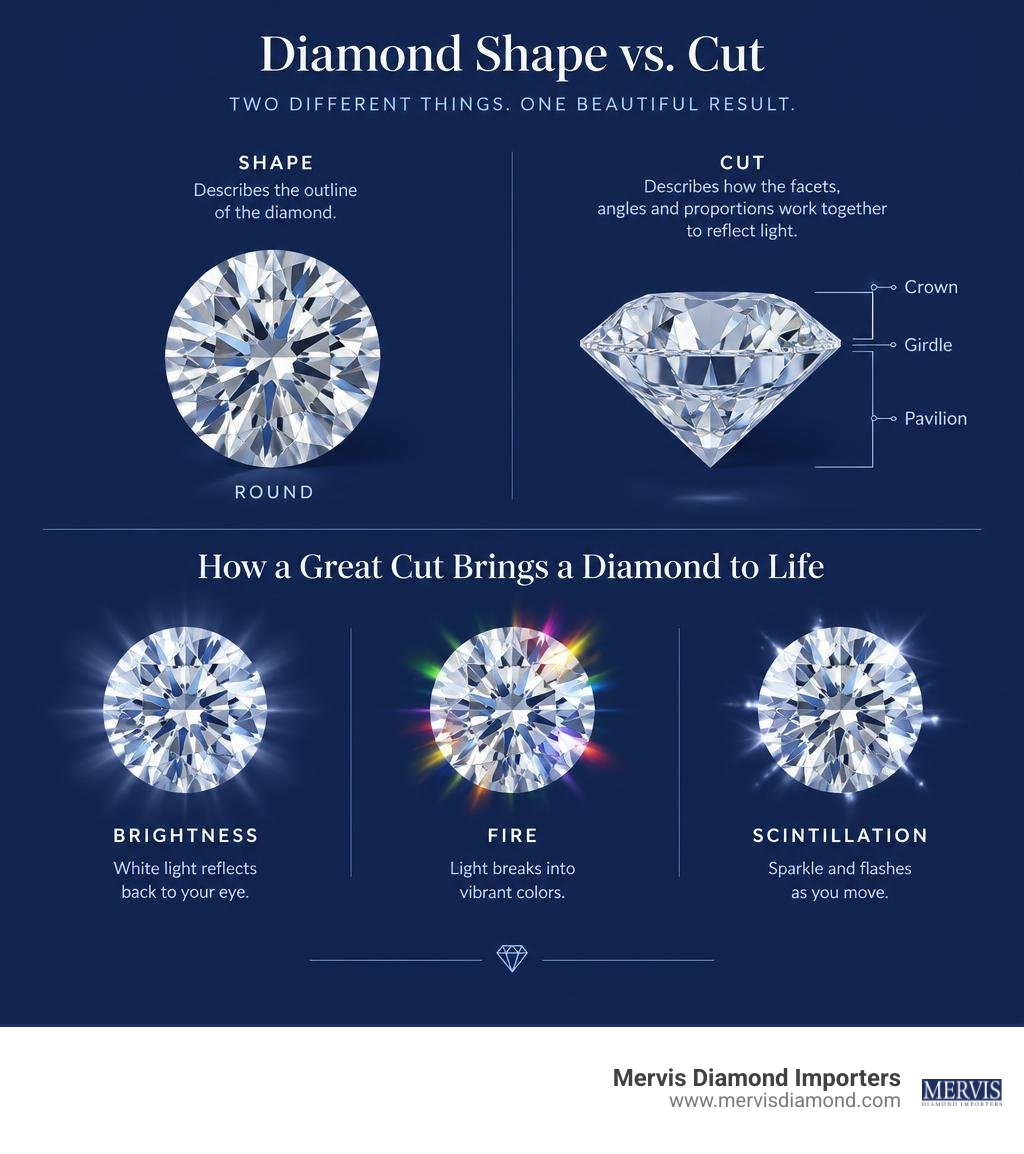
Diamond Cut vs. Shape: Anatomy of a Round Brilliant
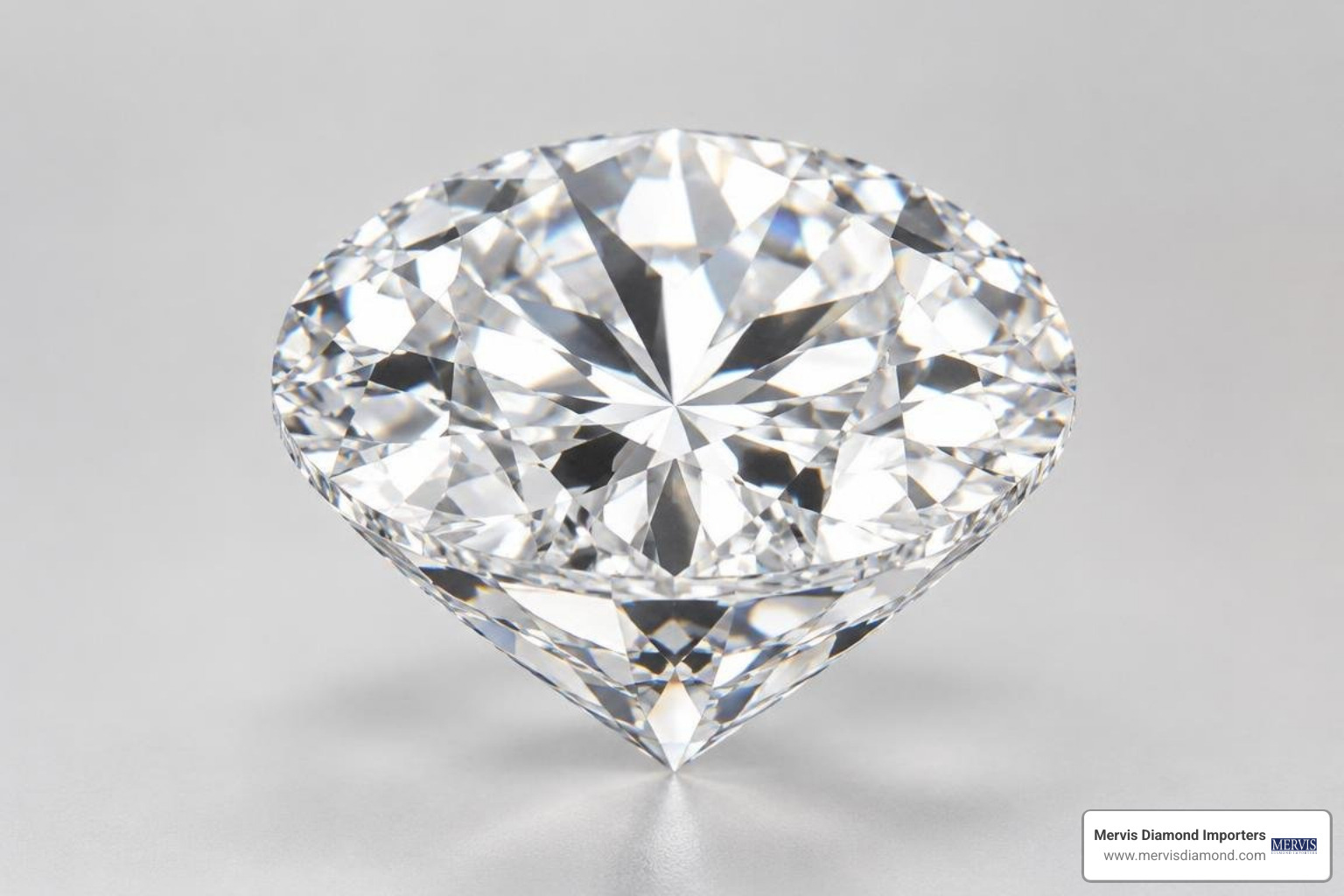
When people begin exploring fine jewelry, they often use "cut" and "shape" interchangeably. In gemological terms, they refer to two completely different attributes. A diamond's shape describes its external silhouette—such as round, oval, emerald, or cushion. In contrast, cut refers to the intricate architecture of facets, angles, and proportions that dictate how the stone captures and returns light to the eye.
Among the 4 Cs of diamonds explained by gemological institutions, cut has the greatest influence on beauty. A diamond can possess flawless clarity and colorless purity, but if it is cut poorly, it will appear dull, glassy, or dark. Conversely, an impeccably proportioned cut can mask minor inclusions and make the stone look significantly brighter and larger.
Crown, Girdle, and Pavilion Components
A standard round brilliant cut is divided into three primary physical sections:
- The Crown: The upper section of the diamond extending from the girdle up to the flat top surface. It acts as the entryway for light and contains the large central table facet surrounded by star, kite (bezel), and upper girdle facets. The crown angle plays a vital role in dispersing white light into vivid spectral colors.
- The Girdle: The narrow perimeter rim that separates the crown from the pavilion. It functions as the setting edge of the diamond. Girdles that are overly thin risk chipping during setting or wear, while excessively thick girdles hide dead weight that adds to carat cost without increasing the stone's visible surface area.
- The Pavilion: The lower cone-shaped portion of the diamond extending from the lower girdle facets down to the bottom tip. The pavilion depth and pavilion angle act as an internal mirror system, reflecting incoming light rays back up through the crown toward the viewer's eyes.
The 57 or 58 Facet Structure
Every standard round brilliant diamond features either 57 or 58 precisely placed facets. The upper portion holds 33 facets (the table, 8 star facets, 8 kite facets, and 16 upper girdle facets), while the lower portion holds 24 facets (8 pavilion main facets and 16 lower girdle facets).
The optional 58th facet is the culet—a microscopic flat surface polished at the very tip of the pavilion. In modern cutting, culets are typically graded as "None" or "Pointed," creating a 57-facet layout. When present as a tiny flat plane, the culet protects the delicate bottom point from fracturing during mounting. If cut too large, it acts as an optical hole, allowing light to leak straight through the bottom and appearing as an unnatural dark circle in the center of the table.
What Defines GIA Excellent Cut Diamonds?
The Gemological Institute of America (GIA) evaluates standard round brilliant diamonds in the D-to-Z color range using a standardized five-tier scale: Excellent, Very Good, Good, Fair, and Poor.
Rather than relying on a single rigid set of measurements, GIA's cut grading system recognizes that multiple combinations of table sizes, crown angles, and pavilion depths can work together in harmony to produce top-tier light performance. A diamond must satisfy strict parameters across visual appearance, structural design, and external finish to earn the top designation.
| GIA Cut Grade | Light Return Efficiency | Fire & Dispersion | Visual Balance & Patterning | Typical Flaws |
|---|---|---|---|---|
| Excellent | Maximum (edge-to-edge brightness) | High, balanced spectral flashes | Crisp, even contrast of light and dark | None; optimal light retention |
| Very Good | High | Moderate to High | Slight unevenness in facet contrast | Minor light leakage at the edges |
| Good | Moderate | Moderate | Noticeable dark zones or reduced brilliance | Shallow or deep proportions |
| Fair | Low | Low | Muted, hazy, or localized dullness | Noticeable "fisheye" or "nailhead" effects |
| Poor | Very Low | Minimal | Dark center or dull, lifeless appearance | Severe light leakage through pavilion |
How GIA Excellent Cut Diamonds Maximize Light Performance
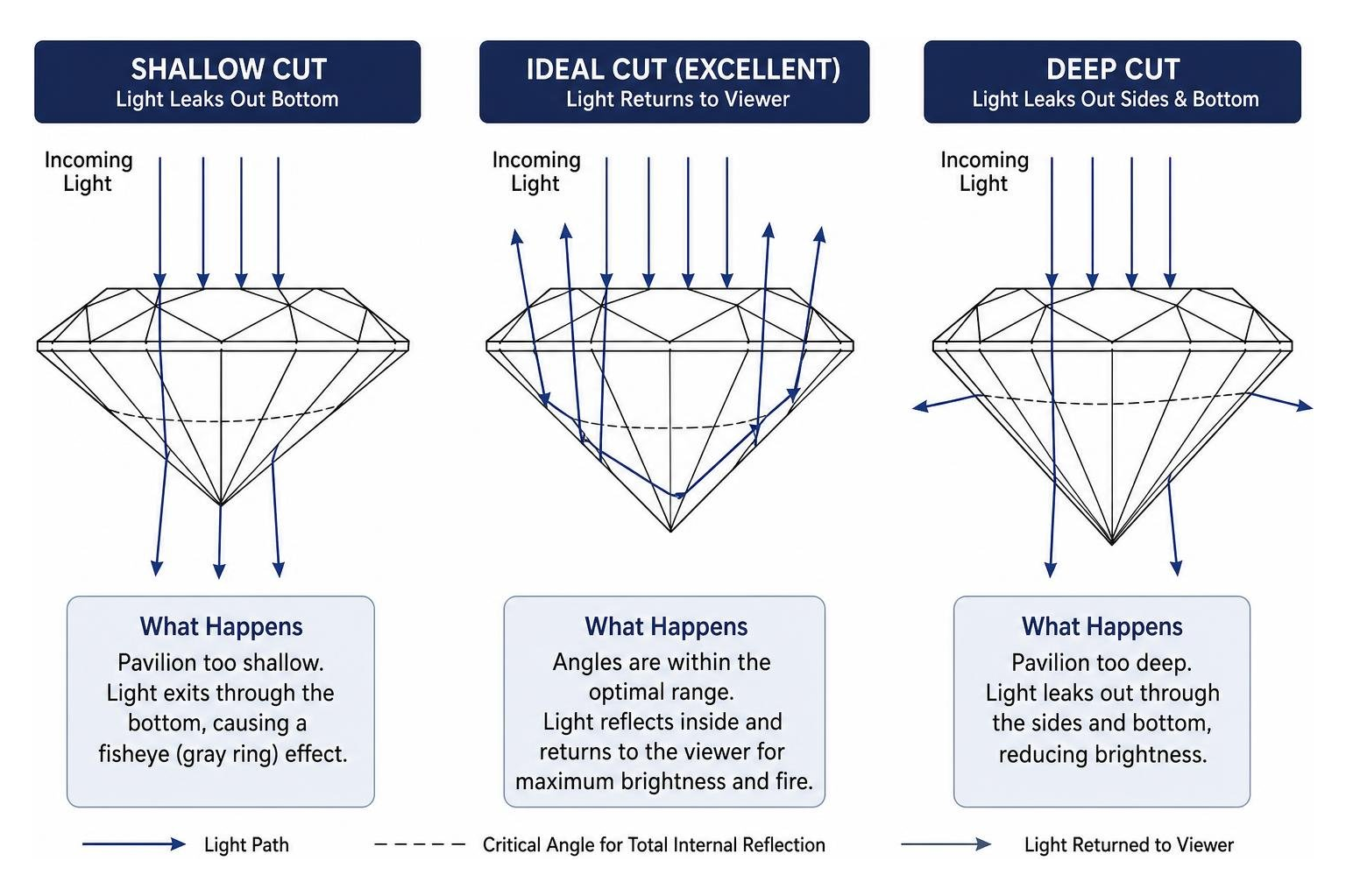
A diamond graded as an Excellent cut achieves what physicists call total internal reflection. When ambient light strikes the crown facets at optimal angles, it refracts (bends) as it enters the dense diamond crystal.
Because the pavilion angles are engineered within precise tolerances (typically between 40.6 and 41.0 degrees), the light bounces off the interior pavilion walls rather than slipping out the bottom. It then reflects back up through the crown facets, exiting directly toward the viewer as a dazzling blend of brightness and color.
Comparing Excellent to Very Good, Good, Fair, and Poor Grades
When diamond proportions deviate from optimal ranges, optical efficiency drops rapidly:
- Shallow Cuts ("Fisheye" Effect): If the pavilion depth is cut too shallow, incoming light strikes the bottom facets at low angles and leaks out the base. This creates a washed-out, glassy center that reflects the girdle rim internally, creating an unsightly gray circular ring known as a fisheye.
- Deep Cuts ("Nailhead" Effect): When cutters intentionally leave the pavilion too deep to preserve rough weight, light rays strike the first pavilion facet and bounce straight out of the opposite side. The center of the diamond turns black or shadowed, resembling a dark nailhead viewed face-up.
- Very Good vs. Excellent: A Very Good cut diamond still exhibits attractive brilliance, but it may feature a slightly steep crown paired with a shallow pavilion or minor weight retention in the girdle. While it offers good value, GIA excellent cut diamonds deliver superior optical balance, edge-to-edge illumination, and visual presence.
The Three Pillars of GIA Cut Evaluation: Appearance, Design, and Craftsmanship
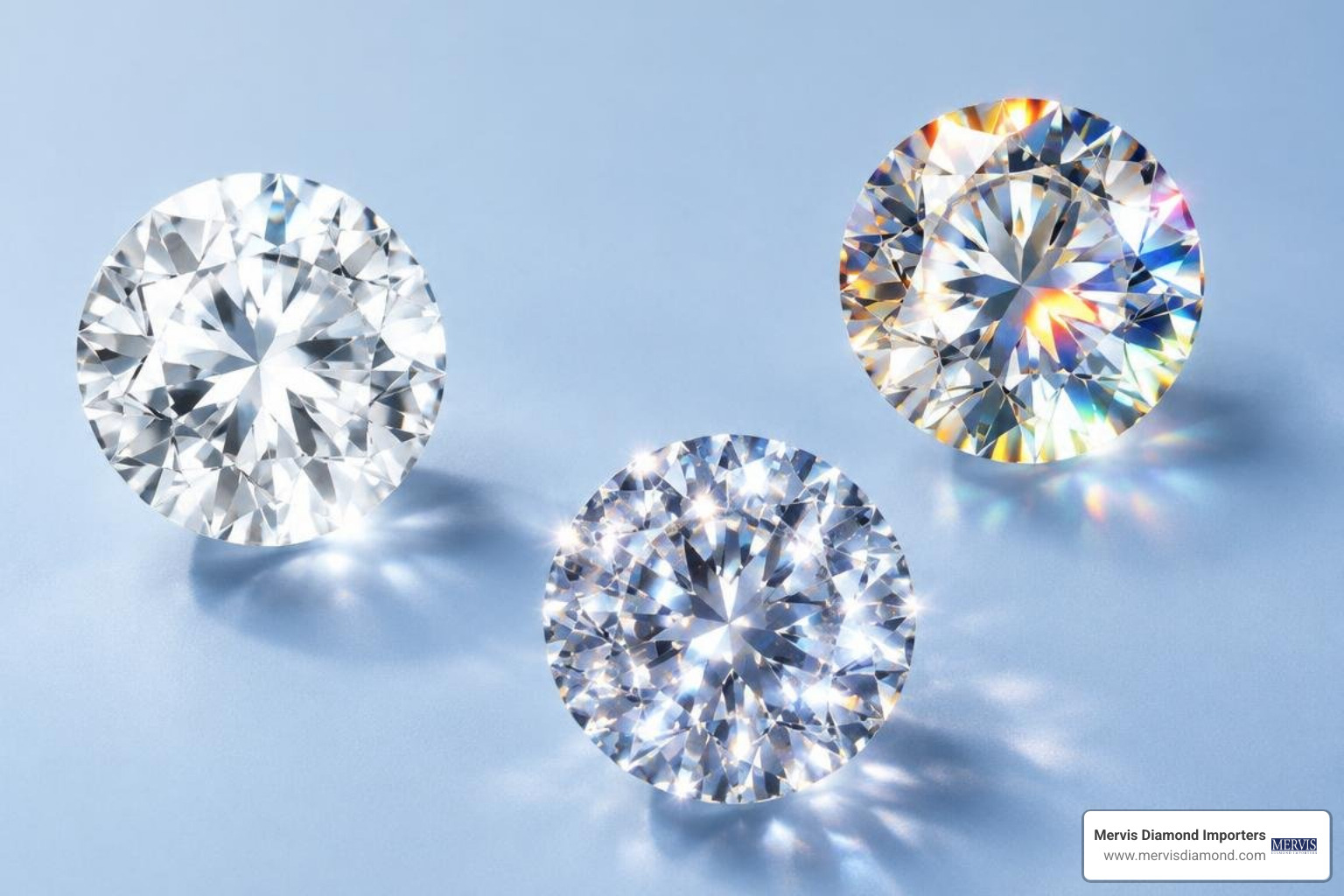
GIA assesses cut quality through seven specific components grouped into three overarching categories: face-up appearance, design, and craftsmanship.
Face-Up Appearance: Brightness, Fire, and Scintillation
A diamond's visual impact relies on three distinct optical phenomena that explain what makes a diamond sparkle:
- Brightness (Brilliance): The total amount of internal and external white light returned to the eye when the stone is viewed face-up under standard lighting.
- Fire (Dispersion): The flashes of vibrant spectral rainbow colors (reds, blues, greens, and oranges) produced when white light separates into its component wavelengths as it exits the crown facets.
- Scintillation: The dynamic flashes of light produced when the diamond, the light source, or the observer moves. Scintillation also includes the static pattern of light and dark areas across the facet junctions. A well-cut diamond requires balanced dark contrast zones—without these dark reflections, the white flashes would blend together into a flat, blinding glare.
Design Considerations: Weight Ratio and Durability
Design parameters evaluate how the diamond was physically planned and constructed from the original rough crystal:
- Weight Ratio: This compares a diamond's total carat weight against its actual millimeter diameter spread. Poorly proportioned stones often hide unnecessary weight in a thick girdle or bloated pavilion, meaning a 1.00-carat stone might only have the visual surface spread of a 0.85-carat stone. An Excellent cut ensures you get the full visual millimeter spread appropriate for your carat weight.
- Durability: The stone's structural stability is evaluated to prevent premature damage. Extremely thin "knife-edge" girdles present a severe risk of chipping during daily wear and setting. Conversely, extremely thick girdles add dead weight and create mounting difficulties.
Craftsmanship: Polish and Symmetry Standards
Craftsmanship evaluates the care taken by the master diamond cutter during the final shaping and polishing stages:
- Polish: Assesses the smoothness and clarity of each facet surface. Poor polish leaves microscopic drag lines, wheel marks, or polishing burns that diffuse light and give the stone a hazy finish.
- Symmetry: Evaluates the exactness of facet shapes and junction alignments. It checks whether the table is perfectly centered, if opposite facets are identical in size, and if crown and pavilion facet junctions align precisely at the girdle. While minor symmetry flaws are invisible to the naked eye, severe asymmetry disrupts internal light paths and degrades sparkle.
Why Cut Grades Apply to Round Brilliants and How Fancy Shapes Compare
A frequent point of confusion for jewelry buyers is why GIA diamond grading reports only list an official overall "Cut Grade" for standard round brilliants. The reason comes down to mathematical standardization.
Standard round brilliant diamonds all share an identical, symmetrical 57 or 58 facet arrangement, allowing gemologists to apply universal 3D ray-tracing algorithms and mathematical models.
In contrast, all non-round diamonds—known in the industry as "fancy shapes"—lack standardized facet architecture. Shapes such as ovals, cushions, pears, radiants, marquises, and emerald cuts are faceted in dozens of different configurations, facet counts, and length-to-width ratios according to the cutter's artistic intent. Because there is no single universally accepted mathematical standard for an "ideal" oval or cushion, GIA does not assign an overall cut grade to fancy shapes on its grading dossiers, providing grades only for their Polish and Symmetry.
Evaluating Cut Quality in Fancy Shapes
When selecting fancy shapes, buyers must rely on proportion guidelines and visual evaluation rather than an automated grade:
- The Bow-Tie Effect: Elongated shapes like ovals, marquises, and pears often display a dark, bow-tie-shaped shadow across the center facets caused by light passing straight through the stone. A masterfully cut fancy diamond minimizes this shadow, blending it naturally into the surrounding sparkle pattern.
- Length-to-Width Ratio: This dictates the visual outline of the stone. For instance, classic oval diamond engagement rings generally target a balanced ratio between 1.35 and 1.50, while classic emerald cuts look best between 1.30 and 1.45.
- Windowing and Extinction: Step-cut diamonds like emerald cuts feature open, rectangular facets. If the pavilion angles are cut improperly, the stone will exhibit "windowing" (acting like clear window glass with zero reflection) or "extinction" (broad sections of permanent blackness).
Shopping for GIA Excellent Cut Diamonds in Fine Jewelry
When building a custom engagement ring or anniversary piece, prioritizing cut grade delivers clear practical advantages across your entire budget:
Whether you are exploring natural diamonds or contemporary lab-grown diamond rings, pairing an Excellent cut with timeless solitaire engagement ring settings ensures that the center gem commands attention through pure, uninhibited light return.
The Evolution of the GIA Cut Grading System
For nearly a century, the diamond trade relied on historical rule-of-thumb proportion sets. In 1919, mathematician and gemologist Marcel Tolkowsky published his landmark treatise calculating the mathematical angles required for ideal light reflection in round diamonds. However, Tolkowsky's model assumed a two-dimensional plane and evaluated light reflection from only a single, fixed observation angle.
Over the following decades, various trade labs introduced competing "ideal" parameters, creating confusion for consumers. Recognizing the need for an objective, comprehensive standard, GIA embarked on a massive decades-long research initiative.
Researchers utilized advanced computer modeling and 3D ray-tracing technology to analyze over 70,000 distinct proportion combinations across millions of theoretical diamond models. Crucially, GIA validated these mathematical models by conducting extensive human observation trials with diamond cutters, retailers, and everyday consumers worldwide.
In 2006, GIA officially debuted its comprehensive Diamond Cut Grading System. The system proved that diamond beauty is not confined to a single rigid set of angles, but rather a spectrum of harmonious proportion sets that work together to produce world-class optical performance.
Frequently Asked Questions About GIA Cut Grades
Does a GIA Excellent cut make a diamond look bigger?
Yes. An Excellent cut diamond maximizes visual size in two ways. First, its proportions ensure that carat weight is distributed across its face-up diameter rather than hidden in a bloated pavilion or thick girdle. Second, edge-to-edge brightness illuminates the entire perimeter of the stone, eliminating the dark borders that make poorly cut stones appear visually smaller.
Can a diamond have Excellent polish and symmetry but not an Excellent cut grade?
Yes. Polish and symmetry are simply two individual components within the broader craftsmanship assessment. A diamond can feature flawless surface polish and perfectly aligned facet junctions, but if its crown is cut at 38 degrees and its pavilion depth is 45%, light will leak straight out of the bottom. In GIA's grading hierarchy, overall proportions override surface finish.
Is an Excellent cut grade necessary for fancy shape diamonds?
GIA does not issue overall cut grades for fancy shapes (such as ovals, emeralds, or radiants) due to the absence of standardized facet arrangements. When buying fancy shapes, look for Excellent or Very Good grades in Polish and Symmetry, check that depth and table percentages fall within recommended ranges, and inspect the stone in person or via high-definition video to evaluate light return.
Conclusion
When shopping for an engagement ring or milestone jewelry gift, cut is the single most important factor determining your diamond's beauty and sparkle. A diamond's color and clarity describe its natural purity, but its cut is a direct testament to human craftsmanship.
At Mervis Diamond Importers, we hand-select exceptional natural and lab-grown diamonds across our showrooms in Tysons, VA, Rockville, MD, and Washington, DC. We believe in providing transparent, pressure-free guidance to help you find a center stone that delivers breathtaking brilliance. We invite you to visit our experts in person or continue exploring our educational resources on understanding the 4 Cs to choose the perfect diamond with complete confidence.