

How Should Wedding and Engagement Rings Be Worn Properly
While Western culture often treats left-hand ring placement as an absolute rule, exploring global etiquette reveals a rich tapestry of regional customs, spiritual significance, and historical influences. Understanding these variations helps put your own personal styling choices in perspective and shows how diverse romantic traditions truly are around the world.
How Are Wedding Rings Worn on the Left Hand and the Vena Amoris Myth
In the United States, Canada, the UK, France, Australia, and parts of Southern Europe, wearing your marital rings on the left hand is deeply rooted in ancient history. The habit of wearing wedding rings worn 4th finger left hand traces back to ancient Egyptian customs and Roman tradition. The Romans believed that a specific physical vein—the Vena Amoris, or "Vein of Love"—ran directly from the fourth finger of the left hand straight to the heart.
Modern cardiovascular science has long since proven that all fingers have identical vascular connections to the heart, but the romantic symbolism has endured for millennia. Today, placing your bridal band on the left ring finger remains the quintessential approach across Western cultures, serving as a globally recognized emblem of lifelong commitment.
How Are Wedding Rings Worn on the Right Hand in Eastern Europe and Asia
If you travel across Eastern Europe, Central Europe, or parts of Asia, you will quickly notice that the right hand takes center stage. But how do you wear wedding rings across these diverse cultures?
- Germany, Austria, and Poland: Germanic cultures historically held that the direct line of devotion flowed through the right hand. Furthermore, linguistic etymology in German links the right side to noble ideals (such as aufrichtig, meaning honest or upright), reinforcing right-hand placement. During the 16th-century Protestant Reformation, many believers deliberately moved their wedding bands to the right hand to distinguish their identity from traditional Catholic customs.
- Russia, Greece, and Eastern Orthodox Traditions: In Orthodox Christian wedding liturgy, sacred blessings and solemn vows are made using the right hand. Consequently, partners naturally wear their marriage bands on their right ring finger as an ongoing sign of spiritual covenant.
- Jewish Wedding Customs: During traditional Jewish marital ceremonies, the groom places the simple plain gold wedding band on the bride's right index finger—the most visible finger for witnessing the ceremony. Following the service, many brides choose to relocate the ring to the ring finger of either the left or right hand based on personal daily preference.
- Indian Traditions: Historically, traditional Indian customs designated the left hand as unsuitable for sacred rites, prompting couples to wear jewelry on the right hand. In contemporary India, modern couples blend traditional guidance with personal comfort, choosing whichever hand best suits their daily lifestyle.
The Proper Ring Order: Engagement Ring vs. Wedding Band Stacking
Once you have determined which hand aligns best with your personal heritage or lifestyle, your next styling consideration is deciding the precise sequence of your rings. A detailed breakdown on how do you Wear an Engagement Ring and Wedding Band? - Styling Mania shows that order often comes down to balancing classic etiquette with modern ergonomics and setting architecture.
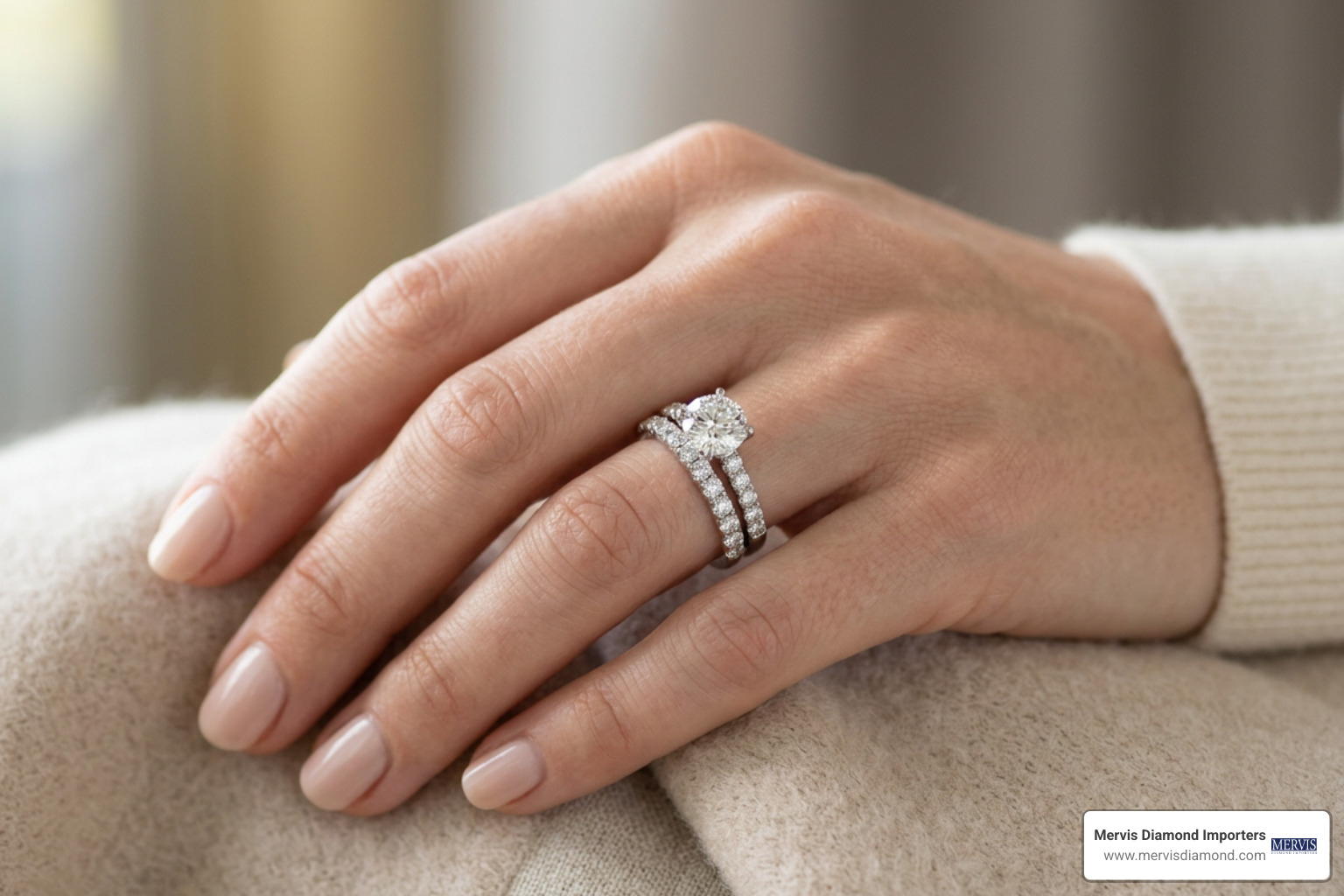
The Traditional Method: Wedding Band First, Engagement Ring Second
The most widely practiced stack arrangement involves sliding the wedding band onto the finger first, followed immediately by the engagement ring. According to traditional etiquette, your wedding band sits lowest at the base of your finger—placing it physically closest to your palm and your heart. When exploring how are you supposed to wear your wedding band, you will find this time-honored arrangement provides a timeless, balanced aesthetic while respecting historical sentiment.
Modern Alternatives: Chronological Stacking and Separate Hands
Not everyone prefers to follow historical conventions. Today's couples frequently adopt flexible stacking styles that prioritize personal story and daily comfort:
- Chronological Stacking Order: Placing your engagement ring on first and capping it with your wedding band reflects the chronological order in which you received them. Symbolically, the wedding band acts as a protective shield that "seals" the original proposal ring and the promise it represents.
- Wearing Rings on Separate Hands: If you read our dedicated advice on how to wear your engagement ring and wedding ring, you will see that wearing your wedding band on your left hand while moving your engagement ring to your right hand offers an elegant modern solution. This approach is especially ideal if your rings feature contrasting metal tones, wide bands, or distinct gemstone cuts that might otherwise rub against or scratch one another.
Modern Alternatives and Styling Ideas for Wedding Ring Sets
Your fine jewelry selection should reflect your daily activities, personal aesthetic preferences, and long-term ergonomic comfort.
Wearing Rings on a Necklace, Soldering, and Tattoo Alternatives
If your profession or physical hobbies involve manual labor, heavy equipment, or high-impact activities, traditional finger stacking might pose safety or wear concerns. Here are popular practical solutions highlighted in our guide on how to wear a wedding ring set:
- Rings on a Precious Metal Necklace: Healthcare professionals, culinary specialists, musicians, and fitness enthusiasts frequently slide their precious rings onto a sturdy platinum or 18k gold chain around their neck while on duty.
- Ring Soldering: If your separate bands tend to twist out of alignment, pinch your skin, or cause friction against neighboring setting prongs, a master jeweler can seamlessly fuse them together. Soldering creates a unified, single band that prevents metal wear over time.
- Permanent Tattoos: A growing number of couples opt for intricate ring finger tattoos as a sleek, permanent, and maintenance-free symbol of their devotion.
Stacking Anniversary Bands and Multi-Ring Sets
Expanding your stack over time has become a favorite modern tradition. Industry surveys reveal that over 40% of couples add a third anniversary band within five years of marriage to mark major milestones.
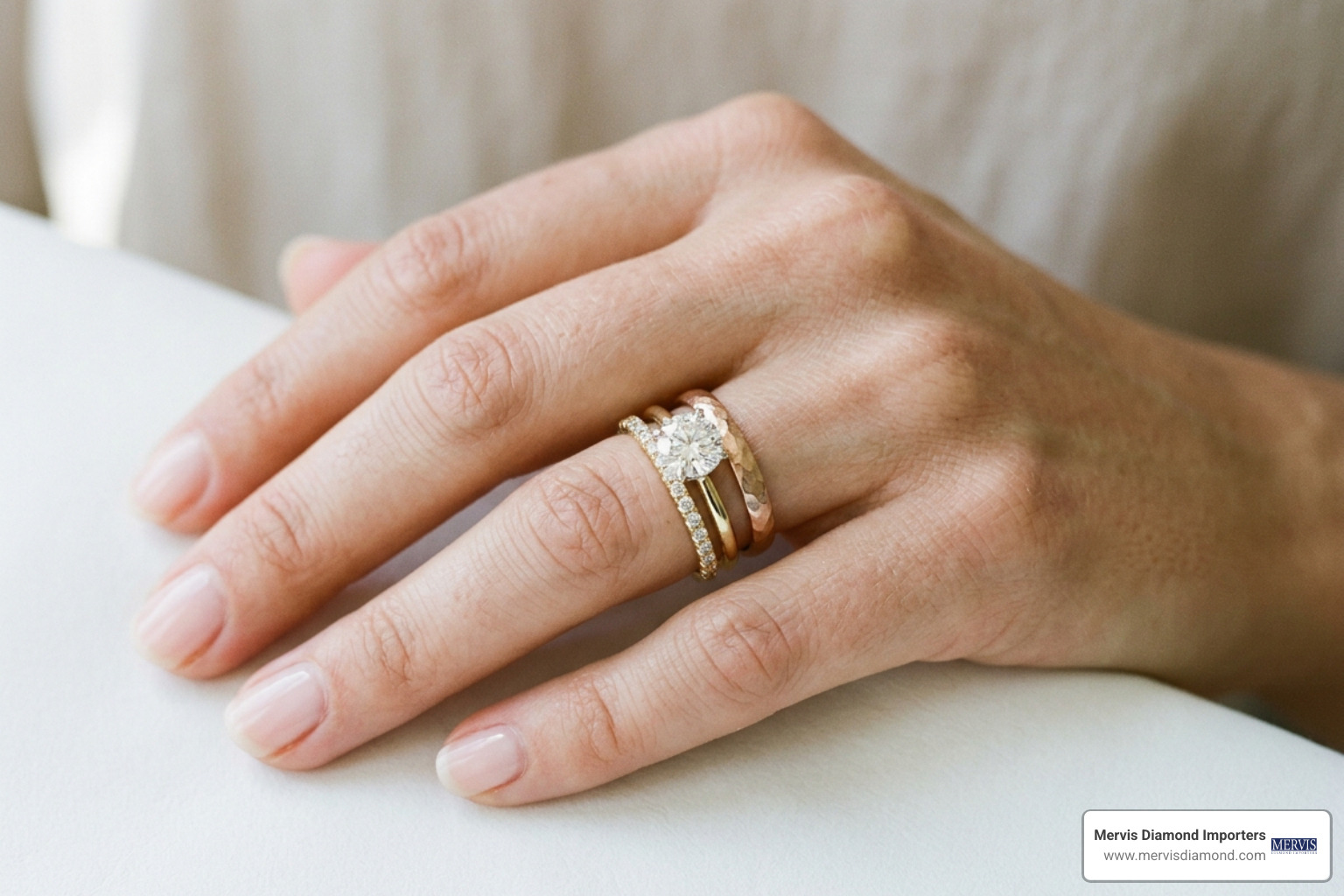
When adding a third ring, you can symmetrically sandwich your diamond engagement ring between two matching bands, or curate an eclectic multi-metal stack. For creative styling advice on combining different diamond shapes, band widths, and setting types, consult the ultimate stacking guide.
Practical Considerations: Sizing, Lifestyle, and Daily Wear
Selecting how to position and style your rings isn't purely about visual appeal—long-term practicality and physical fit matter just as much. Keep these vital considerations in mind:
- Dominant vs. Non-Dominant Hand Sizing: Your dominant hand's fingers are routinely up to a half-size larger than those on your non-dominant hand due to muscle development. Always measure the specific finger you intend to wear the band on.
- Stacking Friction and Fit: Combining multiple bands on one finger creates a wider overall surface area, causing rings to feel tighter than a single slim band worn on its own.
- Metal Hardness Compatibility: Wearing a soft 18k yellow gold band adjacent to a dense platinum setting can lead to metal erosion over time as the harder platinum gradually wears away the softer gold. Select matching metals or seek custom fitting guidance.
Explore our recommendations on how to pick the perfect wedding band to ensure your wedding band engagement ring match pairs flawlessly for a lifetime.
| Band Style | Pros | Cons | Best Suited For |
|---|---|---|---|
| Matching Bridal Set | Designed to sit flush together without gaps or rubbing. | Less individual versatility if worn alone. | Traditionalists who want a seamless, unified look. |
| Contoured / Curved Band | Accentuates large center stones (e.g., oval, pear, marquise). | Can look unusual when worn on its own without the engagement ring. | Low-set engagement rings or oversized solitaire diamonds. |
| Stand-Alone / Mixed Band | Highly versatile; can be worn independently or swapped onto another hand. | May leave a small gap when stacked next to a solitaire setting. | Modern stackers who value flexibility and unique metal combinations. |
Frequently Asked Questions About How Wedding Rings Are Worn
Do you wear your engagement ring on your wedding day?
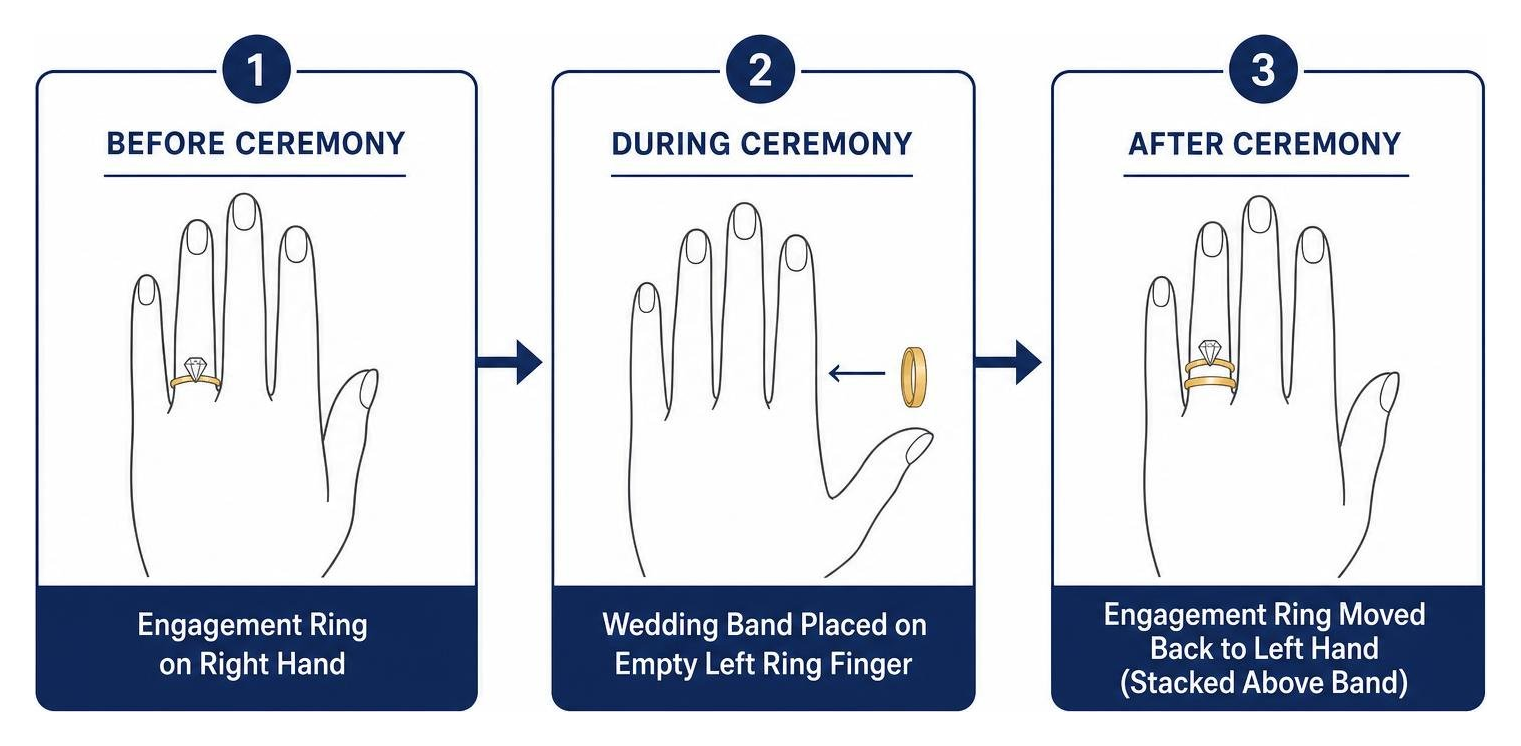
Yes, absolutely! The most practical approach is shifting your engagement ring to your right hand before walking down the aisle. This leaves your left ring finger completely clear for your partner to place the wedding band during your vows. Following the ceremony or reception, you can return your engagement ring to sit on top of your brand-new wedding band. Check out our step-by-step guidance on do I wear my engagement ring on my wedding day for smooth transition tips.
Should you wear your wedding band and engagement ring every day?
Not necessarily. With the average engagement ring cost lingering around $5,500, taking strategic care of your investment is essential. Many individuals choose to reserve high-set solitaire diamond rings for special outings while relying on a durable, low-profile platinum or gold wedding band during workouts, swimming, gardening, or domestic chores.
Can engagement rings and wedding bands be worn on different hands?
Yes! Wearing your engagement ring on one hand and your wedding band on the opposite hand is an excellent option if your engagement ring features an elaborate vintage setting, an unusual gemstone geometry, or mismatched metal densities that might scratch if stacked together.
Conclusion
Whether you choose to adhere to ancient Roman left-hand traditions, honor regional right-hand customs, or build your own distinctive modern multi-band stack, there is no single rule for how your jewelry should be styled. The ideal configuration is whichever brings you daily joy, ultimate comfort, and timeless beauty.
When you are ready to find your dream ring set, visit us at Mervis Diamond Importers. With state-of-the-art showrooms conveniently located across Tysons, VA, Rockville, MD, and Washington, DC, our master diamond consultants provide hand-selected natural and lab-grown diamonds in a warm, pressure-free atmosphere. Read our comprehensive master guide on how to wear your engagement wedding rings or schedule your personalized private consultation with our experts today!