

The Cushion Cut Color Guide: Why G-H Might Be Your Sweet Spot
The Best Color for a Cushion Cut Diamond: Your Quick Answer
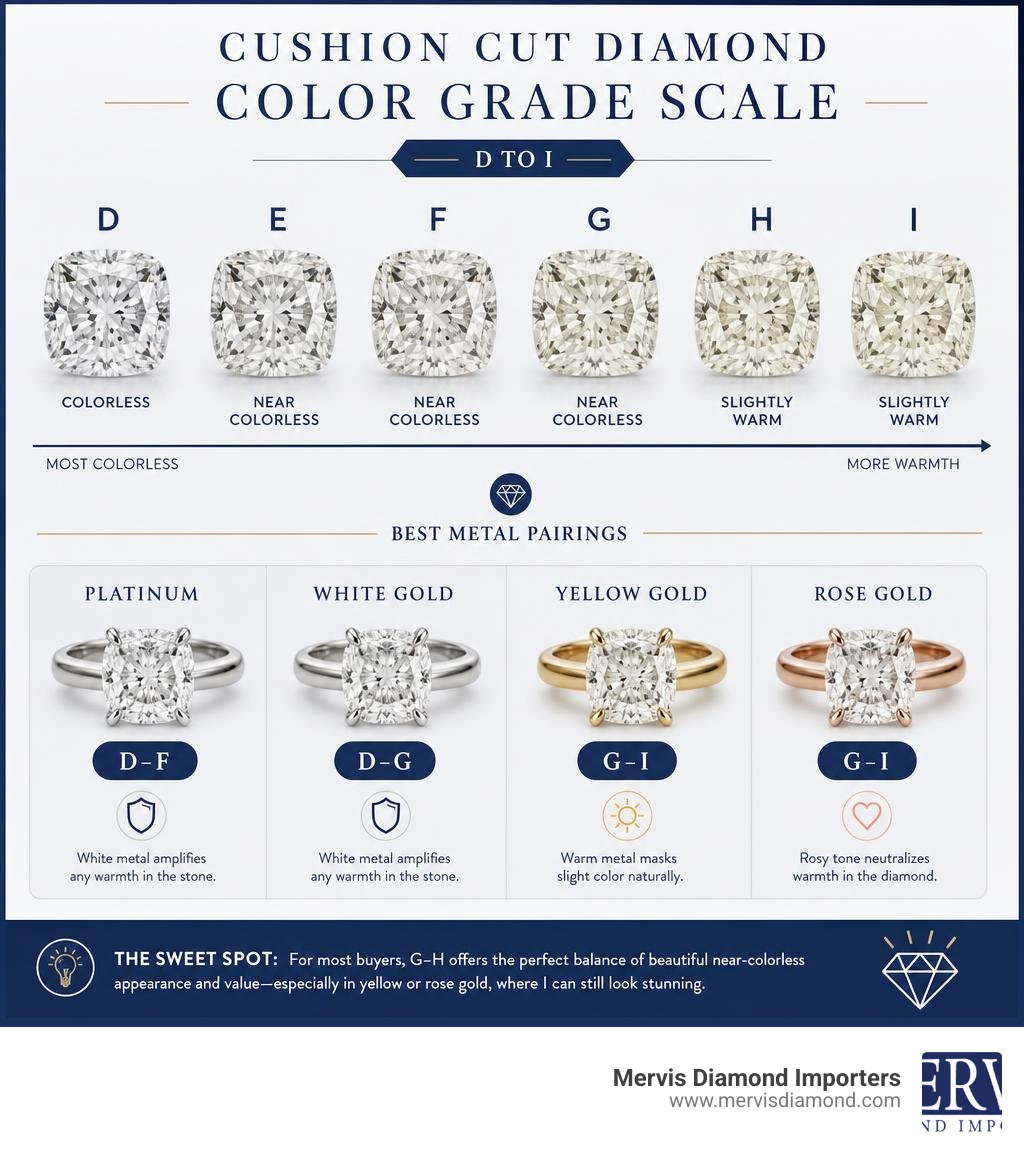
The best color for cushion cut diamond rings falls in the G-H range for most buyers — and here's why that matters before you spend a cent.
Cushion cuts hold onto body color more visibly than round brilliant diamonds. That means the color grade you choose has a bigger impact on how your stone looks face-up. Getting this right saves you money and gets you a better-looking ring.
Quick color guide by metal type:
| Metal | Recommended Color Grade | Why |
|---|---|---|
| Platinum | D-F | White metal amplifies any warmth in the stone |
| White Gold | D-G | Same reasoning as platinum |
| Yellow Gold | G-I | Warm metal masks slight color naturally |
| Rose Gold | G-I | Rosy tone neutralizes warmth in the diamond |
Most buyers land on G or H as the sweet spot — near-colorless to the naked eye, but meaningfully less expensive than D-F stones. In yellow or rose gold, you can often go as low as I without seeing any visible warmth.
Cushion cuts are the third most popular shape for engagement rings, and they cost roughly 25% less than a comparable round brilliant. That price advantage grows even further when you choose the right color grade instead of defaulting to colorless.
Even the world's most famous diamond — the 45.52-carat Hope Diamond — is a cushion cut. So you're in good company with this shape.
But here's what most guides skip: cushion cuts don't all behave the same way. The style of cut (traditional "chunky" vs. modern "crushed ice"), your metal choice, and even your diamond's depth all change how much color shows. This guide walks you through all of it.
Why Cushion Cuts Hold Warmth Differently Than Round Brilliants
To understand why color is such a critical factor for cushion cuts, we have to look at how these stones are built. Unlike round brilliant diamonds, which are engineered to maximize light return and minimize body color visibility, cushion cuts are naturally "warm" shapes.
Historically known as the "candlelight diamond" because of its origins in the 1700s as the old mine cut, the cushion cut was designed to glow under soft, flickering light rather than scream with modern, laser-like brilliance. This vintage heritage is exactly why they hold onto body color differently than other shapes.
The Role of Depth and the Deep Pavilion
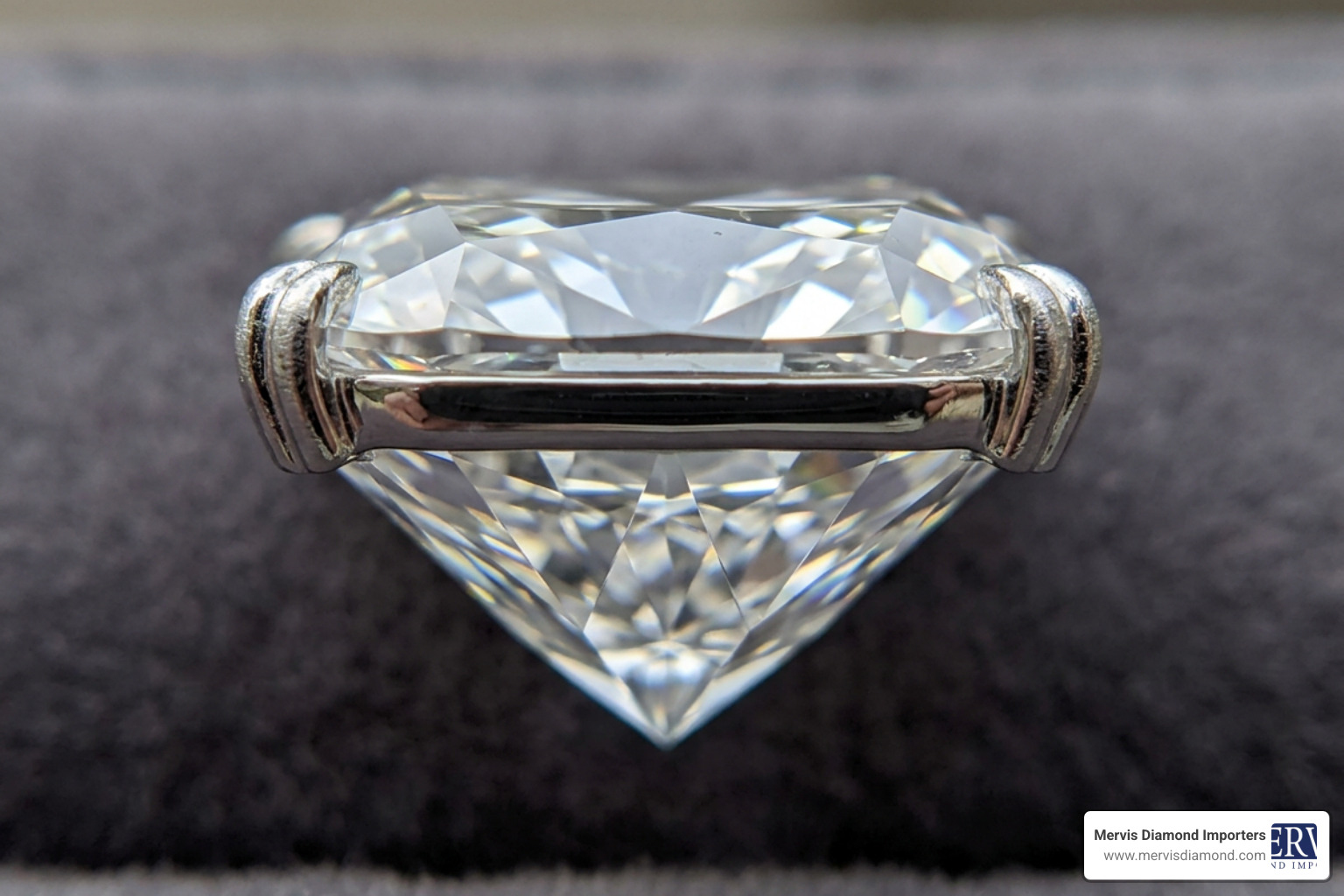
Cushion cut diamonds are notoriously deep. They feature a tall crown and a deep pavilion (the bottom half of the diamond). This means a significant portion of the diamond’s carat weight is concentrated in its belly.
When light enters a deep diamond, it travels a longer path through the crystal before reflecting back to your eye. The longer the light path, the more opportunity it has to pick up the natural body color of the rough diamond material. While a round brilliant diamond uses its proportions to shoot light straight back out of the top, a cushion cut lets the light linger. This lingering light highlights any yellow or brown undertones present in the stone.
Facet Structure and Light Dispersion
The facet arrangement of a cushion cut also influences how we perceive its color. Cushion cuts generally have 58 facets (though some modern variations have more). These facets are larger and broader than the tiny, splintery facets of a round brilliant.
Because the facets are larger, they act like tiny windows looking into the body of the stone. Rather than breaking light up into highly dispersed, blinding white sparkles, cushions produce broader flashes of light. While this creates a romantic, vintage glow, it also makes any underlying body color much easier to spot from the side profile and even face-up.
Fancy Shapes and Color Retention
In the gemological world, fancy shapes (any cut that isn't round) are known for retaining color, according to the Gemological Institute of America (GIA). Cushions, ovals, and radiant cuts are at the top of this list. If you were to place an H-color round brilliant next to an H-color cushion cut of the exact same carat weight, the cushion cut would likely look slightly warmer, especially when viewed from the side.
This unique trait is why understanding the Understanding Four Cs is so vital. You cannot buy a cushion cut using the exact same rules you would use for a round diamond.
The Celebrity Influence
The unique personality and soft, romantic aesthetic of the cushion cut have made it a favorite among Hollywood royalty and real-world royalty alike.
- Meghan Markle: Her famous three-stone engagement ring features a stunning cushion-cut center diamond sourced from Botswana, flanked by two round diamonds from Princess Diana's personal collection. The choice of a cushion cut perfectly balances modern royalty with classic, historical elegance.
- Zendaya: She turned heads with an incredible 5.02-carat cushion-cut diamond set in an east-west orientation, proving that this vintage shape can look remarkably modern and avant-garde.
- Other Icons: Stars like Gabrielle Union, Priyanka Chopra Jonas, Leighton Meester, and Kim Kardashian have all opted for the pillow-like silhouette of the cushion cut, cementing its status as a timeless yet fashionable choice.
These high-profile rings showcase how beautiful a cushion cut can be when the color is paired perfectly with its setting.
Finding the Best Color for Cushion Cut Diamond Settings in White Gold or Platinum
If your heart is set on a white metal setting—such as platinum or 18k white gold—you need to be strategic about your diamond's color grade.
White metals act like mirrors. They reflect the true color of the diamond back to the observer, and because the metal itself is an icy, neutral white, any hint of yellow or warmth in the diamond will stand out by contrast.
For a completely colorless, crisp look in a platinum or white gold setting, the D-F color range is the premium choice. Diamonds in this range are graded as colorless, meaning even a trained gemologist looking at the stone under magnification will struggle to find any trace of body color.
However, this absolute purity comes with a premium price tag. Because colorless diamonds are incredibly rare in nature, they command the highest prices. If you want to know more about how these top-tier grades impact your budget, you can read our deep dive on What Color Diamond is the Most Expensive.
For those who want the icy look of white metal without paying the "colorless premium," G is the ultimate transition grade. A G-color cushion cut will face up completely white in a platinum setting to the naked eye, while saving you a significant amount of money that you can reinvest into a larger carat weight or a more intricate setting design.
The Best Color for Cushion Cut Diamond Settings in Yellow and Rose Gold
If you prefer the warm, romantic tones of yellow gold or rose gold, we have fantastic news for your budget: you can easily lower your color grade without sacrificing the beauty of your ring.
Yellow gold and rose gold settings naturally reflect their warm metallic tones into the diamond. Because of this, putting a colorless D or E grade diamond into a yellow gold setting is actually a counterproductive move. The warm metal will make the colorless diamond look slightly warm anyway, meaning you paid a massive premium for a color purity that is visually lost the moment the stone is set.
For yellow and rose gold settings, the G-I color range is the absolute sweet spot.
- G and H Grades: In a yellow gold setting, G and H color diamonds will look exceptionally bright and white. The contrast between the rich gold prongs and the near-colorless stone actually makes the diamond appear even whiter than its technical grade.
- I and J Grades: If you want to maximize your budget and get the largest carat weight possible, do not be afraid of an I or J color grade. The natural warmth of these grades blends beautifully with the warm undertones of yellow or rose gold. Instead of looking "yellow," the diamond takes on a soft, antique, candlelight glow that enhances its vintage charm.
By stepping down to an H or I color grade, you can save thousands of dollars while achieving a cohesive, warm aesthetic. To see how color fits into the broader picture of your ring purchase, check out our guide on The 4Cs When Purchasing Diamond Engagement Rings.
Chunky vs. Crushed Ice: How Facet Patterns Impact Perceived Color
One of the most fascinating aspects of cushion cut diamonds is that two stones with the exact same weight, color, and clarity on paper can look completely different in real life. This is due to the two primary faceting styles: the Traditional "Chunky" Cushion and the Modified "Crushed Ice" Cushion.
The Traditional Cushion (Cushion Brilliant)
Often referred to as the "chunky" cushion, this style features large, broad facets that extend from the center of the stone out to the edges. This arrangement is highly similar to a round brilliant cut.
Traditional cushions produce distinct, bold flashes of light and spectacular "fire" (the rainbow-colored light dispersion). Because the facets are structured and orderly, they create clear areas of contrast (dark and light play) that help mask body color. The bold flashes of white light help disguise any minor warmth, making traditional cushions an excellent choice if you are aiming for a lower color grade like H or I.
The Modified Cushion (Crushed Ice)
The vast majority of cushion cuts on the market today are modified brilliant cushions. To maximize the yield from the rough diamond crystal, cutters add an extra row of facets just below the girdle.
This creates a visual effect that looks like a bowl of crushed ice—millions of tiny, glittering reflections with no distinct facet lines. While this style offers a highly contemporary, glittering sparkle, those tiny, dense facets tend to trap and concentrate body color. A crushed ice cushion will show its color grade much more readily than a chunky cushion. If you choose a crushed ice cut, we highly recommend staying at a G color or higher if you want to avoid a visible yellow tint.
To help you decide which sparkle style matches your personality, here is a quick comparison:
| Feature | Traditional "Chunky" Cushion | Modified "Crushed Ice" Cushion |
|---|---|---|
| Facet Style | Large, broad, distinct facets | Tiny, dense, disorganized facets |
| Sparkle Type | Bold, slow flashes of light and fire | Constant, glittering, modern shimmer |
| Color Retention | Masks color well due to broad white flashes | Concentrates and shows body color easily |
| Vintage Appeal | High (mimics antique old mine cuts) | Low (very modern, similar to radiant cuts) |
| Best Color Range | G to I (highly forgiving) | D to G (requires higher color purity) |
To explore how these cutting styles compare to other shapes when it comes to sheer brilliance, take a look at our article on Which Diamond Cut Sparkles the Most.
Color vs. Clarity: What is the Best Color for Cushion Cut Diamond Buyers to Prioritize?
When you are balancing a budget, you will inevitably face a classic diamond-buying dilemma: should you spend your money on a higher color grade or a higher clarity grade?
For cushion cuts, the answer is simple: prioritize color over clarity.
Cushion cut diamonds are incredibly forgiving when it comes to clarity. Because of their brilliant facet structures—whether chunky or crushed ice—they excel at masking internal inclusions. Small feathers, pinpoints, or crystals that might be visible in an emerald or asscher cut are completely lost in the sparkling reflection of a cushion cut.
Industry buying trends reflect this reality. Approximately 27% of cushion cut buyers choose VS1 clarity, and 25% choose VS2 clarity. These grades represent the "sweet spot" where the diamond is guaranteed to be completely eye-clean (meaning no inclusions are visible to the naked eye), without the massive price premium of Flawless or VVS grades.
In fact, many SI1 and even some SI2 cushion cuts are completely eye-clean when viewed from the top. Because nobody will be looking at your engagement ring with a 10x jeweler's loupe, paying for a clarity grade higher than VS2 is often a waste of money.
Color, on the other hand, is visible from across the room. A yellow tint in a white metal setting can be spotted instantly by the naked eye under natural light. Therefore, your purchasing strategy should be:
- Find an eye-clean VS2 or SI1 clarity stone to secure your clarity baseline. To learn more about selecting the right clarity, check out our guide on What Diamond Clarity is Best.
- Allocate the rest of your budget to securing the best color grade for your preferred metal type (such as a G or H for white metals).
- Enjoy the 25% savings that cushion cuts inherently offer compared to round diamonds, allowing you to get a larger, more brilliant center stone for your budget.
Frequently Asked Questions About Cushion Cut Diamond Color
To help you shop with absolute confidence, we’ve gathered the most common questions our clients ask when visiting our showrooms.
Do cushion cut diamonds look smaller than round diamonds?
Yes, cushion cut diamonds can look slightly smaller than round brilliants of the exact same carat weight. Because cushion cuts are deeper, more of their weight is hidden beneath the surface.
To prevent your diamond from looking too small, pay close attention to the proportions. Avoid cushion cuts with a depth percentage over 70%, as these will look small and suffer from light leakage. Instead, target a table percentage of 61-67% and a depth percentage of 61-67% for the perfect balance of spread (visual size) and light performance.
Is H color too yellow for a cushion cut diamond?
Not at all! An H color diamond is classified as "near colorless." When viewed face-up under normal lighting conditions, an H-color cushion cut will look beautifully white, especially when set in a ring. While a trained gemologist might spot a trace of warmth when viewing the diamond upside down against a white background under laboratory lighting, it is practically invisible in the real world. H color represents one of the best value-for-money options on the market.
Why are cushion cut diamonds less expensive than round brilliants?
Cushion cut diamonds are roughly 25% less expensive than round brilliants of the same weight because of the "yield" from the rough crystal.
Natural diamond crystals grow in a cubic, squarish shape. When cutting a cushion, the jeweler wastes very little of the rough material (losing only about 30-40%). In contrast, cutting a round brilliant requires cutting away over 50-60% of the rough crystal. Because the manufacturing process for cushions is far more efficient, those savings are passed directly to you.
Conclusion
Choosing the best color for cushion cut diamond rings doesn't mean you have to buy a flawless, colorless D-grade stone. By understanding how the shape's depth, facet patterns, and metal choice interact, you can make a highly informed, tactical choice.
For the vast majority of engagement rings, the G-H range is the ultimate sweet spot—offering a bright, icy-white face-up appearance while keeping your budget intact. If you love the vintage romance of yellow or rose gold, you can confidently step down to an I color to maximize your carat weight and get a larger, show-stopping stone.
At Mervis Diamond Importers, we have spent decades helping couples find the perfect center stone. Our hand-selected natural and lab-grown diamonds are curated for exceptional cut and beauty, and our expert, pressure-free service ensures you enjoy every step of the journey.
If you want to see the difference between a chunky and crushed ice cushion in person, or compare G and H color grades under natural light, we invite you to visit one of our beautiful showrooms in Tysons, VA, Rockville, MD, or Washington, DC.
Ready to start your search? Learn more about this gorgeous shape by reading our comprehensive guide, What is a Cushion Cut Diamond, or book an appointment with a Mervis diamond expert today!