

The Right Way to Wear a Wedding Ring Without Losing Your Mind
How Is a Wedding Ring Worn? Start With Tradition, Then Choose What Fits
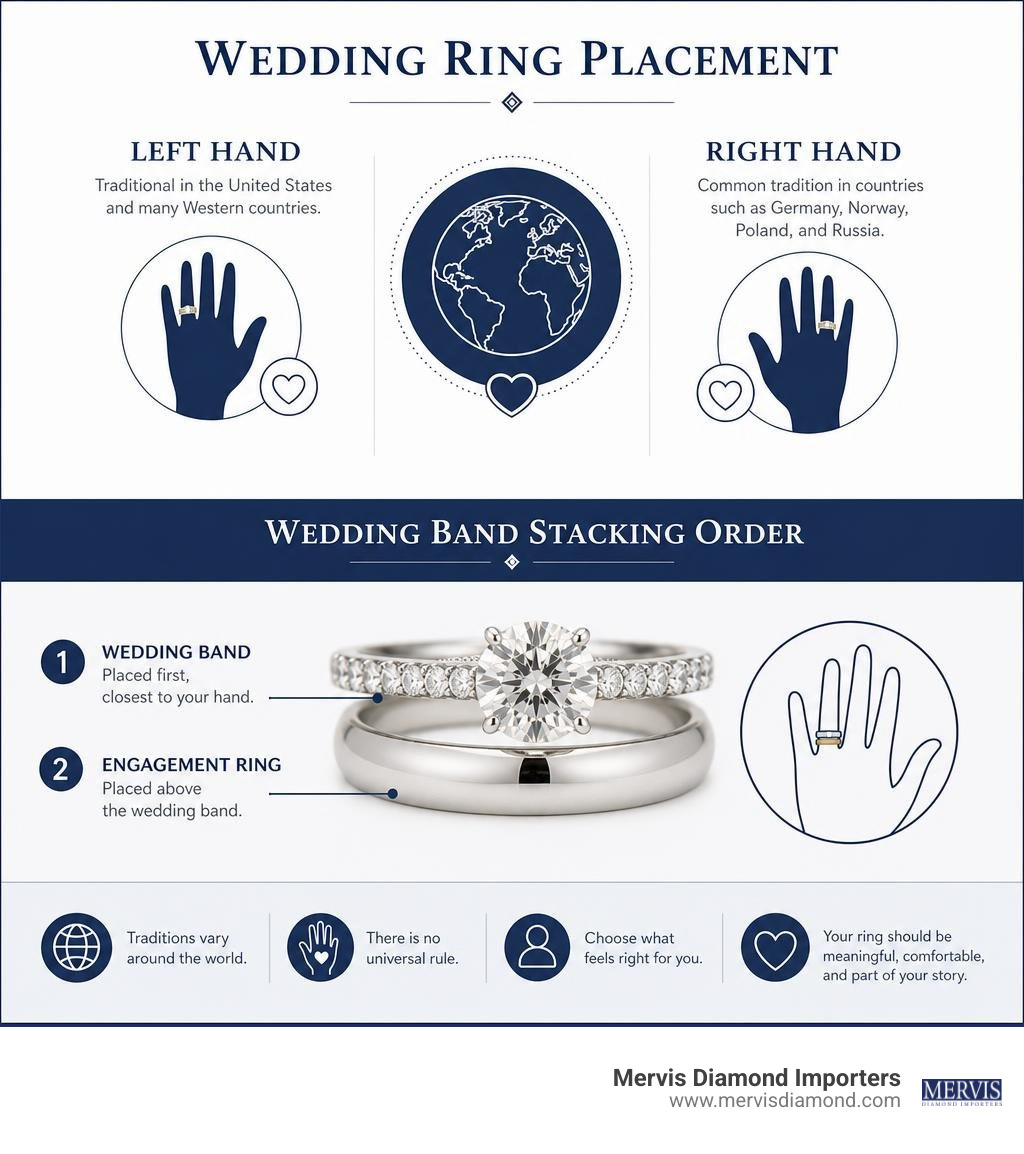
In the United States and many Western countries, a wedding ring is traditionally worn on the fourth finger of the left hand. If you also wear an engagement ring, put the wedding band on first, closest to your hand, then place the engagement ring above it.
That said, there is no universal rule. In countries such as Germany, Norway, Poland, and Russia, wedding rings are often worn on the right hand. You can also wear your rings on separate hands, a different finger, or a necklace when work, sports, or comfort makes that more practical.
The best choice is one that respects any tradition that matters to you and fits your daily life. Your ring should feel secure, comfortable, and meaningful - not like a rule you have to decode.
I'm Morris Mervis, and the sections ahead will help you choose a ring placement and stack that feels right for your marriage and your routine.
Cultural and Historical Roots: How Is Wedding Ring Worn Globally?
When you step back to look at world history, the rules around wedding jewelry are far more diverse than what you might see at a typical American ceremony. Discovering how are wedding rings worn across different borders reveals that hand placement often depends on centuries of religious doctrine, folklore, and local customs.
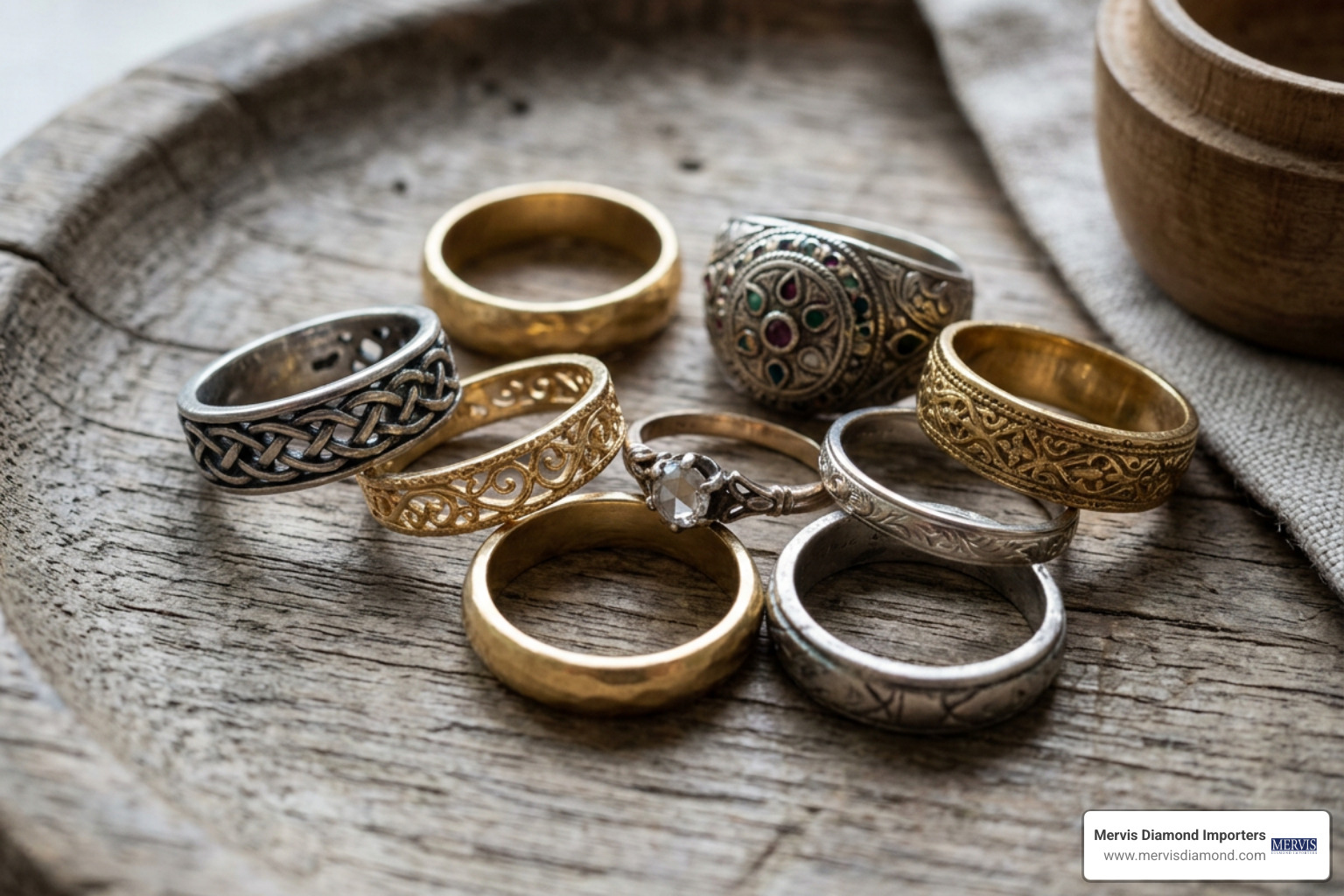
In the United States, over 80% of engagement rings feature diamonds, and the average engagement ring represents an investment of around $5,500. With such sentimental and financial value placed on bridal jewelry, couples naturally want to ensure they are honoring their commitments in a way that aligns with both heritage and personal aesthetics. Yet today, roughly 83% of couples actively challenge traditional wedding expectations, paving the way for deeply customized styling choices.
Left Hand vs. Right Hand: How Is Wedding Ring Worn by Country?
The decision to place a wedding band on the left versus the right hand is largely geographic and religious:
| Region / Tradition | Preferred Hand | Cultural & Historical Context |
|---|---|---|
| United States, Canada, UK, France, Italy | Left Hand | Follows ancient Roman beliefs and Western European customs; positions the band closest to the heart. |
| Germany, Austria, Norway, Poland, Ukraine, Russia | Right Hand | Influenced by Germanic traditions, Eastern Orthodox customs, and historical Protestant preferences during the Reformation. |
| Traditional Orthodox Christianity | Right Hand | The right hand symbolizes honor, strength, and the side of blessing during religious rites. |
| Traditional Indian Customs | Right Hand / Both | Historically, the left hand was considered spiritually impure; modern brides often wear bands on either hand or incorporate toe rings (bichiya). |
In many Eastern European nations, placing the band on the right ring finger is the standard expectation. Conversely, Western European nations and the Americas favor the left. If you come from an intercultural relationship, blending these traditions or simply choosing the hand that feels most natural is completely normal.
The Vena Amoris Myth and Historical Symbolism
The custom of wearing a ring on the fourth finger traces back to ancient Egypt and Greece. The Romans popularized the belief in the vena amoris, or the "vein of love." They believed this specific vascular pathway traveled directly from the fourth finger of the left hand to the heart.
Modern anatomy proves that all fingers possess similar circulatory pathways connecting back to the heart—no single finger holds a biological monopoly on romantic affection. Still, the poetic sentiment endured. In 1549 and later reinforced in the 1662 Book of Common Prayer, the Church of England codified the left-hand placement into official marriage liturgy. This cemented the custom throughout the English-speaking world, turning old fashioned wedding bands into enduring symbols of lifelong devotion.
The Proper Stacking Order for Bridal Jewelry
Bridal styling involves balancing comfort, visual harmony, and safety. Understanding how pieces interact helps you create a look that feels seamless on your hand.
How Is Wedding Ring Worn with an Engagement Ring?
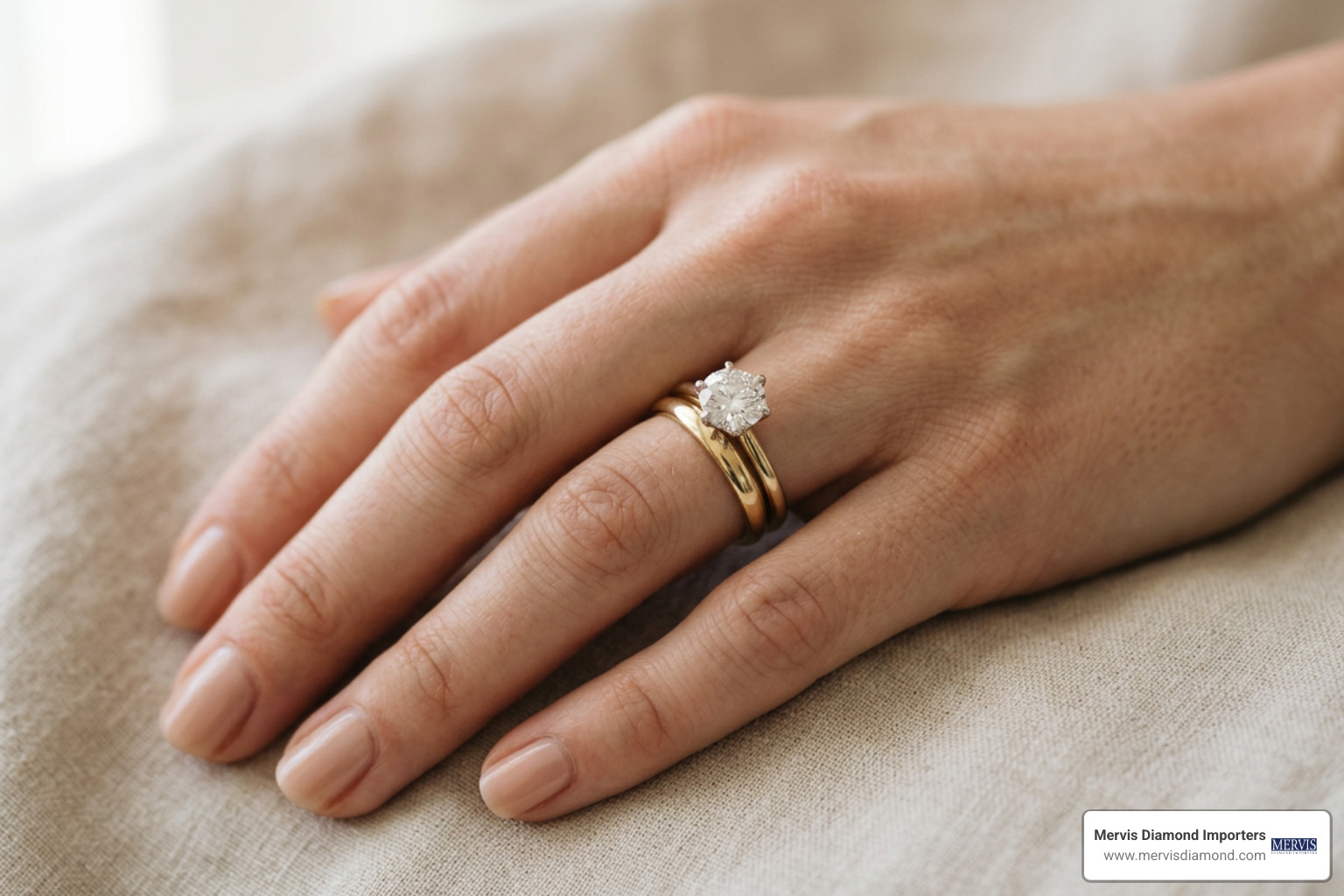
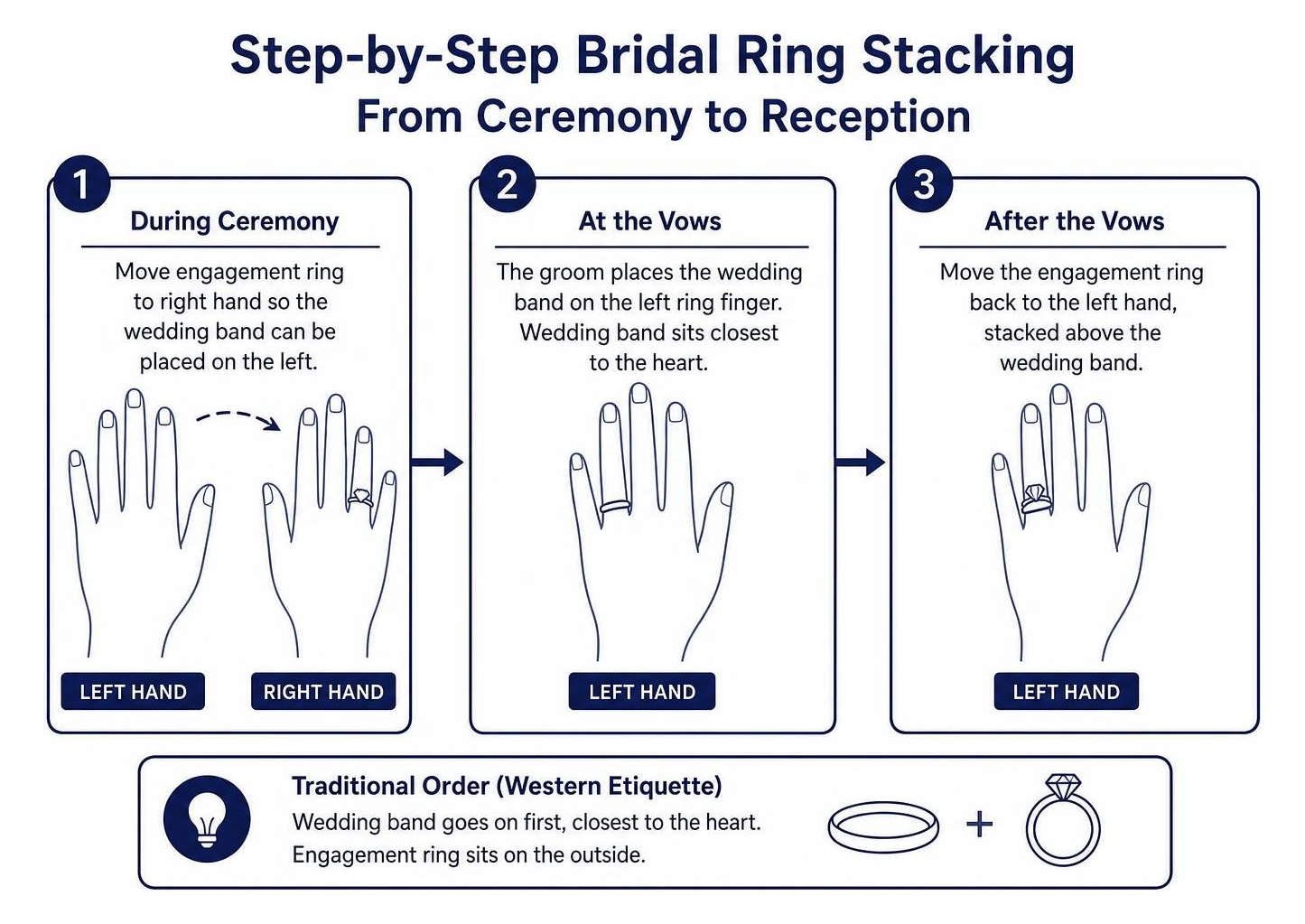
According to Western etiquette, the traditional order dictates placing the wedding band on your finger first, followed by the engagement ring on the outside. The romantic logic behind this arrangement is that the wedding band sits closest to your heart, serving as the foundational anchor of your commitment.
During the wedding ceremony, brides often move their engagement ring over to their right hand so the groom can slide the wedding band onto the left ring finger unhindered. After the vows, the bride moves the engagement ring back to the left hand, resting it neatly above the band. For an in-depth breakdown of pairing techniques and gemstone proportions, explore Styling Mania's guide on styling engagement and wedding rings.
If you prefer a cohesive look where the rings never spin out of alignment, you can reference a bridal ring set wearing guide to understand the benefits of soldering them together into a single, unified band.
Adding Anniversary and Eternity Bands into the Stack
As marriages mature, jewelry stacks frequently grow. Over 40% of couples add anniversary bands within their first five years of marriage, turning their daily bridal set into a multi-textured celebration of milestones.
When incorporating a third ring—such as a full-eternity diamond band—you have several elegant options:
- Symmetrical Framing: Place matching eternity bands on either side of your center-stone engagement ring.
- Chronological Stacking: Wear the wedding band closest to the hand, the engagement ring in the middle, and the milestone ring on top.
- Top Nesting: Rest both diamond bands below the engagement ring to let the primary diamond lead the stack.
For inspiration on balancing carat weights across multiple bands, review our anniversary wedding bands guide 2026.
Modern Alternatives and Non-Traditional Ring Placements
Traditional rules are helpful starting points, but your lifestyle dictates what actually works. Over 60% of couples now customize their wedding jewelry to fit their personal preferences.
Wearing Rings on Separate Hands or Alternative Fingers
Stacking high-set diamond rings next to low-profile bands can sometimes cause friction or visual imbalance. Many individuals wear their wedding band on the traditional left ring finger while transferring their engagement ring to the right hand.
This approach protects delicate prong settings, allows standalone appreciation of current wedding ring styles, and prevents fingers from feeling crowded. Choosing sleek, minimalist wedding bands allows you to maintain low-profile elegance on one hand while highlighting an elaborate solitaire on the other.
Necklace Chains, Ring Holders, and Occupational Safety
For many professions and hobbies, wearing metal bands on fingers presents genuine safety hazards or hygiene barriers:
- Medical Professionals: Surgeons, nurses, and dentists frequently change latex gloves, which can catch on prongs or trap moisture and bacteria against the skin.
- Machinists and Tradespeople: Heavy machinery and electrical equipment present risks of ring avulsion or conductivity injuries.
- Athletes and Fitness Enthusiasts: Weightlifting and rock climbing can bend precious metals or damage diamond settings.
Wearing your ring on a secure pendant chain or a dedicated ring-holder necklace keeps your sentimental jewelry safe and close to your chest. For husbands seeking durable, low-maintenance options for physical labor, exploring affordable wedding bands for him in robust metals like platinum or titanium offers peace of mind.
Practical Tips and Common Mistakes When Wearing Rings Daily
Understanding how are you supposed to wear your wedding band requires paying attention to fit, metal wear, and regular cleaning habits.
Sizing, Dominant Hands, and Metal Compatibility
Your dominant hand is almost always slightly larger than your non-dominant hand—often by a half-size or more—due to muscular development. If you plan to alternate hands, size your ring specifically for the finger on which it will reside most often.
Furthermore, consider metal hardness when stacking:
- Platinum against Platinum: Ideal durability; both metals wear evenly over decades.
- Gold against Platinum: Platinum is denser and will gradually wear down softer 14k or 18k gold bands over time.
- Contoured Bands: Curved or notched bands prevent abrasive friction against protruding diamond baskets.
Cleaning Routines and When to Remove Your Jewelry
Daily exposure to hand lotions, cooking oils, and environmental dust dulls diamond brilliance.
- Clean your rings every two weeks using warm water, mild dish soap, and a soft-bristled toothbrush.
- Remove fine jewelry before swimming in chlorinated pools, applying harsh household cleaners, or lifting heavy weights.
- Schedule an annual professional inspection to ensure prongs remain tight and stones stay secure.
Frequently Asked Questions About Wearing Wedding Rings
Can you wear your wedding ring on your right hand if you are left-handed?
Yes. Many left-handed individuals move their wedding rings to the right hand to prevent daily wear, scuffing, or physical discomfort while writing, typing, and handling tools.
Do you have to wear both the engagement ring and wedding band together?
No. Many people choose to wear only their comfortable wedding band for everyday tasks, errands, and travel, reserving their diamond engagement ring for special evenings and formal occasions.
Can men wear engagement rings alongside their wedding bands?
Absolutely. Men's engagement rings are increasingly popular. Grooms often wear an engagement band prior to the wedding and either stack it with a second band or switch hands following the ceremony.
Conclusion
Whether you choose the time-honored left ring finger, celebrate your cultural heritage with a right-hand placement, or design an eclectic stack that is entirely your own, there is no single mandatory path. How you wear your rings should celebrate your shared commitment while fitting naturally into your daily routine.
At Mervis Diamond Importers, we take pride in helping couples across Washington DC, Tysons VA, and Rockville MD discover hand-selected natural and lab-grown diamonds crafted for a lifetime of beauty. To build your ideal bridal set, explore our complete guide on how to wear your engagement and wedding rings.