

Drool-Worthy but Pricey? Demystifying the 3 Carat Oval Diamond Ring Cost
The Real 3 Carat Oval Diamond Ring Cost — What to Expect Before You Shop
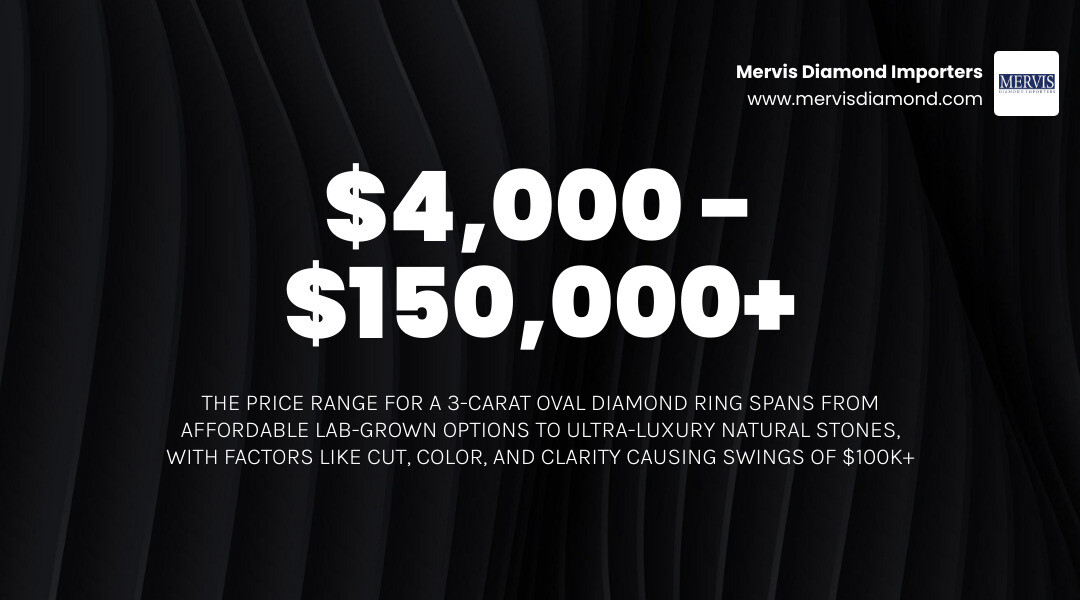
The 3 carat oval diamond ring cost can range widely — from around $4,000 for a lab-grown stone to over $150,000 for a top-tier natural diamond. Here's a quick snapshot:
| Type | Typical Price Range |
|---|---|
| Lab-grown 3 ct oval diamond ring | $4,000 – $20,000 |
| Natural 3 ct oval diamond ring | $25,000 – $150,000+ |
| Key price drivers | Cut, color, clarity, fluorescence, setting |
The final number depends heavily on factors like cut quality, color grade, and whether you choose a natural or lab-grown stone. We'll break all of that down in this guide.
That said, one thing catches a lot of buyers off guard: a 3 carat oval diamond is not just a big rock with a big price tag. It's a stone with specific quirks — like the bow-tie effect — that can dramatically affect both its beauty and its value. Knowing what to look for before you shop can save you from overpaying or ending up with a diamond that disappoints.
I'm Morris Mervis, and after decades of helping buyers find exceptional diamonds without the pressure or confusion, I want to walk you through everything that shapes the price of a 3 carat oval ring.
What is the Average 3 Carat Oval Diamond Ring Cost?
When you begin researching a 3-carat diamond, the numbers can feel a bit dizzying. In the current market of July 2026, a natural 3-carat oval diamond typically costs between $25,000 and $150,000. Why is that window so wide? It is because no two diamonds are created equal, and even minor differences in color or clarity can swing the price by tens of thousands of dollars.
If you are looking to understand how this fits into the broader diamond landscape, you might want to read our breakdown on How Much Is a 3 Carat Diamond Ring or view our curated 3 Carat Diamond Assortment to see actual examples of these stones in person.
To make sense of the 3 carat oval diamond ring cost, it helps to look at where your money actually goes.
The Retail Markup and Brand Premium
The average retail markup for a 3-carat oval diamond ring sits between 50% and 100% above the wholesale price. If you walk into an ultra-luxury, blue-box heritage brand, that markup can easily double or triple due to the brand name alone. At Mervis Diamond Importers, we believe in a different approach. By importing our diamonds directly and hand-selecting each stone, we bypass unnecessary middlemen to keep our pricing fair and transparent for our clients in Washington DC, Maryland, and Virginia.
Pricing Comparison: Natural vs. Lab-Grown
The single largest factor influencing the cost today is the diamond’s origin. Here is a realistic look at how natural and lab-grown 3-carat oval diamonds compare in price:
| Diamond Type (3 Carat Oval) | Average Loose Diamond Price Range | Average Completed Ring Cost (with setting) |
|---|---|---|
| Lab-Grown (High Quality) | $3,500 – $15,000 | $4,500 – $18,000 |
| Natural (Good/Commercial Quality) | $22,000 – $45,000 | $24,000 – $48,000 |
| Natural (Premium Quality) | $50,000 – $90,000 | $52,000 – $95,000 |
| Natural (Investment/Flawless Quality) | $100,000 – $140,000+ | $103,000 – $150,000+ |
How the 4Cs and Shape Characteristics Affect Pricing
To understand diamond pricing, you have to look at the 4Cs: Cut, Color, Clarity, and Carat Weight. If you want a quick refresher on how these elements interact, check out The 4Cs When Purchasing Diamond Engagement Rings 2.
Carat weight is particularly tricky. Diamond prices do not increase linearly; they jump exponentially at whole-carat milestones. A 3.00-carat diamond will cost significantly more than a 2.90-carat diamond of the exact same quality because crossing that "3-carat" threshold is highly desirable. To understand if this is the sweet spot for you, our guide on What Diamond Carat Size Is Right for You can help you weigh size versus your personal budget.
Understanding Cut Quality and the Bow-Tie Effect
When it comes to oval diamonds, the Cut grade is paramount. Interestingly, oval-cut diamonds with Excellent or Very Good cut grades command a 15-20% premium over round brilliant cuts of the same carat weight. This premium reflects their unique, elongated shape and the high level of skill required to master their brilliance.
However, ovals have a unique optical feature known as the bow-tie effect. This is a dark, bow-tie-shaped shadow that runs across the center of the stone, caused by a misalignment of light reflection inside the diamond.
- The Value Impact: A severe bow-tie effect can reduce the perceived value of an oval diamond by up to 30%.
- The Solution: You want a well-cut stone where the bow-tie is minimal or virtually invisible. This cannot be determined by a grading report alone; it requires looking at the diamond in person under different lighting conditions.
- Length-to-Width Ratio: The ideal ratio for a classic oval is typically between 1.30 and 1.50. Stones that are too wide can look bulky, while stones that are too narrow can look like moving searchlights and exhibit a harsher bow-tie.
Balancing Color and Clarity to Optimize Your 3 Carat Oval Diamond Ring Cost
Because a 3-carat diamond has a relatively large surface area, it is easier to see color tints and inclusions than it would be in a smaller 1-carat stone. However, you do not need to buy a D-color, Flawless diamond to have a breathtaking ring.
- Color: Ovals tend to hold onto color more than round diamonds, especially at the tips. While D, E, and F are colorless, opting for a G, H, or even a warm I color can save you thousands of dollars while still appearing white to the naked eye—especially if set in yellow or rose gold.
- Clarity: Instead of paying a premium for VVS1 or Internally Flawless, look for an "eye-clean" VS2 or SI1 diamond. An eye-clean diamond has inclusions that are invisible without a jeweler's loupe, meaning it looks identical to a flawless stone to the casual observer but costs a fraction of the price.
- Fluorescence: Some diamonds glow blue under UV light. While strong fluorescence can sometimes make a diamond look hazy (reducing its value), faint or medium fluorescence can actually make a slightly warm-toned diamond look whiter, offering a clever way to save money.
Natural vs. Lab-Grown 3 Carat Oval Diamonds
The debate between natural and lab-grown diamonds is one of the most common conversations we have with clients in our Tysons, Rockville, and Washington DC showrooms.
If you want to dive deep into lab-created options, our 3 Carat Man Made Diamond Ring Guide is an excellent resource.
Comparing the Value of Natural and Lab-Grown Diamonds
- Natural Diamonds: These are geological miracles formed deep within the earth over billions of years. Because the supply of high-quality, large-carat natural diamonds is finite, they possess inherent rarity and have historically retained their value far better over time.
- Lab-Grown Diamonds: Created in a laboratory using advanced technological processes (either High Pressure High Temperature or Chemical Vapor Deposition), these stones share the exact same chemical, physical, and optical properties as natural diamonds. However, because they can be manufactured in a factory, they are not rare.
How Lab-Grown Technology Lowers Your 3 Carat Oval Diamond Ring Cost
Because lab-grown diamonds can be produced on demand, they are approximately 60-85% less expensive than natural diamonds of the same size and quality.
For a 3-carat oval diamond, this means you can secure a stunning, high-quality lab-grown stone for between $4,000 and $20,000. This massive price difference allows couples to either maximize their budget for an incredibly large, high-quality center stone or allocate more of their budget toward an elaborate custom setting.
How Settings and Additional Expenses Influence the Total Price
When calculating your total 3 carat oval diamond ring cost, do not forget that the diamond needs a home. The setting you choose plays a significant role in both the aesthetics and the final price tag of the ring.

To learn more about matching your stone to the perfect mount, read our guide on How to Choose a Diamond Ring Setting or brush up on the fundamentals with Engagement Ring Shopping 101 The Ultimate Guide.
- Solitaire Settings: A classic, simple band in 18k gold or platinum is the most budget-friendly option, typically ranging from $1,000 to $2,500. Platinum is more expensive than white gold due to its density and purity, but it offers superior durability for a heavy 3-carat stone.
- Pave and Side-Stone Settings: Adding small diamonds along the band increases the sparkle and the cost, generally adding $1,500 to $4,000 to the price.
- Halo Settings: Surrounding your 3-carat oval with a border of smaller diamonds can make the center stone look even larger, but it also adds complexity and cost, usually ranging from $2,000 to $5,500.
Hidden Costs: Certification, Insurance, and Customization
When buying a luxury item of this caliber, there are a few extra line items to keep in mind:
- Certification: Never buy a 3-carat natural diamond without an independent grading report from a highly respected lab like the Gemological Institute of America (GIA). While the certification fee is usually built into the retail price, ensure you are viewing a genuine report.
- Insurance: Protecting your investment is essential. Annual jewelry insurance typically costs 1% to 2% of the ring’s appraised value. For a $50,000 natural ring, expect to pay $500 to $1,000 annually.
- Customization: If you want a completely custom design, expect to pay a premium for CAD design work, casting, and hand-setting the stones.
Comparing Oval to Other Diamond Shapes at 3 Carats
How does the oval shape stack up against other popular cuts when it comes to pricing and visual impact?
| Shape | Visual Size Impression | Relative Price per Carat | Key Unique Feature |
|---|---|---|---|
| Oval Cut | Appears larger than its actual weight | Moderate to High (15-20% premium for top cuts) | Elongated, finger-flattering silhouette |
| Round Brilliant | Standard visual size | Highest | Maximum sparkle and fire |
| Cushion Cut | Appears slightly smaller than its actual weight | Lower | Soft, romantic vintage look |
Because of their elongated shape, ovals have a larger "face-up" area than round brilliant or cushion-cut diamonds of the same carat weight. This means a 3-carat oval diamond will actually look larger on the finger than a 3-carat round diamond, giving you more visual impact for your money.
To compare this to other options, you can read about What Is a Cushion Cut Diamond or look at how carat weights change pricing in our guide on How Much Is a 2 Carat Diamond Ring. If you are still trying to decide on the perfect weight, check out How Many Carats Should an Engagement Ring Be.
Frequently Asked Questions About 3 Carat Oval Diamond Rings
Why are oval diamonds so popular for engagement rings?
Oval diamonds offer the brilliant sparkle of a round cut but with an elongated shape that flatters the hand, making the fingers look longer and more slender. Additionally, because they are cut shallower than round diamonds, they have a larger surface area, meaning they look larger than a round diamond of the exact same carat weight.
How can I avoid a bad bow-tie effect in an oval diamond?
The only way to truly avoid a distracting bow-tie is through visual inspection. Grading certificates do not list "bow-tie" as a metric. We highly recommend visiting our showrooms in Maryland or Virginia to view the diamond in person under various lighting conditions, or working with a trusted jeweler who can hand-select a stone with minimal dark shading.
Is a 3 carat oval diamond too big for everyday wear?
A 3-carat diamond is undeniably a statement piece, but whether it is "too big" depends entirely on your lifestyle and personal style. If you work with your hands or have an highly active lifestyle, you may want to consider a secure, low-profile platinum setting (like a six-prong or bezel setting) to protect the stone from accidental knocks.
Conclusion
Purchasing a 3-carat oval diamond ring is a significant milestone, and navigating the 3 carat oval diamond ring cost does not have to be overwhelming. By understanding how the 4Cs, the bow-tie effect, and diamond origin impact the final price, you can make an informed decision that perfectly balances beauty and budget.
At Mervis Diamond Importers, we pride ourselves on offering expert, pressure-free service. Every single one of our natural and lab-grown diamonds is hand-selected to ensure it meets our strict standards for brilliance and cut quality.
Whether you are ready to start designing your dream ring or just want to see the difference between a natural and lab-grown stone in person, we invite you to visit us at our locations in Tysons, VA, Rockville, MD, or Washington, DC.
Ready to begin your search? Feel free to explore our collection of oval engagement rings or schedule a private consultation with our diamond experts today.