

Everything to Look for When Inspecting a 3 Carat Diamond Ring
How to Prepare for a 3 Carat Diamond Ring Viewing
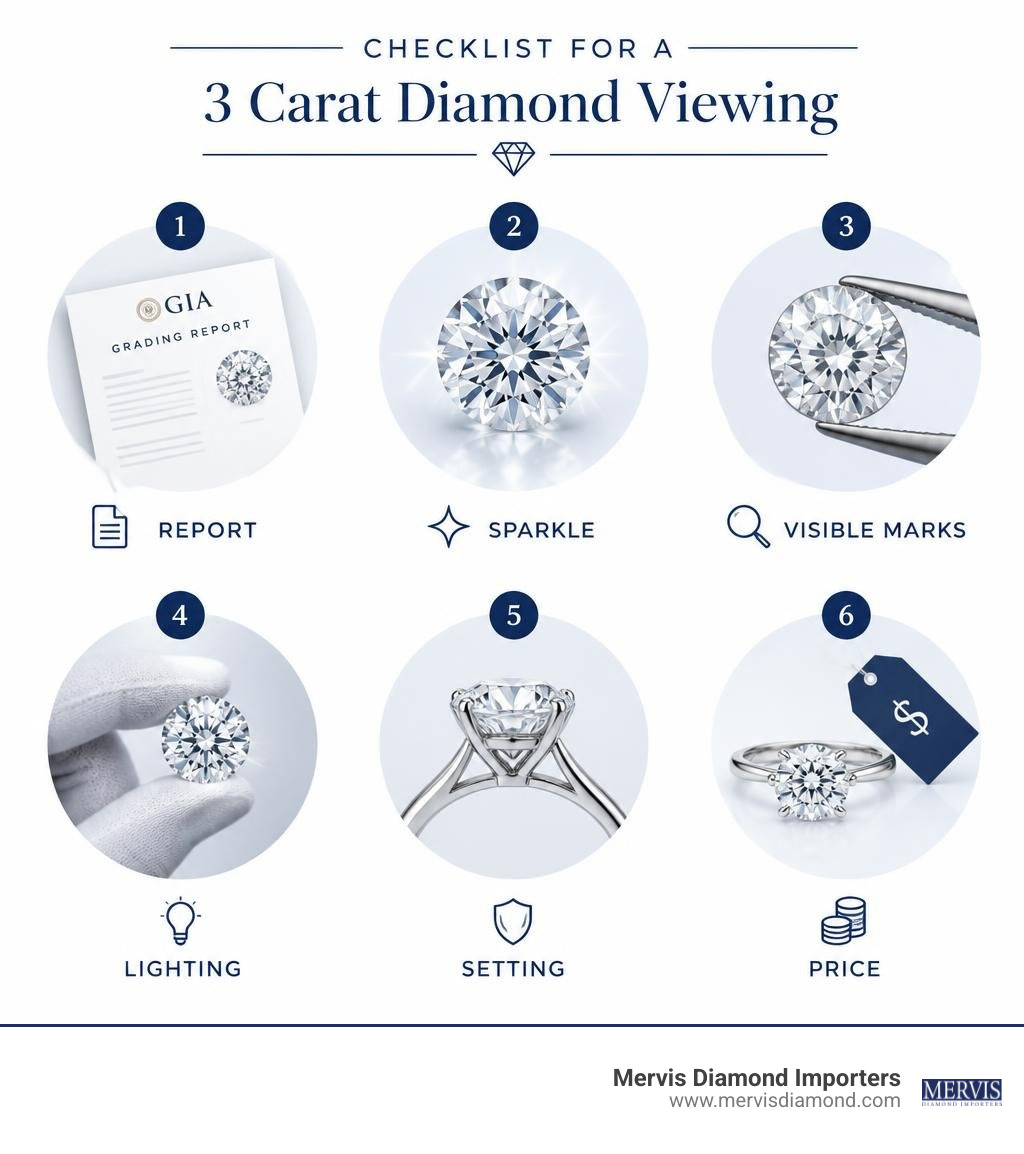
At your 3 carat diamond meeting, ask to see the grading report first. Then compare stones side by side. Look for bright, even sparkle, check for marks you can see without magnification, and view each diamond away from showroom spotlights. Ask how the setting will protect the stone and what the full ring will cost before you decide.
A 3-carat diamond makes small differences in quality easier to notice. You do not need to master every grade before your appointment; you need to know what to look at and what to ask.
I'm Morris Mervis, and I'll walk you through those checks so you can choose with confidence, not pressure.
Critical Quality Factors to Evaluate in a 3 Carat Stone
When you examine a diamond of this scale, every individual characteristic is magnified. Only about 1 in 1,000 mined rough diamonds weighs over a single carat, which makes finding an exceptional 3-carat rough gemstone extraordinarily rare. Because a 3-carat diamond offers significant surface area—roughly 9.3 millimeters across for a round cut—subtle nuances in cut, clarity, and color that stay hidden in smaller gems become instantly visible.
Having a clear understanding of the 4 Cs of diamonds explained helps you prioritize where to invest your budget and where you can safely optimize. Whether you are browsing a classic round or following our 3ct oval diamond ring guide, independent gemological certification (such as from GIA or IGI) serves as your foundational baseline. A reputable grading report verifies that the carat weight, color grade, clarity level, and cut proportions match exactly what you are paying for.
Evaluating Cut Quality and Light Performance
Cut quality is paramount. It determines how effectively the diamond handles light, which creates sparkle, brightness, and fire. A poorly cut 3-carat diamond can look dull, lifeless, or smaller than its true weight because excess mass gets trapped in a deep pavilion or an overly thick girdle.
Round brilliant cut diamonds account for over 60% of all 3-carat diamond sales because their 57 or 58 precisely angled facets maximize light return. When evaluating cut precision, look for:
- Light Return and Brightness: The stone should return pure white light (brilliance) across its entire face rather than showing dark, dead zones.
- Fire and Scintillation: As you move the stone, it should produce rainbow-colored flashes balanced by dynamic sparkle.
- Symmetry and Proportions: For round stones, aim for an Excellent cut grade with a table percentage between 54% and 57% and a depth percentage between 61% and 62.5%.
- Optical Balance: Fancy shapes like ovals, cushions, and emerald cuts require pleasing length-to-width ratios so the outline appears balanced on your hand.
Navigating Clarity and Color in Large Surface Diamonds
Because larger diamonds feature broader facet windows, evaluating clarity and color requires extra attention. Approximately 75% of 3-carat diamonds sold are graded as VS (Very Slightly Included) clarity or higher to guarantee that internal characteristics do not compromise the stone's beauty.
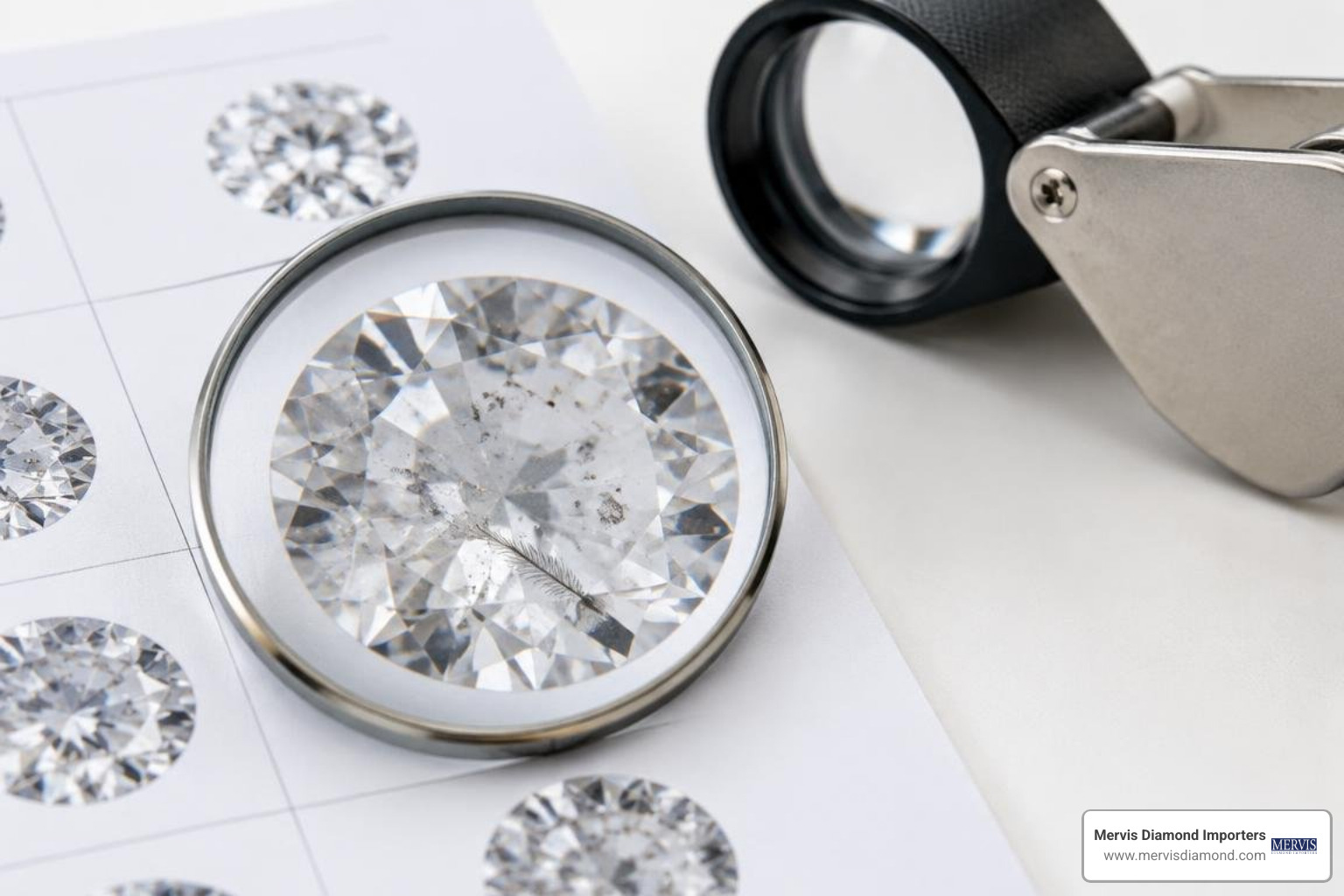
In lower clarity tiers (such as SI1 or SI2), inclusions like dark crystals or feathers can sit right under the center table facet. Aim for an "eye-clean" stone, meaning no inclusions are noticeable to the naked eye from standard viewing distances (8 to 12 inches).
When it comes to color, larger diamonds concentrate body tint more noticeably than smaller stones. If you prefer an icy-white appearance set in platinum or white gold, diamonds in the G to H range deliver near-colorless performance while providing substantial value compared to D–F colorless grades. If you plan to set the stone in warm yellow gold or rose gold, you can comfortably select an I or J color diamond, as the warm metal complements subtle undertones.
Preparing for Your 3 Carat Diamond Meeting: What to Bring and Expect
Walking into a consultation prepared ensures you get the most out of your private viewing. Before you arrive, decide whether you want to focus on natural or lab-grown options. Reviewing our lab grown diamonds guide 2026 will clarify how modern laboratory innovations deliver identical physical, chemical, and optical properties at distinct price tiers.
If you are coordinating your visit around local events or looking up networking event events and things to do in Tysons Corner, booking a dedicated appointment in advance guarantees a gemologist prepares an inventory matching your specific preferences. We recommend beginning your evaluation by viewing loose stones before they are mounted into rings, following the principles in our guide on how to buy a loose diamond.

Always assess the diamond across varied environments. Showroom spotlights are calibrated to maximize sparkle; ask to view the diamond near natural window daylight and under indirect interior lighting to see how it performs in everyday settings.
Essential Questions to Ask During Your 3 Carat Diamond Meeting
Make sure to ask these specific questions during your consultation:
- "Can we match the diamond's laser inscription to its grading report under the microscope?"
- "Does this stone exhibit any fluorescence, and does it create any haziness under natural daylight?"
- "Where are the inclusions located, and will any prong placement protect or conceal them?"
- "What are your resizing, warranty, and lifetime care policies?"
How to Compare Multiple Stones at a 3 Carat Diamond Meeting
Never inspect a 3-carat diamond in isolation. Viewing diamonds side by side allows your eyes to detect fine gradations in tint, facet alignment, and sparkle. Use professional tweezers to handle the stones, and place them upside down against a matte white grading card to compare body color without the distraction of surface reflection.
To explore varied shapes, proportions, and budgets, browse our 3 carat diamond assortment before scheduling your consultation.
Understanding 3 Carat Diamond Pricing and Size Dynamics
The price of a 3-carat diamond ranges from $15,000 to over $50,000 for high-quality natural diamonds, depending on cut precision, color, and clarity. Lab-grown diamonds of equivalent size and quality represent an accessible alternative, often available between $3,000 and $7,000.
Because diamond prices scale exponentially rather than linearly, the price per carat for a 3-carat diamond is typically 20% to 40% higher than for a 1-carat diamond of similar quality. This premium reflects extreme natural rarity.
| Characteristic | 2-Carat Round Diamond | 3-Carat Round Diamond | 3-Carat Oval Diamond |
|---|---|---|---|
| Approximate Diameter / Dimensions | ~8.1 mm | ~9.3 mm | ~11.5 mm x 7.8 mm |
| Surface Area (Face-Up Spread) | ~51.5 mm² | ~67.9 mm² | ~70.5 mm² |
| Visual Size Increase | Baseline | +32% larger surface | +37% larger surface |
| Natural Price Range (G-H / VS) | $12,000 – $24,000 | $28,000 – $55,000+ | $25,000 – $48,000+ |
To evaluate balancing size and budget tradeoffs, explore our 3 carat diamond affordable guide or compare proportions with our 2 carat oval ring guide.
Avoiding Common Buying Pitfalls
- Compromising on Cut to Gain Carat Weight: A heavy, poorly cut diamond will appear smaller and look lifeless compared to a well-proportioned stone.
- Overlooking the "Bowtie" Effect: Fancy elongated cuts like ovals, marquises, and pears can show a dark shadow across their center. Inspect the stone to confirm the bowtie is minimal.
- Buying Uncertified Stones: Never purchase a significant diamond without independent certification verifying its specifications.
Choosing the Best Setting for Durability and Style
A 3-carat stone requires a setting that balances aesthetic refinement with structural security. Because a diamond of this size sits higher off the finger, selecting the right mounting keeps it secure during daily wear.

- Six-Prong Mountings: Provide added security and keep round stones symmetrical.
- Platinum Construction: Platinum does not wear away over time, making it ideal for holding larger stones safely.
- Gallery Rails and Baskets: A supportive bridge or basket under the center stone prevents prongs from snagging or bending.
- Low-Profile Designs: Bringing the diamond closer to your hand reduces accidental impacts.
For more mounting ideas, read our guide on how to choose a diamond ring setting.
Frequently Asked Questions About 3 Carat Diamonds
Is VS2 clarity high enough for a 3-carat diamond?
Yes. In most round, cushion, and oval diamonds, a VS2 clarity grade is completely eye-clean. As long as the inclusions are light in color and dispersed toward the edges rather than centered under the table, VS2 offers an ideal balance of visual quality and value.
How much does an average 3-carat diamond cost in 2026?
In 2026, an eye-clean, well-cut natural 3-carat diamond typically ranges between $22,000 and $45,000. Exceptional colorless stones with higher clarity grades can exceed $60,000. Lab-grown diamonds of equivalent size and quality generally range between $3,000 and $7,000.
Do 3-carat diamonds hold their value over time?
Due to their natural rarity—with only a fraction of mined gems yielding high-carat rough—high-quality natural 3-carat diamonds consistently maintain demand on the secondary market. Value retention depends directly on cut quality, color, clarity, and internationally recognized certification.
Conclusion
Inspecting a 3-carat diamond ring should be an enjoyable, transparent experience. By focusing on cut quality, confirming eye-clean clarity, verifying certifications, and selecting a secure mounting, you can choose a ring that will look stunning for generations.
At Mervis Diamond Importers, we believe in a warm, consultative, pressure-free environment across our showrooms in Tysons, VA, Rockville, MD, and Washington, DC. We invite you to view our loose stones side by side under expert guidance. To explore personalized pricing and design options, review our comprehensive 3 carat diamond ring cost breakdown and schedule your private viewing today.