

How to Find a Sparkly Eye-Clean GIA Certified Ring Without Buying Flawless
Why Choosing a Clean Diamond GIA Certified Ring Doesn't Mean Buying Flawless
Finding a clean diamond GIA certified ring is one of the smartest moves you can make as a buyer — but most people assume "clean" means "flawless," and that assumption can cost thousands of dollars unnecessarily.
Here's the quick answer if you're in a hurry:
The best eye-clean GIA-certified diamonds for most buyers:
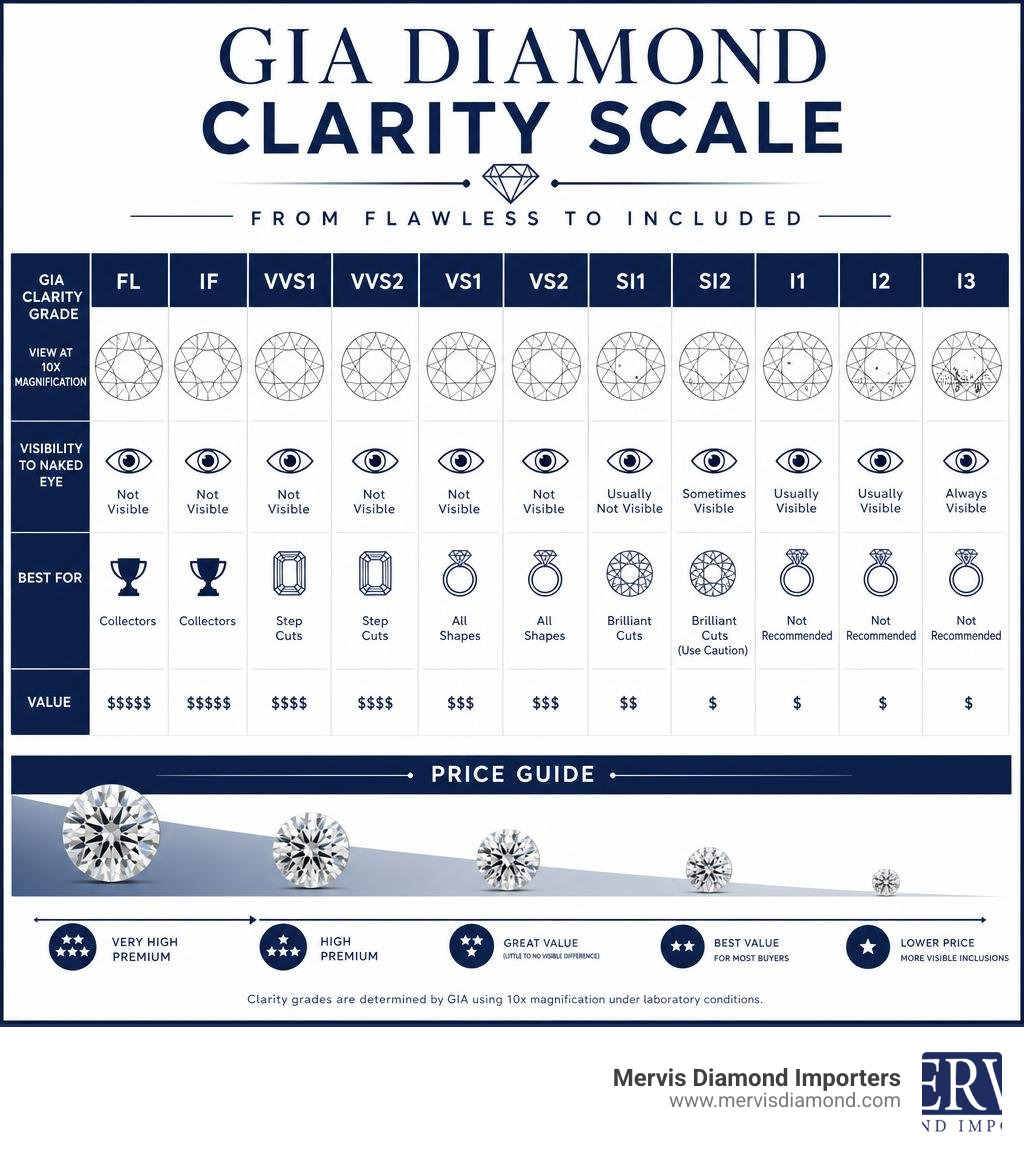
| Clarity Grade | Visible to Naked Eye? | Best For | Value |
|---|---|---|---|
| FL / IF | No inclusions at all | Museums, collectors | Very expensive |
| VVS1 / VVS2 | No | Step cuts (emerald, asscher) | High cost, little visual benefit |
| VS1 / VS2 | No | All shapes, best all-around | Excellent |
| SI1 | Usually no | Brilliant cuts (round, oval) | Best value |
| SI2 | Sometimes | Brilliant cuts only, case by case | Good if vetted |
| I1 / I2 / I3 | Yes | Not recommended for center stones | Low |
The GIA (Gemological Institute of America) grades diamonds on an 11-point clarity scale — from Flawless (FL) all the way down to Included (I3) — using 10x magnification. Most diamonds sold in jewelry stores fall somewhere in the VS to SI range.
And here's the thing: a well-chosen VS2 or SI1 diamond looks identical to a flawless stone with the naked eye. You simply cannot tell the difference at arm's length. Yet the price gap between the two can be enormous.
That's the heart of what this guide is about. You don't need to pay for perfection that no one — including you — will ever actually see.
Understanding GIA Certification and Clarity Grading
When you begin shopping for an engagement ring, the term "certification" will come up constantly. But what is it, and why does it matter?
A GIA report is essentially a diamond's birth certificate and passport combined. It provides an unbiased, scientific blueprint of the stone's exact qualities. Without it, you are relying solely on a salesperson's word. To understand the baseline of what you are buying, it helps to ask: What is a GIA Certified Diamond?
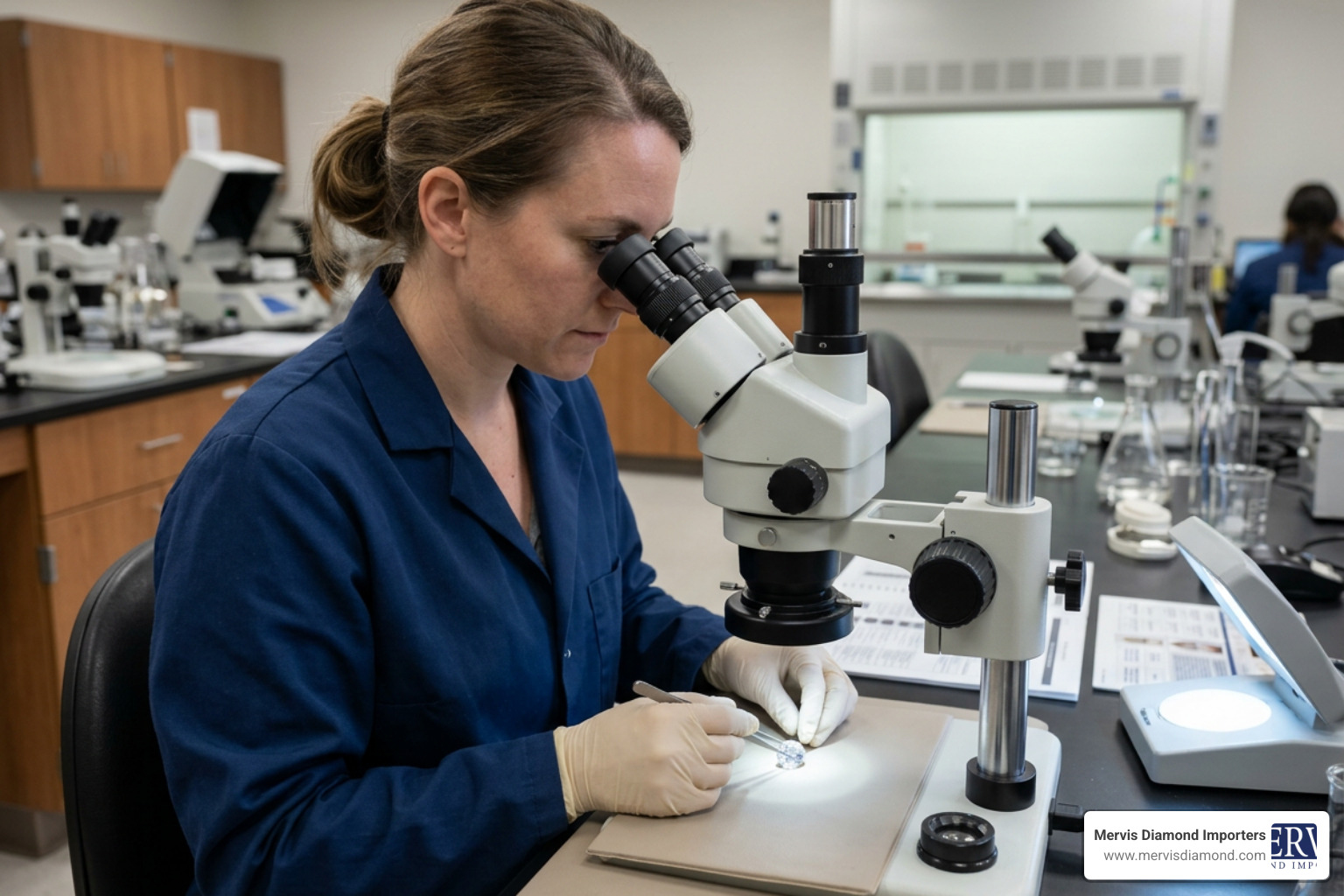
Simply put, the GIA is the world's most trusted gemological authority. They do not sell diamonds; they grade them under strict laboratory conditions. Gemologists evaluate each stone face-up under 10x magnification using daylight-equivalent lighting to assess its clarity. You can also review the official GIA explanation of diamond clarity for more background on how clarity fits into overall diamond quality.
Clarity is determined by two types of characteristics:
- Inclusions: Internal "birthmarks" trapped inside the diamond during its formation deep within the Earth.
- Blemishes: External surface scratches, nicks, or chips that occur during cutting, polishing, or daily wear.
By understanding how these imperfections are categorized, you can confidently shop for a clean diamond GIA certified ring without overpaying for invisible microscopic perfection.
The GIA Clarity Scale Explained
The GIA Clarity Scale features 11 grades. Under 10x magnification, gemologists look at the size, number, position, nature, and color (relief) of any inclusions or blemishes.
Here is how the grades break down and what they actually mean for your ring's appearance:
- Flawless (FL): No inclusions or blemishes visible under 10x magnification. These stones are incredibly rare and usually sit on velvet pillows in museums rather than on fingers.
- Internally Flawless (IF): No inclusions, and only minor surface blemishes visible under 10x magnification. Interestingly, setting an FL diamond in a ring often downgrades it to IF because the setting process can create tiny surface blemishes.
- Very, Very Slightly Included (VVS1 and VVS2): Inclusions are so tiny that they are extremely difficult for even skilled gemologists to see under 10x magnification.
- Very Slightly Included (VS1 and VS2): Minor inclusions that range from difficult (VS1) to somewhat easy (VS2) to see under 10x magnification. To the naked eye, these are virtually always 100% clean.
- Slightly Included (SI1 and SI2): Inclusions are noticeable under 10x magnification. SI1 stones are usually eye-clean, whereas SI2 stones may have visible inclusions if you look closely. "SI3" is not recognized by the GIA; it is a grade used by lesser labs that usually equates to a GIA I1.
- Included (I1, I2, and I3): Inclusions are obvious under 10x magnification and are typically visible to the naked eye. These can affect the diamond's transparency, brilliance, and structural durability.
The Value of a Clean Diamond GIA Certified Ring
Buying an "eye-clean" diamond - one where the inclusions are invisible to the naked, unmagnified eye - is the ultimate insider secret to maximizing your budget.
Why pay a massive premium for a Flawless or VVS diamond when a VS2 or SI1 diamond looks exactly the same on your partner's hand? By prioritizing an eye-clean stone in the VS2 to SI1 range, you free up a significant portion of your budget to invest in a larger carat weight or a superior cut grade (which dictates how much the stone sparkles).
Once you find the perfect eye-clean ring, protecting your investment is crucial. You will want to ask yourself: Should I Have Engagement Ring Insured? Yes, absolutely. Insuring your ring ensures peace of mind, whether you are wearing it around Washington DC or traveling abroad.
Smart Buying: How to Choose a Clean Diamond GIA Certified Ring
Shopping smart means understanding how the 4Cs (Cut, Color, Clarity, and Carat) interact. They do not exist in isolation; they work together to create the overall beauty of the ring.
First and foremost, Cut is king. While clarity determines the purity of the stone, the cut determines its sparkle. An Excellent or Ideal cut diamond will reflect light so that it can actually mask minor inclusions, making a lower clarity grade look completely eye-clean.
Carat weight also plays a major role in clarity selection. As a diamond gets larger, its facets (the flat polished surfaces) get larger too. This means that an inclusion that is completely invisible in a 0.50-carat diamond might become visible in a 2.00-carat diamond. If you are going big, you may need to step up to a VS1 or VS2 to guarantee an eye-clean look.
How Diamond Shape Affects Perceived Clarity
Not all diamond shapes handle inclusions the same way. The shape you choose dictates how strict you need to be with your clarity grade.
Diamonds are generally divided into two cutting styles:
- Brilliant Cuts (Round, Oval, Cushion, Heart, Princess): These shapes feature triangular and kite-shaped facets designed to maximize sparkle. The complex, overlapping reflections of light act as a natural camouflage for inclusions. For brilliant cuts, you can often drop down to SI1 or VS2 and still get a completely eye-clean stone.
- Step Cuts (Emerald, Asscher): These shapes feature long, parallel facets that mimic steps. They act like a hall of mirrors, offering clear, unobstructed views deep into the stone. Because there is no intense sparkle to hide imperfections, step cuts require a higher clarity grade — typically VS1 or VVS2 — to ensure they look clean.
If you are exploring local options in Northern Virginia or Washington DC, understanding how different shapes trend can help you make the perfect choice for your personal style.
Natural vs. Lab-Grown Certified Diamonds
As you search for a clean diamond GIA certified ring, you will inevitably compare natural and lab-grown options. Both are chemically, physically, and optically identical, but they have distinct differences in pricing and origin.
- Inclusions vs. Growth Remnants: Natural diamonds contain minerals, feathers, or pinpoints trapped during their millions of years underground. Lab-grown diamonds, created via HPHT (High Pressure High Temperature) or CVD (Chemical Vapor Deposition), can contain tiny metallic or carbon growth remnants unique to the manufacturing process.
- Price and Budget: Lab-grown diamonds are significantly more affordable, allowing you to buy a larger, higher-clarity stone for a fraction of the price of a natural stone.
- Certification: The GIA grades lab-grown diamonds with the exact same rigorous standards as natural diamonds, ensuring full transparency.
Additionally, if you decide on a lab-created stone, you might wonder: Can You Insure a Lab Grown Diamond? Yes, you can insure lab-grown diamonds just like natural ones, protecting your beautiful ring against loss or theft.
Maximizing Sparkle: Settings and Side Stones
The setting of your engagement ring does more than just hold the center stone in place — it can actually enhance the diamond's perceived clarity and size.
For example, a layout featuring a 0.90-carat total weight design — such as a 0.50-carat heart-shaped center stone rated Internally Flawless (D color) surrounded by 0.40 carats of SI1 side stones — can look incredibly lavish and bright. The brilliant flash of the accent stones draws the eye and makes the entire ring appear larger and more brilliant.
Setting Styles That Enhance a Clean Diamond GIA Certified Ring
Choosing the right setting can help mask inclusions and maximize light reflection:
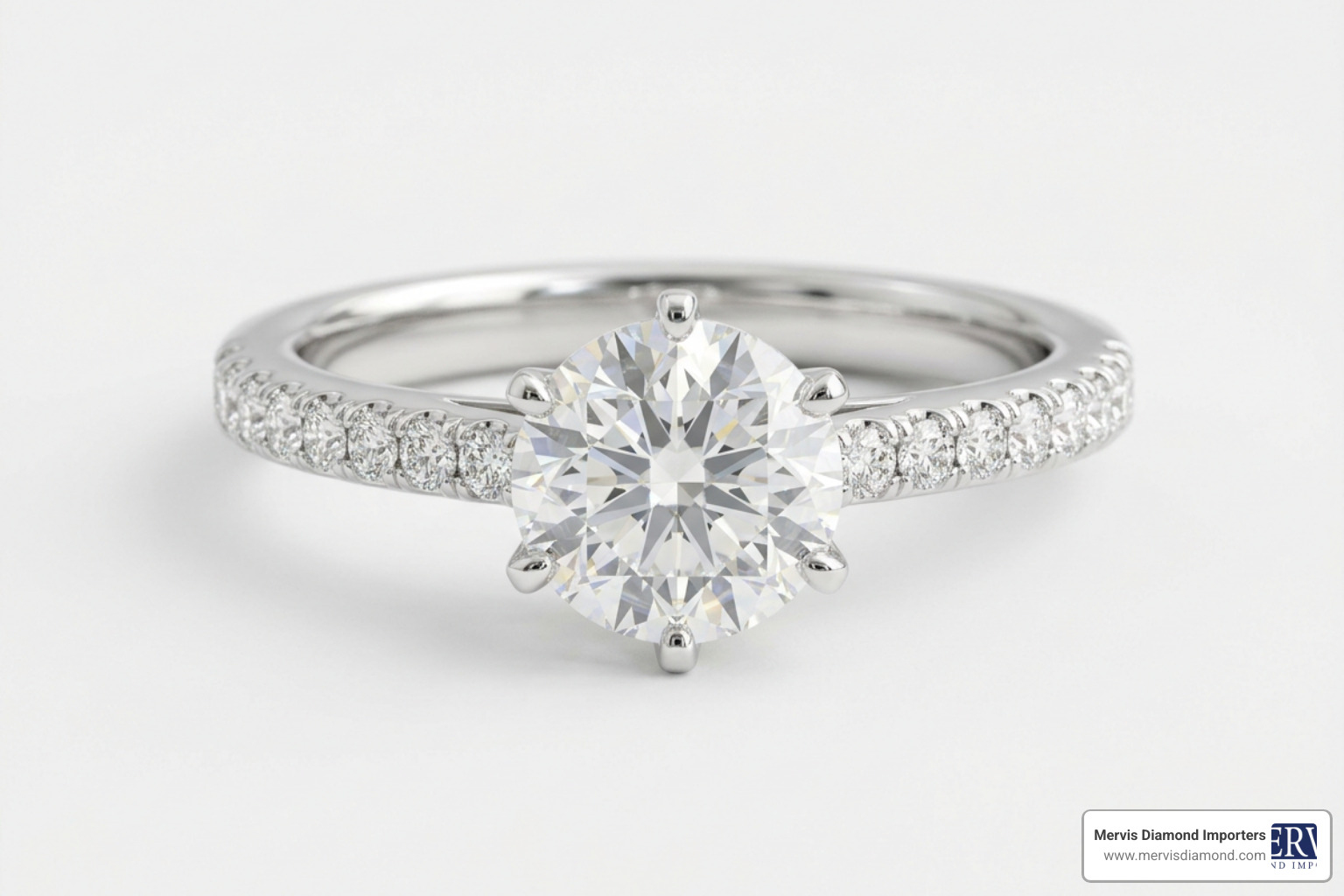
- Prong Settings: By lifting the diamond high off the band, prongs allow maximum light to enter from all angles, creating intense sparkle that hides imperfections.
- Pavé Settings: Incorporating small, brilliant-cut side diamonds along the band creates a continuous surface of sparkle. This extra light reflection distracts the eye from any minor inclusions in the center stone.
- Halo Settings: Surrounding the center diamond with a "halo" of smaller stones not only makes the center stone look up to 50% larger, but the collective brilliance also helps mask any slight clarity issues near the edges of your main diamond.
How to Clean and Maintain Your Certified Ring
Even a flawless, D-color diamond will look dull and lifeless if it is covered in a film of hand lotion, hairspray, and daily grease. Dirt blocks light from entering the diamond, which completely kills its brilliance.
To keep your ring looking like it just came out of our showroom, we recommend a simple routine to Clean Diamond Ring. Learning the Cleaning Diamonds Easy Way is essential for Keeping Diamonds Sparkling over the years.
Safe At-Home Cleaning Methods
You do not need specialized, expensive chemical solutions to clean your ring at home. In fact, simple household items work best.
- The Warm Soap Soak: Fill a small bowl with warm water and add a few drops of mild, degreasing dish soap (like blue Dawn). Let your ring soak for 20 to 40 minutes. Gently brush the stone with a soft-bristled toothbrush, paying close attention to the underside where dirt accumulates. Rinse under warm running water (make sure the drain is covered!) and dry with a lint-free cloth. For a complete walkthrough, read How to Clean Your Diamond Jewelry at Home or How to Clean Engagement Ring at Home.
- Using Windex: For gold or platinum settings, a quick soak in Windex can cut through tough grease. Learn the proper steps here: How to Clean Diamond Rings with Windex.
- What to Avoid: Never use abrasive materials. If you are wondering, Can I Clean My Diamond Ring with Toothpaste, the answer is a resounding no. Toothpaste contains abrasives that can scratch the precious metal setting. Also, avoid bleach, chlorine, and paper towels (which can leave lint and minor scratches).
(Note: If you have matching earrings, you can apply similar methods. Check out How to Clean Diamond Earrings, How to Clean Diamond Earrings at Home, and learn How Often Should You Clean Diamond Earrings to keep your entire jewelry suite looking brand new!)
Professional Care and Long-Term Maintenance
While weekly at-home cleanings are great, they cannot replace professional maintenance. We recommend bringing your ring in for a professional inspection every 6 months.
During a professional visit, we will:
- Inspect the prongs under a microscope to ensure they are tight and the center stone is secure.
- Perform a deep ultrasonic and steam cleaning to remove impacted dirt that a toothbrush cannot reach.
- Polish out minor surface scratches from the metal setting.
To learn more about professional care tips, see How to Clean Your Diamond Ring 2. If your ring is made of platinum, it requires specific handling: How to Clean Platinum Diamond Ring. Finally, if you own a clarity-enhanced diamond (which requires completely different care to avoid damaging the filler materials), be sure to read How to Clean Clarity Enhanced Diamonds.
Frequently Asked Questions about Eye-Clean Diamonds
What is an eye-clean diamond?
An eye-clean diamond is a stone that has no inclusions or blemishes visible to the naked, unmagnified eye when viewed face-up from a distance of about 8 to 10 inches. While a gemologist using a 10x loupe can easily spot the inclusions in a VS2 or SI1 diamond, those same imperfections are completely invisible to your family, friends, and partner. This visual perfection makes these grades the best value on the market.
How can I verify a GIA report?
Every authentic GIA-certified diamond comes with a unique 10-digit report number. You can easily verify this report on the official GIA website using their "Report Check" tool. Furthermore, most modern GIA-certified diamonds have their report number micro-laser inscribed on the diamond's girdle (the outer edge). A professional jeweler can show you this inscription under a microscope to prove that the diamond matches the paperwork perfectly.
What is the typical price range for a GIA-certified 1-carat diamond?
Diamond pricing varies significantly based on the combination of the 4Cs. In the current 2026 market, GIA-certified natural diamonds can range anywhere from $810 for lower-grade cuts and colors up to $7,960+ for top-tier stones. For a high-quality, eye-clean 1-carat round brilliant diamond with an Excellent cut and a near-colorless grade (G to H), you can typically expect a market value in the $1,600 to $2,000 range.
Conclusion
Finding a gorgeous, sparkly, clean diamond GIA certified ring does not require you to pay a premium for a Flawless clarity grade. By focusing on eye-clean VS2 or SI1 diamonds, selecting a shape that naturally masks inclusions, and choosing a high cut grade, you can get a breathtaking ring that looks absolutely perfect to the naked eye while keeping your budget intact.
At Mervis Diamond Importers, we specialize in helping you navigate these choices. Our hand-selected natural and lab-grown diamonds are vetted by experts to ensure they deliver maximum sparkle and beauty. We invite you to visit our locations in Tysons, VA, Rockville, MD, and Washington, DC for pressure-free, expert service.
For more helpful guides on keeping your jewelry in pristine condition, check out our master resource on How to Clean Diamond Rings at Home, or stop by one of our showrooms to see the difference an eye-clean diamond can make in person!