

The Right Way to Wear Your Wedding Band and Engagement Ring
How Is a Wedding Band Worn? A Quick Answer Before We Dive In
How is a wedding band worn comes down to a few simple choices — hand, finger, and order. Here's the quick version:
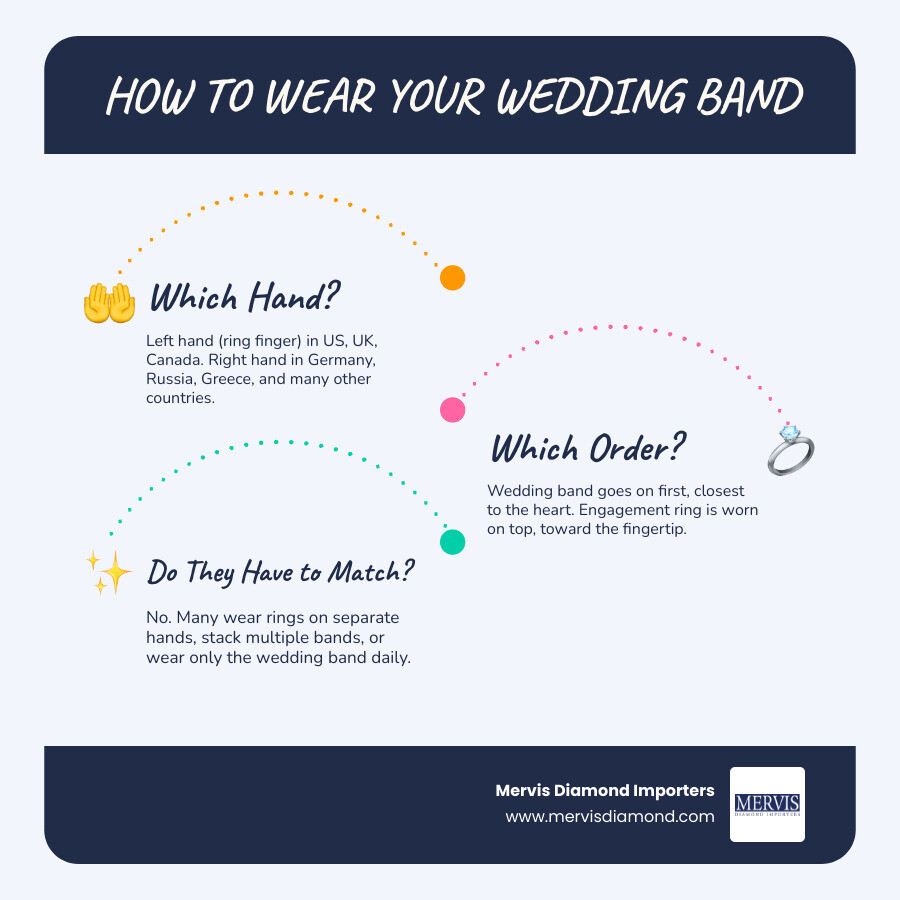
- Which hand? In the US, UK, and Canada, the left hand, fourth finger (ring finger) is traditional. In Germany, Russia, Greece, and several other countries, the right hand is standard.
- Which order? Traditionally, the wedding band goes on first (closest to the heart), with the engagement ring on top.
- Do they have to be together? No. Many people wear them on separate hands, stack them with other bands, or wear just the wedding band daily.
That's the short answer. But the full picture is more interesting.
The stacking tradition dates back to ancient Rome, where people believed a vein called the vena amoris — the "vein of love" — ran directly from the fourth finger of the left hand to the heart. Modern science has since disproven this, but the tradition stuck. Today, over 60% of couples customize their wedding bands, and the "rules" around wearing them have never been more flexible.
Whether you're planning your wedding day or just want to wear your rings right, this guide walks you through everything — tradition, cultural differences, styling options, and daily care.
I'm Morris Mervis, and after decades of helping couples find their perfect rings, I've seen every combination imaginable — let me walk you through what actually works.
How is a Wedding Band Worn: Traditional vs. Modern Rules
When it comes to wearing your bridal jewelry, there is a fascinating tension between age-old customs and modern, highly personalized styling. Traditionally, the wedding band and engagement ring are worn together on the fourth finger of the left hand. This specific finger has been designated as the "ring finger" in Western culture for centuries.
But as jewelry styles evolve, many couples are questioning whether they must strictly follow these rules. To understand how to style your rings, it helps to understand why these traditions exist and how you can adapt them to your lifestyle. For a deeper dive into the basic customs, you can read more on how do you wear wedding rings.

While the left hand remains the standard in the United States, modern brides and grooms are increasingly choosing comfort and personal expression over rigid conformity. Some prefer to wear their rings on separate hands, while others opt for unique stacking combinations. You can explore various approaches in this detailed guide on How to Wear a Wedding Band and an Engagement Ring .
The Traditional Order: Wedding Band First
The most common traditional method is to place the wedding band on your finger first, followed by the engagement ring. This means the wedding band sits at the base of the finger, physically closest to your hand and, symbolically, closest to your heart.
This custom is deeply rooted in the ancient Roman belief in the vena amoris (vein of love). The Romans believed that a delicate vein ran directly from the fourth finger of the left hand straight to the heart. Although modern anatomy has shown us that all fingers have similar venous connections to the heart, the romantic sentiment of the "vein of love" has stood the test of time.
By placing the wedding band on the finger first, you are figuratively anchoring your marriage vows closest to your body. The engagement ring, which represents a promise of marriage, is then placed on top, acting as a beautiful "guardian" of that sacred vow. If you are curious about the historical and cultural significance of this placement, check out our article on why wedding rings worn 4th finger left hand.
How is a Wedding Band Worn Chronologically?
An increasingly popular modern alternative is the chronological method. In this style, you wear the rings in the exact order you received them: the engagement ring goes on the finger first, and the wedding band is placed on top.
This approach appeals to couples who view their rings as a visual timeline of their relationship. The engagement ring represents the first chapter—the proposal and the period of anticipation. The wedding band represents the next chapter—the actual marriage ceremony. Wearing the wedding band on the outside "seals" the engagement ring and symbolizes the completion of the wedding vows.
Additionally, some brides find this arrangement more comfortable or visually balanced, especially if the wedding band is wider or has a contour shape that nests better on the outside of the engagement ring setting. For more styling ideas on this chronological approach, read our guide on how to wear your engagement ring and wedding ring.
Cultural and Regional Differences in Ring Placement
While the left-hand ring finger is the standard in the United States, Canada, and much of Western Europe, global traditions are incredibly diverse. How and where you wear your wedding band depends heavily on your geographic location, religious background, and cultural heritage.
For example, in many Northern and Eastern European countries, it is customary to wear the wedding band on the right hand. This is also the norm in countries such as India, Greece, Colombia, and Venezuela. To help visualize these global differences, we have compiled a quick comparison table:
| Left-Hand Tradition | Right-Hand Tradition | Alternating / Multi-Hand Customs |
|---|---|---|
| United States, United Kingdom, Canada, France, Italy, Sweden | Germany, Austria, Russia, Poland, Greece, India, Colombia | Brazil (switch hands after vows), Germany (engagement on right, wedding on left) |
If you are marrying into a different culture or simply want to honor your heritage, you can find a wealth of global styling inspiration in this resource on How do you Wear an Engagement Ring and Wedding Band? - Styling Mania .
How is a Wedding Band Worn Across Different Cultures?
Let's look closer at some specific cultural and religious traditions.
In Orthodox Christian traditions, the right hand is the sacred hand used for blessings and vows, making it the natural place for wedding rings. Similarly, in traditional Jewish wedding ceremonies, the groom places the wedding ring on the bride's right index finger. This finger is chosen because it is the most active and visible finger during the ceremony, making the ring exchange clear to all witnesses. After the ceremony, many brides choose to move the ring to the left ring finger for daily wear, though some keep it on the right hand.
In Germany and the Netherlands, couples often wear their engagement ring on the right hand. Once they are married, they move the engagement ring to the left hand and place the wedding band on the right hand. In Brazil, couples wear plain gold bands on their right hands during their engagement, and then simply switch the same bands to their left hands during the wedding ceremony.
These diverse traditions show that there is no single "correct" hand or finger. The meaning behind the ring is what truly matters. To explore the deeper meanings of these symbols, read our article on what does a wedding ring symbolize.
Styling Non-Traditional Rings and Ring Stacks
In July 2026, the trend of customizing and stacking rings is stronger than ever. Over 60% of couples now choose to customize their wedding bands, moving away from simple, plain bands to create unique, multi-layered ring stacks.
If you have a non-traditional engagement ring—such as a low-profile setting, an emerald cut, or a pear-shaped diamond—a standard straight wedding band might not sit flush against it. This is where contour (curved) or notched bands come into play. These bands are specifically designed to curve around the center stone of your engagement ring, creating a seamless, comfortable fit. You can explore these creative designs in our guide to different styles wedding bands.
Stacking is not just about making the rings fit; it is about self-expression. Many brides love to mix metals—such as pairing a platinum engagement ring with a yellow gold wedding band—to create a chic, textured look. For step-by-step advice on building your own stack, check out the ultimate stacking guide.
Stacking with Anniversary and Milestone Bands
Your ring stack does not have to stop at two rings. More than 40% of couples add anniversary bands to their collection within five years of marriage. These bands are a beautiful way to celebrate major milestones, such as a five-year anniversary, the birth of a child, or a vow renewal.
When adding an anniversary band to your stack, the traditional placement is to wear the wedding band first, followed by the engagement ring, and then place the anniversary band on the outside. However, many couples prefer a symmetrical look, placing the engagement ring in the center with the wedding band on the bottom and the anniversary band on top.
If you want to learn more about what makes these milestone rings special, read our article on what is an anniversary band. To see how you can continuously build your stack over time, explore how to celebrate all of lifes milestones with ring stacks.
Wearing Rings on Separate Hands or Fingers
For some, stacking multiple rings on a single finger can feel bulky, heavy, or uncomfortable. This is especially true for individuals with active lifestyles, those who work with their hands, or those with wider ring designs.
If this sounds like you, wearing your rings on separate hands is an elegant and practical solution. You can wear your wedding band on your left ring finger and move your engagement ring to your right ring finger. This not only balances the weight of the jewelry across both hands but also allows each individual ring to stand out and be appreciated on its own.
This method is also ideal if your engagement ring and wedding band do not match in style or metal type and you prefer not to wear them together. For more practical advice on styling your rings separately, check out our guide on how to wear a wedding ring set.
Practical Tips for Daily Wear and Maintenance
Your wedding band and engagement ring are meant to be worn and enjoyed every single day, but daily wear means they will be exposed to the elements, physical activity, and accidental bumps. Proper care and styling adjustments are essential to keep your rings sparkling for a lifetime.
When selecting your wedding band, it is vital to keep your daily activities in mind. If you work in a hands-on profession—such as healthcare, fitness, or culinary arts—you might want to opt for a low-profile, durable metal band for daily wear and save your sparkling diamond engagement ring for special occasions. For more lifestyle-based tips, read our 4 tips for choosing a wedding band that matches your lifestyle.
What to Do on Your Wedding Day
One of the most common questions brides ask is: What do I do with my engagement ring during the wedding ceremony?
According to traditional etiquette, your left ring finger should be completely bare during the ceremony so the wedding band can be slipped on first without any obstacles. To achieve this, we recommend wearing your engagement ring on your right hand on the morning of your wedding.
Once the ceremony is over and you have officially exchanged vows, you can simply slip your engagement ring back over to your left hand, placing it on top of your newly received wedding band. This ensures a smooth, fumbling-free ceremony at the altar. For a complete breakdown of wedding day ring etiquette, check out our article: do i wear my engagement ring on my wedding day.
Sizing, Cleaning, and Maintenance
To keep your rings in pristine condition, regular maintenance is key. We recommend scheduling a professional cleaning and inspection at least once a year. A jeweler will check the security of your diamond prongs, polish out minor scratches, and ensure the rings are structurally sound.
Sizing is another crucial factor. Your fingers will naturally swell and shrink depending on the temperature, humidity, and time of day. If you plan to stack multiple thick bands together, you may need to size up slightly, as stacked rings tend to fit tighter on the finger than a single thin band.
Additionally, if you are considering a full eternity band (where diamonds go all the way around), keep in mind that these are incredibly difficult to resize later. If you are worried about future size changes, read our guide on can eternity rings be resized.
Frequently Asked Questions about Wearing Wedding Bands
Can you wear a wedding band without an engagement ring?
Absolutely! Many people choose to wear their wedding band completely on its own. This minimalist style is highly practical for daily wear, travel, or physical activities where a raised diamond engagement ring might get snagged, scratched, or damaged. Wearing just the wedding band is a classic, understated way to show your commitment while prioritizing daily comfort. If you are trying to find a stand-alone band that still makes a stunning statement, explore our tips on how to pick the perfect wedding band.
Do engagement rings and wedding bands have to match?
No, they do not have to match at all. While classic matching bridal sets are beautiful, mixing metals, diamond cuts, and styles has become incredibly popular. Pairing a vintage-style yellow gold wedding band with a modern platinum solitaire engagement ring creates a beautiful, personalized contrast. The key is to choose rings that complement each other structurally so they do not rub against one another and cause damage. Learn how to mix and match your rings safely in our guide on wedding band engagement ring match.
Can men wear engagement rings?
Yes, they certainly can! In July 2026, the trend of men wearing engagement rings continues to grow as more couples embrace shared commitment and equality in their relationships. A male engagement ring is a beautiful way for a man to display his commitment during the engagement period before exchanging his final wedding band. To learn more about modern, inclusive ring styles for everyone, check out our resource on same sex marriage engagement rings and wedding bands for everyone.
Conclusion
There is no single "right" way to wear your wedding band and engagement ring. Whether you choose to follow the traditional Roman custom of wearing your wedding band closest to your heart, adopt a modern chronological stack, or wear your rings on separate hands, the choice is entirely yours. Your rings should reflect your personal love story, your unique style, and your daily lifestyle.
At Mervis Diamond Importers, we specialize in helping couples find and customize high-quality natural and lab-grown diamond rings that sit together perfectly. If you are ready to find your dream wedding set or need expert advice on matching your rings, we invite you to visit one of our convenient showrooms in Tysons, VA, Rockville, MD, or Washington, DC. Our expert team is here to provide pressure-free guidance to help you make a selection you will love forever.
Ready to find your perfect fit? Read our comprehensive guide on how to wear your engagement wedding rings or stop by a Mervis showroom today!