

Why Lab Created Diamond Hoops Are the Smartest Earring Choice
Why Lab Created Diamond Hoops Are a Smart Choice
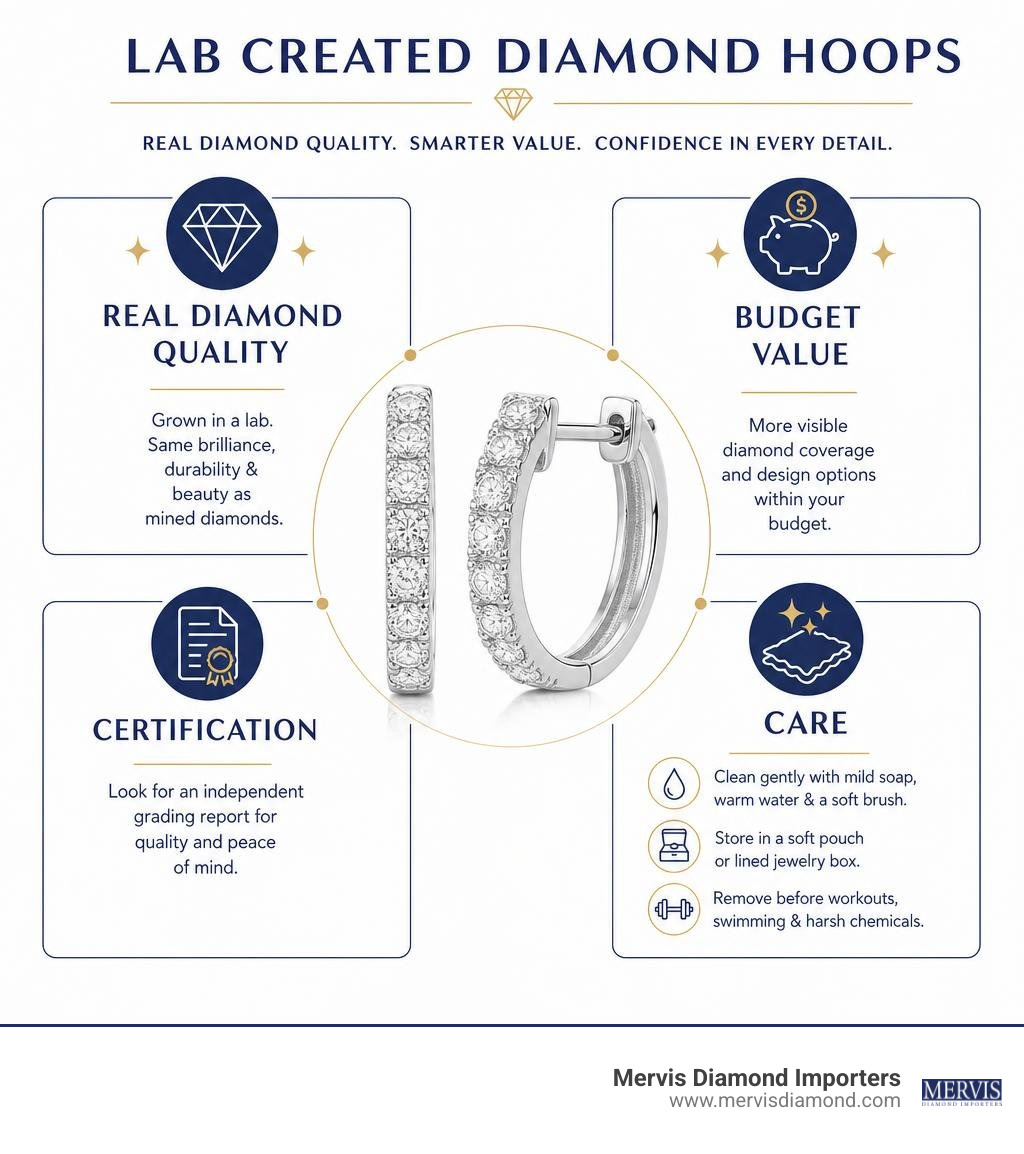
Lab created diamond hoops pair the sparkle and durability of real diamonds with more room in your budget for size, design, or setting quality. Lab-created diamonds have the same core chemical and physical properties as mined diamonds, but they are grown in controlled conditions rather than extracted from the earth.
| What shoppers want to know | Quick answer |
|---|---|
| Are they real diamonds? | Yes. They are real diamonds, not diamond simulants such as cubic zirconia. |
| Do they last? | Yes. Lab-created diamonds are highly durable and suitable for everyday earrings. |
| Do they cost less? | Often, yes. They can offer more visible diamond coverage for the same budget. |
| Are they conflict-free? | Their origin is traceable to a laboratory, but buyers should still ask for an independent grading report and clear sourcing details. |
| Are they an investment? | Buy them for beauty and wear, not expected resale gains. Resale values can be lower than for comparable natural diamonds. |
For an engaged professional or any careful buyer, the appeal is simple: diamond hoops should feel beautiful, secure, and worth the price. The right pair balances diamond quality, hoop diameter, metal color, comfort, certification, and the look you want to wear for years.
I’m Morris Mervis, and I’ll help you understand the key choices behind a confident lab-created diamond hoop purchase.
Lab-Created vs. Natural Diamond Hoops: Quality, Cost, and Ethics
When comparing lab-created diamond hoops to traditional natural diamond hoops, the fundamental difference comes down to origin rather than physical appearance or durability. Atomically, optically, and chemically, both variations consist of pure crystalized carbon structured in a cubic lattice. When you place a high-grade lab-created diamond hoop side-by-side with a natural diamond hoop, even experienced gemologists cannot distinguish them with the naked eye.
Understanding the direct comparison helps clarify why so many jewelry lovers in Washington DC, Tysons, VA, and Rockville, MD are choosing lab-grown options today:
| Property | Lab-Created Diamond Hoops | Natural Mined Diamond Hoops |
|---|---|---|
| Chemical Composition | Pure Carbon (C) | Pure Carbon (C) |
| Hardness (Mohs Scale) | 10 (Maximum) | 10 (Maximum) |
| Reflective Index | 2.42 | 2.42 |
| Origin | Advanced High-Tech Laboratory | Earth's Mantle (Mined) |
| Relative Price | 60%–80% Lower | Traditional Market Value |
| Environmental Footprint | Controlled Energy Usage | Mining & Geological Disturbance |
To explore a deeper breakdown of these physical characteristics, check out our guide on Mined vs Lab Grown Diamonds.
From an ethical point of view, lab created diamond hoops offer absolute certainty regarding origin. Because they are produced in modern laboratory facilities, they completely bypass traditional mining supply chains. For buyers seeking a guaranteed conflict-free fine jewelry item, lab-created options provide complete peace of mind.
Cost Savings and Carat Size Advantages
The primary driving factor behind the popularity of lab-created diamond hoops is total value. Because growing diamonds in high-tech laboratories is far more efficient than deep-earth mining, production overhead is drastically reduced. These savings pass directly down to you.
Typically, lab-grown diamonds sell for a fraction of the cost of mined diamonds of identical cut, color, clarity, and carat weight. For instance, a budget that might secure a 1.00 carat total weight (CTW) pair of mined diamond hoops can easily purchase a 2.50 to 3.00 CTW lab-created pair featuring superior clarity and color grades. To learn more about current price benchmarks, review our analysis on the Average Cost of Lab Grown Diamonds.
Certification and Ethical Verification
Just like natural diamonds, high-quality lab created diamond hoops should always come with official independent grading reports. Reputable gemological institutes such as the International Gemological Institute (IGI) and the Gemological Institute of America (GIA) evaluate lab-grown stones using the standard 4 Cs: Cut, Color, Clarity, and Carat Weight.
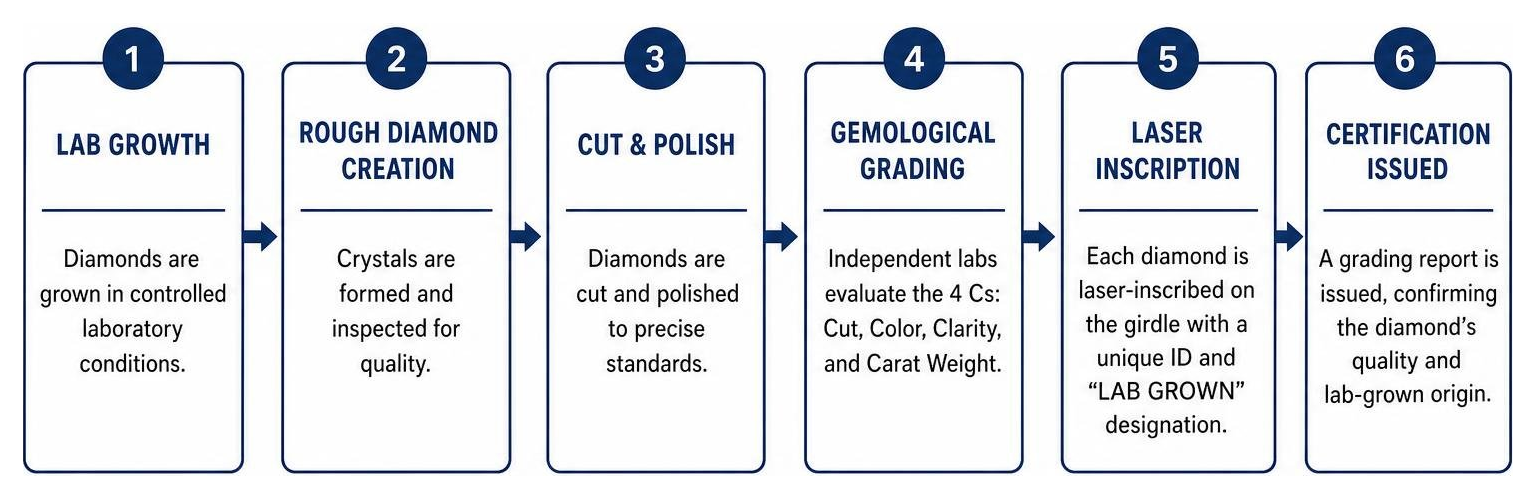
Every certified lab diamond is laser-inscribed on its girdle with a microscopic tracking number and a designator confirming its lab-grown origin. This micro-laser inscription guarantees transparency and ensures that your diamond hoop earrings can be independently identified and verified by any qualified jeweler anywhere in the world.
How Lab Diamonds Are Made: Process, Durability, and Authenticity
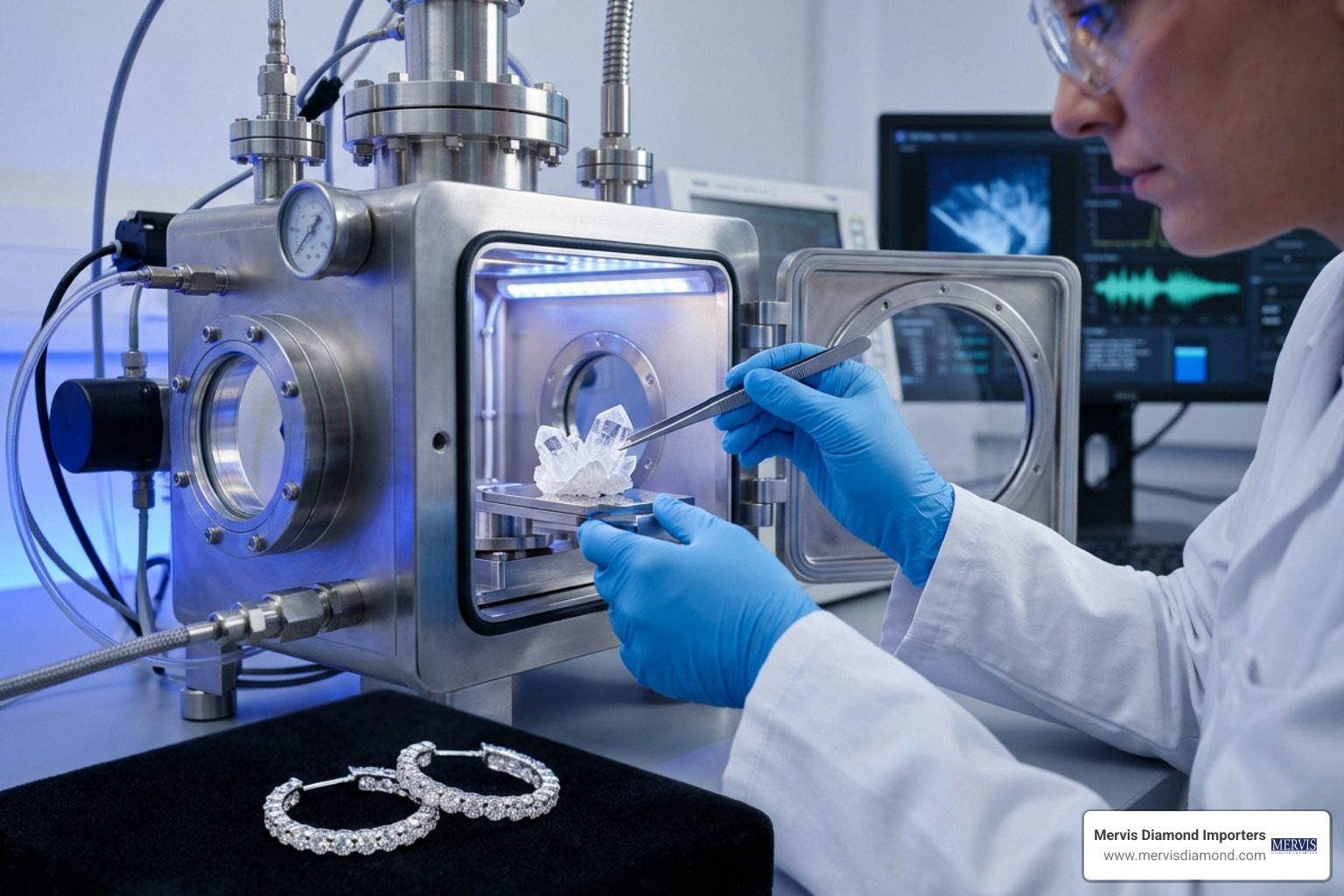
A common point of confusion for shoppers is how diamonds can actually be grown in a lab while remaining genuine diamonds. The key lies in replicating the intense natural pressure and temperatures found hundreds of miles below the earth's surface. Because the crystal growth duplicates natural diamond formation, the finished gemstone achieves a 10 out of 10 rating on the Mohs Hardness Scale. It is identically scratch-resistant, durable, and resilient to daily wear.
HPHT and CVD Manufacturing Techniques
There are two primary scientific methods used to cultivate high-purity gem-quality lab diamonds:
- High Pressure High Temperature (HPHT): This method simulates the intense heat and pressure deep inside the Earth. A tiny diamond seed is placed into a mechanical press surrounded by pure carbon source material, exposed to temperatures above 2,000°C and immense atmospheric pressures, causing carbon atoms to melt and crystallize around the seed.
- Chemical Vapor Deposition (CVD): In the CVD process, a flat diamond seed plate is placed inside a sealed vacuum plasma chamber filled with carbon-rich gases (such as methane and hydrogen). When heated using microwave energy, the gas breaks apart, allowing carbon atoms to continuously precipitate and settle layer-by-layer onto the diamond seed plate. To read more details on this process, visit our guide on What is a CVD Diamond.
Testing and Common Myths Debunked
One enduring myth is that lab-grown diamonds are synthetic "fake" stones like cubic zirconia or moissanite. That is entirely incorrect. Cubic zirconia and moissanite are diamond simulants with completely different optical properties, density, and chemical compositions.
Because lab diamonds are real diamonds, basic thermal testers will identify them instantly as natural diamond material. To read more about how gemological tools react during inspection, explore our article on whether Do Lab Diamonds Pass a Diamond Tester. For a comprehensive breakdown on terminology, read our detailed Lab Grown Diamonds Guide Synthetic Natural.
Choosing Your Perfect Lab Created Diamond Hoops: Size, Cut, and Metal

Finding the ideal pair of lab created diamond hoops involves selecting the right proportion, diamond quality grades, metal type, and backing system. Whether you desire subtle daily elegance or an eye-catching statement piece, tailoring these variables ensures comfort and lasting aesthetic delight. For a foundational overview on earring selection, review our guide on How to Choose Diamond Earrings.
Hoop Dimensions and Daily Wearability
Hoop size is measured by internal diameter (in millimeters) and total carat weight (CTW) distributed across both earrings. Here is a handy breakdown of popular hoop styles:
- Huggies (10mm – 15mm): These sit snug against the earlobe. Huggies offer maximum comfort, making them perfect for sleep, exercise, and effortless daily luxury.
- Medium Everyday Hoops (20mm – 30mm): The classic "sweet spot." These hoops dangle comfortably, framing the face with unmistakable sparkle without interfering with collar lines or hair.
- Statement Hoops (35mm – 50mm+): Bold, high-fashion hoops designed to stand out. Thanks to the accessibility of lab-created diamond pricing, larger statement hoops with significant carat weights are far more achievable than ever before.
Selecting Color, Clarity, and Metal Settings
Because diamond hoops catch light from multiple angles while moving, prioritize cut quality and eye-clean clarity over flawless technical perfection. Choosing diamonds graded F-G in color and VS1-VS2 in clarity guarantees brilliant sparkle without unnecessary price premiums. Dive deeper into selecting stone parameters with our resource on What is Good Color and Clarity for Diamond Earrings.
Metal choice plays a massive role in both security and aesthetics:
- Platinum & 18K White Gold: Provides a bright, seamless background that maximizes colorless diamond sparkle.
- 14K or 18K Yellow Gold: Offers a warm, rich contrast that highlights modern fashion trends.
- Rose Gold: Creates a unique, vintage-inspired romance.
Don't overlook earring backings! Secure latch-backs, heavy duty friction posts, or push-lock mechanisms protect your investment against accidental slips. Learn which locking style suits your routine best with our advice on the Best Backing for Diamond Earrings.
Style, Trends, and Investment: Are Lab Created Diamond Hoops Worth It?
Hoop earrings have maintained a cherished place in fine jewelry collections across centuries, but modern jewelry design has elevated them into a staple for every modern wardrobe.
The Rise of Lab Created Diamond Hoops in Modern Jewelry
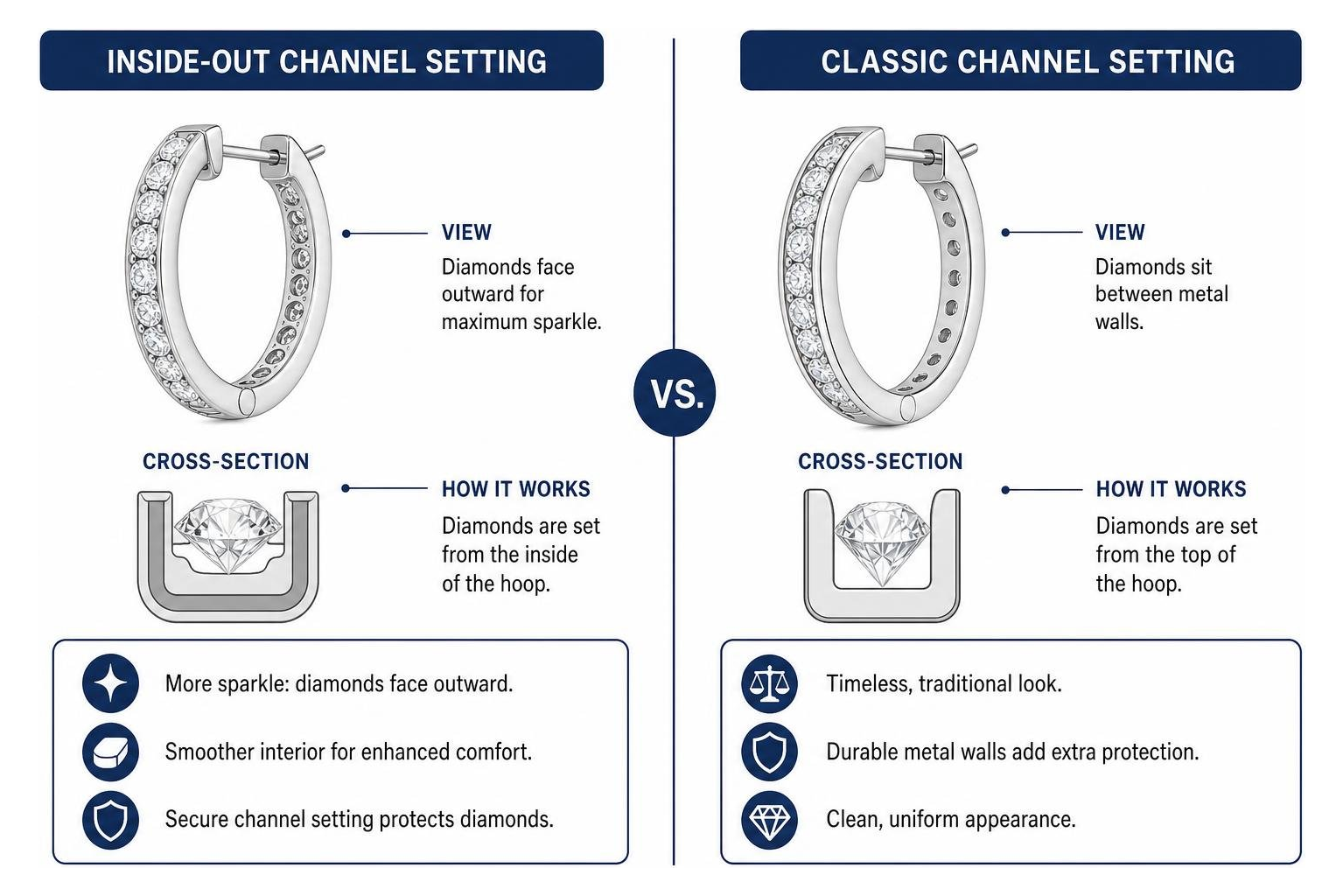
From casual denim-and-tee days to high-elegance gala events, diamond hoops add instant polish. Recent styling shifts lean toward "inside-out" hoop designs—where diamonds set along the inner back curve face forward, maximizing visible diamond fire from every angle.
To see how modern fashion pairs with diamond hoops, explore our styling articles on Are Diamond Hoop Earrings in Style and How to Wear Diamond Hoop Earrings. You can also discover broader design updates in our overview on Diamond Jewelry Trends for 2024 and our comprehensive Lab Grown Diamonds Guide 2026.
Resale Value and Investment Truths About Lab Created Diamond Hoops
When buying lab created diamond hoops, clarity regarding market value is essential. Like many commercial luxury products—including cars and fine electronics—lab-created diamonds should not be treated as a financial asset intended to appreciate over time.
Because lab diamond manufacturing yields continue to expand, secondary resale pricing remains low compared to original retail costs. Natural diamonds historically hold stronger long-term liquidity, though both types experience initial retail depreciation. We advise clients to purchase lab diamond hoops for wearability, beauty, confidence, and personal joy rather than financial speculation. For a detailed breakdown of resale realities, check out our guide on whether Do Lab Grown Diamonds Have Resale Value.
Regardless of market liquidity, insuring your fine jewelry against loss or theft is essential. Read our guide on how to insure your piece: Can You Insure a Lab Grown Diamond.
Essential Care and Maintenance for Long-Lasting Diamond Hoops
Diamond hoops are built to last generations, but dirt, hair products, body oils, and lotions naturally reduce light reflection over time. Regular cleaning restores full optical brilliance.
Safe Home Cleaning Methods
Cleaning your diamond hoop earrings at home takes less than ten minutes:
- Soak: Submerge your hoops in a small bowl of warm water mixed with a few drops of mild dish soap for 10 to 15 minutes.
- Gently Brush: Use a soft-bristled toothbrush to gently clean around the metal prongs and underneath each diamond setting where lotion builds up.
- Rinse & Dry: Rinse thoroughly under warm running water (ensure the drain is plugged!) and pat dry with a lint-free microfiber cloth.
For complete step-by-step cleaning guides, consult our tutorials on How to Clean Diamond Earrings at Home and How to Clean Diamond Earrings.
Maintenance Frequency and Best Practices
To keep your earrings in optimal condition:
- Routine: Clean your hoops every 2 to 4 weeks depending on how frequently you wear them. Learn more on timing with How Often Should You Clean Diamond Earrings.
- Showers: Avoid showering with diamond hoops. Soaps and shampoos create a dull film over high-purity metal and gems. Find out more here: Can You Take a Shower with Diamond Earrings.
- Professional Checks: Visit us at Mervis Diamond Importers once a year for a complimentary professional cleaning and prong inspection to prevent loose stones.
If you ever lose a single earring, don't panic! Explore options like Can You Buy One Diamond Stud Earring or reach out to our team to match individual hoops. You can also review classic stud essentials in our guide to Diamond Studs 101 and pricing comparisons in Diamond Stud Earrings Cost.
Frequently Asked Questions About Lab-Created Diamond Hoops
Are lab-created diamond hoops real diamonds?
Yes! Lab-created diamonds possess identical physical, optical, and chemical characteristics as earth-mined diamonds. They consist of pure carbon organized in a diamond crystal structure and are certified using the exact same gemological criteria.
How much do lab-created diamond hoops cost compared to natural ones?
Lab-created diamond hoops typically cost between 60% and 80% less than natural diamond hoops of equivalent quality and carat weight. This allows buyers to select larger hoop sizes or higher quality stone grades within the same budget.
Can jewelers tell the difference between lab and natural diamond hoops?
Jewelers cannot tell the difference using standard magnification loupes or basic optical inspection. Differentiating between lab-grown and natural diamonds requires specialized gemological laboratory equipment that analyzes microscopic growth patterns and trace nitrogen levels.
Conclusion
Choosing lab created diamond hoops is one of the smartest decisions you can make in modern fine jewelry. By combining uncompromising physical beauty, supreme scratch resistance, conflict-free origins, and incredible value, lab-created hoops deliver timeless luxury tailored perfectly to today's lifestyle.
At Mervis Diamond Importers, our expert team provides hand-selected diamonds, custom metal crafting, and pressure-free guidance across our showrooms in Washington DC, Tysons VA, and Rockville MD. Whether you're exploring modern regional jewelry insights like Trending Lab Grown Diamonds Washington DC or seeking a personal consultation, we are here to guide you toward the perfect pair.
Ready to find your perfect style? Explore our comprehensive comparison guide on Mined vs Lab Grown Diamonds or visit a local Mervis Diamond Importers showroom today!