

Demystifying the Elongated Cushion Cut Lab Created Diamond
What to Know About an Elongated Cushion Cut Lab Created Diamond
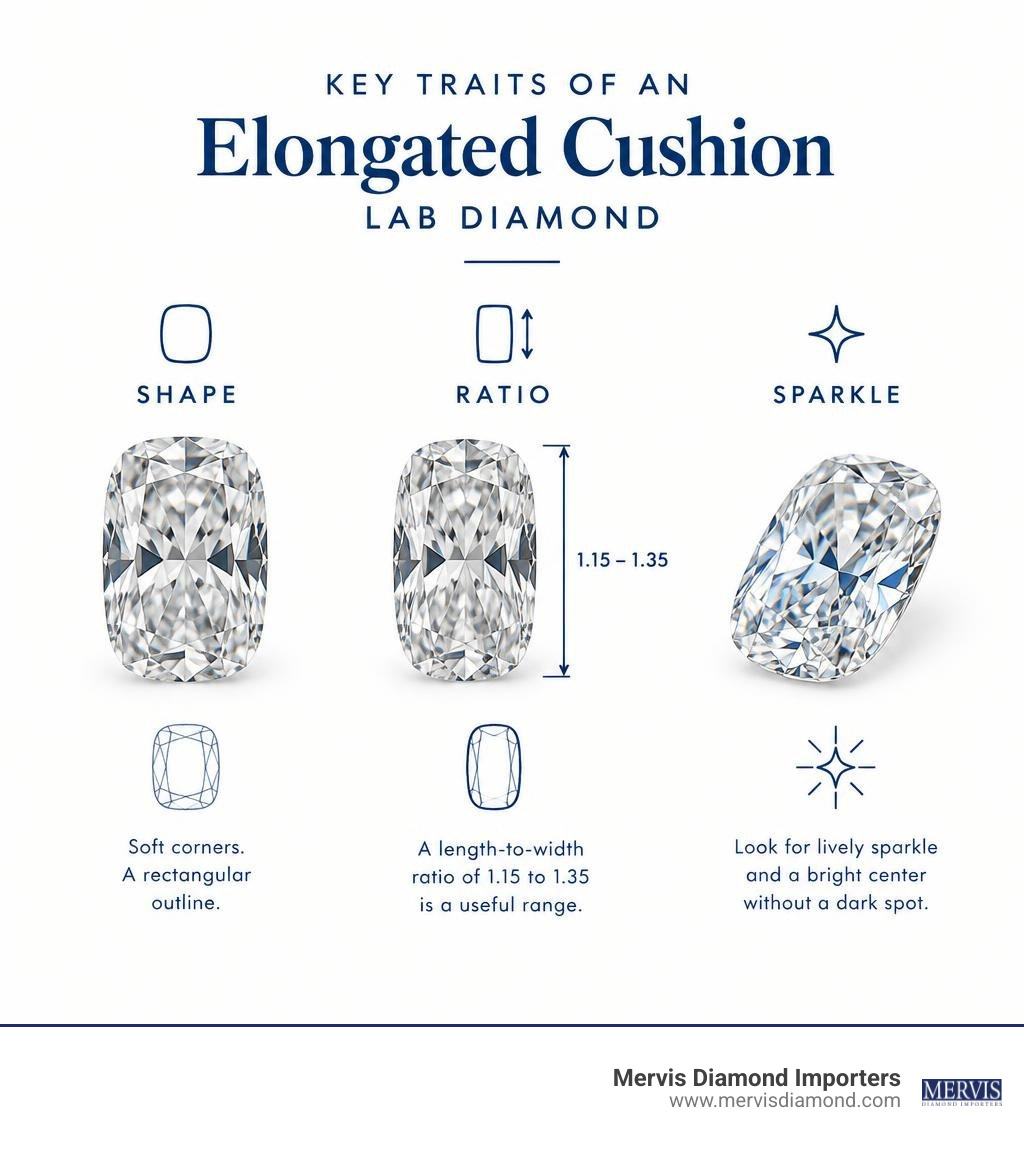
An elongated cushion cut lab created diamond is a real diamond grown in a lab and cut into a soft-cornered, rectangular shape. If you're comparing stones, start with the length-to-width ratio: 1.15 to 1.35 is a useful range, but your preferred shape matters more than a single number. Then look at how the diamond sparkles and whether its center appears dark in everyday light.
The cut pairs a vintage-inspired outline with a longer shape that draws the eye along the finger. This guide will help you weigh proportions, quality, and price without getting lost in the specs.
I'm Morris Mervis, and I'll walk you through what to look for before you choose.
Understanding the Elongated Cushion Cut: Shape and Faceting
The cushion cut traces its lineage back to the historic "old mine cut" of the nineteenth century. Characterized by a softly curved perimeter and rounded corners, it earned its name because it mimics the plush silhouette of a pillow. While classic cushion cuts are square, an elongated cushion stretches that perimeter into a graceful, rectangular form.
This elongated geometry has driven a massive surge in modern demand. Over the past two years alone, the elongated cushion cut has seen a 25% increase in popularity among engagement ring buyers. It merges the romantic, antique charm of soft edges with the finger-flattering presence of a rectangular outline.
| Diamond Shape | Typical Ratio | Outline Profile | Primary Sparkle Style | Finger Coverage |
|---|---|---|---|---|
| Elongated Cushion | 1.15 – 1.35 | Soft rectangular, rounded corners | Blended broad flash & fire | High (slimming effect) |
| Classic Cushion | 1.00 – 1.05 | Symmetrical square, pillowed sides | Broad, vintage-style flashes | Balanced |
| Oval Cut | 1.30 – 1.50 | Fully rounded, curved ends | Linear, brilliant scintillation | Maximum length spread |
Cushion Brilliant vs. Crushed Ice Faceting Patterns
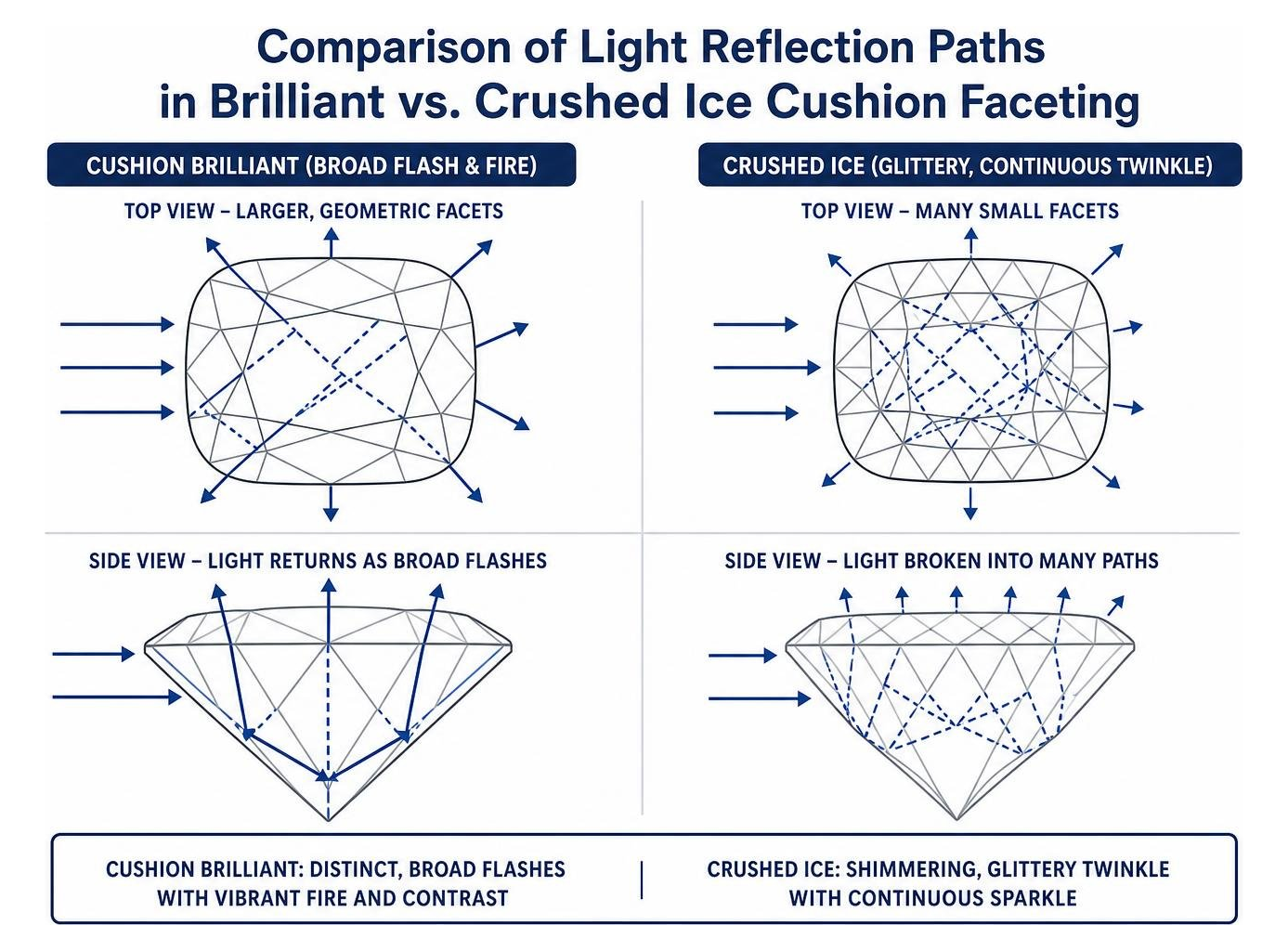
When evaluating an elongated cushion, one of the most critical visual distinctions is the faceting style. Cushion cuts fall broadly into two visual camps: Cushion Brilliant and Modified Cushion (frequently referred to as "crushed ice").
- Cushion Brilliant: These stones feature larger, geometrically precise facets that radiate outward from the pavilion in a manner similar to a round brilliant. This creates distinct, broad flashes of white light and vibrant colored fire. If you appreciate clean contrast and vintage-inspired sparkle, exploring our Brilliant Cushion Cut Guide 2026 offers deeper insight into how these traditional facet arrangements optimize light return.
- Crushed Ice (Modified Brilliant): Cutters add an extra row of small facets to the pavilion, breaking up light into a shimmering, glittery mosaic. While it creates a lively, continuous twinkle, it can occasionally mask internal reflections or make the stone look slightly hazy if the cut depth is uneven.
Why Choose an Elongated Cushion Cut Lab Created Diamond Over Mined Stones
Lab-created diamonds are chemically, physically, and optically identical to mined diamonds. They consist of pure crystalline carbon arranged in an identical isometric lattice structure. They are not cubic zirconia or moissanite; they exhibit the exact same hardness (10 on the Mohs scale), refractive index (2.42), and fire dispersion.
The primary difference lies in their origin and value proposition. Because lab-grown diamonds typically cost 30% to 40% less than mined diamonds of comparable quality, buyers can secure a significantly larger carat weight, a cleaner clarity grade, or a premium length-to-width ratio within their target budget. In our comprehensive lab grown diamonds ultimate guide, we explain how these stones are grown using advanced Chemical Vapor Deposition (CVD) or High Pressure High Temperature (HPHT) methods, providing complete supply chain transparency and an ethical footprint without compromising optical brilliance.
Anatomy and Proportions of an Elongated Cushion Cut Lab Created Diamond
Unlike round brilliant diamonds, fancy shapes like elongated cushions do not receive a standardized, single-word cut grade (such as "Ideal" or "Excellent") on most laboratory certificates. Instead, the quality of the cut must be judged by its individual proportions, symmetry, and visual performance.
Length-to-Width Ratio and Finger Coverage
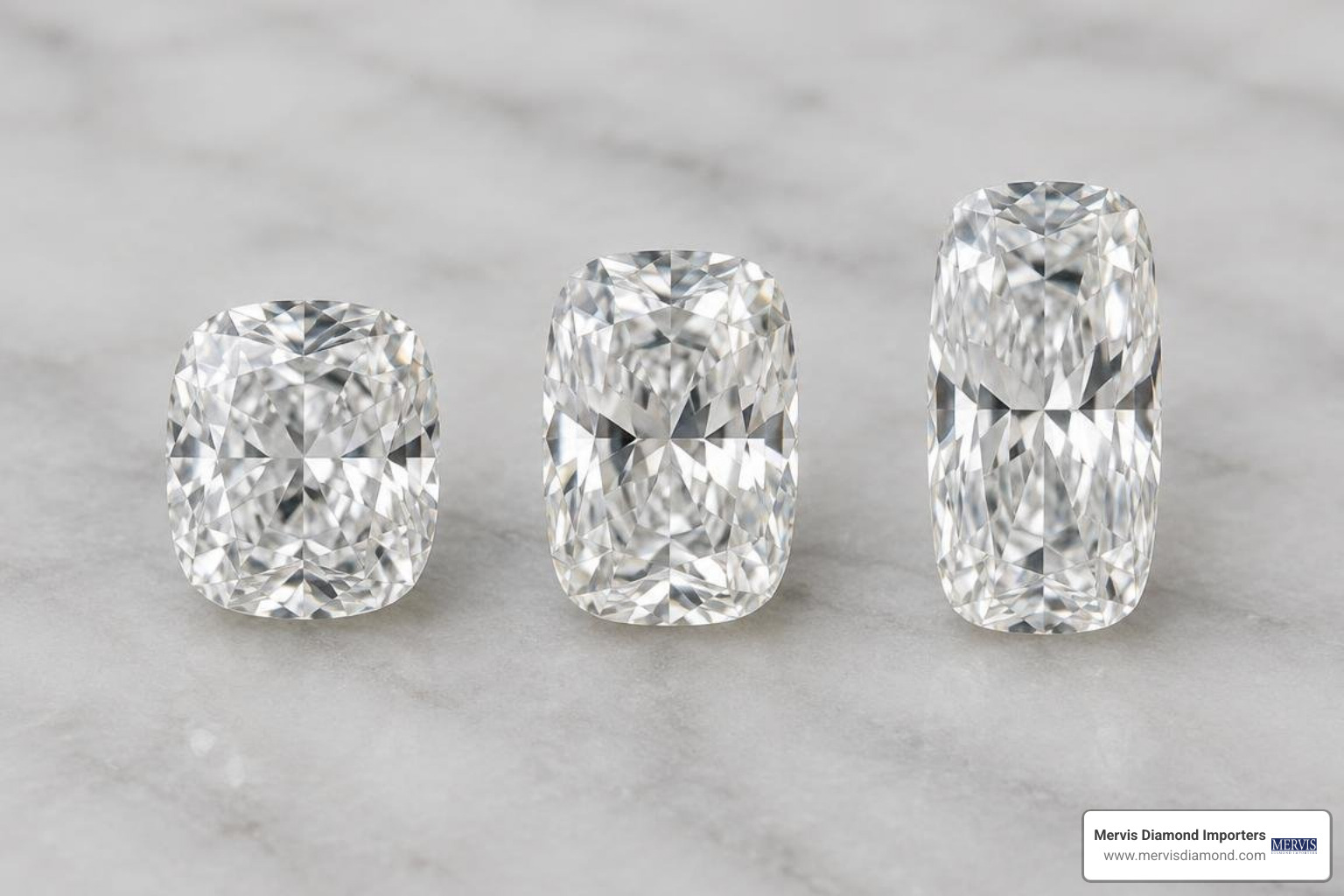
The length-to-width ratio dictates how rectangular your diamond appears. To calculate this, divide the diamond's length in millimeters by its width in millimeters.
- 1.10 to 1.15: A subtle rectangular stretch that still retains a square-like fullness.
- 1.16 to 1.25: A balanced, classic elongated cushion silhouette that maintains soft pillow shoulders while visibly lengthening the hand.
- 1.26 to 1.35+: A pronounced rectangular shape that delivers dramatic finger coverage, rivaling the visual spread of radiant and emerald cuts.
Because elongated cushion cut diamonds have a length-to-width ratio typically ranging from 1.15 to 1.35, they create an elegant vertical line along the finger, making the hand appear longer and more slender while maximizing the visible surface area from the top down.
Ideal Table and Depth Percentages
To ensure light does not leak through the bottom of the stone (known as "windowing") or reflect dark shadows in the center, you should aim for balanced proportions. Our guide to finding the best cut for a cushion diamond outlines the optimal numerical benchmarks:
- Depth Percentage: Look for stones between 61% and 68%. A depth under 60% can cause light leakage, making the diamond look glassy or dull, while a depth over 70% hides weight in the pavilion where you cannot see it.
- Table Percentage: Aim for 58% to 65%. A well-proportioned table allows ample light into the diamond while preserving enough crown height to generate rainbow-colored fire.
- Girdle Thickness: A range from Very Thin to Slightly Thick is ideal. Avoid Extremely Thick girdles, which add dead weight to the certificate without increasing visual surface area.
Evaluating the 4Cs for Lab-Grown Elongated Cushions
Balancing the fundamental 4Cs—Cut, Color, Clarity, and Carat Weight—ensures you maximize your investment without paying for characteristics the naked eye cannot detect. Understanding the 4 Cs of diamonds helps you focus your budget on what truly enhances beauty.
Color and Clarity Recommendations
Because elongated cushions have an open table and deep pavilion, they can hold more body color than shallower shapes. When selecting your stone:
- Color: If setting your diamond in platinum or white gold, we recommend an F or G color grade for an icy, colorless appearance. If you choose yellow gold or rose gold, you can comfortably select an H or I color; the warm metal naturally complements the diamond, keeping it bright while offering substantial cost savings. Reviewing a standard diamond color chart can help you visualize these subtle tonal shifts.
- Clarity: Cushion cuts, especially those with brilliant faceting, disperse light well enough to conceal minor internal characteristics. A VS1 or VS2 clarity grade represents the sweet spot of value and optical purity, ensuring the diamond is completely "eye-clean" (free of visible inclusions without magnification). If you are considering an SI1 grade, verify our diamond clarity grading guide to ensure inclusions are not situated directly beneath the center table.
Cut Precision and Lab Certification
Always verify that your lab-grown diamond is certified by an internationally recognized grading laboratory, such as the International Gemological Institute (IGI) or the Gemological Institute of America (GIA).
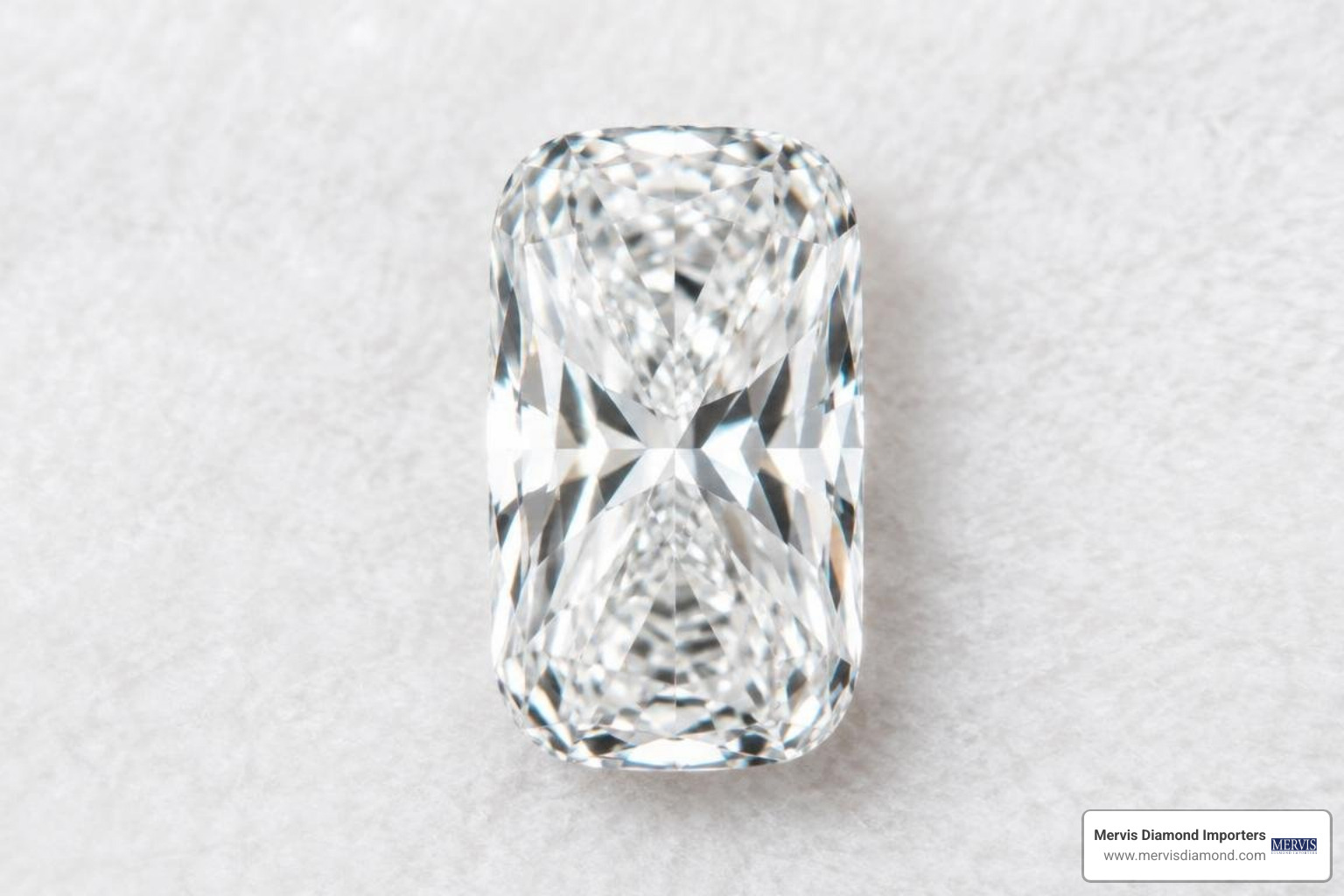
Grading reports confirm that the diamond was grown in a controlled environment and validate its precise measurements. When inspecting elongated shapes, watch for the bow-tie effect—a dark, bowtie-shaped shadow running across the center of the stone caused by misaligned pavilion facets. A well-cut elongated cushion minimizes this shadow, distributing brilliance evenly from the center out to the rounded corners.
Ring Settings, Styling, and Care
The softened geometry of an elongated cushion makes it one of the most versatile center stones for custom bridal jewelry.
Top Setting Styles for an Elongated Cushion Cut Lab Created Diamond
- Classic Solitaire: A sleek four-prong or six-prong platinum band highlights the diamond’s silhouette without distraction.
- Hidden Halo: A row of micro-pavé diamonds placed just beneath the center stone's girdle adds a secret layer of sparkle visible from profile angles. To explore more pairing concepts, browse our curated collection of the best cushion cut settings.
- Three-Stone Mountings: Flanking the center stone with tapered baguettes, cadillac diamonds, or pear shapes frames the elongated proportions and introduces striking vintage symmetry.
- Custom Pavé Creations: Incorporating delicate pavé accents along the shank enhances brilliance. Our team regularly crafts custom lab grown engagement rings tailored specifically to the exact millimeter dimensions and ratio of your center diamond.
Care, Cleaning, and Longevity Practices
Because diamonds have an inherent affinity for natural oils, lotions, and dust, maintaining their fire requires simple, routine care:
- Weekly Cleaning: Soak your ring in warm water mixed with a few drops of mild dish soap for 15 minutes. Gently brush beneath the pavilion and around the prongs using an extra-soft toothbrush, then rinse with lukewarm water and pat dry with a lint-free cloth.
- Avoid Harsh Chemicals: Remove your ring before using chlorine bleach, swimming in treated pools, or applying abrasive household cleaners, which can erode precious metal mountings over time.
- Professional Inspections: Visit a reputable local jeweler twice a year to check prong tension, ensuring your stone remains firmly seated and protected from accidental impacts.
Frequently Asked Questions About Elongated Cushion Cut Lab Diamonds
Do elongated cushion lab diamonds look larger than traditional cushion cuts?
Yes. By distributing carat weight along a longer vertical axis rather than a symmetrical square, an elongated cushion cut diamond creates greater visual surface spread on the finger. This provides the perception of a larger diamond compared to a square cushion of the exact same carat weight.
What is the ideal length-to-width ratio for an elongated cushion cut?
While individual aesthetic preference always takes precedence, the most sought-after range for an elongated silhouette is 1.20 to 1.30. This ratio achieves a clear rectangular presence while preserving the distinct, curved pillowed corners that define the cushion family.
Will a lab created elongated cushion cut diamond test as a real diamond?
Yes. Because lab-created diamonds possess the exact same physical, optical, and chemical properties as earth-mined diamonds, they test as 100% genuine on standard thermal and electrical conductivity diamond testers. Only specialized spectroscopic laboratory equipment can distinguish between lab-grown and mined origins.
Conclusion
Choosing an elongated cushion cut lab-created diamond offers a balance of vintage warmth, modern brilliance, and exceptional value. Whether you prefer the broad flashes of a cushion brilliant or the glittering sparkle of a modified cut, selecting the right proportions ensures a ring that will stay captivating for a lifetime.
At Mervis Diamond Importers, we hand-select each of our lab-grown and natural diamonds for superior optical performance and cut precision. We invite you to visit our showrooms in Washington DC, Tysons, VA, or Rockville, MD for a personalized, pressure-free consultation. Explore our trending lab grown diamond collection or schedule an appointment with our master gemologists today.