

How to Score the Best Value Diamond Without Getting Ripped Off
The Real Cost of a Diamond — and How to Get More for Your Money
Finding the best value diamond is not about buying the cheapest stone. It's about knowing exactly which quality factors matter to the naked eye — and which ones only matter on paper.
Most ring buyers spend between £1,300 and £7,000 on an engagement ring, with the lion's share of that budget going toward the diamond itself. Yet two diamonds can look completely identical in person while differing in price by as much as 65%. The difference? Knowing which grades to prioritize — and which ones to let go.
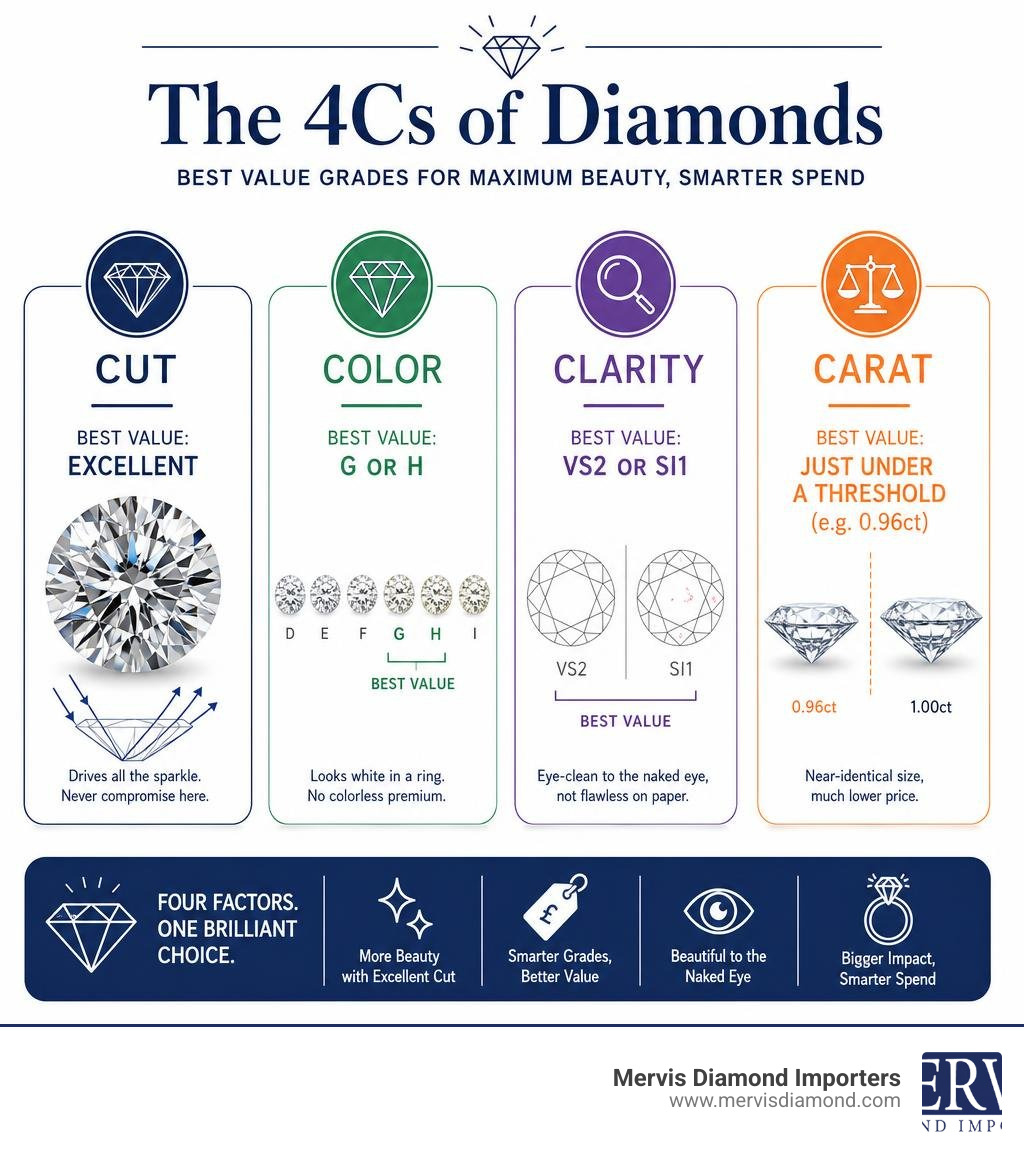
Here's a quick summary of the sweet spot grades that deliver the best visual quality for the lowest price:
| The 4Cs | Best Value Grade | Why It Works |
|---|---|---|
| Cut | Excellent | Drives all the sparkle — never compromise here |
| Color | G or H | Looks white in a ring, no colorless premium |
| Clarity | VS2 or SI1 | Eye-clean to the naked eye, not flawless on paper |
| Carat | Just under a threshold (e.g. 0.96ct) | Near-identical size, much lower price |
And if you're open to a lab-grown diamond, you can apply all of these savings and cut the price roughly in half again compared to a natural stone of the same grades.
This guide walks you through every decision — cut, color, clarity, carat, shape, certification, and where to buy — so you never overpay for quality you can't actually see.
Demystifying the 4Cs to Find the Best Value Diamond
To get the most out of your budget, you have to understand the rules of the game. Diamond quality is universally evaluated using the 4Cs: Cut, Color, Clarity, and Carat Weight. Established by the Gemological Institute of America (GIA), this system grades diamonds along a standardized scale.
However, many first-time buyers make the mistake of treating all four Cs as equally important. They try to find a stone that scores near the top of every category, resulting in an astronomical price tag.
By understanding the 4Cs of diamonds and how they impact pricing, you can make strategic trade-offs. The key is to compromise on the characteristics that are invisible to the naked eye while maximizing the ones that directly affect the diamond's beauty and sparkle.
Cut: The Most Critical Factor for Sparkle
If there is one "C" you should never skimp on, it is Cut. The cut of a diamond does not refer to its shape (like round, oval, or princess), but rather to how well its facets interact with light. It is the only quality characteristic determined entirely by human craftsmanship rather than nature.
An Excellent or Ideal cut diamond will reflect almost all the light that enters it, creating spectacular brilliance, fire, and scintillation. This intense sparkle is your best friend when shopping on a budget: a highly brilliant diamond will actually mask minor color tints and tiny inclusions.
Conversely, a poorly cut diamond will leak light out of the sides or bottom, making the stone look dull, glassy, and sometimes even smaller than its actual carat weight. This is why cut is the most important C. If you want to know which diamond cut sparkles the most, the classic round brilliant takes the crown, but any shape with an excellent cut grade will maximize what makes a diamond sparkle.
Color: Finding the Best Value Diamond Sweet Spot
The GIA grades diamond color on a alphabetical scale from D (completely colorless) to Z (noticeable light yellow or brown).
D, E, and F grades are classified as "Colorless" and command a massive premium. However, once a diamond is mounted in a ring setting, it is nearly impossible for the untrained eye to distinguish a colorless stone from a "Near-Colorless" stone (grades G, H, I, or J).
Choosing a G or H color diamond is the ultimate sweet spot for a best value diamond. These stones look bright white to the naked eye but cost significantly less than D-F stones. If you plan to set your diamond in yellow or rose gold, you can easily drop to an I or J color—and sometimes even a K color—because the warm metal of the band will naturally mask any slight warmth in the stone. Knowing these metal-matching tricks is a fantastic way to learn how to save money on diamond color.
Clarity: Choosing Eye-Clean Over Flawless
Clarity measures the presence of internal characteristics called "inclusions" and surface marks called "blemishes." The grading scale ranges from Flawless (FL) down to Included (I3).
Flawless diamonds are incredibly rare and priced for collectors, not everyday jewelry. The secret to finding the best value diamond is to look for "eye-clean" stones. An eye-clean diamond is one that has inclusions, but they are so small or positioned in such a way that they cannot be seen without magnification.
Typically, the best diamond clarity grades for value are VS2 and SI1. At these levels, the inclusions are generally invisible to the naked eye, meaning a VS2 or SI1 diamond will look identical to a Flawless diamond when set in a ring, but at a fraction of the cost. You can consult a diamond clarity chart best to worst to see where these fall, but always trust your eyes (or a trusted gemologist) over the paper grade.
Carat Weight: Buying Shy to Save Big
Carat is a measure of a diamond's weight, not its physical size (one carat equals 0.20 grams). Because larger diamonds are rarer in nature, diamond prices increase exponentially—not linearly—at major weight thresholds known as "magic numbers" (e.g., 0.50ct, 0.75ct, 1.00ct, 1.50ct, 2.00ct).
You can save a massive amount of money by "buying shy"—selecting a diamond that weighs just under these popular thresholds. For example, a 0.96-carat diamond will look visually identical to a full 1.00-carat diamond, but because it avoids the "1.00-carat premium," it can cost up to 30% less.
The same applies to larger stones. If you are researching the cost of a 2 carat diamond, you will find that choosing a 1.90-carat stone offers huge savings. This strategy scales up beautifully whether you are looking at how much is a 3 carat diamond ring or even how much is a 4 carat diamond ring.
Natural vs. Lab-Grown: Maximizing Your Budget
One of the most important decisions you will make when hunting for the best value diamond is choosing between a natural (mined) diamond and a lab-grown diamond.
From a physical, chemical, and optical standpoint, lab-grown diamonds are 100% identical to natural diamonds. They are made of the same crystallized carbon structure, possess the same hardness (10 on the Mohs scale), and exhibit the exact same sparkle. The only difference is their origin: one grew deep within the earth over billions of years, while the other was grown in a high-tech laboratory over a matter of weeks.
Because the supply chain for lab-created stones is highly efficient, they cost a fraction of the price of natural stones. Choosing a lab-grown diamond allows you to save an additional 50% to 70% on the sweet-spot values you have already optimized. If you want a deep dive into how these two options stack up, read our guide on mined vs lab grown diamonds. You can also explore our best cheap man-made diamond engagement rings guide for budget-friendly design inspiration.
The Resale Value and Long-Term Outlook
While lab-grown diamonds offer unparalleled value for buyers who want the largest, most brilliant stone for their immediate budget, it is important to understand the resale landscape.
Natural diamonds carry inherent rarity. Because the earth's supply of gem-quality natural diamonds is finite, they hold generational value and retain a portion of their original purchase price over time. Lab-grown diamonds, on the other hand, do not hold significant resale value. Because technology continues to improve and production capacity increases, the market price for lab-grown rough has steadily decreased.
When deciding which path to take, ask yourself if long-term asset value matters to you, or if you prefer to maximize your buying power today. For a detailed breakdown of this topic, check out our analysis on do lab grown diamonds have resale value.
How Diamond Shape Impacts Value and Appearance
The shape of your diamond plays a massive role in how large it looks on the finger and how much it costs per carat. Over three-quarters of all diamond engagement rings feature a round brilliant diamond, but going with the crowd comes at a premium.
When thinking about which diamond shape looks the biggest, you will find that elongated shapes offer much better visual value than round cuts.
Round Brilliant vs. Fancy Cuts
Round diamonds are the most expensive shape for two primary reasons:
- Raw Yield: Cutting a round brilliant diamond wastes up to 60% of the original rough stone. In contrast, fancy shapes like princess and cushion cuts align better with the natural shape of rough diamond crystals, wasting far less material and keeping costs down.
- High Demand: Because round cuts are incredibly popular, jewelers charge a premium for them.
By choosing a "fancy shape" like an oval, marquise, pear, or princess cut, you can save up to 25% per carat compared to a round diamond of the exact same quality. Furthermore, elongated shapes like ovals and marquise diamonds have a larger "spread"—meaning they have a larger face-up surface area, making them look significantly larger than a round diamond of the same carat weight.
Shape-Specific Strategies for the Best Value Diamond
Every diamond shape has its own unique optical properties, which means you can use shape-specific strategies to save even more money:
- Step Cuts (Emerald & Asscher): These shapes feature long, open facets that act like mirrors. They do not hide inclusions well. If you choose an emerald cut, you will want to prioritize clarity (VS2 or VS1) over color.
- Brilliant Fancy Cuts (Oval, Pear, Marquise): These shapes are incredibly forgiving when it comes to hiding inclusions, allowing you to drop to an SI1 or SI2 clarity grade. However, they can exhibit a "bow-tie effect"—a dark shadow across the center of the stone. Look for stones with excellent cut symmetry to minimize this.
- Cushion and Radiant Cuts: These shapes tend to retain color more than rounds. If you want a bright white look, stick to a G or H color rather than dropping into the I or J range.
Smart Buying Strategies: Certification, Settings, and Online Verification
When you are ready to make a purchase, protecting yourself from inaccurate grading is paramount. This starts with ensuring your diamond is certified by a highly respected, independent laboratory.
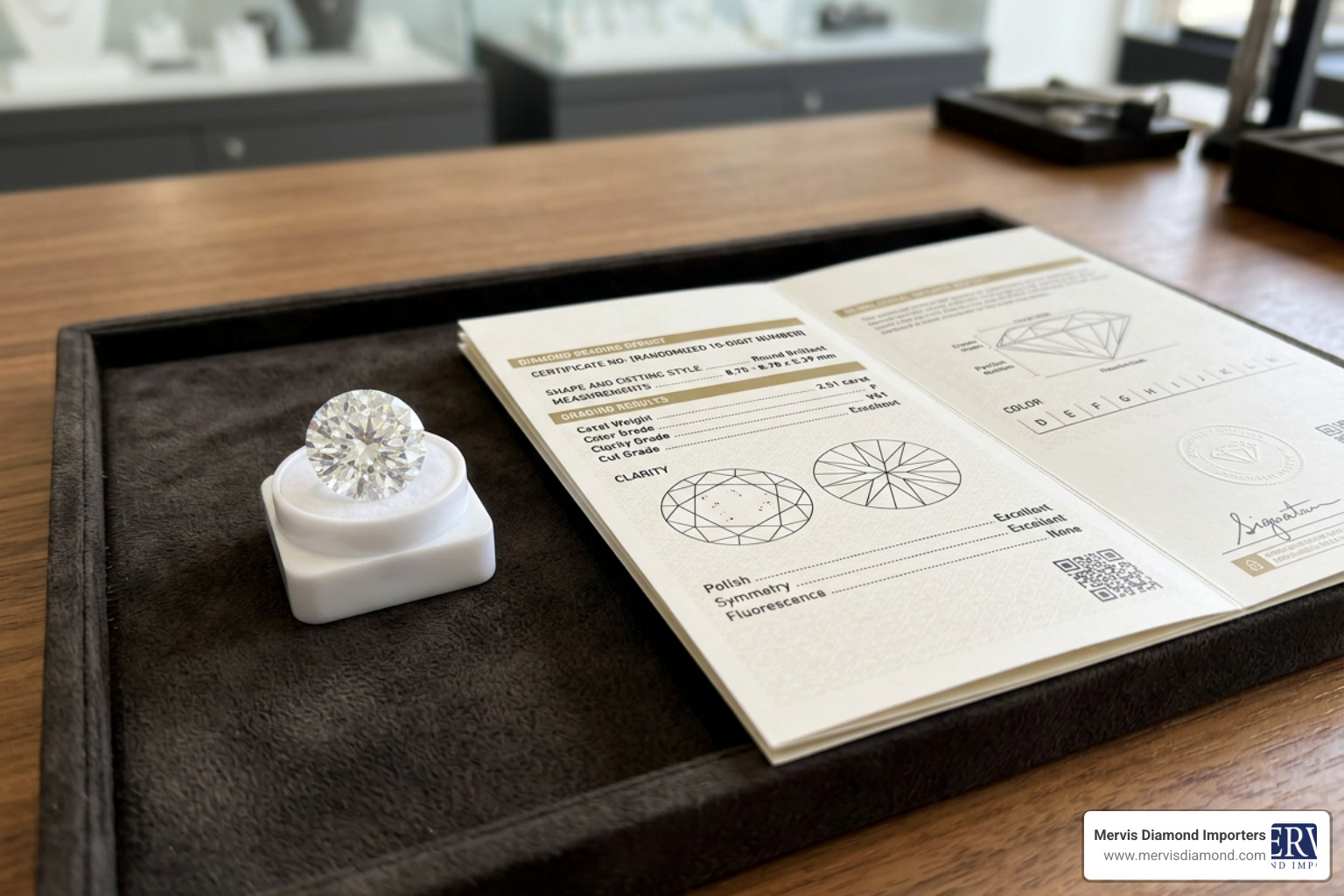
The GIA (Gemological Institute of America) and the IGI (International Gemological Institute) are the gold standards of diamond grading. A certificate from one of these institutions ensures that the color, clarity, and cut grades listed on the tag are completely accurate and unbiased.
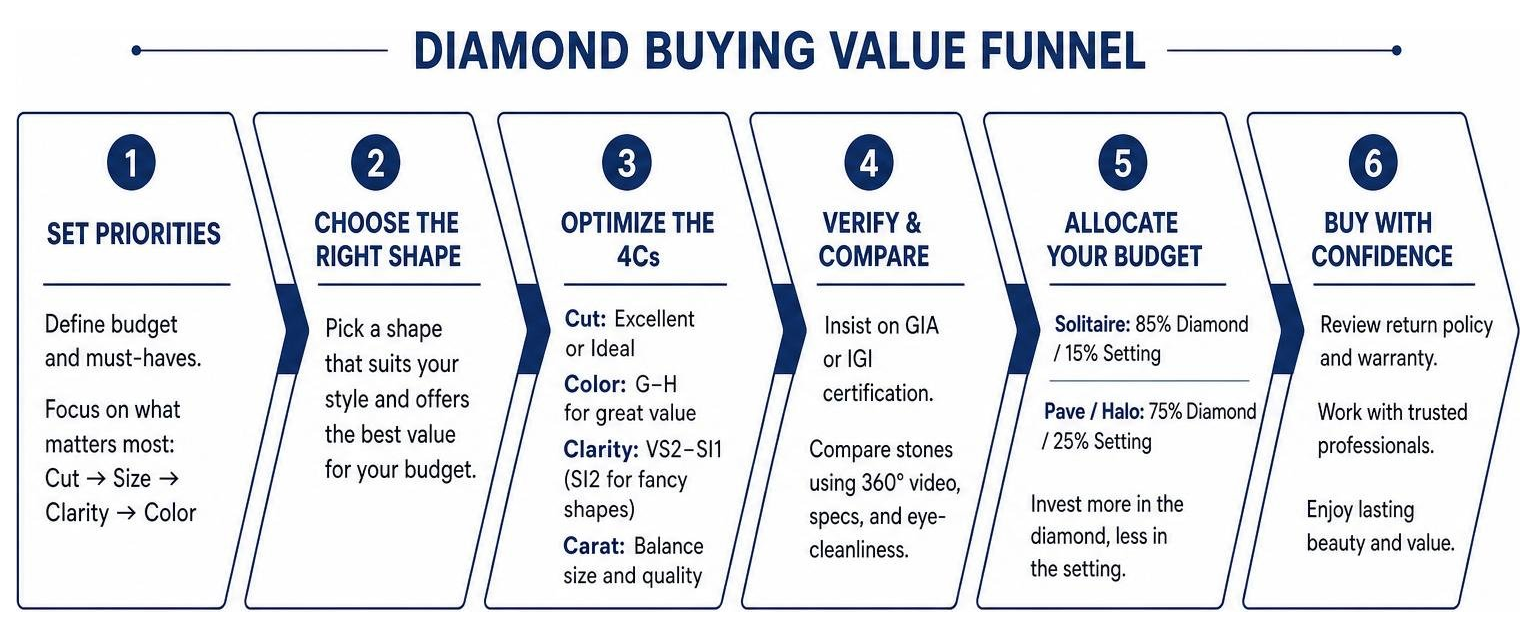
To help you visualize how to distribute your funds, here is a recommended budget allocation table for a standard engagement ring:
| Budget Item | Solitaire Style | Pave / Halo Style |
|---|---|---|
| The Diamond | 85% of total budget | 75% of total budget |
| The Ring Setting | 15% of total budget | 25% of total budget |
Verifying Quality and Authenticity Online
Buying a diamond online or starting your research digitally can yield great savings, but it requires caution. You should always use high-definition 360-degree videos to inspect the diamond's light performance and check for eye-cleanliness.
For the ultimate peace of mind, we recommend partnering with a reputable local jeweler who offers expert, pressure-free service. At Mervis Diamond Importers, we hand-select only the finest natural and lab-grown diamonds, allowing you to view stones in person at our showrooms in Tysons, VA, Rockville, MD, or Washington, DC.
To see how we can assist you in finding a spectacular stone within your price range, read about how mervis diamond can help you find the perfect engagement ring on a budget.
Common Mistakes to Avoid When Buying
- Overpaying for Invisible Grades: Do not pay a premium for a Flawless (FL) or Colorless (D-F) diamond when a VS2, G-color stone looks identical on your partner's hand.
- Ignoring the Cut Grade: Many buyers sacrifice cut quality to afford a larger carat weight. This results in a dull, lifeless stone that looks smaller than it actually is.
- Forgetting the Setting's Influence: If you are setting the stone in yellow gold, do not buy a colorless diamond. The yellow prongs will reflect through the stone, making a D-color diamond look like a G or H anyway!
Frequently Asked Questions About Diamond Value
What is the single best value diamond grade combination?
For a natural round diamond, the absolute "sweet spot" for maximum value is an Excellent Cut, G or H Color, and VS2 or SI1 Clarity. This combination ensures the diamond is blindingly brilliant, looks bright white, and is completely clean to the naked eye, all while avoiding the steep price premiums of the absolute top tiers.
How much of my budget should go to the diamond vs. the setting?
As a general rule, we recommend spending roughly 80% of your budget on the center diamond and 20% on the setting. If you choose a simple solitaire setting, you can push up to 85% or 90% of your budget into the diamond. To keep your expectations realistic, it helps to understand the average engagement ring cost in today's market. You can read more about this in our articles on how much is the average engagement ring and how to decide how much money spend engagement ring.
Why is independent certification non-negotiable?
Without a GIA or IGI certificate, you are simply taking the seller's word for the diamond's quality. Some uncertified stores will inflate grades by one or two levels (e.g., selling an I-color diamond as a G-color), which can cost you thousands of dollars in overpayment.
Conclusion
Scoring the best value diamond is all about making smart, educated compromises. By prioritizing an Excellent cut, choosing an eye-clean VS2/SI1 clarity, selecting a near-colorless G/H color, and buying just shy of major carat weights, you can get a breathtaking stone without overpaying.
At Mervis Diamond Importers, we believe the ring-buying journey should be exciting and entirely stress-free. Our non-commissioned diamond experts in Tysons, VA, Rockville, MD, and Washington, DC are here to help you navigate these choices in a welcoming, pressure-free environment.

Ready to find your dream stone? Schedule a consultation to find your perfect budget-friendly ring with one of our master gemologists today!